

Healthcare Disruptor Shen Peng and the Ripple Effect of Waterdrop
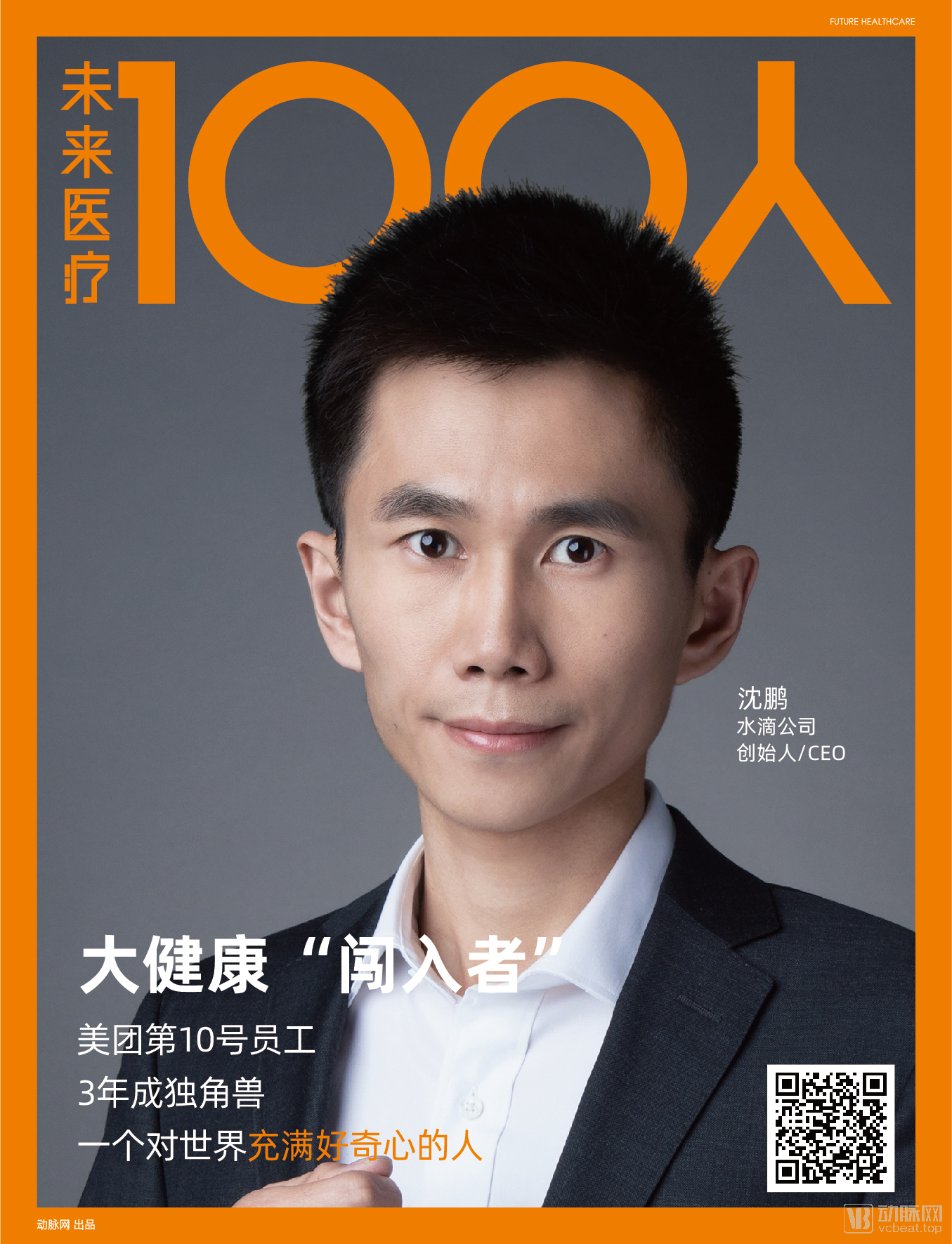
Shen Peng is too ordinary.
On October 31, at a cultural and creative park along Beijing’s East Fourth Ring Road, Shen Peng, dressed in jeans and carrying a casual backpack, appeared at an open-air booth under construction, attracting almost no attention.
“Meituan’s 10th Employee,” “One of the Four Kings of the Lower-Tier Market,” “Nearly RMB 1.6 Billion Raised in Two Funding Rounds Within Three Months,” and “Holding Traffic from Over 100 Million Users”—Shen Peng, CEO of Shuidi Inc., who created these internet-world legends within just three years, is actually quite ordinary in real life.
Born in 1987 in the family housing compound of PICC (People’s Insurance Company of China) in a third-tier city in Shandong Province, Shen Peng enrolled at the Central University of Finance and Economics at the age of 18. At 22, he joined Meituan during its startup phase, rising from an intern to head of the national business team for Meituan Waimai (Meituan Food Delivery). At 29, he founded Shuidi Inc. Now 32, Shen Peng’s career trajectory is remarkably clear. However, when he decided to launch his own venture after several experiences of building businesses “from 0 to 1,” he may not have realized that the sector he had casually identified would become an increasingly prominent trend: health insurance has maintained a compound annual growth rate (CAGR) of over 35% in the past five years.
Recently, in an exclusive interview with VCBeat, Shen Peng revealed that Shuidi Inc. will focus on addressing healthcare payment issues through its businesses such as Shuidi Chou, Shuidi Insurance Mall, and Shuidi Mutual Aid in the short term. In the future, it will collaborate with industry suppliers to enter the field of medical services.To establish Shuidi as a platform-based company in the broader health industry。
To some extent,Shen Peng may be doing what his mentors, Wang Xing and Wang Huiwen, did in the local life services industry a decade ago.. In the healthcare industry, Shui Di (Waterdrop), founded by Shen Peng, has already amassed over 100 million high-quality users. Although Shui Di’s core business currently remains in the health insurance sector, its potential cross-industry expansion at a critical juncture would bring significant imaginative space to the industry.
However, given the numerous pain points in the healthcare industry and the difficulties inherent in its transformation, Shen Peng and his company, Waterdrop, may have chosen a challenging path.
But setting aside simplistic judgments of success and failure, Shen Peng seems to embody a metaphor for this era:
In this era, everyone is encouraged to live the life they aspire to.
On January 11, 2019, Waterdrop’s non-profit divisions—Waterdrop Crowdfunding and Waterdrop Charity—hosted the inaugural “111 Small Acts of Kindness Day” charity gala, aiming to pay tribute to benevolent individuals across society. Since then, Waterdrop Crowdfunding and Waterdrop Charity have anchored November 11 as the date for this annual charity event, with the second edition held recently on November 1.
At 4:23 p.m. on the day before this year’s “111 Xiaoshan Day” event, Shen Peng, slender in build and carrying a casual backpack, arrived at the event setup site. With his head down, he walked slowly, holding a smartphone in each hand and sending voice messages as he went. Although many staff members were present, busy constructing outdoor booths, hardly anyone paused their work to greet him upon his arrival—despite the many legendary chapters in this young entrepreneur’s past.
Shen Peng often recounts his past in this manner during media interviews or event speeches:
In 1987, I was born in the family housing compound of PICC (People’s Insurance Company of China) in Shandong Province. My father was an insurance sales agent, and many residents in the compound worked in the insurance industry, so I was exposed to insurance from a very young age. I have always been competitive by nature. Once, in the fifth grade, I competed with several playmates back in my hometown to climb utility poles. Unfortunately, one of the poles was leaking electricity. I suffered an electric shock, fell, and sustained severe burns to my scalp and one arm, losing consciousness on the spot.
Fortunately, my father had purchased insurance for me in advance, so I only incurred minimal out-of-pocket expenses throughout the entire course of treatment. During my eight-month hospitalization, I witnessed many fellow patients who, due to financial hardships, were unable to afford the exorbitant medical costs and ultimately fell into poverty as a result of their illnesses. At that time, I found myself pondering: What is the purpose of life? What should I do in the future to make my life more meaningful? How can I ensure that my life is not lived in vain?
I didn’t want to stay in Shandong; I yearned to explore broader horizons. In 2006, I enrolled at the Central University of Finance and Economics, which brought me to Beijing. Influenced by the entrepreneurial spirit prevalent at the time, I developed an interest in tech entrepreneurship. In 2010, I joined Meituan as its tenth employee, staying with the company until April 2016. During my six and a half years at Meituan, I initially worked on Meituan’s group-buying business. Later, I pursued several internal ventures, such as Meituan Smart Ordering and Meituan Membership Card. Subsequently, I took charge of Meituan Waimai (food delivery). All these efforts were centered around improving people’s daily necessities—clothing, food, housing, and transportation—with the aim of enabling everyone to eat better and more conveniently.
In early 2016, I observed certain macroeconomic variables indicating that China’s population aging issue would become increasingly severe. At that time, a report projected that over the next 10 to 15 years, the median age of China’s population would rise from 34 to 43 years, an increase of approximately 10 years.
At that time, a family member of an old colleague fell ill but could not afford the treatment. I called on my colleagues to raise funds, but the fundraising efficiency was extremely low. Moreover, many young people were unwilling to spend significant amounts on health protection. Consequently, I decided to resign and start my own business, launching Shuidi Mutual Aid. I believe that internet technology can change the world, but it must be applied to more meaningful endeavors.
From the very inception of our company, we established Waterdrop’s mission: “To leverage internet technology to ensure that the general public has access to insurance coverage, safeguarding hundreds of millions of families.” Enabling more people to have protection while healthy and to rapidly receive financial support when ill is, in essence, the original aspiration behind our founding—a commitment that remains unchanged to this day.
But in reality, compared to these sentimental narratives, another version of Shen Peng may be more authentic.
Shen Peng has demonstrated strong business acumen since middle school, engaging in ventures such as operating sports lottery services and selling books. Although these enterprises never scaled significantly, they provided him with valuable entrepreneurial experience.
Perhaps following the entrepreneurial advice from a certain book, or drawing inspiration from an entrepreneur’s speech video, Shen Peng decided to first join a reliable team to learn how to start a business before venturing out on his own.
In 2010, Shen Peng, on the verge of graduating from university, chose to join Wang Xing’s team. After undergoing two interviews in an old tube-shaped apartment building in Beijing, Shen Peng joined Meituan as its 10th employee and second sales representative, with a base salary of RMB 1,500.
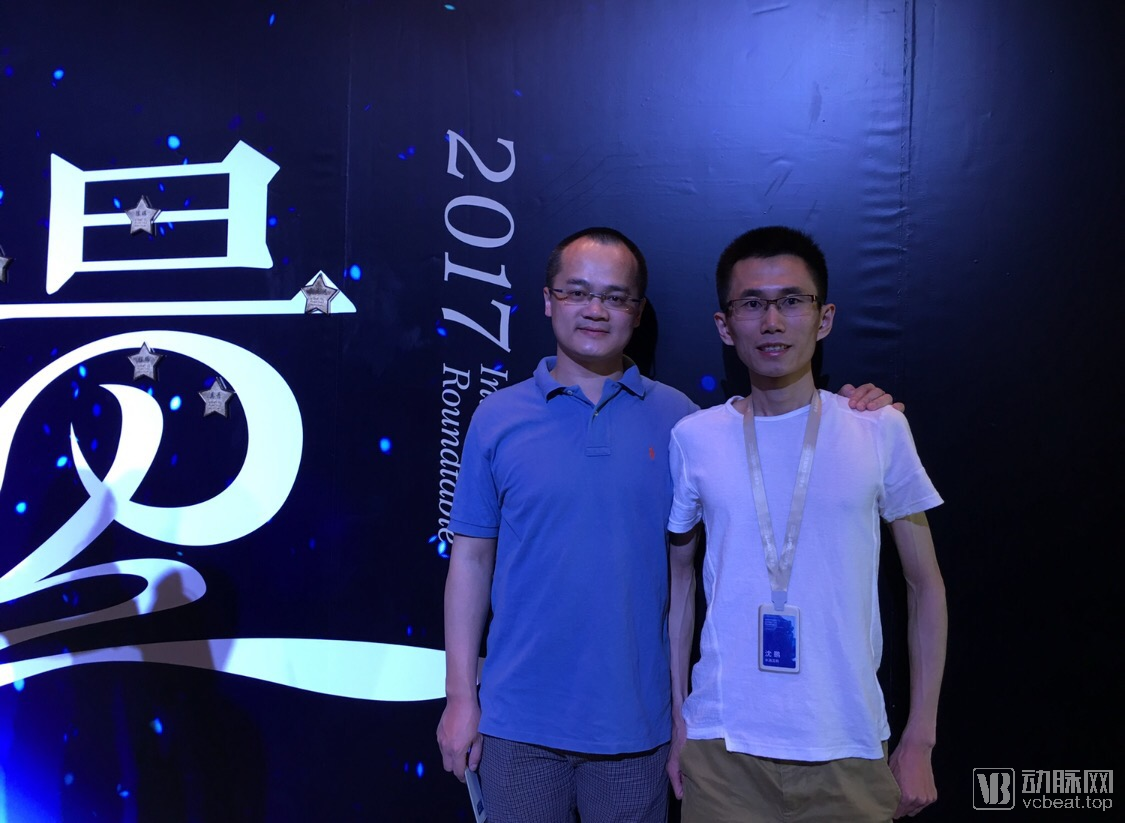
(The photo shows Shen Peng and Wang Xing together)
That year marked the impending end of the portal era, while the mobile internet was in its nascent stage. The atmosphere for internet entrepreneurship in China was highly vibrant at the time. After his experiences with Xiaonei and Fanfou, Wang Xing founded Meituan; Lei Jun decided to resign as Chairman of Kingsoft to establish Xiaomi; and Zhang Xiaolong was leading Tencent’s Guangzhou R&D Center product team in developing WeChat.
In 2016, after the merger of Meituan and Dianping,Shen Peng, who had already undergone several “zero-to-one” journeys and risen to the position of National Head of Meituan Waimai, decided to launch.
On March 19, at 12:16 a.m., an email titled “Farewell to Meituan, Embarking on a New Venture: A Thousand Words of Gratitude” appeared in Meituan’s internal email system, in which Shen Peng announced his departure from Meituan to start his own business.
That year, Shen Peng was 29 years old, and China’s internet landscape was already abuzz with activity. Ride-hailing services, digital healthcare, online insurance, mutual aid platforms, and bike-sharing schemes successively entered the public eye, with one emerging trend after another coming to the fore.
On November 1, 2019, at the venue of the second Shuidichou “111 Small Acts of Kindness Day” Charity Gala, Shuidi Company invited more than ten film and television stars and singers, including Kelly Yu and Hai Lu, as well as nearly one hundred media organizations such as Southern Weekly, The Beijing News, and VCBeat. The nearly three-hour agenda included keynote speeches, charity awards, the launch of charitable initiatives, and charity performances.
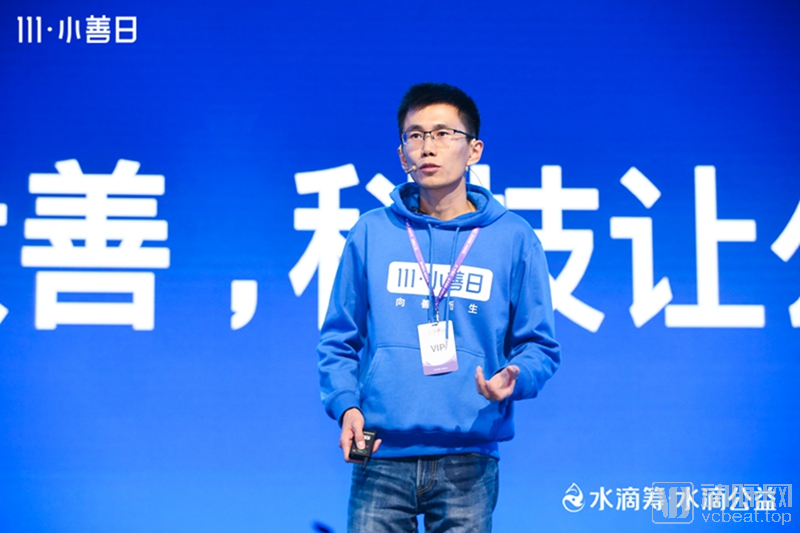
(The photo shows Shen Peng delivering a speech at the 2nd “111” Small Acts of Kindness Day)
As the founder of Shuidi Inc., Shen Peng took the stage to deliver a speech. He wore a blue event T-shirt on his upper body and jeans on his lower body. He had a slight cold that day and coughed briefly three times during his speech. His presentation was ordinary yet sincere, and the well-delivered sentences were“It is not technology itself that truly changes the world; rather, when technology is imbued with human warmth, it can better create social value.”。
As the Rare Disease Band 8772 performed the song “Embrace,” the screen cut back to Shen Peng, who sat with his eyes closed, seemingly immersed in the melody, lost in thought, or reminiscing.
In April 2016, Shen Peng officially resigned and rented an office in Wangjing SOHO. Founding team members such as Yang Guang and Jiang Wei had followed Shen Peng from Meituan. The company’s registered business name is “Beijing Zongqing Xiangqian Science And Technology Co., Ltd.,” a reference to the phrase Wang Xing often used to conclude his public speeches: “Do not dwell on the past; move forward with passion.”
On the second day after resigning from Meituan, Shen Peng received millions of RMB in transfers via WeChat and Alipay, many of which came from his former colleagues at Meituan. Within a week, he was frequently approached by numerous investment firms. Upon learning that Shen Peng had embarked on an entrepreneurial venture, Xu Xiaoping, founder of ZhenFund, immediately invited him to dinner together with Wang Qiang. “Shen Peng said he wasn’t short of money—and indeed, he wasn’t. At the China World Hotel, Wang Qiang and I treated him to drinks, and we managed to secure a portion of the equity,” Xu Xiaoping revealed.
Shen Peng, who has just “graduated” from Meituan-Dianping,Secured RMB 50 million in angel round financing, IDG Capital, Tencent, Meituan-Dianping, Gaorong Capital, Dianliang Fund, and ZhenFund are all on the list of investors.
At that time, the sector Shen Peng targeted was online mutual aid, which was considered the second most promising trend in China after live streaming. Capital flooded into the space, with dozens of companies securing financing ranging from millions to tens of millions of yuan, and more than 200 online mutual aid platforms of various sizes emerged.
Well-known online mutual aid platforms included Bige Mutual Aid, Quark Alliance, and Kang'ai Commune, with Qingsongchou being the industry leader at the time.
However, with Shen Peng and his company Shuidi entering the arena, the landscape of this sector is poised for rapid transformation. Meituan was not the first to launch group-buying services, yet it emerged as the sole survivor of the “Groupon Clone Wars” and rose to become the industry leader. Likewise, Meituan was not the first to offer food delivery services, but it ultimately secured the top position in that market as well.
In the sector of internet-based health insurance coverage, similar stories will unfold again.
Twenty-four days after the Shuidi team was established, its first business line, “Shuidi Mutual Aid,” went live. The team worked six days a week, holding regular meetings at 8 p.m. in the courtyard downstairs at Wangjing SOHO, with company group chat notifications continuing until at least 2 a.m. In terms of customer acquisition, Shuidi Mutual Aid launched extensive advertising campaigns on platforms such as Toutiao, Meituan Waimai, and Tencent’s Guangdiantong, spending RMB 10 million within three months.
On the 100th day since the launch of Shuidi Mutual Aid, its membership surpassed one million. Shen Peng then led his team in taking a brief pause, flying from Beijing to Lijiang, Yunnan, for a team-building retreat at Yulong Snow Mountain.
By the end of 2016, amid the boom in the online mutual aid market, widespread irregularities emerged. In a bid to attract a large number of members, many players crossed regulatory red lines. Some platforms improperly used insurance terminology, comparing and linking mutual aid plans with insurance products, thereby blurring the distinction between the two; others engaged in false advertising under the guise of “insurance innovation” or “Internet + Insurance,” claiming that their mutual aid plans and fund management were subject to government oversight; even more egregiously, some collected insurance premiums in the name of mutual aid plans and illegally established pooled funds.
By the end of that year, regulators took action. The China Insurance Regulatory Commission (CIRC) issued the “Notice on Launching a Special Campaign to Rectify the Illegal Engagement in Insurance Business in the Form of Online Mutual Aid Plans.” The notice categorized online mutual aid organizations into three types: Type I institutions were permitted to continue their exploratory efforts, while Type II and Type III institutions were placed on a negative list and subjected to regulatory interviews, mandatory rectification, and enforced exit.
Amid stringent regulatory scrutiny, exhausted financing capital, lack of clear strategic direction, inability to establish viable business models, and intense competition among peers, fewer than 10 online mutual-aid platforms remained by 2017.
Shuidi Inc. was fortunate and restrained, ultimately surviving under intense regulatory pressure. At a media briefing marking the company’s first anniversary in 2017, Shen Peng proudly announced that Shuidi had obtained an insurance brokerage license, thereby becoming a fully compliant and legitimate player in the insurance industry.
Shen Peng and his Waterdrop Company are so fortunate,After riding the wave of online mutual aid, they have now caught the next wave in health insurance.
From RMB 158.718 billion in 2014 to RMB 544.813 billion in 2018, health insurance has maintained a compound annual growth rate (CAGR) of over 35% in the past five years. Analysts predict that the health insurance market will reach the trillion-yuan level within three years.
In such a large health insurance market, Shuidi Inc. could easily earn many “small goals” even if it only engaged in insurance brokerage business.
May 9, 2019, marked the third anniversary of the founding of Waterdrop Inc. At 2 a.m., Shen Peng lay awake for a long time and wrote an email to all employees.
In the email, Shen Peng reflected on Waterdrop’s three-year entrepreneurial journey and expressed gratitude to many people. At the end of the message, Shen Peng once again used the phrase, “Let go of the past and move forward with passion!”
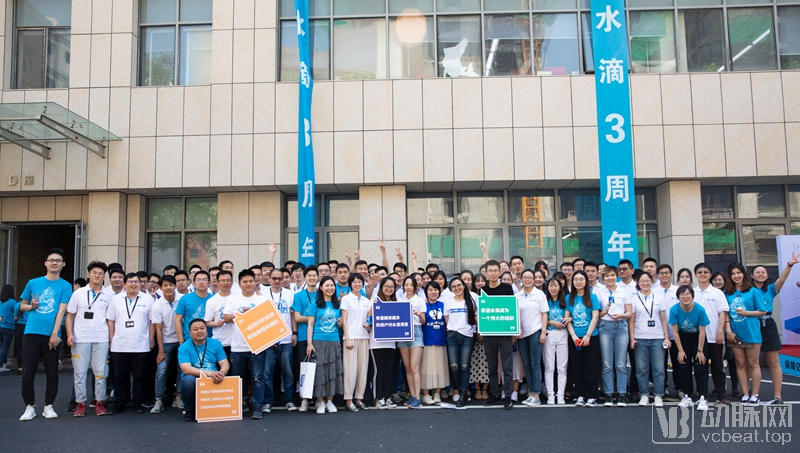
(The photo shows a group picture taken on the third anniversary of Shuidi Inc.)
Over the past three years, Shuidi has experienced remarkably rapid growth. In terms of team expansion, a representative from Shuidi’s Brand and Public Relations Department revealed that when she joined the company last July, it had only 600 to 700 employees; today, Shuidi’s workforce has surpassed 5,000. Regarding financing, the company secured four rounds of funding within three years, totaling more than RMB 1.7 billion. Its backers include over ten well-known venture capital firms, such as IDG Capital, Tencent Investment, Gaorong Capital, and Sinovation Ventures.
At the press conference for the second Shuidichou “111 Small Acts of Kindness Day,” Shuidi Inc. released an updated set of data.
As of the end of September 2019, Shuidichou had raised RMB 23.5 billion in free medical assistance for patients with serious illnesses, with nearly 280 million compassionate individuals participating, resulting in over 750 million donations; the Shuidi Public Welfare Platform had raised nearly RMB 280 million in charitable funds. By the end of October, Shuidi Huzhu had provided mutual aid payments to 7,302 members, totaling more than RMB 1 billion; Shuidi Insurance Mall had covered nearly 20 million users and over 13 million families.
Three years on, Shen Peng has led his company, Waterdrop, from a startup to a unicorn in the internet health insurance sector. When asked by VCBeat to rate his entrepreneurial achievements on a scale of 100, Shen Peng gave himself a score of 60.
Regarding future development, Shen Peng revealed to VCBeat that Waterdrop Inc. aims to become a platform-based company in the health sector. “Our first step is to excel in insurance and fundraising, addressing the issue of financing medical treatment; our second step involves deep collaboration with suppliers in the broader health industry, enabling end-users to access better diagnosis and treatment at lower costs.”
From a business perspective, Shen Peng’s vision represents a major commercial opportunity: the health insurance sector is a potential blue-ocean market worth trillions of yuan, while the broader big-health industry boasts a market size exceeding 5 trillion yuan.
However, viewed from the current industrial landscape of the broader health and wellness sector, Waterdrop Inc. remains far from its envisioned goal of becoming a platform-based enterprise in the big health industry.
“How do you perceive yourself?” VCBeat asked at the end of the interview.
Shen Peng thought for a moment and replied, "A person with great curiosity about the world”。