

Meland Pediatrics: Building a Family-Centered, One-Stop Pediatric Brand Backed by an In-House Pediatrician Group
“Ensuring that children’s health is safeguarded with high-quality, dignified care, and enabling medical professionals to practice with dignity and a sense of value.” This statement embodies the mission of Meilang Pediatrics, as well as the principle it has upheld since its inception.
Meilang Pediatrics was established in Shenzhen in May 2018. As a wholly-owned medical entity of the Meilang Medical Group, it is a one-stop pediatric institution dedicated to providing high-net-worth families with integrated online and offline professional pediatric medical services and child health management solutions. Committed to excellence, Meilang Pediatrics strives to build a premier pediatric care brand.
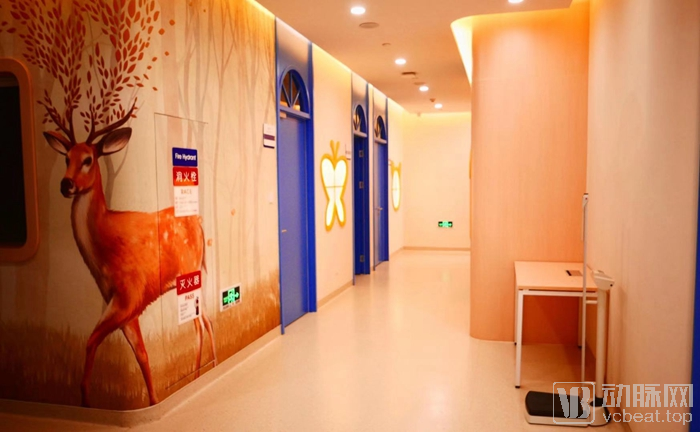
Meilang Pediatric Clinic focuses on serving communities within a 10-kilometer radius, adopting a membership-based service model. Currently, Meilang Pediatric Clinic primarily provides comprehensive pediatric medical services, excluding inpatient care, to target patients aged 0–18 years, with each individual clinic planned to house at least 10 departments. Since the Beijing clinic opened in May of this year, it has already attracted over 1,000 members. It is understood that Meilang Pediatric adheres to infection control principles based on zoned diagnosis and treatment, employs international design standards and top-tier eco-friendly decoration materials, and is committed to creating a playground-style general pediatric clinic.
To gain deeper insight into the distinctive features of Meilang Pediatrics, a reporter from VCBeat (WeChat ID: vcbeat) conducted an exclusive interview with Cheng Hongbo, the founder of Meilang Pediatrics. This article explores how this executive—who holds a doctorate from Johns Hopkins University’s School of Public Health after graduating from Tsinghua University School of Medicine, and has amassed nearly a decade of experience in managing and operating high-end specialized medical groups for women and children—has shaped the brand he built from the ground up.
Proprietary Pediatric Physician Group: Building an Inimitable Core Competency in Talent
At its inception, Meilang Pediatrics was defined by Cheng Hongbo as a one-stop pediatric medical institution, with a primary focus on building a robust general pediatrics department. In addition to basic internal pediatric services, it offers specialized and comprehensive pediatric care, including child health care, pediatric surgery, pediatric ophthalmology, pediatric dentistry, pediatric dermatology, pediatric traditional Chinese medicine (TCM), pediatric otolaryngology, and pediatric ultrasound. To efficiently and promptly address patients’ needs, the clinic has established in-house laboratory, pharmacy, and X-ray departments, providing comprehensive technical support to clinical departments at all times. Furthermore, Meilang Pediatrics provides international-standard, systematic, and integrated one-stop medical services for high-risk infants, such as premature babies and those with low birth weight.
Complementing its multi-departmental and multi-service model is a team of specialized professionals across various pediatric subspecialties. Therefore, guided by the practical characteristics of pediatric healthcare and a commitment to meeting all patient care needs, Meilang Group has prioritized addressing the shortage of specialized medical talent. It established its headquarters in Shenzhen and founded a Pediatric Physicians Group, bringing together high-quality pediatric experts from across China and around the world. This initiative lays a solid foundation of medical talent for its strategy of continuously expanding physical medical institutions nationwide. It is reported that the Beijing clinic has been in operation for six months, while clinics in Shenzhen, Chengdu, and other cities are being actively rolled out.
Refined Membership Management: A Comprehensive Health Management System Centered on the Family
Meilang Pediatrics has adopted a family-based prepaid membership model, establishing a comprehensive Customer Relationship Management (CRM) system. By creating member health records, formulating personalized health promotion plans, and implementing targeted health management programs, the clinic ensures proactive care. When issues are identified, guidance and treatment plans can be rapidly developed and implemented. A holistic health management system covering the entire growth cycle—infancy, toddlerhood, preschool age, school age, peripuberty, and adolescence—is established for each child based on their developmental trajectory. Additionally, Meilang Pediatrics provides members with 24-hour exclusive medical services and green channel access; home nursing and consultation services are also available when necessary.
Notably, Meilang Pediatrics adheres to a family-centered approach to diagnosis and treatment, emphasizing family involvement and encouraging parents to accompany their children during medical visits. In response to current parental concerns about child-rearing, Meilang Pediatrics has launched health education classes that combine online and offline formats. A diverse range of courses is scheduled in advance each month, closely aligned with scientific parenting principles while balancing practicality, engagement, and interactivity. Health education is delivered through various channels, including community groups, local communities, salons, training sessions, and videos.
In addition, the pharmacy at Meilang Pediatrics stocks nearly several hundred pediatric medications. It is understood that all medication prescriptions at Meilang Pediatrics must be based on clinical indications, thereby severing any link between physicians’ income and the prescribing of medications or ordering of tests. This approach eliminates, at the source, irregular and unethical diagnostic and treatment practices that may arise from financial incentives. Cheng Hongbo stated that Meilang Pediatrics is committed to ethical medical practice, ensuring that all services and items are communicated to patients in an open and transparent manner.
Adhere to Service Details, Pursue the Ultimate Patient Experience
For high-net-worth individuals, in addition to clear expectations for medical technology and clinical environments, key priorities also include detailed service experiences during consultations and robust safeguards for safety and privacy.
Regarding medical consultations, Meilang Pediatrics operates on an appointment-only basis. Patients can schedule appointments via WeChat or the 400 hotline, with bookings available up to 1–2 months in advance. Furthermore, for all appointments made more than 24 hours in advance, Meilang Pediatrics’ electronic scheduling system automatically sends reminders and confirmation messages to patients 24 hours prior to their scheduled visit. For patients who book by phone, a dedicated health concierge will conduct a telephone confirmation 24 hours in advance.
In terms of clinical care, Meilang Pediatrics requires each physician to spend 20–30 minutes communicating with the patient’s family. In addition to standard diagnostic and treatment procedures, this time includes science-based parenting education and guidance on disease prevention. For cases with unclear diagnoses, Meilang Pediatrics ensures optimal and safest care by leveraging auxiliary examinations, senior physician consultations, case discussions, and expert committee reviews. Furthermore, customized treatment plans are developed based on individual conditions; follow-up visits are conducted by the attending physician, while a dedicated health manager provides comprehensive ongoing support.
Regarding the details of patient safety, unlike traditional pediatric practices, Meilang Pediatrics has strictly adhered to the safety standards of the JCI International Patient Safety Goals since its inception, implementing triage as soon as children arrive at the front desk. Diseases, healthcare, and specialized clinics are located in separate areas, thereby eliminating the risk of cross-infection through environmental design.
Cheng Hongbo told reporters that although this approach increases costs, such zoning principles not only prevent cross-infection but also align with Meilang Pediatrics’ needs for segmenting disease diagnosis and treatment, healthcare services, and children’s health management. Meanwhile, it helps safeguard the privacy of children and their families during medical visits. Cheng Hongbo stated that Meilang Pediatrics’ management system includes clear prohibitive regulations, such as strictly forbidding staff from calling patients’ names aloud or from a distance, and employs a distinctive method for verifying patient information that is characteristic of Meilang Pediatrics.
Currently, Meilang Pediatrics has preliminarily completed the exploration of a tripartite closed-loop non-public healthcare model, integrating member families for health management of children aged 0–18, pediatric medical talent, and both proprietary and partnered pediatric medical institutions. It has also established the architectural framework for autologous blood transfusion services. Meanwhile, the company has begun implementing a “Healthcare + Internet” model through practical application, featuring seamless online-offline integration and comprehensive membership-based management. It is steadily integrating and optimizing the allocation of medical resources to provide member families with precise and integrated pediatric medical and health management solutions.
An inverted-triangle management model concentrates all resources on frontline staff.
Multidimensional quality control across medical care, nursing, allied health services, hospital infection prevention and control, and patient safety constitutes the foundation for ensuring healthcare service quality. In this process, the medical management model or mindset serves as both the foundational enabler for achieving these objectives and the overarching top-level design.
Traditional management models often adopt a pyramid structure, where top-level decision-makers make decisions, middle management communicates them, and frontline staff execute them. In contrast, Meilang Pediatrics employs an inverted triangle management model. Cheng Hongbo, the top executive, positions himself as someone who serves the group and each terminal clinic. Each group director and clinic manager serves department heads and head nurses; each department head and clinic manager serves supervisors; and each supervisor serves frontline staff, who in turn serve patients. This constitutes the basic framework of the inverted triangle management model.
Thus, when patients are dissatisfied with the service, provide feedback, or express higher expectations for service quality, Meilang Pediatrics’ mechanism design ensures that all frontline staff who first become aware of these requests have adequate channels and methods to report them to management. The mechanism stipulates clear requirements for timeliness and quality, mandating that managers make prompt decisions and resolve issues raised by frontline staff. Furthermore, to enhance the efficiency and effectiveness of decision-making, the clinic has established a daily Administrative Chief-on-Duty role (operating under a full-delegation mechanism, unrestricted by their regular job title, and holding the highest authority on their duty day) to conduct “management by walking around.” This dual-pronged approach ensures that all issues are reported and addressed without overnight delays, thereby achieving information symmetry.
Regarding the reporting of internal risk events, Meilang encourages every employee to report promptly upon identifying operational risks within the clinic. Reporters will be rewarded, turning issues into “gold coins” for continuous improvement. Conversely, individuals who are aware of risks but fail to report them will be subject to corresponding negative incentives.
Admittedly, due to the unique nature of healthcare, most medical institutions are highly reluctant to disclose risk events to all staff members or make them public to patients, leading many to avoid exposing such risks. However, in Cheng Hongbo’s view, disclosing risk events not only serves as an effective early warning mechanism but also helps clinics and hospitals reduce the recurrence of similar issues or adverse events. He cited an example to illustrate this point:
“Meilang Pediatric Clinic verifies the identity of every patient. Initially, Meilang adopted an active questioning approach, asking parents, ‘Excuse me, is your child named XXX?’ However, an incident occurred when a pair of twins visited the clinic. The elder twin was named Li Ziyu (pseudonym), and the younger one was Li Zichen (pseudonym). During the inquiry, the mother was distracted. When the nurse scanned the identification barcode and verbally confirmed the information with the parent, the parent carelessly answered ‘Yes’ without paying close attention. It was only during the specific examination that the doctor discovered the discrepancy while verifying information directly with the child. The process was then restarted from the nursing stage to reconfirm the details, correct the error, and reschedule the consultation with the doctor. Following this incident, all departments involved in the service workflow—including front desk staff, nursing personnel, physicians, and medical technologists—conducted a comprehensive review of the event. They changed the verification method to passive questioning, asking parents, ‘Excuse me, what is your child’s name?’ This simple change in phrasing significantly enhanced the quality and safety of patient information verification.”
Cheng Hongbo stated that the establishment of a risk event management mechanism and the orientation of cultural development are essential components reflecting a medical institution’s management philosophy. Risk event management is also a critical aspect of safeguarding patient safety. To mitigate risks, the Patient Safety and Quality Control Committee of Meilang Medical Group is composed of department heads. The committee convenes at least once a month on a regular basis, with additional ad hoc meetings as needed. It holds priority over other committees within the organization. Its primary focus is to examine the nature and root causes of risks and to explore more effective ways to prevent them through systemic and mechanistic improvements. Each meeting employs scientifically validated, industry-standard, and advanced risk analysis methodologies to drive continuous improvement in risk management. The ultimate objective is to ensure patient safety and to guarantee the professionalism and high quality of clinical care and services.
In terms of clinic standardization, Meilang Medical has established a comprehensive set of standards covering physicians, nurses, customer service representatives, and logistical support staff, supplemented by clear institutional policies and procedural documentation. Service personnel must undergo rigorous, repeated simulation drills after training; they are permitted to serve end clients or perform procedures only after passing assessments and examinations. Furthermore, group policy mandates that the highest-level administrator of each clinic must set aside all other duties to personally participate in every simulation drill.
In terms of future planning, Meilang Pediatrics is committed to establishing 7 to 9 physical pediatric medical institutions, comprising clinics and hospitals, within five years, with each clinic achieving break-even within three years.
Note: All background and in-text images are provided by the company.