

Novartis Zolgensma Data Integrity Incident and Corporate Quality Management Strategy
On May 24, 2019, the U.S. Food and Drug Administration (FDA) approved Novartis’s Zolgensma, a gene therapy drug, for the treatment of spinal muscular atrophy (SMA) in children under two years of age. Dubbed the most expensive drug in history, Zolgensma can cure SMA at its genetic root with a single intravenous infusion; however, its price tag of $2.1 million per dose has sparked intense public controversy. Just over two months later, the FDA issued a warning letter regarding the drug due to data manipulation issues.
On June 28, 2019, AveXis Inc., the manufacturer of Zolgensma (acquired by Novartis in 2018 for $8.7 billion in cash), notified the U.S. Food and Drug Administration (FDA) of a data processing issue that affected the accuracy of certain animal study data included in the Biologics License Application (BLA) submitted for FDA review.
Although AveXis voluntarily notified the FDA, the agency pointed out that AveXis was aware of the data issues prior to product approval but failed to notify them in a timely manner, only informing the FDA after the product had been approved. The FDA stated that Novartis could face civil or criminal penalties, as manufacturers are responsible for submitting complete and accurate information in their marketing applications for FDA evaluation.Deliberately submitting false data as part of a new drug application constitutes a criminal offense.
From July 24 to August 2, 2019, the FDA conducted an inspection of AveXis’s quality control laboratory and issued a Form 483 containing five observations, which are summarized as follows:
Observation 1: Failure to thoroughly review any unexplained discrepancies, regardless of whether the batch has been distributed.
Observation 2: Laboratory records do not include complete data for all tests, inspections, and assays required to ensure compliance with established specifications and standards. For example, the equipment ID number of the balance used to weigh mice (for determining AVXS-101 potency) was not recorded in the logbook, nor was a printout generated; the weights in the logbook are currently recorded manually.
Observation 3: The responsibilities and procedures of the Quality Control Department were not fully complied with. For example, employees responsible for GMP activities report directly to the R&D Manager, which is inconsistent with Version 3 of the “Quality Manual.”
Observation Item 4: Laboratory records did not include complete trial documentation and standardized laboratory reference ranges.
Observation 5: Failure to follow established test procedures. For example, in Section “Date of Mouse Death” of SOP-346 Version 3.0, “In Vivo Functional Testing of Single-Dose AVXS-101 in the SMN7 Mouse Model,” it is defined as “…the date when the animal first experiences a xx% body weight loss…”. In SOP-2682 Version 2.0, “AVXS-101 Potency Assay,” it states that study animals are weighed (at intervals of no less than xx days) until the end of the study…” As the mice were not weighed daily, the exact date on which their body weight decreased by xx% could not be determined.
On August 13, Novartis dismissed AveXis Chief Scientific Officer Brian Kaspar and Senior Vice President of Research and Development Allan Kaspar, holding them accountable for the incident. The company stated that they either manipulated data personally or pressured subordinates to do so. To date, Novartis has terminated five employees in connection with this matter.
On September 24, 2019, Novartis published on its website its response to the FDA Form 483 issued on August 2, reaffirming its firm commitment to data integrity and transparency. Additionally, it provided findings from two phases of internal investigations, detailed explanations of the observations, and corrective and preventive actions taken to address data integrity issues. Novartis CEO Vas Narasimhan voluntarily committed that Novartis’s Quality Department would notify the FDA within five business days of receiving any credible allegations related to data integrity.
Between approximately March 2017 and June 2018, AveXis used a method called in vivo relative potency assay (IVRPA) for clinical product release and stability testing. IVRPA used SMNΔ7 mice to determine the relative potency and stability of different batches of AVXS-101. SMNΔ7 mice have a gene mutation similar to that of SMA, which greatly reduces their expected lifespan compared to mice without the mutation. Untreated SMNΔ7 mice will die from an SMA-like disease around 15 days after birth. The date of death of each mouse was recorded, and these dates were used to assess the average number of survival days for each group of mice, calculate the median survival time, and express the response as a percentage of relative potency based on a pre-selected reference standard. Due to the high variability of the IVRPA method, at the request of the FDA, AveXis developed and validated an in vitro relative potency assay, which, together with an in vitro functional assay, replaced IVRPA for product release and stability testing. Since June 2018, nearly a year before Zolgensma® was approved, IVRPA has not been used for clinical trial product releases and has never been used for commercial product releases.
On March 14, 2019, approximately eight months after the discontinuation of IVRPA, AveXis senior management first became aware of data manipulation issues involving certain mice used in the IVRPA. An AveXis employee reported that two senior executives at AveXis had altered, or instructed others to alter, certain raw data obtained from the IVRPA. These allegations primarily concerned the recorded dates of death for some of the mice used in the IVRPA.
AveXis immediately launched an internal investigation, led by executives from the Human Resources, Quality, and Legal departments, to comprehensively understand and assess the veracity of the allegations and the potential scope of data manipulation. After contacting the whistleblower on March 26, 2019, AveXis determined that the allegations warranted further investigation and notified Novartis on March 28, 2019. As the allegations involved two founders who were still executives at AveXis at the time, the company engaged an external law firm on April 3, 2019, to conduct an initial internal investigation into these allegations, ensuring that key evidence was preserved and effectively collected.
In its response to the FDA, Novartis stated that the investigation was delayed because the implicated executives were unwilling to cooperate and categorically denied the allegations. The investigation team spent more than 2,000 hours reviewing hundreds of handwritten and electronic records. When discrepancies were identified, technical experts needed to assess them to determine whether they had an impact on the results of the IVRPA studies, batch release decisions for the drug, and the clinical data generated using these batches. The first phase of the internal investigation took 39 working days. After the preliminary investigation confirmed the allegations, a team composed of Avexis quality executives, Quality Assurance (QA), Quality Control (QC), and Novartis’s GxP (an umbrella term for Good Management Practices such as GMP, GCP, and GLP) Compliance Department initiated a non-conformance investigation on May 8, 2019, and also engaged an independent third-party cGMP consultant.
On June 28, 2019, AveXis notified the FDA of the allegations and interim investigation findings via its web portal, based on the interim investigation report (NCR-1922) generated on June 27, 2019, and also informed the Lead Clinical Reviewer by telephone. All regional regulatory authorities to which Zolgensma marketing applications had been submitted were also notified, including two authorities where applications were still under review.
Novartis stated that both the in vitro relative potency assay (IVRPA) and the in vivo functional test were validated and included in the Biologics License Application (BLA) for Zolgensma® as assays for assessing release and stability potency. The IVRPA was not included in the BLA as a commercial product release test or stability test. The allegations raised in March 2019 pertained solely to one test that had not been used for clinical product release purposes since June 2018 and was not designated in the BLA as the final commercial product release test or stability test. Furthermore, data discrepancies identified during the investigation were determined not to have affected the initial batch release decisions. Re-evaluation of the underlying data did not change any reported within-specification results to out-of-specification results (i.e., failing results). Subsequent testing of all affected clinical development batches using the validated in vitro relative potency assay consistently demonstrated that each batch met the relative potency specifications. Therefore, Novartis believes that the allegations have no impact on patient safety, product efficacy, or quality.
Novartis acknowledged to the FDA that AveXis’s quality culture was inadequate, citing a lack of GxP experience and insufficient understanding of the importance of data integrity and good documentation practices. Due to the absence of robust controls and oversight, document anomalies went undetected. Furthermore, there were deficiencies in adequate training, real-time data recording capabilities, and escalation strategies for addressing GxP issues. In response, Novartis has established a new data integrity role to oversee the vast amount of information generated by R&D and manufacturing activities, and has engaged an external consultant to assess AveXis’s data integrity controls and practices. AveXis has hired an experienced former Novartis senior executive specializing in compliance, who will implement Novartis’s global Quality Management System (QMS) at AveXis to facilitate its deeper integration into Novartis.
The FDA expressed continued confidence in the market availability of Zolgensma and will not change its positive assessment of Zolgensma’s human clinical trial data at this time. The FDA will continue to evaluate and take seriously concerns regarding the integrity of product testing data used in the manufacturing development process.
Latest News: On October 30, Novartis announced that the FDA had partially placed its intrathecal clinical trial of AVXS-101 for SMA patients on hold. This decision was made because preclinical animal studies revealed mononuclear cell inflammation in the dorsal root ganglia (DRG), sometimes accompanied by degeneration or loss of neuronal cell bodies. However, intravenous administration of AVXS-101 remains unaffected and is still available in the United States.
Novartis stated that the clinical significance of the dorsal root ganglion (DRG) inflammation observed in this preclinical animal study remains unclear, and such findings were not reported in previous AVXS-101 animal studies. A thorough review of existing human safety data has not identified any adverse events related to sensory changes. Novartis will continue to closely monitor patient-related safety events and proceed with the Phase IV clinical study of intravenous AVXS-101.
Zolgensma generated $160 million in sales during its first quarter on the market.
How Should Data Be Recorded Completely and Accurately in Drug Trials?
In December 2018, the U.S. Food and Drug Administration (FDA) under the Department of Health and Human Services issued a guidance document in the form of questions and answers regarding data integrity and compliance with drug current Good Manufacturing Practice (cGMP) regulations.
The FDA expects all data to be reliable and accurate. cGMP regulations and guidelines permit the use of risk-based and flexible strategies to prevent and detect data integrity issues. Companies should implement meaningful and effective strategies to manage their data integrity risks, based on an understanding of processes, as well as knowledge management of technology and business models. Meaningful and effective strategies should be grounded in an awareness of risks to patients, processes, and products, taking into account the design, operation, and oversight of the entire system and its controls. Management involvement and influence are critical to preventing and correcting issues that could lead to data integrity problems. It is management’s responsibility to foster a quality culture in which employees understand that data integrity is a core organizational value, and to encourage them to identify and promptly report data integrity issues. Without managerial support for a quality culture, the quality system may collapse.
Regulatory requirements for data integrity include:
•211.68: Requires that backup data be accurate and complete, preventing alteration, accidental deletion, or loss; the accuracy of computer outputs must be verified.
• 211.100 and 211.160: Require concurrent documentation during execution, with scientific and rational laboratory controls
•211.180: Requirement to retain original records, true copies, or other accurate reproductions of original records
• 211.188, 211.194, and 212.60(g): Require complete information (complete records of all tests, complete data from all tests, and complete records of all data).
• 211.22, 211.192, and 211.194(a): Require review of production records and control records, and review of laboratory records for accuracy, completeness, and compliance with established standards).
• 21 CFR 211.182, 211.186(a), 211.188(b)(11), and 211.194(a)(8): Requirements for documentation of checks, validations, or reviews
•212.110(b): Requires data storage to prevent alteration or loss of original data
When considering how to meet these regulatory requirements, companies should pay attention to the following issues:
• Are controls in place to ensure data integrity?
• Is the activity execution documented?
• Is the activity attributable to a specific individual?
• Are records modifiable only by authorized personnel?
• Is there a data change record?
• Has a review been conducted to assess the accuracy, completeness, and compliance with established standards of the records?
• Is data securely maintained from creation through disposal after the retention period?
The FDA explicitly states in its guidance:
1) Information regarding quality issues (such as potential data falsification), regardless of the purpose, method, or source of acquisition, must be subjected to a thorough investigation of suspected or altered/fabricated records in accordance with the CGMP quality system. This investigation aims to determine the impact of the event on patient safety, product quality, and data integrity; identify the root cause; and ensure that necessary corrective actions are taken (see 21 CFR 211.22(a), 211.125(c), 211.192, 211.198, 211.204, and 212.100). Informal handling outside the CGMP quality system is not permitted.
2) The FDA encourages firms to determine the scope of the problem and its root cause through investigation, conduct a scientifically sound risk assessment of its potential impact (including the impact on data submitted to support FDA filings), and implement management strategies that demonstrate the issue has been effectively resolved, including a global corrective action plan addressing the root cause. This may include engaging third-party consultants and removing personnel responsible for data integrity from positions that could affect the firm’s CGMP-related or drug application data; it may also involve enhancing quality oversight, strengthening computer systems, and establishing mechanisms to prevent recurrence and address data integrity vulnerabilities (e.g., anonymous reporting systems, data governance officers, and guidelines).
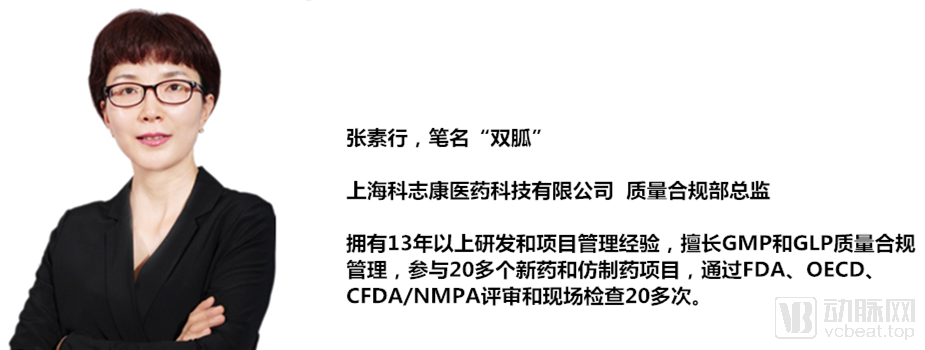
Author Biography
Reference Link
https://www.novartis.com/news/avexis-data-integrity-updates
https://www.fda.gov/news-events/press-announcements/statement-data-accuracy-issues-recently-approved-gene-therapy
https://finance.yahoo.com/news/novartis-announces-avxs-101-intrathecal-060000161.html