

ZhiheTi Unveils Revolutionary Extraoral Surgical Guide 'ImplantRuler' for Precision Dental Implantation
Digital Dental ImplantationDigital dental implantation refers to the application of digital technologies throughout the processes of preoperative diagnostic design, intraoperative implant placement, and postoperative prosthetic restoration. While traditional dental implantation relies heavily on the clinician’s experience, digital implantation techniques—which offer advantages such as minimal invasiveness and enhanced patient comfort—have emerged as a new developmental trend.
For the implementation phase of dental implant surgery, Shenzhen Zhiheti Technology Co., Ltd. (hereinafter referred to as “Zhiheti”) has pioneered a novel digital extraoral guide template for dental implants.It is currently the only guide that enables extraoral guidance, achieving a breakthrough in extraoral operation. It resolves issues such as the complexity of 3D guide toolkits and impaired cooling during surgery, allowing for precise control of implant positioning, enhancing patient comfort, ensuring drilling accuracy, and reducing surgical time., and is expected to become the mainstream direction for the future development of digital dental implant technology.
A Strategic Entry Point into the Field of Digital Dental Implants
Wu Shengfu, the founder of Zhiheti, has many years of extensive experience in the field of medical digitalization. Prior to establishing Zhiheti, Wu Shengfu had already founded another company in 2006—Shenzhen Heti Medical System Co., Ltd. (hereinafter referred to as “Heti Medical”).
Heti Medical focuses on the research and development of digital forming machine systems for titanium mesh used in cranial repair. The cranial repair market is relatively small, representing an excellent niche market. After more than a decade of development, Heti Medical has grown into a benchmark enterprise in the field of digital cranial repair.For over a decade, it has maintained a leading market share, cumulatively assisting physicians in performing cranioplasty on hundreds of thousands of patients.
After the establishment of Heti Medical, a European dental implant company planning to enter the Chinese market engaged Heti Medical to develop supporting digital dentistry technologies.
“Digital technologies used for cranial repair, particularly those related to spatial control and form control, can be applied in many medical fields,” said Wu Shengfu. Hete Medical soon completed the development of the relevant technologies; unfortunately, after the supporting technologies were developed, the product was not promoted in the market.
Although the technology failed to gain market traction, this opportunity allowed Wu Shengfu to engage with digital technologies in dental implantology.
Digital dental implant technology refers to the use of CBCT and digital implant software for diagnosis and design during the preoperative phase, the utilization of digital surgical guides to achieve precise control throughout the intraoperative procedure, and the application of digital impressions, CAD/CAM, and 3D printing to facilitate postoperative dental restoration.
Wu Shengfu stated, “Currently, digital technologies for preoperative diagnostic planning and postoperative dental restoration are highly mature; however, digitally designed 3D-printed surgical guides used in the intraoperative phase still present numerous challenges.”
3D-printed surgical guides are used for osteotomy preparation and implant placement in dental implantology.Due to the addition of sleeves to 3D-printed guides, issues such as axial errors and limited spatial access arise, preventing physicians from visualizing internal wound conditions.“Suboptimal efficacy, low reliability, and inability to meet surgical requirements.” Wu Shengfu summarized the limitations of 3D-printed surgical guides.
Through extensive and in-depth research and nearly a decade of technological accumulation, Wu Shengfu developed a novel digital extraoral surgical guide for dental implants—ZhiZhongGui. To further advance the development and promotion of ZhiZhongGui, Wu Shengfu founded ZhiHeTi in 2017.
Pioneering Extraoral Surgical Guide: Addressing Multiple Pain Points of 3D-Printed Guides
The most significant breakthrough of the surgical guide lies in transferring most components to the extraoral environment, enabling extraoral surgical operations. This approach avoids issues such as limited intraoral space, complex spatial relationships, complicated guide toolkits, and impaired cooling during surgery. Therefore, this type of surgical guide is also referred to as an extraoral guide.
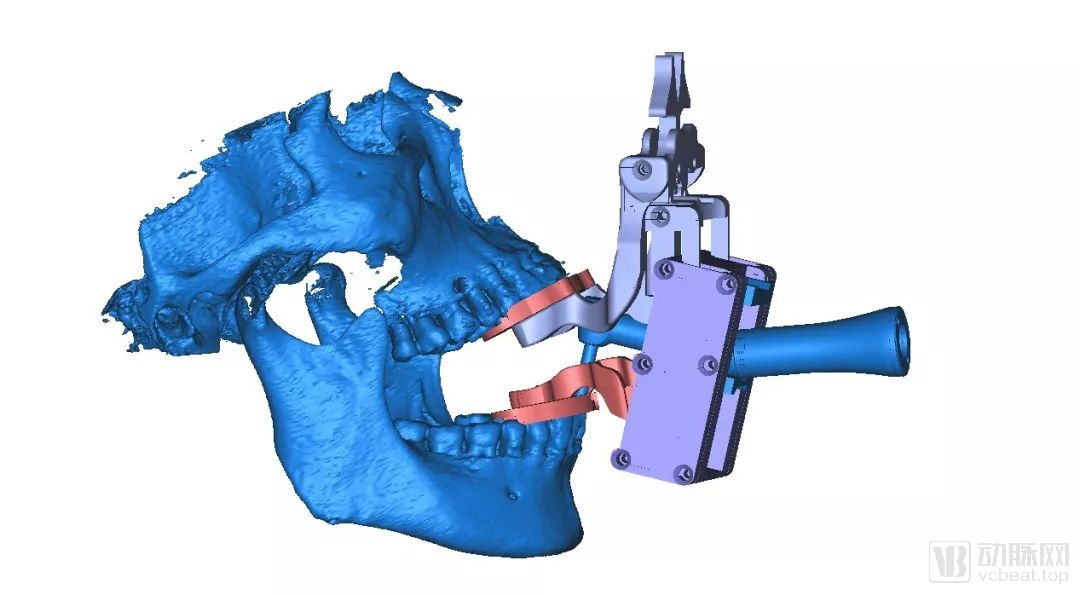
Implantation GuidelinesFixation Device(Upper and lower occlusal splint) andExtraoral Guidance DeviceComposed of two parts. The fixation device conforms to the contour grooves of the teeth, ensuring precise tooth stabilization. The locking mechanism can be directly secured, remaining immobile during surgery to stably maintain the spatial relationship between the oral cavity and the implant. The extraoral guide device addresses the limitations of intraoral space by enabling extraoral operation, allowing for precise control of handpiece movement and ensuring accurate osteotomy preparation. Additionally, the extraoral guide device features a vertical lifting structure to facilitate insertion into and removal from the oral cavity.
Comparison of Advantages: Surgical Guides vs. 3D-Printed Guides
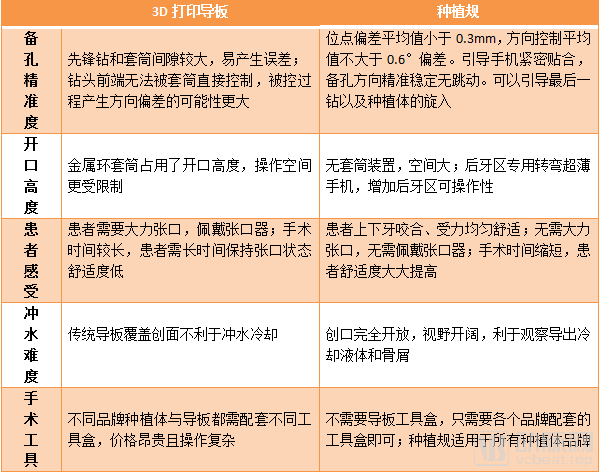
Data provided by the enterprise; graphic by VCBeat
The “Gui” system comprises five elements: protocols, algorithms (regularities), specifications (digital positioning devices), procedures (professional software for digital implant design systems), and standards (digital implant training programs). Meanwhile, Zhiheti has independently developed supporting tools compatible with the “Gui” system, such as Gui articulators, Gui robots, Gui sterile chambers, Gui osteotomes, and Gui zygomatic guides.
Focused on Physician Training, Academic Collaboration, and Clinical Promotion & Application
According to Wu Shengfu,The implantation protocol has secured independent intellectual property rights and holds more than 10 patents domestically and internationally.By the end of 2018, Zhongzhi Gui successfully obtained its registration certificate and manufacturing license, and physicians at multiple hospitals have already utilized Zhongzhi Gui for dental implant surgeries. Clinical promotion and application will be the company’s key focus moving forward.
For a long time, severe pain has deterred many patients with missing teeth from undergoing dental implant surgery. With the use of surgical guides, even patients who fear pain report no discomfort or pain during the procedure, with only mild postoperative pain.
Compared with the vast dental implant market, China’s oral healthcare industry has a severe shortage of qualified implant dentists, with only 11% of dentists certified to perform dental implants. In the past, the success of dental implant surgery relied heavily on physicians’ experience, as noted by multiple doctors,The implantation procedure is simple to operate and yields excellent surgical outcomes, making it highly suitable for novice physicians.Zhiheti will persist in organizing large-scale physician training programs nationwide to help doctors quickly adopt surgical guides for precise implant placement.
Wu Shengfu also stated that the implant company will actively engage in academic collaborations with universities and hospitals to further research and validate the advanced nature and advantages of its implant protocols.
Currently, digital dental implantation has gradually replaced manual implantation, becoming a new development trend. Wu Shengfu firmly believes thatExtraoral guides are bound to be the major direction for the future development of digital dental implantology.As the first company to develop extraoral surgical guides for dental implants, Zhiheti is emerging as a pioneer and leader in this field.