

Baili Technology Submits IPO Prospectus: AI-Powered Breast Imaging System Deployed in Xi'an for Mass Two-Cancer Screening
The early cancer screening market has attracted numerous players, particularly as the rise of AI, 5G, and other technologies in recent years has spurred a growing number of innovative enterprises to seek a share of this lucrative sector. In this highly competitive arena, who will emerge as the dark horse? Who will gain a first-mover advantage by launching breast cancer early screening products to capture the market? VCBeat recently conducted an exclusive interview with Zhou Ming, an entrepreneur focused on the field of early breast cancer screening. His company, Xi’an Baili Information Technology Co., Ltd. (hereinafter referred to as “Baili Tech”), obtained a Class II medical device registration certificate from the National Medical Products Administration (NMPA) as early as 2017 and undertook Xi’an’s “two-cancer” screening program in 2018.
“Excellent technology does not guarantee profitability.” This is how Zhou Ming, who has successfully navigated product R&D, regulatory registration, market launch, and achieved profitability, evaluates China’s early breast cancer screening market. “Medical products in China have long been suppressed by imported alternatives. Traditionally, there seems to be a perception that imported products can command premium prices, while domestically produced ones struggle to do so. I believe Chinese manufacturers should have confidence. China boasts a sufficiently large market and unique advantages. Although we cannot achieve rapid growth in a short period like the internet sector, we need long-term accumulation and continuous exploration to succeed.”
Baili Tech Founder Zhou Ming (Image provided by the company)
According to the latest national breast cancer statistics from the National Cancer Center, China accounts for 11.2% of global breast cancer incidence and 9.2% of global breast cancer mortality, ranking among the highest worldwide. There are approximately 300,000 new breast cancer cases in China each year, and it is projected that the number of breast cancer patients in China will reach 2.5 million by 2021.
Does the sheer size of the patient population raise concerns about your breast health? In fact, there is no need for undue worry, as breast cancer has an exceptionally long screening window—up to ten years. By ensuring annual early screening for breast cancer, women can largely safeguard themselves against the disease.
Rather than seeking treatments after falling ill, it is better to implement preventive measures before the disease develops. Early-stage breast cancer, particularly stage 0 (carcinoma in situ), can be radically cured through surgery while preserving the breast; this approach is cost-effective and achieves a five-year survival rate of over 90%. For mid-stage breast cancer, standardized treatment yields a cure rate of approximately 50%. In late-stage breast cancer, the condition is more severe with extensive metastasis, making cure difficult; treatment aims primarily to prolong survival.
When it comes to early breast cancer screening, if the 400 million women of eligible age in China were to visit hospitals annually for such screenings, relying solely on the limited capacity of physicians for manual operations would fall far short of meeting this immense healthcare demand. Furthermore, with various local governments successively launching initiatives for the prevention and control of “two cancers” (breast and cervical cancer), population-based early breast cancer screening has been elevated to an unprecedented level. How can we achieve large-scale and efficient population-wide breast cancer screening under conditions of limited medical resources? The answer inevitably involves the integration of artificial intelligence.
Provides a full-service chain for breast cancer screening, with a detection rate exceeding 90%, already implemented in Xi'an.
“Breast cancer is the only tumor that can be cured through early screening.” Zhou Ming, founder of Baili Technology, personally experienced the Pink Ribbon movement for breast cancer awareness while studying in the United States. He observed how the U.S. managed to reduce its high breast cancer incidence rate—where one in eight women will develop breast cancer in their lifetime—through year-on-year declines via early screening. “After early screening and intervention, the incidence of breast cancer in the U.S. has been decreasing at an annual rate of 3% over the past decade, turning it into a curable chronic disease. In contrast, China’s annual breast cancer incidence is rising by nearly 3%, which is deeply concerning.”
Prior to 2011, Zhou Ming earned a Master of Science in Engineering and a Master of Business Administration in Cincinnati and New York, respectively. He subsequently worked for over a decade at international IT giants such as Computer Associates (CA) and IBM, becoming one of the first Microsoft Certified Systems Engineers (MCSE) certified by Microsoft in China. After 2011, Zhou returned to China and co-founded Baili Technology with an alumnus from the Department of Electronic Engineering at Tsinghua University. The two collaborated closely, with one focusing on algorithms and models, and the other overseeing product engineering and commercialization.
The medical industry is a field that rewards long-term accumulation and gradual breakthroughs. For the first two years, Baili Technology focused exclusively on product research and development. Over the subsequent two to three years, the company pursued certifications from national authoritative bodies. Throughout this period, it collaborated with more than ten leading hospitals across China—including Shaanxi Provincial Cancer Hospital, Xijing Hospital, the Affiliated Hospital of Xi’an Jiaotong University, Beijing Cancer Hospital, the Chinese PLA General Hospital, Jiangsu Province People’s Hospital, and Wuhan Central Hospital—to continuously refine its products and conduct clinical validations.
Baili Technology pioneered the concept of a cloud-based platform for breast health assessment. This platform enables real-time analysis of uploaded breast imaging data to detect and evaluate suspicious lesions. Beyond the cloud platform, Baili Technology has developed a comprehensive suite of products and technologies for breast cancer screening. The company initially focused on establishing a systematic breast screening framework, leveraging advanced high-tech solutions for rapid analysis and diagnosis. It then disseminates these diagnostic insights to grassroots patients through collaborative medical institutions such as hospitals, thereby creating a fully integrated care pathway.
Currently, Baili Tech has streamlined all processes outlined in its initial concept, launched its products, and is collaborating with 40 to 50 hospitals. The company plans to further expand its partnerships with healthcare institutions.
“We have adopted a strategy of building an entire service chain for breast cancer screening,” said Zhou Ming. Baili Technology has established its own physician group, which primarily consists of senior physicians at the associate chief physician level or above. This physician group can collaborate directly with hospitals, while the company promotes its flagship product, the “Intelligent Detection System for Breast Medical Imaging,” to help local populations undergo breast cancer screening, thereby creating a closed-loop ecosystem. Within this closed loop, Baili Technology acts as the medical device manufacturer, and the physician group serves as the service provider, linking together the full breast cancer screening service chain. Screening results are transmitted to hospitals for further diagnosis and treatment.
A breast specialist with five years of training can achieve a detection rate of approximately 80% for breast cancer. Even industry experts have a missed diagnosis rate of at least 10%. One of the underlying reasons is that humans, unlike machines, cannot maintain constant focus in their work. In contrast, the intelligent breast medical imaging detection system developed by Baili Technology using artificial intelligence has achieved a detection rate exceeding 90%, a figure expected to improve further with subsequent product iterations.
“I hope our products can reach as close to the grassroots level and ordinary people as possible.” Zhou Ming described the application scenarios for the intelligent breast medical imaging detection system, “We have already extended our services to township health centers and village doctors, providing breast cancer screening to the public through home visits. Therefore, I believe that future breast cancer screening will become increasingly convenient.”
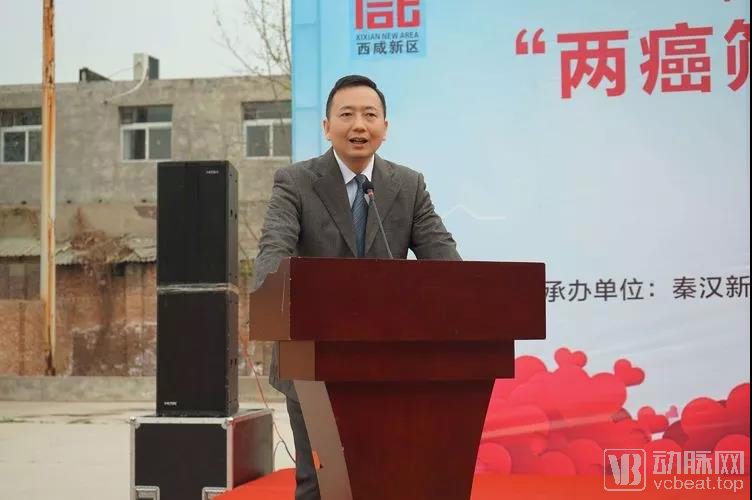
In 2018, Baili Tech undertook the "Two Cancers" screening initiative in Xi’an, aiming to conduct breast cancer screenings for approximately 2 million eligible women across the city over the following three years. This project was carried out in collaboration with Shaanxi Provincial Cancer Hospital and the Second Affiliated Hospital of Shaanxi University of Chinese Medicine. Baili Tech provided an intelligent detection system for breast medical imaging, while the hospitals supplied physician resources; together, they conducted community-based population breast cancer screenings at the grassroots level.
To date, Zhou Ming has disclosed that his team has completed breast cancer screenings for 40,000 to 50,000 eligible women. He expressed great satisfaction that, while braving heavy snow in Nanwei Town, a suburban area, the AI system flagged a real-time finding as “red alert” during an examination of one participant. Subsequent biopsy confirmed the diagnosis of ductal carcinoma in situ (DCIS). The patient promptly underwent modified radical mastectomy and experienced an uneventful postoperative recovery. This screening effort successfully prevented the progression of early-stage, asymptomatic cancer to a more advanced stage.
At the end of 2018, Xi'an Baili Information Technology Co., Ltd. (Baili Tech) was awarded the First Prize by the Shaanxi Provincial Anti-Cancer Association in recognition of its contributions to advancing breast cancer screening through artificial intelligence in Shaanxi Province. Previously, the company had secured first place in the corporate category of the Chuangqi Future Global Youth Technology Competition, emerging victorious after multiple rounds of intense competition against nearly a thousand enterprises from various countries.
Looking ahead, Zhou Ming stated that Baili Tech would replicate its success in Xi’an and other regions by first expanding into surrounding cities before further extending its reach across China. It is reported that Baili Tech has completed a RMB 20 million Series A financing round and has launched a new fundraising plan aiming to raise approximately RMB 30 million. The proceeds will be primarily used to replicate and expand its market presence nationwide next year.
Currently, Xi'an Baili Information Technology Co., Ltd. is seeking a new round of financing. Interested parties please contact VCBeat’s financing assistant, Xiao Yun: DongMai_Investent