

FTC2019 | Zheng Jun of China Medical Education Association: A Methodology for Rapid Establishment of Cardiothoracic Surgery Departments
On November 9–10, 2019, hosted by the Cardiac Surgery Professional Committee of the China Medical Education Association and the Cardiovascular Surgery Technology and Engineering Branch of the China Medical Biotechnology Association, co-organized by Da Yisheng Bingqi Pu, and undertaken by VCBeatFTC2019: The 1st China Frontier Technology Forum in Cardiac SurgeryHeld in Beijing.
At the meeting,Zheng Jun, Professor at the Heart and Great Vessels Center of Beijing Anzhen Hospital, Vice Chairman and Secretary-General of the Cardiac Surgery Professional Committee of the Chinese Medical Education Association, on “Methodology for Rapidly Establishing a Cardiac Surgery Department”Delivered a speech. This article compiles the highlights.
Below is the transcript of the speech (abridged):
How to Establish a Cardiac Surgery Department or Cultivate Talent?It is the responsibility of our educational association and also the primary objective of our research.
Following the establishment of the association, the first initiative undertaken was focused on the development of cardiac surgery.There are several critical requirements for establishing a hospital’s cardiac surgery department: First, the cardiology department requires support from the cardiac surgery team. Second, anesthesiologists skilled in cardiac anesthesia are essential to ensure the safe perioperative management of critically ill patients. Third, developing a cardiac surgery program will enhance the technical capabilities of the intensive care unit (ICU) and improve the hospital’s overall capacity for critical care. Fourth, cardiac surgery constitutes a subspecialty cluster that encompasses anesthesia, cardiopulmonary bypass, diagnostics, critical care monitoring, emergency services, and more.
The Number of Cardiac Surgery Cases Has Declined Year by Year: Why?
Cardiac surgery departments are often the last to be established in a hospital. When a hospital intends to build a cardiac surgery department, it typically begins by recruiting a leader in the field. For example, many job postings issued by hospitals express a desire to recruit academicians or recipients of the Changjiang Scholars Program. This indicates that the hospital has not clearly defined its actual needs and specific development goals, making such recruitment advertisements unlikely to attract suitable candidates.
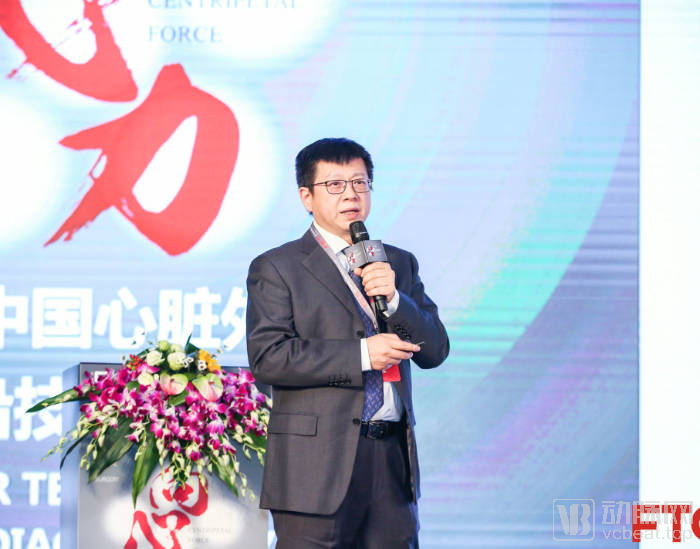
(Figure caption:Zheng Jun, Deputy Director and Secretary-General of the Cardiac Surgery Professional Committee of the Chinese Medical Education Association, and Professor at the Heart and Great Vessels Center, Beijing Anzhen Hospital
Based on our prior experience in cardiac surgery training, early-stage learning relied primarily on self-directed observation and opportunities for hands-on practice provided by supervising physicians. For instance, surgeons specializing in aortic procedures require over a decade of cultivation; the transition from imitation to comprehensive mastery, ultimately becoming a mature cardiac surgeon, typically entails a ten-year training cycle.
This largely depends on one’s insight. In the past, there were no standard models, nor was there standardization or systematization; your path to success was not necessarily applicable to others. As a result, such training produced predominantly technical cadres, with no one providing guidance on what the development of a cardiac surgery department should look like.
WeThe project title of the association is "System Engineering for Cardiac Surgery Planning and Construction". When we initiated this project, Director Sun Lizhong raised several requirements for us, as follows:Several Keywords。
First, high efficiency.We cannot wait ten years; that is an excessively long development cycle for a hospital. It is possible that by the time the initiative supported by one president is handed over to the next, the former president will have already retired before the project is even completed.
Second, there must be a standardized model,Capable of rapid and efficient replication.
Third, strict compliance is essential.Assisting universities in establishing cardiac surgery programs must not involve illegal methods or illicit channels; all measures must be compliant and conducted with full transparency.
Finally, integrate resources from all parties.To secure resources from various parties, it is essential to garner support from multiple stakeholders.
Cardiac Surgery Department Development: We Have a Systematic Approach
1. First, establish the disciplinary positioning.It is essential to clearly define one’s current conditions and target objectives. Only after establishing and confirming these factors can one determine the length of the development path and identify the specific actions required.
2. How the patient presents.Build strong brand influence; without it, patients will not come. The general public typically does not pay attention to which hospitals specialize in treating heart disease. Brand influence is primarily concentrated within the medical community.
3. Adopt a systematic approach.For instance, achieving the target within three years, determining how to achieve it, cultivating talent, planning hardware infrastructure, and establishing referral processes for patients across different specialties—this is a systematic engineering project. To achieve this goal within three years, we need to carefully consider the specific actions required.
4. Most importantly, talent development.This is the most challenging aspect of the discipline, as it requires gradual cultivation; one cannot master a technique today and become an expert in cardiac surgery by tomorrow, which makes it particularly difficult.
Let us first discuss how to plan for the assessment of disciplinary capabilities and the positioning of disciplinary development, which requires a detailed analysis. How should this analysis be conducted? Here, we need to employ the triangular analysis model.
1. The hospital itself.For instance, what talent do you have? Do you have cardiac surgeons? If not, are there potential candidates for training in areas such as ICU, anesthesiology, extracorporeal circulation, ultrasound, and imaging? All these factors must be carefully considered.
2. How do patients arrive?If the discipline has been well established but patients do not trust you, significant effort is required to build patient trust.
3. Competitive Landscape.It is essential to thoroughly assess the region’s medical resources and diagnostic and treatment capabilities.
Following the analysis, several implementation strategies have been identified, as outlined below:
1. Pathway,How to implement it requires a detailed breakdown of the steps, specifying who is responsible for each task and what metrics and outcomes are to be achieved.
2. Channels,It refers to the conditions you possess or create to facilitate patient transfer or hospital visits.
3. Promotion,Who is the target of your influence outreach? We would prefer patients to seek medical care directly from us, but this is often unrealistic; our patient referrals primarily come from healthcare professionals. Therefore, when negotiating with partner hospitals, our top priority for advertising is ensuring that it effectively reaches physicians.
Another particularly important matter is that we must first reach a consensus with the hospital’s leadership team and secure the support of the hospital director and other senior leaders."Cardiac surgery requires many years of support and assistance; it is impossible to achieve a high level of proficiency right from the start."
This is akin to starting a business, requiring the psychological readiness for three to five years of sustained hard work, as well as preparatory support for five to eight years.Another consensus in preparation is that we must foster a spirit of mutual assistance and support among all cardiology-related departments. Furthermore, a unified mechanism should be established to facilitate collaboration during patient transfers between hospitals and across different disciplines.
Talent development is the most time-consuming and lengthy challenge. As is well known, cultivating talent is a slow process, with a training cycle of over ten years for each individual. Training in cardiac surgery is particularly difficult, especially for those with no prior foundation. Therefore, new approaches to training and education are essential."The first thing to train is to cultivate the clinical thinking of surgeons."Clinical reasoning emphasizes the relationship between enriching knowledge points and establishing thinking patterns, highlights the connection between information collection and clinical decision-making, and underscores the principles of timely feedback and discussion mechanisms.
Secondly, emphasize surgical thinking.The causal relationships inherent in surgical procedures are of paramount importance. While junior physicians may be unaware of these nuances, experienced surgeons fully understand the specific risks associated with suturing at particular anatomical sites and the appropriate operative techniques required under varying conditions. Furthermore, it is essential to anticipate the outcomes associated with different surgical approaches and to design personalized surgical plans tailored to individual patients.
It incorporates several methodologies, such as the surgical step decomposition and intensive practice method, the Feynman technique, and deliberate practice based on surgical cases.Furthermore, routine training should be conducted focusing on preoperative case planning, intraoperative Q&A, and postoperative review.
How effective has the project implementation been? Over the past year, we have assisted numerous hospitals, including provincial-level, municipal-level, public, and private institutions. Some hospitals with no prior foundation were able to establish a fully functional cardiac surgery platform in just eight months—demonstrating remarkable speed.
Our systematic approach enables specialty physicians to accelerate their professional development, training them within one year to analyze cases with the proficiency of seasoned practitioners and within three years to achieve expert-level analytical capabilities. Experts play two key roles in this framework: providing strategic direction and serving as role models. In particular, during surgical procedures, they must maintain situational control by monitoring vital parameters such as blood pressure, urine output, and body temperature, while actively questioning attending physicians on-site. By raising case-specific inquiries, experts stimulate critical thinking among junior clinicians.
Adhering to high-standard operational procedures represents the most valuable learning opportunity. This is critically important, not only in performing surgeries but also in explaining the rationale behind each step, thereby guiding others to think critically. By establishing this systematic approach, experts serve as instructional mentors. I also hope that specialists in our field will actively participate in our project, working together to advance our profession.