

Bluepha Secures RMB 40 Million Series A Funding to Advance Industrialization of Synthetic Biology Technologies
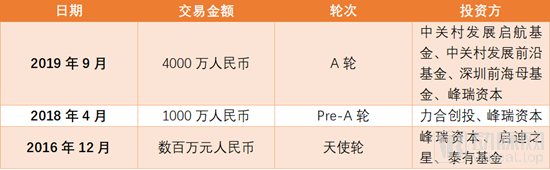
VCBeat has learned that Bluepha, a startup focused on applying synthetic biology technologies to molecular and material innovation, has recently completed its RMB 40 million Series A financing round. Investors include Zhongguancun Development Qihang Fund, Zhongguancun Development Frontier Fund, and Shenzhen Qianhai Fund of Funds, with existing shareholder FreeS Fund continuing to participate. Tan Zhen Capital served as the exclusive financial advisor. The funds raised in this round will be primarily used for the industrialization of existing product pipelines, advancing collaborative R&D pipelines with multiple Fortune 500 corporate clients, and further developing its genetic component technology platform.
On October 28, 2019, Bluepha signed a strategic cooperation agreement with Sinochem International (600500.SH), a chemical giant under China’s central state-owned enterprises, at Tsinghua University. The two parties will join hands to promote the industrialization of Bluepha’s existing product pipeline—bio-based biodegradable material PHA.
To date, Bluepha Microbiology, founded in 2016, has completed multiple rounds of financing totaling tens of millions of yuan. The company possesses a unique genetic component technology platform exclusive to the domestic and international industrial sectors. This platform addresses molecular and material innovation needs in the medical, environmental protection, and consumer goods fields, with the potential to reach a global market valued at hundreds of billions of dollars.
Bluepha is a startup founded by alumni of Tsinghua University and Peking University. Its two co-founders, Dr. Li Teng and Dr. Zhang Haoqian, were among the first young scholars in China to engage in synthetic biology research and have won multiple awards at the International Genetically Engineered Machine Competition (iGEM), the premier international competition in the field. Bluepha’s advisory team comprises world-leading experts in R&D and business development within industrial microbiology, including Professor Chen Guoqiang from Tsinghua University, who has over 20 years of technical expertise in synthetic biomaterials.
Dr. Zhang Haoqian, Co-founder and CEO of Bluepha, stated, “Bluepha’s ability to consistently deliver results that exceed expectations is inseparable from the unwavering support of hard-tech investors, represented by FreeS Fund, since the company’s inception. The new investors introduced in this financing round, Zhongguancun Development Group and Shenzhen Qianhai Fund of Funds, not only endorse Bluepha’s development vision but also share highly aligned values and industrial resources with us. This multi-dimensional synergy will empower Bluepha, enabling us to maintain our outstanding R&D capabilities while making sound commercial decisions and seizing optimal industry opportunities.”
Dr. Li Teng, Co-founder and President of Bluepha, told VCBeat, “We are delighted to have earned the recognition and support of both new and existing investors. Over the past three years, Bluepha has navigated a challenging yet exhilarating entrepreneurial journey. The proceeds from this financing round will be used to further bolster the development of our synthetic biology technology platform and data platform, advance our product R&D pipeline, and accelerate industrial commercialization. To date, we have gained an increasingly clear view of the immense potential unleashed by combining the scalability of synthetic biology with China’s rich and unique application scenarios. This is an endeavor worthy of our lifelong dedication in this era.”
Wang Chunping, Founding Partner of Qihang Investment, pointed out: “Synthetic biology is one of the frontier technologies targeted for key breakthroughs under China’s 13th Five-Year Plan Special Project for Biotechnology Innovation. By applying engineering principles such as modularity, standardization, and decoupling, it enables the rational design of metabolic and regulatory networks in living organisms, thereby driving industrial upgrading in fields such as advanced materials, biopharmaceuticals, and agriculture. Qihang Investment values the Bluepha team’s global academic perspective, profound technological expertise, and pioneering efforts in industrialization. We look forward to continuously empowering the company’s growth and helping it become an internationally leading industry player.”
Liu Yaohui, Founding Partner of the Zhongguancun Development Frontier Fund, stated: “The Frontier Fund remains bullish on data-driven frontier technological innovation and industrial upgrading, committed to leveraging capital and an industrialization mindset to drive innovative development in biotechnology. Bluepha is dedicated to building a synthetic biology platform that integrates BT (Biotechnology) and IT (Information Technology), with multiple products targeting multi-billion-dollar markets having achieved significant breakthroughs. We look forward to witnessing together the industry transformation brought about by commercialization.”
Lei Yaofeng, Managing Director of Shenzhen Qianhai Fund of Funds, stated: “Synthetic biology is a truly disruptive technology. Grounded in robust scientific principles, it represents an integrated, multidisciplinary, and cross-field innovation. With the continuous decline in sequencing costs, ongoing advancements in gene-editing technologies, and the rapid development of big data and artificial intelligence, the prospects for synthetic biology are becoming increasingly clear, and its industrialization is poised for an explosive growth phase. Bluepha possesses a unique synthetic biology technology platform in China, ranking among the top tier globally. Its team is young, dynamic, steady, and pragmatic. Over the past three years, Bluepha has established international-level technological barriers and achieved preliminary commercialization of multiple products, making it one of the Chinese enterprises with the greatest commercial potential in the field of biosynthesis.”
Li Feng, Founding Partner of FreeS Fund, stated, “Since the angel round, FreeS Fund has continuously participated in every financing round of Bluepha. This is primarily because we are optimistic about the broader trajectory of synthetic biology and the potential for computation-enabled biological synthesis of novel molecules (materials) to unlock significant commercial opportunities in China during its period of structural transformation. Bluepha’s founding team is young, driven, and technically strong; as the team has grown, we have observed remarkable development in the founders’ capabilities. Over the past three years, Bluepha has continually strengthened its platform technology. The collaboration with Sinochem on PHA production marks a critical step in practical application. In the future, Bluepha will partner with more industry leaders to deploy additional applications and products, paving the way for successful commercialization.”
Dr. Zhang Haoqian told VCBeat that the development of engineered microorganisms can be broadly divided into three steps: design, build, and test. First, genetic elements are designed on computers based on biological big data and past experience; then, the assembly of these genetic elements at the DNA level is completed in a molecular biology laboratory and inserted into microbial cells; finally, analytical instruments are used to test whether the synthesized microorganisms possess the expected functions.
Among these, the design and assembly of genetic elements constitute the most critical step in synthetic microbiology. This is because biological gene sequences are categorized into two types: protein-coding sequences and regulatory sequences. The former can be regarded as the cell’s “hardware,” while the latter serves as the cell’s “software.” Regulatory sequences control when, where, under what conditions, and at what intensity protein-coding sequences are activated within the cell. Although “hardware” from different organisms can be transplanted, the “software” must be specifically developed for the target cell to ensure that “hardware” derived from diverse biological sources functions properly within the target cell under the drive of a unified “software” system.
Dr. Li Teng stated that Bluepha has systematically arranged intellectual property protection for its genetic element technology platform, with some patents already granted. Furthermore, at Bluepha, the design, construction, and testing of genetic elements are about to be integrated into Holog, its self-developed data flow and workflow management system, which will significantly enhance the development and testing efficiency of engineered microorganisms.
It is understood that the gene element design, development, and process integration capabilities of Bluepha’s R&D team are at the forefront globally. Moreover, its advisory team comprises early pioneers who established a series of technical standards and theories in the field of synthetic biology. Dr. Zhang Haoqian, with an interdisciplinary academic background in biology and physics, designed and synthesized a microbial genetic circuit comprising more than 50 gene elements five years ago—a level of complexity that remains unsurpassed to this day. Dr. Li Teng was named to the China region’s “35 Innovators Under 35” list by MIT Technology Review earlier this year, in recognition of his outstanding work in applying synthetic biology technologies to industrial microbiology.
Synthetic biology is an emerging field of biotechnology research in the early 21st century. Built upon the order-of-magnitude reduction in the costs of gene sequencing and DNA synthesis, alongside the order-of-magnitude increase in the scale of biological genetic data, it employs rational tools from mathematics, physics, and computer science to intentionally design and engineer biological cells. This approach aims to achieve specific biological functions and holds promise for addressing a range of challenges in biology-related sectors, including drug development, medical diagnostics, molecular and material innovation, energy alternatives, environmental protection, and the upgrading of food and agricultural technologies.
Since 2018, synthetic biology technology has attracted significant attention from capital markets and the industry. According to CrunchBase statistics, in the first half of 2019, 65 synthetic biology companies raised a total of $1.9 billion in funding. Both figures surpassed those of any previous year except for the prior year. If investment maintains this pace, the number of investment deals in 2019 will increase by 33%, with the total amount on par with the previous year’s $3.8 billion.
Domestic synthetic biology research began around 2007, slightly later than in Europe and the United States, but has since experienced rapid growth. Currently, China ranks second worldwide in both the number of synthetic biology publications and citation counts, trailing only the United States; however, it leads the world in the scale of talent training output in this field. The Guangdong-Hong Kong-Macao Greater Bay Area is emerging as a domestic hub for synthetic biology development. The Shenzhen Institutes of Advanced Technology (SIAT) of the Chinese Academy of Sciences has established a dedicated Institute of Synthetic Biology, directed by Professor Chenli Liu, a renowned researcher in the field. It is currently the largest synthetic biology research institution globally. Furthermore, the Shenzhen Municipal Government and the National Development and Reform Commission plan to invest billions of RMB in constructing major synthetic biology infrastructure in the Guangming District of Shenzhen, which will further empower the research, development, and industrial translation of synthetic biology technologies.
Furthermore, this August, the Hong Kong University of Science and Technology (HKUST) announced a HK$500 million donation from the Li Ka Shing Foundation to establish Hong Kong’s first research platform focused on synthetic biology technologies, named the Li Ka Shing Institute for Synthetic Biology. According to reports, Mr. Li Ka Shing expressed delight at Hong Kong’s launch of synthetic biology research. He hopes to leverage large-scale data from genomics and related fields to modify microbial genomes in order to address challenges such as the scarcity of Earth’s resources. Professor Peter Liao, Chairman of the HKUST Council, also expressed anticipation for the outcomes of this synthetic biology research platform, stating that it would undoubtedly bring disruptive changes to Hong Kong and the surrounding region.
About the Zhongguancun Development Qihang Fund
Zhongguancun Development Qihang Fund is a market-oriented equity investment platform for high-tech enterprises, initiated and meticulously established by Zhongguancun Development Group. It primarily focuses on Beijing’s key supported cutting-edge industries, including biomedicine, next-generation information technology, new energy and advanced materials, and intelligent manufacturing.
Based in the Zhongguancun National Independent Innovation Demonstration Zone, the Fund leverages the extensive government background of Zhongguancun Development Group and its comprehensive ecosystem supporting innovation and entrepreneurship to provide robust value-added services to its portfolio companies. Star investments by the Zhongguancun Development Qihang Fund team include BeiGene, InnoCare Pharma, Tinavi Medical Technologies, Sinobioway, and Qiandaibao.
About the Zhongguancun Development Frontier Fund
The Zhongguancun Development Frontier Fund is a market-oriented equity investment fund for frontier technology enterprises, initiated and established with Zhongguancun Development Group as the cornerstone investor. The fund focuses on leveraging next-generation information technologies, such as artificial intelligence and big data, to empower industries, with key investments in industrial internet, intelligent connected vehicles, biomedicine and healthcare, and other sectors. Committed to serving outstanding innovative and entrepreneurial companies through capital strength and an industrialization mindset, the Frontier Fund aims to help them grow into exceptional enterprises that deliver both social and commercial value.
About Shenzhen Qianhai Fund of Funds
Qianhai Fund of Funds is a large-scale commercial fund of funds established in line with the spirit of “supporting the establishment of Qianhai equity investment funds of funds” as outlined in the State Council’s Reply on Policies Supporting the Development and Opening-up of the Shenzhen Qianhai Shenzhen-Hong Kong Modern Services Industry Cooperation Zone, and capitalizing on the broader trend that China’s equity investment fund-of-funds industry is poised for significant growth. The Qianhai Equity Investment Fund of Funds was successfully established in December 2015. It is currently the largest commercially raised fund of funds in China, as well as the single venture capital and private equity fund with the largest amount of capital raised domestically, having completed fundraising totaling RMB 28.5 billion to date.
Qianhai Fund of Funds has assembled a consortium of influential and well-resourced limited partners (LPs) in China, primarily comprising government entities, insurance and financial institutions, renowned enterprises, and listed companies. It also brings together the most insightful, experienced, resourceful, and capable fund-of-funds management team in the domestic private equity sector. The managing partners of the management company hail from top-tier investment institutions, with an average of over 20 years of investment management experience, overseeing assets under management exceeding RMB 100 billion, and delivering industry-leading investment performance.
About Frees Fund
Frees Fund is committed to mobilizing all available capital, technology, and resources to invest in outstanding startups and help them grow into great enterprises with long-term social and commercial value. Established in 2015, Frees Fund focuses on early-stage and growth-early-stage investments, targeting deep tech, TMT/consumer sectors, and biomedicine. The firm seeks investment opportunities across multiple fields, including lifestyle, education, finance, intelligent manufacturing, artificial intelligence, biotechnology, and new drug R&D. Its portfolio includes innovative companies such as 360 Finance (NASDAQ: QFIN), Three Squirrels (300783.SZ), Uber (NYSE: UBER), Huasheng Haoche, Unity, Club Factory, Qingtao Development, NextVPU, SoundAI Technology, Xtalpi, Calterah Semiconductor, Bluepha, Space Pioneer, Singleron Technologies, VisionICs, and Changmugu Medical. Emphasizing long-term value, research-driven strategies, and innovation, Frees Fund has garnered significant recognition over the past four years. Much like entrepreneurship, the investment journey is a marathon; Frees Fund firmly believes that being right is more important than being easy.