

Hefei High-Tech Cup ECG AI Competition and Cardiovascular AI Industry-Academia Collaboration Forum Successfully Held
To further promote the application and implementation of artificial intelligence in the cardiovascular field, the inaugural “Hefei High-Tech Zone Cup” ECG Human-Machine Intelligence Competition was officially launched in Hefei. The event is hosted by the Administrative Committee of Hefei High-Tech Industrial Development Zone and Alibaba Cloud Computing Co., Ltd.; organized by Alibaba Cloud Innovation Center – Hefei High-Tech, Hefei Dibei Space Technology Service Co., Ltd., and Hangzhou Normal University; and co-organized by Anhui Huami Information Technology Co., Ltd. and the Affiliated Hospital of Hangzhou Normal University.
During the same period, the Cardiovascular AI Industry-Academia-Research Co-Creation Conference was successfully held in Hefei on November 14. The event brought together experts from local government, academia, healthcare, and industry to engage in in-depth discussions on the current status, pain points, and future development of AI in cardiovascular care.
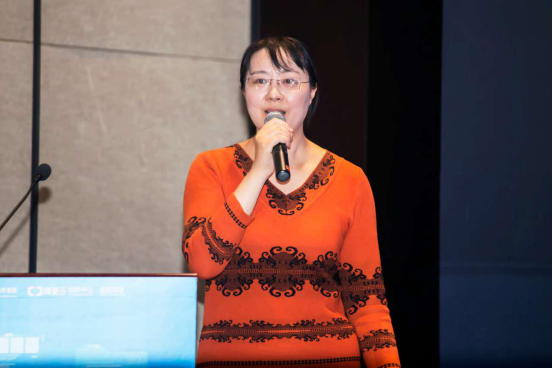
(Chi Ying, Alibaba DAMO Academy)
At the conference, Dr. Chi Ying, Technical Director of Medical AI at Alibaba DAMO Academy, delivered the opening remarks. She stated that in the field of cardiology, the DAMO Academy team has conducted in-depth research on the extraction of coronary artery branches. For branch naming, the academy adopted a network-based approach, achieving high accuracy. Furthermore, DAMO Academy continues to make breakthroughs and innovations in the assessment of calcification and myocardial tissue.
Meanwhile, from the perspective of natural language processing, DAMO Academy leverages knowledge graphs to provide heart-related Q&A, intelligent Q&A, and intelligent triage services for middle-aged and elderly individuals, enabling patients to receive immediate assistance through intelligent knowledge support.
Alibaba DAMO Academy maintains an open mindset within the industry and is currently launching the “Cardiovascular AI Qianlima Partner Recruitment Program.” The initiative aims to recruit cardiovascular AI partners, categorized into strategic and general tiers, with partner types including channel-focused, product-focused, and research-oriented entities, among others. By pooling intelligence and resources, the program seeks to jointly build a cardiovascular AI ecosystem.
Huang Xinsheng, Chief Physician in the Department of Cardiac Surgery at Beijing Anzhen Hospital, Capital Medical University, and Niu Tao, Chief Physician in the Department of Cardiovascular Surgery at Ningxia Hui Autonomous Region People’s Hospital, delivered insightful clinical perspectives on the topics of “Application of Artificial Intelligence in Cardiovascular Clinical Practice” and “The Controversies Surrounding Patent Foramen Ovale and Paradoxical Embolism,” respectively.
Director Huang Xinsheng has accumulated eleven years of clinical experience in the application of three-dimensional ultrasound navigation in ventricular aneurysm surgery. In the future, he hopes to leverage technologies such as artificial intelligence to process 3D ultrasound data prior to surgery, thereby visualizing postoperative outcomes and assessing potential prognosis. This approach aims to enhance patients’ understanding of the procedure and improve surgeons’ confidence and precision in surgical planning.
Studies have shown that no less than 25% of adults have a patent foramen ovale (PFO), which is currently the most common congenital heart defect in adults. Director Niu Tao stated that patients with this condition undergo PFO closure surgery, a procedure in which anatomical assessment requires the assistance of technologies such as artificial intelligence. Currently, a gap exists between the right and left atria; this gap can lead to re-opening of the foramen ovale, thereby causing paradoxical embolism.
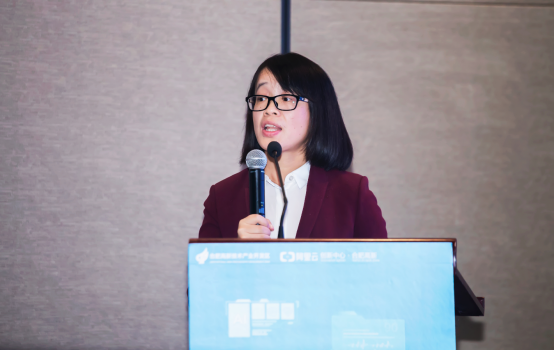
(East China Normal University, Wang Liping)
Wang Liping, an associate professor at East China Normal University, has been deeply engaged in the field of electrocardiography for over a decade. At the conference, she delivered a keynote presentation titled “Intelligent ECG Diagnosis: Models and Data.”
Professor Wang Liping stated that deep learning has brought about a disruptive transformation in the field of electrocardiography, provided it is supported by big data.
Based on data and models, Professor Wang also developed data management functionalities on the KAAS platform, which additionally features neural network models, domain rules, and data domains. Data undergoes real-time processing and is analyzed through model-based computation to achieve real-time intelligent analysis.
At the conference, Alibaba Cloud Tianchi and VCBeat jointly released the thematic report “2019 AI Empowering Cardiovascular Care,” providing a comprehensive and in-depth overview of the cardiovascular AI industry.
The report highlights that key policy initiatives, such as the release of the “Key Points for Approval of Medical Device Software Assisted by Deep Learning in Decision-Making” and the national promotion of chest pain center construction, have significantly propelled the development of the cardiovascular AI sector. Meanwhile, the severe situation in the prevention and treatment of cardiovascular diseases will serve as the core driving force for the advancement of cardiovascular AI, which may become the earliest area within medical AI to achieve commercial implementation.
Healthcare is entering a new era, one that requires leveraging new technologies to shape innovative products and address current challenges through more convenient and efficient solutions.
Consequently, scenario providers and demand-side stakeholders—represented by the medical community, industry, and academia—engaged in in-depth discussions from multiple perspectives, including “articulating and fulfilling needs” and “balancing commercial costs with solving practical problems.”
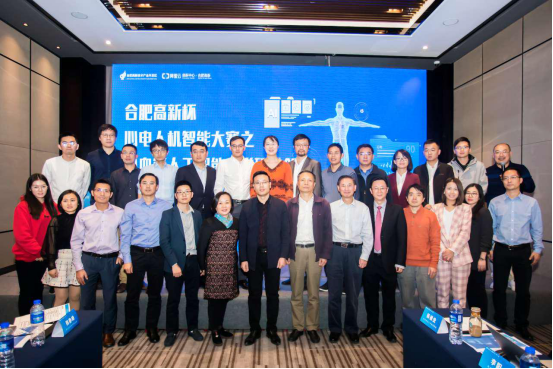
Although electrocardiography (ECG) research is not a new topic, experts from industry, academia, and research institutions still sparked many new insights at this co-creation summit.
Dr. Ding Xiaomei, Chief Physician in the Department of Cardiology at the First Affiliated Hospital of University of Science and Technology of China (Anhui Provincial Hospital), shared her insights: first, electrocardiograms can be rapidly interpreted with the aid of artificial intelligence; second, AI technology can assist in identifying malignant arrhythmias.
Dr. Yang Deye, Chief Physician at the Affiliated Hospital of Hangzhou Normal University and a cardiologist, also shared his insightful perspectives. Dr. Yang stated that in the future, there may be wearable 12-lead ECG vests that users can wear comfortably while sleeping, with real-time transmission of electrocardiogram data.
Qu Peng, Chief Physician in the Department of Cardiology at the Second Affiliated Hospital of Dalian Medical University, stated that he hopes to address the current issue of “slow ECG printing” by eliminating the app-based format and implementing dynamic electrocardiography.
Professor Dong Jun from the Institute of Nanotechnology, Chinese Academy of Sciences, raised several critical issues regarding ECG monitoring in practice: First, how to collect large amounts of data? Second, can hierarchical diagnosis and treatment be truly integrated and implemented across a wide range of application scenarios? Third, how to ensure indicators such as sensitivity, specificity, and accuracy of the data?
Liu Xu, Business Director of Guojian Intelligence, also introduced the company’s latest developments. Guojian Intelligence specializes in 12-lead dynamic ECG monitors. To address clinical challenges that AI alone cannot resolve, the company has established nine centers and three monitoring platforms across China, offering a comprehensive service solution that integrates manual ECG interpretation, manual alerts, and AI-assisted warnings. Looking ahead, Guojian Intelligence aims to expand its collaborations with various sectors nationwide.
Armed with these valuable new requirements and fresh insights, Alibaba Cloud will collaborate with multiple partners in the future to initiate high-quality new research topics in AI-powered electrocardiography (ECG), further expanding the scale of ECG datasets and optimizing their applicable scenarios.
Niu Tao, Director of the Department of Cardiac and Great Vessel Surgery at the People’s Hospital of Ningxia Hui Autonomous Region, has articulated strong demands for hardware solutions—including high-value consumables, surgical robots, and domestically produced alternatives—from a surgeon’s perspective.
In response, Ma Jun, Co-founder and CTO of Ruixin Intelligence, shared his perspective. He believes that, in a sense, it is a reasonable path for China to first excel in hardware development and then integrate AI. However, from a long-term perspective, the medical device industry is gradually transitioning from an era of equipment-based updates and iterations to one driven by big data and artificial intelligence.
Therefore, at its core, industrial breakthroughs still require advances in algorithms and technology, supported by greater access to medical big data, adequate computing power, and other complementary resources. The Alibaba Cloud Innovation Center’s Hefei High-Tech Base is precisely such fertile ground for nurturing innovation.
As the largest high-tech industrialization base in Anhui Province, Hefei High-Tech Zone has always attached great importance to talent cultivation, regarding talent as the key to high-quality development and facilitating the region’s high-quality growth.
Currently, Hefei High-Tech Zone is actively responding to major national and provincial/municipal strategic deployments by accelerating the agglomeration of artificial intelligence (AI) industry projects through investment, investment promotion, and incubation, with the aim of establishing a premier hub for the AI industry.
Last year, the Alibaba Cloud Innovation Center’s Hefei High-Tech Zone Base was officially established through a tripartite collaboration among the Administrative Committee of Hefei High-Tech Industrial Development Zone, Alibaba Cloud, and Banyun Technology, with operations managed by Hefei Dibei Space Technology Service Co., Ltd. As Anhui Province’s first mass innovation space dedicated to incubating projects in big data, cloud computing, the Internet of Things (IoT), and artificial intelligence (AI), the Hefei High-Tech Zone aims to introduce or incubate a cohort of enterprises in big data, AI, and information technology over the next three years under the Alibaba Cloud Innovation Center initiative. Meanwhile, it will seamlessly connect entrepreneurs with Alibaba’s ecosystem resources, providing comprehensive empowerment and acceleration support for incubated enterprises and high-quality projects.
Wang Yiting, head of the Alibaba Cloud Tianchi Platform, introduced that Tianchi is a crowdsourced intelligence platform dedicated to industrial AI and big data solutions, covering AI competitions across various industries. The significance of Alibaba Cloud establishing this platform lies in its aim to better integrate industrial resources with AI talent, jointly shaping the future of the AI industry.
The in-depth exchanges at this co-creation meeting will also accelerate the practical application and commercialization of the outcomes from the inaugural “Hefei High-Tech Cup” ECG Human-Machine Intelligence Competition, with promising prospects for successful deployment in major health enterprises and Grade A tertiary hospitals.