Internet Hospitals in China: Clear Policies, 269 Established and Over 100 New Companies Joining — Ecosystem Maturing | 2019 Annual Review

Medlinker
Chronic Disease Management Platform Provider

PINGAN GOOD DOCTOR
Internet Medical Health Platform

Xiangxue
Developer, Producer, and Seller of Traditional Chinese Medicine and Chinese Herbal Pieces
After years of exploration, internet hospitals finally achieved policy certainty last year, entering a new stage of development. This year, the construction of internet hospitals has entered another peak period. According to a report by Beijing Daily, at the 2019 Beijing International Telemedicine Summit, Zhang Xuegao, Director of the Statistical Information Center of the National Health Commission, stated that China’s “Internet + Healthcare” policy framework has been basically established, with 269 internet hospitals nationwide as of October this year. According to statistics from VCBeat, as of November 8, an additional 121 enterprises had participated in the development of internet hospitals in 2019.
Internet hospitals have long moved beyond the initial stages of appointment scheduling and online consultations, and they offer far more than just follow-up visits for certain common and chronic diseases and “Internet+” family doctor contracting services as stipulated in the Administrative Measures for Internet Diagnosis and Treatment (Trial). Instead, using these services as a starting point, they are continuously expanding their offerings and strengthening connections. Based on the construction and development of internet hospitals this year, VCBeat believes that the industrial ecosystem of internet hospitals is gradually maturing, with its scope steadily expanding.
Through our analysis, we have identified several trends in internet hospitals this year:
1. Increasing diversification of participants within a progressively maturing ecosystem; a total of 14 types of enterprises have established internet hospitals, with pharmaceutical, medical device, and insurance companies all participating, including one listed pharmaceutical company; meanwhile, public hospitals have entered a concentrated phase of internet hospital development.
2. Once the industrial ecosystem is fully developed, membership-based products that integrate resources become a common profit model;
3. Under policy guidance, Hainan has emerged as a new hub for internet hospitals; we identified 28 internet hospitals newly established in Hainan in 2019.
At its inception, the internet hospital emerged from the light consultation phase of online medical services, with its core business focused on pre-consultation and intra-consultation stages. As policies have become clearer and industry exploration has deepened, various post-consultation stages have also become integral components of internet hospital operations. Moreover, these stages have gradually expanded, connecting an increasing variety of entity types and forming a unique industrial ecosystem. To provide a more intuitive understanding of this ecosystem, we have developed the following diagram based on the consumer-facing (C-end) and non-consumer-facing (non-C-end, including government, healthcare institutions, physicians, and enterprises) services offered by internet hospitals:
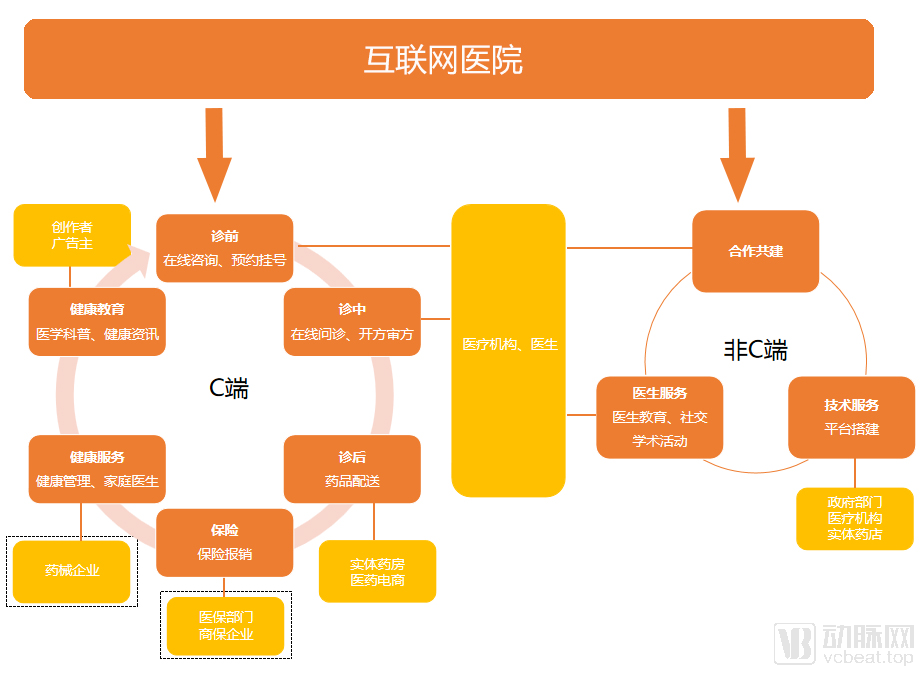
Diagram of the Internet Hospital Industry Ecosystem, by VCBeat
In the schematic diagram, the components connected by circles represent the business segments of internet hospitals targeting either consumer (C-end) or non-consumer (non-C-end) markets, while the components connected by lines denote the stakeholders involved in each respective segment. Currently, with medical institutions and physicians at their core, internet hospitals have effectively linked nearly all types of participants in the healthcare sector through self-developed or collaborative business operations.
Internet hospitals are categorized into hospital-led models and joint venture models between enterprises and hospitals, based on their founding entities. Hospital-led internet hospitals leverage their traditional offline strengths, with their business ecosystems focusing more on core medical services. In contrast, jointly built internet hospitals benefit from the more flexible operational mechanisms of enterprise partners, allowing for broader business expansion that extends beyond diagnosis and treatment to include commercial insurance, health management, and health education.
It is worth noting that, as an important component of the healthcare sector, pharmaceutical and medical device companies have also begun to establish a presence in internet hospitals. Although their numbers remain limited, we consider this a significant shift. Furthermore, the imperfection of the payment process has long been regarded as a major obstacle to the development of internet hospitals. However, this year has not only seen the introduction of medical insurance policies for internet healthcare, but also the entry of insurance companies into the internet hospital landscape, thereby creating a closed loop integrating medicine, healthcare, and insurance. This too represents a significant change. We have highlighted these developments with dashed boxes in the aforementioned ecosystem diagram and will provide case study analyses in the following section.
Why Are Internet Hospitals Continuously Expanding to Form a More Comprehensive Industrial Ecosystem? We Primarily Explore the Reasons from Two Aspects: Market Demand and Policy Guidance.
From a market demand perspective, pure medical needs are low-frequency and have a relatively low average transaction value, making it difficult to generate profit from the consultation phase alone. In contrast, the integration of healthcare and wellness involves multiple touchpoints with varying frequencies of demand. Particularly as consumer-grade medical services and health management needs continue to grow, internet hospitals can leverage online follow-up consultations as a nexus to establish broader connections while ensuring regulatory compliance in diagnosis and treatment, thereby facilitating more effective exploration of profitable business models.
JD Health, which previously focused primarily on pharmaceutical e-commerce, proposed a new strategy centered on “health management” this year, following its entry into the internet hospital sector in late 2017. This strategy aims to connect and integrate the entire industry chain, merge medical resources from various stakeholders, and provide users with products and services that span the full life cycle and cover all health scenarios. In an interview with VCBeat, Xin Lijun, CEO of JD Health, stated that isolated industries are rare in the healthcare sector; entering this field essentially involves nearly all aspects. This also indicates that internet hospitals can hardly exist as standalone diagnostic and treatment entities, making comprehensive connectivity crucial.
In terms of policy, the newly revised Drug Administration Law and the newly issued Guiding Opinions on Improving Price and Medical Insurance Payment Policies for “Internet+” Medical Services have become the bellwether for industry development.
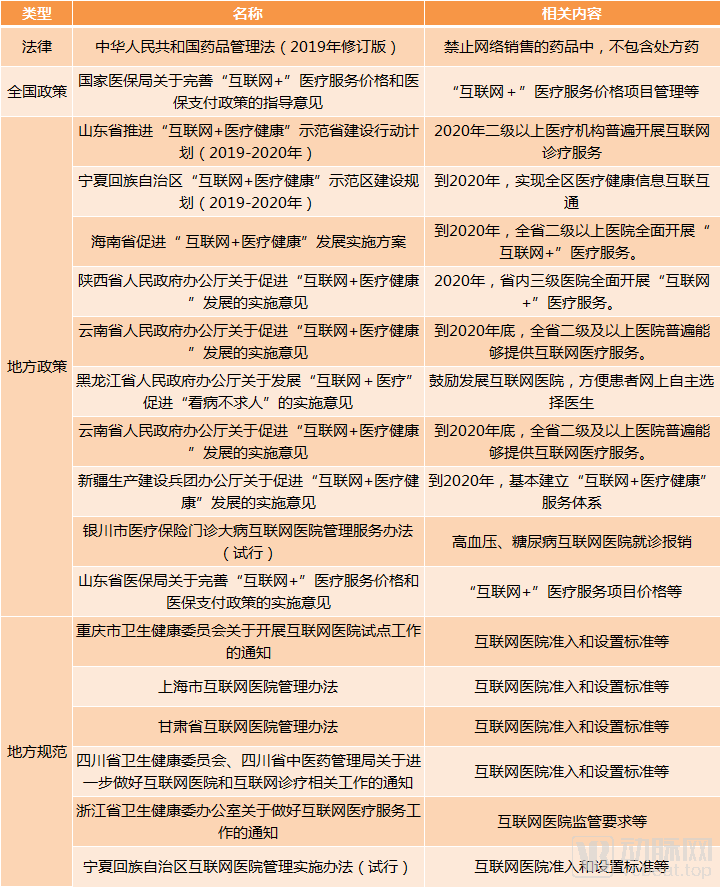
Policies on Internet Hospitals in 2019, Source: Public Information from Government Departments, Chart by VCBeat
The newly revised Drug Administration Law specifies the list of drugs prohibited from online sales, which does not include prescription drugs. This implies that the online sale of prescription drugs is not explicitly banned, although specific regulatory measures remain to be formulated by the regulatory authorities. As internet hospitals already possess prescribing authority for follow-up consultations on certain common and chronic diseases, they will become a major source of prescriptions for online prescription drug sales, thereby accelerating the integrated development of internet hospitals with pharmaceutical e-commerce platforms, pharmacies, and pharmaceutical and medical device enterprises.
On August 30 this year, amid keen anticipation from the industry, the National Healthcare Security Administration officially released the “Guiding Opinions on Improving Pricing and Medical Insurance Payment Policies for ‘Internet+’ Medical Services,” charting a course for medical insurance payments to internet hospitals. Starting in October, Yinchuan began piloting medical insurance reimbursement for online consultations for hypertension and diabetes at internet hospitals. The introduction of national medical insurance policies and the launch of local pilots have been encouraging for the industry, as they represent further recognition of internet hospitals and provide greater impetus for online follow-up visits for common and chronic diseases. However, national policies have imposed strict requirements on pricing items for “Internet+” medical services, emphasizing core diagnostic and treatment components. This implies that it will be difficult for enterprises to derive substantial revenue directly from medical insurance funds; instead, they should explore new technologies and services to promote cost reduction and efficiency improvement in healthcare delivery.
Regarding the "Drug Administration Law" and internet medical insurance policies, VCBeat has previously in its "The 5 Major Changes and 14 Key Points Brought by the "Drug Administration Law" After Legalizing Online Sales of Prescription Drugs, Redefining "Fake" Drugs, and Phasing Out GMP/GSP》and《Medical Insurance Coverage Is About to Go “Live”—Will Internet Healthcare Take Off Again?》Detailed interpretations are provided in the two articles; click to view.
Furthermore, to implement the “Opinions of the General Office of the State Council on Promoting the Development of ‘Internet + Healthcare’,” provinces and municipalities across China have continued to issue related policy opinions and action plans this year. Many provinces and municipalities have proposed that secondary and tertiary hospitals should universally provide internet-based medical services by 2020. To achieve this goal, 2019 is inevitably becoming a peak period for the establishment of internet hospitals. Meanwhile, to standardize the development of internet hospitals and strengthen regulatory oversight, regions such as Ningxia, Gansu, and Shanghai have formulated localized, detailed administrative measures based on the “Administrative Measures for Internet Hospitals (Trial),” the “Administrative Measures for Internet Diagnosis and Treatment (Trial),” and the “Specification for Remote Medical Service Management (Trial),” thereby providing clearer pathways for the construction and management of internet hospitals.
On November 20 this year, the Shandong Provincial Healthcare Security Administration issued the "Implementation Opinions on Improving Pricing and Medical Insurance Payment Policies for 'Internet+' Medical Services," which established the conditions for setting up price items for "Internet+" medical services and specified excluded items, while clarifying the prices for the first batch of "Internet+" medical service items. The pricing for internet-based services is categorized into three types: remote consultation, remote specialist consultation, and remote monitoring. The fee for online follow-up consultations is RMB 6 per visit, while the prices for remote specialist consultations conducted by associate chief physicians and chief physicians are RMB 180 and RMB 260, respectively. The guiding principle is that online follow-up services provided by medical personnel at different levels are charged according to the standard outpatient consultation fees. If "Internet+" medical services cover the same content as offline services within the scope of medical insurance payment and adhere to the corresponding public healthcare institution pricing standards, they will be included in the medical insurance payment scope and reimbursed in accordance with existing regulations after undergoing the appropriate procedures. For basic medical services under "Internet+" that involve entirely new content and are subject to government-regulated pricing, a two-year trial period will be implemented. Upon expiration of the trial period, the Provincial Healthcare Security Administration will determine whether to include them in the medical insurance payment scope, taking into account factors such as clinical value, price levels, and medical insurance payment capacity.
From a trend perspective, policies regarding internet medical services across various regions have shifted from encouraging industry development to gradual implementation. The new policies introduced in 2019 began to specifically define the types of services, service delivery models, and pricing for internet-based healthcare, even considering how to integrate these services into the national health insurance system.
As previously mentioned, internet hospitals are primarily categorized into hospital-led models and joint ventures between enterprises and hospitals, based on the entities responsible for their establishment. Reviewing the development history of internet hospitals, early enterprise-participated projects were predominantly led by internet healthcare companies or health IT firms, which leveraged their technological advantages to rapidly facilitate the digital transformation of hospitals. However, this year, VCBeat has observed a further diversification among the enterprises involved in building internet hospitals.
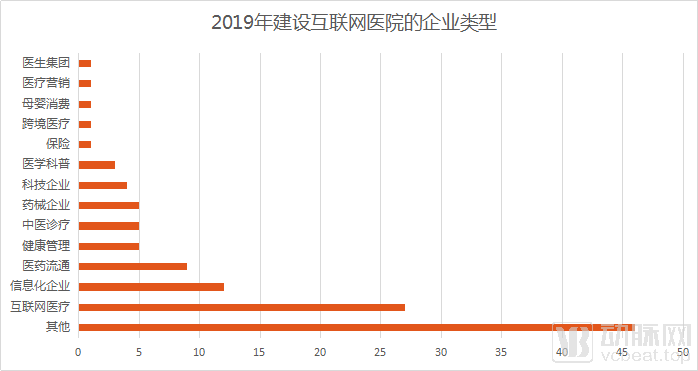
Source: Qichacha; Graphic by VCBeat
In the internet hospital ecosystem, multiple stakeholders across the industry chain—such as pharmaceutical retailers, pharmaceutical and medical device manufacturers, and insurance companies—need to be connected. Previously, these connections were primarily established around the core operations of internet hospitals; however, these stakeholders are increasingly initiating reverse integration.
After compiling statistics on internet hospital companies registered in 2019, VCBeat identified the types of enterprises involved behind them, as shown in the figure above, totaling 14 categories. In the figure, “Others” mainly includes individuals, industrial investment companies, and investment institutions; such cases are numerous but lack common characteristics. The classifiable enterprises nearly cover all sub-sectors of the healthcare field. Among them, internet healthcare, healthcare informatics, and pharmaceutical distribution companies remain the mainstream players in building internet hospitals. As the most fundamental and critical sub-sector of healthcare, the pharmaceutical and medical device industry has seen a few companies begin to lay out internet hospital strategies to expand sales channels. Insurance companies are also extending their reach upstream, moving their business forward to the diagnosis and treatment stage. Next, we will take these key types as examples to examine the specific approaches adopted by these enterprises.
Internet Healthcare: Established Enterprises Set the Example
This year, 27 internet healthcare companies participated in the development of internet hospitals. However, establishing an internet hospital is merely one component of a company’s business operations; the more critical issue lies in how to effectively implement and operationalize it thereafter. VCBeat has reviewed the recent activities of several established internet healthcare companies this year, which may offer valuable references for new entrants.
WeDoctor extensively connects hospitals and physicians, fostering an open ecosystem for collaboration.In 2015, WeDoctor established China’s first internet hospital, the Wuzhen Internet Hospital, achieving integration of online and offline diagnosis and treatment services and closing the loop across medical care, pharmaceuticals, and medical insurance.WeDoctor has participated in the establishment of 24 internet hospitals to date, nine of which were self-built or co-built, while the rest involved assisting physical hospitals in setting up their own internet hospital platforms. WeDoctorInternet hospitals not only provide services to patients but also empower partner hospitals. WeDoctor offers one-stop optimization services for the pre-hospital, in-hospital, and post-hospital care processes. Leveraging offline physical hospitals and utilizing channels such as websites, mobile apps, WeChat official accounts, and mini-programs, it provides general users with services including appointment registration, online follow-up consultations, remote consultations, electronic prescriptions, family doctor contracting, and chronic disease management. For hospitals, Wuzhen Internet Hospital provides advanced diagnostic and treatment technologies for specialized diseases. It enhances the capabilities of primary care physicians through on-site mentoring, remote teaching, online guidance, AI assistance, and the dissemination of standardized diagnosis and treatment protocols. Furthermore, it assists regional central hospitals in building medical consortia, effectively improving primary healthcare services, pharmaceutical supply, and diagnostic testing capabilities.
Dingxiang Yuan Leverages Its Internet Hospital to Expand into the Greater Health Industry.In addition to providing basic services such as online follow-up consultations, prescription issuance, and medication delivery, DXY Internet Hospital places a strong emphasis on developing health science popularization content. Its 2.1 million registered physicians constitute a significant resource advantage for creating such content. All educational materials are produced or reviewed by professional doctors and fall into two main categories: free information and paid content, covering topics such as disease management, pregnancy and childcare, skincare and beauty, and diet and exercise. This year, DXY’s core brand is shifting toward the broader health industry. By leveraging health education, it aims to uncover user needs in consumer healthcare and health management, thereby driving utilization of its internet hospital services and establishing a unique industrial ecosystem.
Medlinker has established a closed-loop system for specialty chronic disease management and expanded the range of covered conditions.Medlinker began laying the groundwork for its internet hospital business, characterized by specialized chronic disease management, in early 2018, establishing corresponding organizational structures and teams. Taking liver disease management as an example, after nearly two years of accumulation, Medlinker has aggregated thousands of hepatologists, built a medical record database for liver disease patients, and formed robust doctor-patient relationships. To date, hundreds of thousands of liver disease patients can access services such as online consultations, follow-up visits with prescription issuance, medication delivery, pharmaceutical guidance, and intelligent health reminders through Medlinker’s internet hospital. Coupled with collaborations with insurance companies, Medlinker has successfully established a closed loop integrating “medical care, patients, pharmaceuticals, and insurance.” Currently, Medlinker’s specialized chronic disease management covers multiple therapeutic areas, including liver disease, HIV/AIDS, diabetes, orthopedics, and oncology, with more specialties expected to be incorporated into Medlinker’s internet hospital platform in the future.
Hao Daifu Online establishes physician teams to optimize the allocation of medical resources.To address the issues of excessive patient loads and delayed responses for prominent physicians, Haodf.com has fully rolled out team-based care this year and undertaken a large-scale overhaul of its underlying platform architecture to provide technical support for this model. In team-based care, a prominent physician serves as the lead expert, assembling an online team that may include physician assistants, junior doctors, nurses, and rehabilitation therapists to collectively serve patients. As of November 8, 3,477 physician teams had joined the Haodf.com platform.
Informatized Enterprise: Capable of Effectively Connecting Multiple Healthcare Institutions
Healthcare IT enterprises primarily provide medical informatics services to healthcare institutions at all levels. As their business volume continues to accumulate, reaching a sufficient number of directly accessible healthcare institutions enables them to meet the key prerequisites for establishing internet hospitals. Currently, many healthcare IT companies are participating in the development of internet hospitals, with 12 such companies involved this year. Among them is Mingyi Zhonghe, which positions itself in the primary healthcare market. It is understood that Mingyi Zhonghe previously leveraged its informatics platform, “Yidebang,” to deliver comprehensive empowerment solutions to primary healthcare institutions, covering areas such as medical education, healthcare informatics, health insurance data services, pharmaceutical supply chains, and medical collaborations. The company has served 130,000 primary care clinics and village health rooms across 80 prefecture-level cities in 11 provinces.
Currently, Mingyi Zhonghe is in the process of establishing an internet hospital, strengthening collaborations with high-quality medical resources, and forming physician groups focused on common specialized conditions at the primary care level. It is launching pilot projects for grassroots implementation, with the ultimate goal of leveraging the internet hospital as a platform to jointly build an empowering internet-based medical consortium with primary healthcare institutions, thereby enhancing the quality of primary care. Upon completion, the Mingyi Zhonghe Internet Hospital will focus on empowering primary care clinics and health stations, while providing remote prescription review services to primary care pharmacies.
For digital health enterprises, the greatest advantage lies in their established multi-terminal layout, particularly within medical institutions. The primary role of internet hospitals is to organically connect these various terminals and create complementary advantages among them.
Pharmaceutical Distribution Enterprises: “Medical + Pharmaceutical” Model for Refined Exploration
It is no longer surprising for pharmaceutical distribution companies to venture into the internet hospital sector. This year, nine internet hospital companies are backed by such distributors. Their robust pharmaceutical supply chains provide a competitive advantage in establishing internet hospitals, with the primary goal of creating an integrated “Medical Care + Pharmaceuticals” model. For those pharmaceutical distributors that had already laid out their internet hospital strategies previously, this year has seen them conduct more in-depth explorations of this “Medical Care + Pharmaceuticals” model.
Taking Jianke as an example, the internet hospitals it has obtained approval for include Guangzhou Jingtai Jianke Internet Hospital, Xinjiang Tumushuke City People’s Hospital Jianke Internet Hospital, and Dongguan Taixin Jianke Internet Hospital. These facilities enable a range of services such as remote online follow-up consultations, issuance of electronic prescriptions, and home delivery of medications. By establishing comprehensive online-to-offline infrastructure, Jianke has accelerated the development of multiple chronic disease management programs. This year, Jianke’s chronic disease management initiatives have progressed toward greater specialization and refinement. For instance, in collaboration with Ferring Pharmaceuticals, a renowned international pharmaceutical company, Jianke co-established the Inflammatory Bowel Disease Specialty Center at its internet hospital, with Professor Wu Xiaoping—Professor of Gastroenterology at the Second Xiangya Hospital of Central South University and Deputy Leader of the Inflammatory Bowel Disease Specialist Group under the Chinese Society of Gastroenterology—serving as the center’s director. Additionally, Jianke launched the Men’s Health Management Service Center at its internet hospital, with Professor Mo Suilin from the First Affiliated Hospital of Sun Yat-sen University serving as Senior Advisor.
The primary benefit for pharmaceutical distribution companies in establishing internet hospitals lies in increasing prescription sources, expanding sales channels, and enhancing the compliance and safety of medication-related services. It also facilitates the extension of business operations into specialized disease management and health management.
Pharmaceutical and Medical Device Companies: Listed Pharmaceutical Companies Establish Internet Hospitals
Pharmaceutical and medical device companies, which are large in scale and hold a significant position in the healthcare sector, previously focused primarily on collaborations with internet hospitals. Now, a small number of these companies are directly establishing their own internet hospital operations. Last year saw the precedent set by Anhan Internet Hospital. This year, a total of five pharmaceutical and medical device companies have established internet hospitals, including one publicly listed pharmaceutical company.
Xiangxue, an A-share listed company, obtained an internet hospital license this year. According to publicly disclosed information, Xiangxue Internet Hospital is a platform providing internet-based pharmaceutical and medical information services. It organically integrates an AI-powered TCM auxiliary diagnosis and treatment platform with an intelligent IoT-based Chinese herbal medicine dispensing center, enabling citizens to enjoy more convenient and higher-quality “Smart TCM” services.Xiangxue’s Smart TCM represents an innovative model integrating the entire TCM industrial chain with the internet and the Internet of Things (IoT). This model spans from establishing a quality control system for TCM decoction pieces characterized by “authenticity, safety, efficacy, and stability” at the upstream stage; to building an internet-based big data analytics platform for TCM and a TCM IoT platform at the midstream stage; to implementing a new TCM diagnosis and treatment mode extending from hospitals to communities, featuring “accurate syndrome differentiation, precise prescriptions, and effective medications” at the downstream stage. By constructing a fully traceable quality control system for precise TCM services, Xiangxue is advancing the practice of Smart TCM, facilitating the evolution of TCM treatment methods from “ambiguous” to “digital,” and ultimately to “precise.”
Thus, it can be seen that under the influence of policies such as centralized drug procurement and medical insurance cost containment on the pharmaceutical distribution landscape, pharmaceutical companies are also exploring more distribution channels and service models. Meanwhile, medical device manufacturers, leveraging internet hospitals as an entry point and collaborating with offline medical institutions to deliver product-related diagnosis and treatment services, can also rapidly promote their products.
Insurance Companies: Strengthening the Role of Payers in Internet Healthcare
This year, insurance companies are also entering the internet hospital sector, with ZhongAn Insurance having already obtained an internet hospital license. In the future, ZhongAn Internet Hospital will serve as a crucial bridge connecting medical institutions, partner pharmacies, patients, and ZhongAn Insurance. ZhongAn will redefine innovative internet insurance as the payer for new healthcare services. Through the internet hospital hub, it will facilitate direct insurance payments to medical institutions and partner pharmacies, thereby eliminating the lengthy wait for patients who previously had to pay out-of-pocket before seeking reimbursement. Currently, ZhongAn is already able to provide online consultation services to its insurance users. As ZhongAn gradually expands its internet hospital layout, it will be able to offer additional services on this basis, such as online consultations for non-critical illnesses and home delivery of medications.
We have also found that, in addition to healthcare companies establishing internet hospitals as mentioned above, technology firms are continuously expanding their presence in this sector. Although they have already made substantial investments or developed their own businesses in the healthcare field, they appear to be highly interested in internet hospitals themselves. This year, Tencent and Sogou separately applied for the establishment of Hainan Tencent Internet Hospital and Hainan Sogou Smart Internet Hospital in Hainan Province, thereby enabling better integration of their respective related businesses.
Thus, in 2019, the internet hospital sector became increasingly vibrant.
Public Hospitals Are Heavily Involved, with Implementation Timetables in Many Regions
In addition to the participation of diversified enterprises in the development of internet hospitals, public hospitals are also playing a more dominant role in their construction.
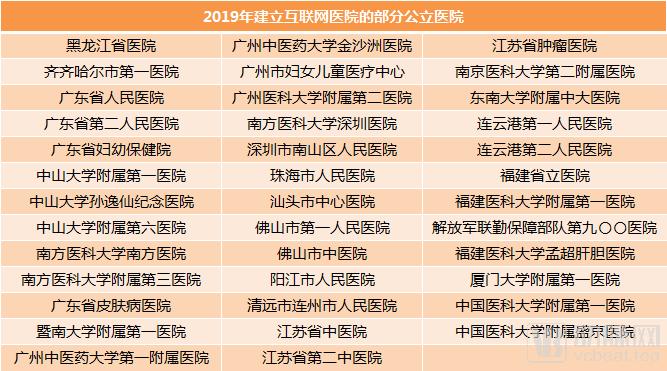
Some Public Hospitals Participating in the Construction of Internet Hospitals in 2019, Compiled by VCBeat Based on Public Information
By establishing internet hospitals, public hospitals can migrate offline medical resources to online platforms, thereby improving efficiency in follow-up consultations for common and chronic diseases. For complex and critical cases, methods such as remote consultations and collaboration within medical consortia can facilitate the downward distribution of high-quality medical resources, expand the service radius, and thus promote the implementation of tiered diagnosis and treatment. This also helps avoid patients seeking medical care across regions, alleviating the problem of uneven distribution of medical resources.
Recently, Heilongjiang Provincial Hospital, a public Grade-A tertiary hospital, has also launched its internet hospital platform. This service is accessible not only via mobile devices and computers but also pioneers a "TV Hospital" service. Designed primarily for elderly patients who find it difficult to use computers or smartphones for online access, the TV Hospital allows users to simply turn on their television, navigate to the app selection page, and open the "Family Clinic." Through this interface, they can perform a range of tasks, including appointment registration, payment processing, medical report inquiries, and accessing health education content from renowned experts.
What progress have public hospitals that were early adopters of internet hospitals made this year? As the first online campus of a public Grade A tertiary hospital in China, “The First Affiliated Hospital, Zhejiang University School of Medicine Internet Hospital” commenced operations on February 16, 2016. After more than three years of development, the hospital now operates seven major platforms, including a tiered diagnosis and treatment platform, a chronic disease management center, and a geriatric disease management center, and offers 15 specialized and expert outpatient clinics. As of April this year, the hospital had served over 55,000 patient visits and established remote collaborations with 206 municipal and county-level hospitals inside and outside Zhejiang Province, 322 community service centers, and 64 pharmacies, thereby facilitating tiered diagnosis and treatment.
According to Wu Jun, head of the Internet Hospital Office at The First Affiliated Hospital, Zhejiang University School of Medicine (Zhejiang First Hospital), the hospital’s internet platform serves only follow-up patients to balance medical safety with service expansion. Physicians can conduct online consultations and provide one-click appointments for laboratory tests, diagnostic examinations, and hospitalization through a unified scheduling platform. Prescriptions issued by doctors are delivered directly to patients’ homes after online review by pharmacists. In addition to video consultations, patients can engage in one-on-one communication with physicians via text-and-image messaging, allowing doctors to respond during their spare time and eliminating the need for patients to wait at fixed times; however, medication prescriptions must still be obtained through offline outpatient visits. These two approaches cater to diverse patient needs.
As mentioned in the previous policy section, policies in many regions have outlined plans for the development of internet healthcare, specifying timelines that require secondary or tertiary hospitals within their jurisdictions to launch internet diagnosis and treatment services before 2020. As the primary providers of medical services in China currently, public hospitals have inevitably become the main entities responsible for implementing these policies, ushering in a peak period of concentrated construction.
When public hospitals take the lead in establishing internet hospitals, they typically require technical services from information technology enterprises. Zhuojian Technology provides internet-based solutions for large and medium-sized hospitals as well as various segments of the medical ecosystem chain. By the end of 2018, it had served more than 400 Grade A tertiary hospitals. This year, the “Zhuojian Smart Internet Hospital Platform 3.0” was released. Built on the foundation of “one engine + five centers,” driven by the dual engines of a rules engine and a knowledge base, the platform creates an online-to-offline, full-process health management system. Leveraging the dual-drive mechanism of a rules engine and a medical knowledge base, it offers service modules including internet hospital services, mobile hospital services, collaborative diagnosis and treatment services, integrated appointment scheduling, and doctor-patient education services. These capabilities meet the Level 4–5 business indicators in the Hospital Smart Service Grading Assessment, providing patients with a more comprehensive medical experience.
After establishing an industrial ecosystem, internet hospitals can significantly expand their accessible resources. By integrating these resources, they can offer bundled packages tailored to user needs. Consequently, membership-based services have become a common revenue model.
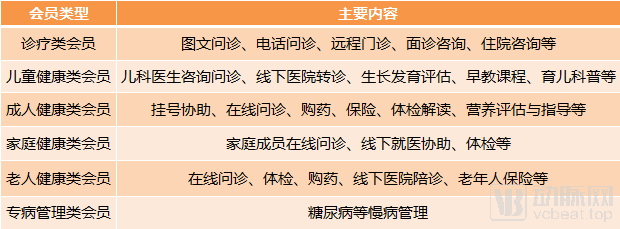
Major Membership Product Types in 2019, Source: Public Information from Major Internet Hospitals, Chart by VCBeat
We have outlined the main membership product types offered by major internet hospitals this year. These products integrate core clinical services with extended health management offerings, combining varying service frequencies with the specific needs of targeted patient populations to add value to medical care and improve the alignment between resources and demand. Upon purchasing a membership, users are entitled to certain discounts and even complimentary services for select items.
PINGAN GOOD DOCTOR’s “Private Doctor” service, launched this year, is a typical membership-based offering. Leveraging its in-house team of renowned medical experts, along with a comprehensive support ecosystem comprising external medical institutions, testing and inspection agencies, and pharmacies, the product provides users with a range of healthcare services. These include 24/7 online consultation, second opinions from leading specialists, arrangement of outpatient visits at offline hospitals, health management, and chronic disease management.
“Private Doctor” adopts a hybrid sales model combining B2B2C, B2B, and B2C approaches, serving both corporate and individual clients. Under the B2B2C model, “Private Doctor” products are sold to large enterprises, which then provide them to their employees or customers. On August 13 this year, at the strategic launch event for “Private Doctor,” PINGAN GOOD DOCTOR reached cooperation agreements with 29 companies, with a total contract value of RMB 300 million. These partner companies span industries such as automotive, maternal and infant care, finance, telecommunications, insurance, and pharmaceutical retail. This model enables rapid breakthroughs in sales revenue while acquiring more precise user segments; meanwhile, it also diversifies business channels beyond third-party commercial insurers and financial institutions.
Since the beginning of this year, many regions have accelerated the construction of provincial-level regulatory platforms for internet medical services, which is a prerequisite for the approval of internet hospitals. In early April, the National Health Commission announced that Shandong, Zhejiang, Guangdong, Sichuan, Yunnan, and Ningxia had established such provincial regulatory platforms. Subsequently, according to public reports, provinces and municipalities including Hainan, Shanghai, Liaoning, Heilongjiang, Jiangsu, and Fujian have issued licenses for internet hospitals, indicating that their respective regulatory platforms have also been completed.
Regions such as Ningxia, Zhejiang, and Guangdong have historically been active hubs for enterprise-led development of internet hospitals. This year, Hainan has joined the list of active regions.
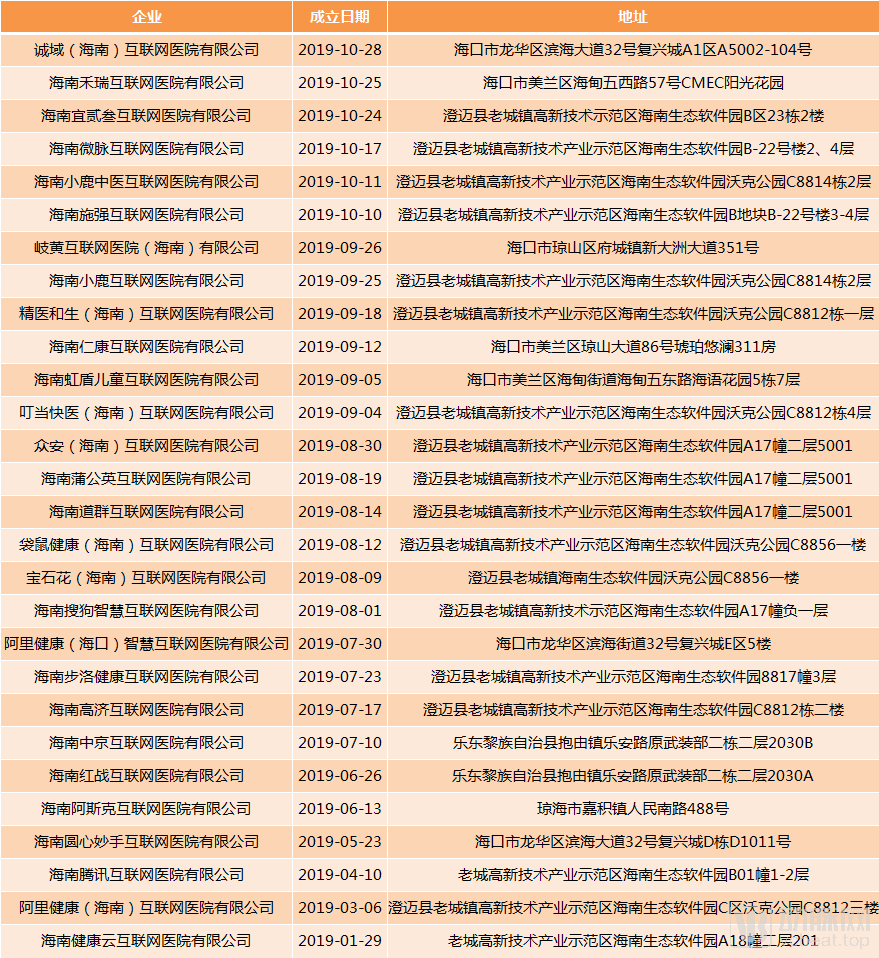
Enterprises Participating in the Construction of Internet Hospitals in Hainan in 2019. Data source: Qichacha; Chart by VCBeat.
The healthcare industry is heavily influenced by policy. Historically, regions where enterprises have been active in building internet hospitals have typically had corresponding local supporting policies. This year, the Hainan Provincial Government issued the Implementation Plan for Promoting the Development of “Internet + Healthcare” in Hainan Province, which proposes that by 2020, a policy framework for the development of “Internet + Healthcare” will be basically established in Hainan Province. Medical and health information will achieve basic interconnectivity and shared application among the government, medical and health institutions, and urban and rural residents, thereby providing the public with more accessible, optimized, smarter, and more precise medical and health services.
We also found that the majority of internet hospitals registered in Hainan are based in the Hainan Eco-Software Park. According to information on the park’s official website, construction officially commenced in October 2009. By February 2019, it had attracted 3,698 enterprises, including Tencent, Huawei, and Baidu. The Hainan Eco-Software Park serves as a key carrier and platform for the development of Hainan’s internet industry and has emerged as a new hub for China’s internet sector. During the 13th Five-Year Plan period, an additional RMB 30 billion was invested, resulting in the one-time completion of a 5-million-square-meter industrial new city. In 2020, the park was projected to generate RMB 50 billion in revenue and accumulate over RMB 10 billion in tax revenue, thereby making a greater contribution to Hainan’s economic structural adjustment and supporting the achievement of its RMB 100 billion internet industry target. Additionally, an “Enterprise Service Supermarket” has been established within the Hainan Eco-Software Park, with multiple administrative approval departments stationed on-site to provide enterprises with one-stop approval services.
Policy guidance and industrial support have prompted a surge of enterprises to flock to Hainan to apply for internet hospital licenses. However, it will take time for these internet hospitals to achieve large-scale business implementation. How will they ultimately proceed? How will they differ from the internet hospitals that previously entered Yinchuan in bulk? We will continue to monitor the situation closely.
In summary, once the industrial ecosystem of internet hospitals is established, it will further integrate connected resources, thereby enabling more precise positioning for itself. We anticipate the following trends may emerge in the future:
Specialized Internet hospitals cover a broader range of types.According to policy regulations, internet hospitals are permitted to conduct follow-up consultations and issue prescriptions for common and chronic diseases; however, there is no strict definition for what constitutes common and chronic diseases. Currently, many internet hospitals are focusing on specialized fields. For instance, this year saw the emergence of China’s first internet hospital dedicated to medical aesthetics: Meixin Internet Hospital. Traditional Chinese Medicine (TCM) diagnosis and treatment platforms, such as Zhongyi Zaixian Internet Hospital, are also increasingly involved in internet healthcare. This year, JD Health also announced that it would launch specialized disease management for conditions including cardiovascular and cerebrovascular diseases, diabetes, and mental disorders.
From the perspectives of both policy guidance and market demand, specialized care and chronic disease management are optimal choices for internet hospitals, facilitating better resource integration and intensive utilization.
Internet Hospitals Have Become a Key Channel for Pharmaceutical Distribution.Patients need more effective and affordable medications, particularly high-quality new drugs; pharmaceutical companies require more precise and efficient distribution channels. By effectively connecting disease screening, pharmaceutical retail and delivery, and insurance payment systems, internet hospitals can better serve as a bridge between pharmaceutical companies and patients.
Next year, an increasing number of internet hospitals will enter the implementation phase. It remains to be seen whether new models will emerge and which unexpected enterprises will enter the market, making the future highly anticipated.
“New Growth in Life”: 2019 Future Healthcare 100 Conference
From December 20 to 22, the 2019 Top 100 Future Healthcare Conference, hosted by VCBeat and Eggshell Research Institute, will be grandly held at Jiuhua Villa in Beijing.
The theme of this conference is “New Growth in Life,” which will comprehensively showcase the innovative ecosystem of China’s healthcare sector by focusing on factors such as the policy environment, technological landscape, and demand potential.
The conference features the Future Healthcare Main Forum, Future Healthcare Top 100 Summit, Future Healthcare Leaders Summit, Future Healthcare Cross-Industry Summit, Health and Medical Fund Partners Summit, China-Japan Health Industry Development Forum, Healthy City Development Forum, Innovative Health Insurance Forum, Digital Pathology and Precision Diagnosis Forum, Health Management Forum, Consumer Healthcare Forum, Internet Hospital Forum, Smart Hospital Construction Forum, Pharmaceutical Digital Marketing Forum, Biotechnology Forum, Medical AI Forum, and Medical Devices Forum, among others. Additionally, more than ten reports will be presented, and the Future Healthcare Top 100 List will be released.