

Smalliot Secures RMB 10 Million Pre-A Funding to Accelerate R&D and Expansion of Healthcare-Associated Infection Control Solutions
VCBeat (WeChat: vcbeat) reports that Hangzhou Xiaochuang Technology Co., Ltd. (“Xiaochuang Tech”) has completed a RMB 10 million Pre-A financing round. The round was led by existing investor Tounaer, with participation from existing shareholder Xinghong Digital Technology and new shareholder Qingchuangtou. Earlier in 2017, Xiaochuang Tech secured millions of RMB in angel funding from Zhejiang Financial Holdings, Tounaer, Shanghai Likang (acquired by Yuwell), and Xinghong Digital Technology.
Hangzhou Xiaochuang Technology Co., Ltd., established in October 2016 and located in the China Artificial Intelligence Town in Hangzhou, Zhejiang, is a provider of IoT solutions specializing in healthcare-associated infection (HAI) control. The company is committed to enhancing the execution of infection prevention and control through IoT technology, helping healthcare institutions achieve the service goal of “zero harm, zero infections.”
Currently, multiple infection control systems for key processes have been developed, covering hand hygiene, environmental surface cleaning, and medical waste management. These solutions have been deployed in markets including China, Japan, the United States, and Canada. Within China, they cover 19 provinces and municipalities and 55 hospitals.
Zhang Fengxiang, Founder and CEO of Xiaochuang Technology, stated that this round of financing will be used to expand business operations in the 19 cities where model hospitals have already been established, achieving broad coverage. In addition, the company will increase R&D investment in healthcare-associated infection (HAI) monitoring products and complete comprehensive foundational infrastructure development for key departments, such as hemodialysis, ICU, and stomatology.
The Development of DRGs Promotes the Advancement of Hospital-Acquired Infection Control
On April 23 this year, a hospital-acquired infection caused by enterovirus (Echovirus 11) occurred at Shunde Hospital of Southern Medical University, a tertiary care hospital in Foshan City, Guangdong Province, resulting in the deaths of five pediatric patients with underlying conditions such as neonatal pneumonia. One month later, 69 hemodialysis patients at Dongtai People’s Hospital were infected with hepatitis C...
“The development of hospital-acquired infection control in China can be traced back to the SARS outbreak in 2004,” Zhang Fengxiang told reporters. China experiences four million cases of hospital-acquired infections annually, resulting in RMB 60 billion in medical insurance expenditures. Over the past five years, the prevalence rate of hospital-acquired infections in China has ranged from 2.3% to 2.7%.
Historically, costs associated with hospital-acquired infections (HAIs) were largely covered by medical insurance. However, with the launch of Diagnosis-Related Group (DRG) pilot programs in 30 cities across China this May, and the release of technical specifications for DRG grouping and payment policies in October, DRG payment reform has accelerated. Correspondingly, under the shift from fee-for-service to DRG-based payment, the financial responsibility for HAIs has transferred from medical insurance funds to hospitals themselves, leading healthcare institutions to place increasing emphasis on infection prevention and control.
In this context, Hangzhou Xiaochuang Technology Co., Ltd. quickly secured its Pre-A round of financing. Zhang Fengxiang stated that the aim of this round was to close rapidly by partnering with Qingchuang Capital, a fellow tenant in the same industrial park, and by collaborating again with existing shareholders. This also demonstrates, from another perspective, the trust that existing shareholders place in Hangzhou Xiaochuang Technology Co., Ltd.
It is understood that Xiaochuang Technology also values the “resources” of its institutional investors; its angel-round investor, Shanghai Likang, possesses resources from over 10,000 hospitals.
Zhang Fengxiang candidly told reporters that, prior to receiving assistance from Shanghai Likang, Xiaochuang Technology opted to launch a public-welfare platform focused on content—namely, the “Infection Control Gas Station,” an educational platform for hospital-acquired infection (HAI) prevention and control knowledge—due to the high entry barriers in the hospital sector. The platform features categorized live broadcasts and rebroadcasts of HAI-related conferences and other educational content. Currently, Xiaochuang Technology has partnered with local HAI quality control centers across various regions to jointly administer, issue, and certify HAI competency certificates and continuing medical education (CME) credits.
IoT-Based Hospital Infection Control Monitoring and Early Warning Platform
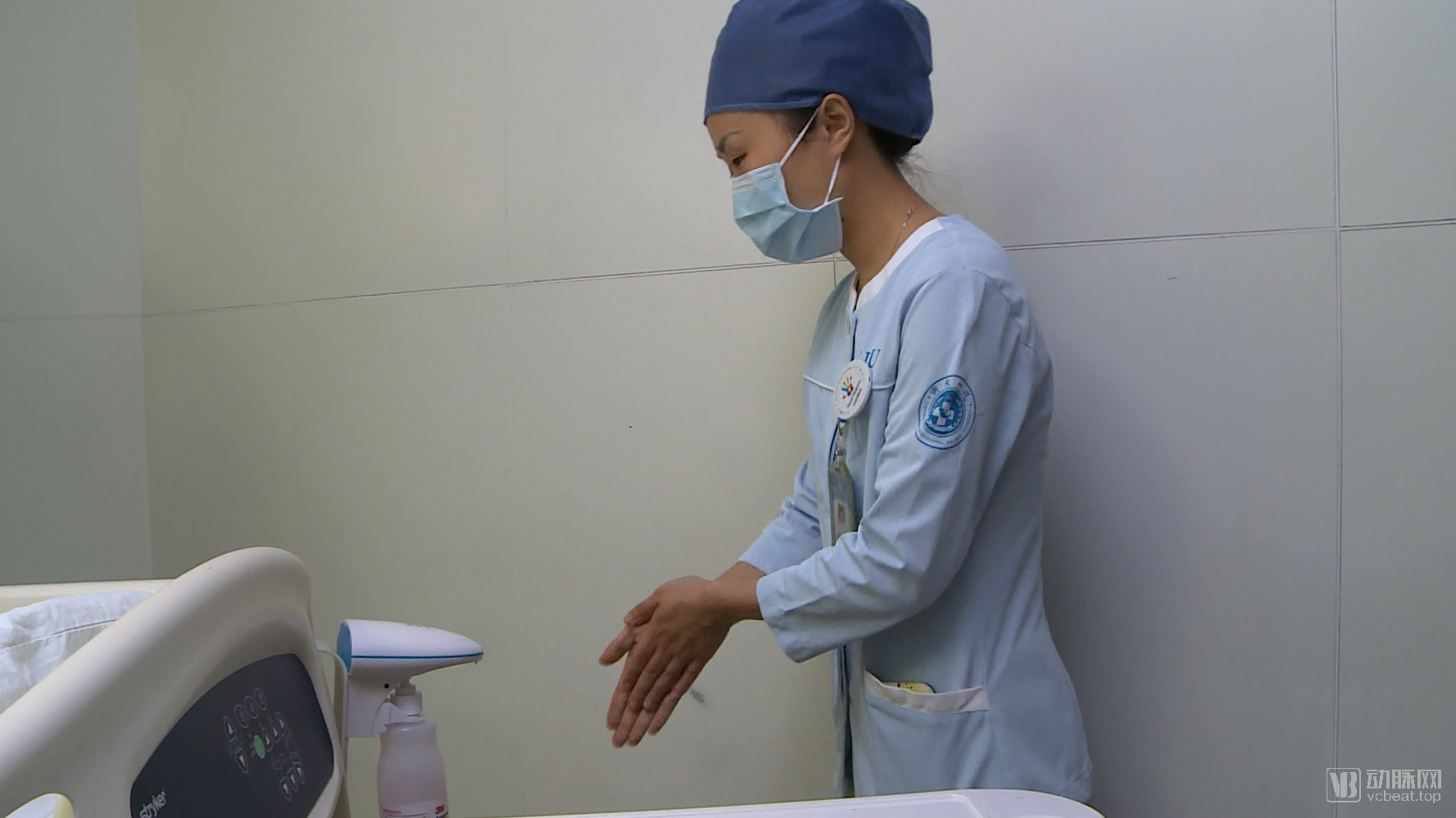
Leveraging its underlying platform architecture and the Internet of Things (IoT), Hangzhou Xiaochuang Technology Co., Ltd. utilizes data collection products deployed in key processes and departments to analyze behavioral data and provide early warnings. Taking the IoT-based Hand Hygiene Management System as an example, the solution encompasses a hand hygiene management platform, a hand hygiene mobile app, and hand hygiene hardware products. Its product portfolio specifically includes:
Smart AP:Utilizes wireless communication to transmit and receive data between various hand hygiene monitors within the identification range and the communication network.
Bed Area Identifier:Identify medical staff and cleaning personnel performing medical procedures near the patient's bedside. Utilize wireless communication to remind individuals entering the detection zone to wash their hands promptly, and transmit their identification information to the access point (AP) upon completion of hand hygiene.
Liquid Bottle:Powered by a lithium battery, it operates for three months on a single charge, features an adjustable detection range, and monitors whether users dispense liquid to wash their hands.
Badge:Worn by healthcare workers, cleaning staff, and others. Powered by a lithium battery with wireless communication; a single charge lasts for one month. Features audio and visual alerts.
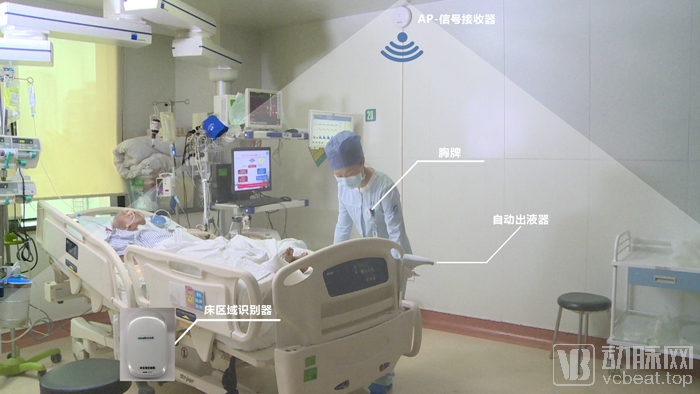
It is reported that Hangzhou Xiaochuang Technology Co., Ltd. adopts ultra-high-precision indoor positioning technology. Leveraging its continuous R&D capabilities, the company constantly expands its product portfolio to form a comprehensive product matrix and build a complete IoT solution for hospital-acquired infection (HAI) control. Furthermore, the enterprise offers specialized services such as live-streamed education on infection prevention and control, as well as big data services for infection control, thereby comprehensively meeting the needs of hospitals.
In terms of marketing, the company adopts an online-offline integrated strategy. Online, it leverages its platform, “Infection Control Gas Station,” to target hospital infection control physicians, promoting products through a low-cost, high-coverage internet-based model. Offline, it promotes products through infection control conferences, strategic deployment in pilot hospitals and lecturer networks across various regions, and a hybrid distribution model combining agency partnerships with direct sales. Currently, Hangzhou Xiaochuang Technology Co., Ltd. has partnered with manufacturers such as Shanghai Likang, Chuangye Huikang, Heren Technology, and Saraya, expanding its product presence into the global market.
Investors say: Focusing on the Xiaochuang Technology sector and startup teams
Founded in 2014 and located in the Haichuang Park of Hangzhou Future Sci-Tech City, TouNa’er is an angel investment firm and startup accelerator dedicated to early-stage companies, featuring robust mechanisms for project screening, investment, and incubation. Since its inception, the firm has engaged in discussions on over 3,000 startup projects, hosted hundreds of entrepreneurial events, and invested in and nurtured 25 companies. These portfolio companies have achieved a survival rate of 90%, with more than two-thirds securing subsequent rounds of financing. The overall internal rate of return (IRR) on investments exceeds 50% annually on a book-value basis.
Chen Qiudong, Founder and CEO of Tounaer.com, told reporters that Tounaer values the sector in which Xiaochuang Technology operates. On one hand, hospital-acquired infection (HAI) control is an essential need with significant social and commercial value; on the other hand, Xiaochuang Technology employs technological solutions, which are a necessary approach to addressing HAI control.
He stated that, compared with some foreign countries, China’s medical resources remain relatively scarce, and doctor–patient conflicts are becoming increasingly severe. Against this backdrop, state oversight of hospital management has grown stricter, with intensified supervision of infection control. Currently, many provinces have successively introduced corresponding policy documents, indicating broad prospects for future development.
Furthermore, TouNaEr also places significant value on the founding team led by Zhang Fengxiang. As the seed investor in Xiaochuang Technology, TouNaEr was the first to engage with the company and has witnessed its development journey. Chen Qiudong stated that from their initial vision to the present, Xiaochuang’s team has encountered numerous challenges across product development, implementation, team building, and fundraising. The team has demonstrated strong resilience, diligence, and perseverance.
Xiaochuang’s team has grown from an initial six members to dozens today; its product portfolio has expanded from a hand hygiene management system to include NICU management and medical waste management systems, with continuous R&D driving ongoing innovation. The company has attracted industrial capital and top-tier industry experts, amassed a large base of physician users, integrated representative distributor resources both domestically and internationally, and is currently building an infection control alliance. In Chen Qiudong’s eyes, Hangzhou Xiaochuang Technology Co., Ltd. undergoes positive changes at regular intervals.
It is understood that after becoming a shareholder of Xiaochuang in its early stages, Tounaer has provided the following assistance to Xiaochuang:
Strategic Review:Xiaochuang initially lacked a clear strategy and had a limited product portfolio. After multiple discussions with the founders and conducting industry research, we assisted the company in defining its market positioning and charting its development roadmap for the next decade.
Corporate Governance:Assist the company in establishing a standardized and comprehensive governance framework, including equity structure design, partner referral and incentive mechanisms, and oversight of the proper functioning of shareholders' meetings and board of directors meetings.
Assist with Fundraising:As a medical hardware project, Hangzhou Xiaochuang Technology Co., Ltd. (“Xiaochuang”) required substantial upfront investment and faced long payment cycles, leading to repeated cash flow bottlenecks. VCBeat supported Xiaochuang’s fundraising efforts by helping refine its business plan, introducing investors, and facilitating communications, ultimately securing the deal.
In the future, as Xiaochuang grows stronger, we hope to provide greater support in areas such as capital operations, team building, internal corporate management, and cultural development.