

The Future Is Here: How AI and Medical Robotics Are Transforming Healthcare
On November 15, 2019, the Greater Bay Area China Frontier Medical Technology Summit, hosted by Gaoda Tongdao Investment Holdings and co-organized by VCBeat, was successfully held at The St. Regis Zhuhai. Themed “Empowering the Healthcare Industry with Frontier Technologies to Co-build the Golden Age of the Greater Bay Area,” the summit leveraged the economic and policy advantages of the Guangdong-Hong Kong-Macao Greater Bay Area. It aimed to promote the empowerment of the healthcare industry through emerging frontier technologies, actively create an international platform for exchange and cooperation in the medical technology sector, and establish an international hub for dialogue among industry, academia, and enterprises.
The forum invited more than 30 distinguished guests from China and abroad to deliver insightful keynote speeches, including Long Yongtu, China’s Chief Negotiator for WTO Accession, former Secretary-General of the Boao Forum for Asia, and former Vice Minister of the Ministry of Foreign Trade and Economic Cooperation; Zhao Zilin, Chairman of the China Association of Medical Equipment and former Director of the Department of Planning and Finance under the former Ministry of Health; Ren Meimei, former Deputy Inspector General of the Department of Science, Technology and Standards and the Department of Drug Supervision under the former China Food and Drug Administration; Liao Hongen, Tenured Professor at Tsinghua University and expert in minimally invasive diagnosis and treatment and 3D imaging; Lu Qingjun, Director of the Office of the National Telemedicine and Internet Medicine Center; and Robert Zurawin, 2018 President of the Society of American Gastrointestinal and Endoscopic Surgeons (SAGES). More than 200 representatives from leading domestic research institutions, medical enterprises, and investment firms participated in the forum.
Attendees focused on fields such as medical robotics, minimally invasive precision diagnosis and treatment, consumer healthcare, biopharmaceuticals, and medical artificial intelligence, sharing the latest scientific research achievements and industry trends, while jointly exploring new pathways for the healthy development of the sector.
Following the opening of the forum, Yang Haofeng, Founding Partner of Gaoda Tongdao Investment Holdings, delivered the inaugural address. In his remarks, Mr. Yang stated that over the past four years, Gaoda Tongdao has invested in more than 30 high-growth technology and healthcare companies across China, the United States, Australia, and Europe, with some projects already delivering exceptional returns to investors. He highlighted the Greater Bay Area as a new engine and strategic focal point for China’s economic development over the next decade. Currently, Gaoda Tongdao has successfully raised a RMB 3 billion fund in Zhuhai, located in the heart of the Greater Bay Area. Moving forward, the firm aims to leverage national strategies for the Greater Bay Area to achieve new heights of success. “Through this summit, Gaoda Tongdao seeks to establish an international platform for exchange and cooperation in medical technology, connecting cutting-edge global technologies and fostering dialogue,” he added.
Long Yongtu, China’s Chief Negotiator for WTO Accession and former Vice Minister of Foreign Trade and Economic Cooperation, delivered remarks at the event. Long pointed out that the healthcare industry will become the most promising sunrise industry in China and around the world in the years to come, ushering in a golden age of significant growth. “With frontier technology as its theme, this forum highlights a critical truth: every industry in today’s society, particularly the healthcare sector, must be driven by cutting-edge technologies. Frontier technology is also a key driver of globalization. Therefore, the forum has chosen an excellent theme, encouraging participants to spark new ideas and innovative concepts through discussion.”
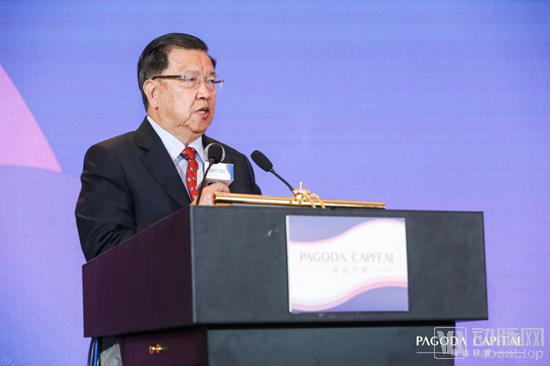
Mr. Long Yongtu’s On-Site Remarks
Subsequently, Zhang Yanling, President of the Chinese Medical Doctor Association, sent a congratulatory message, in which he fully affirmed the role of this high-level summit in promoting the empowerment of the healthcare industry by emerging frontier technologies and in building the ecological chain of the healthcare industry in the Greater Bay Area.
During the forum, Chairman Zhao Zilin delivered a keynote speech titled “Frontier Technologies Driving a New Wave in Medical Equipment.” He stated that the medical equipment industry is a prerequisite for ensuring the normal conduct of clinical diagnosis and treatment, teaching, and scientific research, and is also a sunrise industry with strong growth potential, interconnectedness, and driving force.
Since 2010, the global medical equipment industry has maintained an average growth rate of 3.4%, while the market share of domestically produced equipment by Chinese enterprises has been steadily increasing. It is projected that the Chinese market will surpass RMB 800 billion by 2020. The emergence of cutting-edge technologies such as the internet, big data, and artificial intelligence has initially achieved coverage across the entire industrial chain of medical devices, the full spectrum of medical processes, all health scenarios, and the entire user lifecycle, thereby constructing an “Internet + Healthcare” ecosystem.
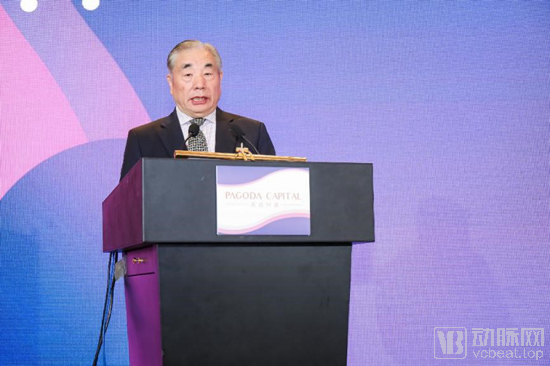
Chairman Zhao Zilin Delivers Keynote Address
Deputy Inspector General Ren Meimei delivered a keynote address titled “Leading with Regulatory Science to Promote Public Health and Industrial Innovation.” In her speech, she pointed out that drug safety is vital to people’s livelihoods and national security; it serves as a crucial foundation for the health of the entire population, and drug regulation constitutes an essential component of implementing the Healthy China initiative.
2019 was a relatively special year for China’s drug administration practices. The Drug Administration Law, originally promulgated in 1984, underwent its third revision, emphasizing risk management throughout the entire drug lifecycle, from evaluation to post-marketing supervision. The country’s first Vaccine Administration Law was promulgated and is scheduled to take effect on December 1, 2019. Ms. Ren Meimei, Deputy Inspector, stated that vaccines fall within the category of drugs; the enactment of separate legislation for their administration reflects the high priority placed on special pharmaceuticals concerning public health and safety. In the future, separate legislation will continue to be introduced to regulate the administration of special products such as cosmetics.
Furthermore, China will launch the Action Plan for Regulatory Science of Pharmaceuticals, fully implement the “four strictest” requirements for drug safety, and promote innovation in regulatory concepts and systems around themes such as innovation, quality, efficiency, system, and capacity, so as to accelerate the country’s transition from a major producer of generic drugs to a pharmaceutical powerhouse.
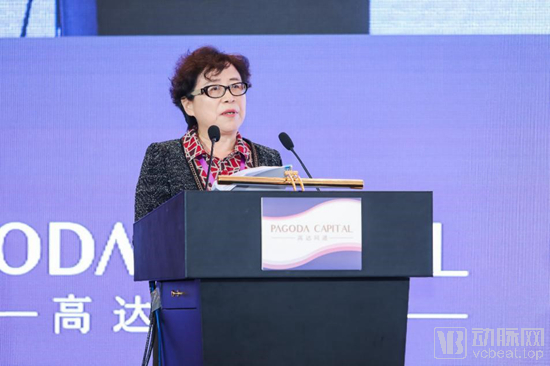
Deputy Inspector Ren Meimei Delivers Keynote Address
Professor Robert Zurawin delivered a keynote speech titled “Prospects for the Global Medical Robotics Industry.”While showcasing the latest advancements in the global medical robotics industry, Professor Zurawin emphasized that regardless of the equipment employed, it is ultimately the operator who determines its effectiveness. Therefore, it is essential to align patient needs with physicians’ skills by providing safe and effective devices that surgeons can master through training, thereby enabling medical robots to fulfill their true potential.
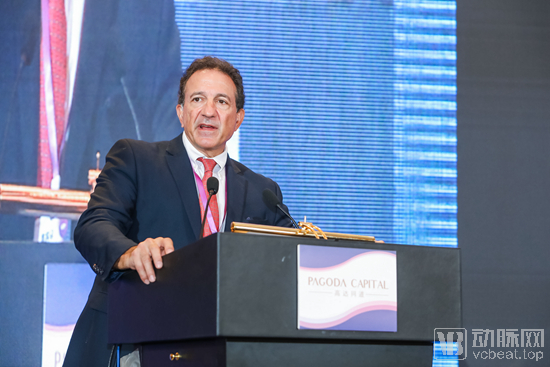
Professor Robert Zurawin Delivers Keynote Address
Zhang Wanshi, Director of the Department of Medical Technology at the Air Force General Hospital, a Top-Tier Expert in Air Force Medicine, and the Chief Expert in Radiology for the entire People's Liberation Army, delivered a keynote speech titled “Artificial Intelligence Empowering CT Imaging for Coronary Heart Disease.” By introducing frontline practices of artificial intelligence (AI) in cardiovascular CT imaging, Director Zhang pointed out that increasing the application of AI in actual clinical settings has significantly improved efficiency. He expressed confidence that, in the future, it will be possible to simultaneously observe various imaging parameters—such as blood vessels, plaques, and myocardial motion—with greater precision. Furthermore, he noted that the optimization and advancement of medical imaging technologies, including fMRI and lung perfusion imaging, will bring greater benefits to clinical patients.
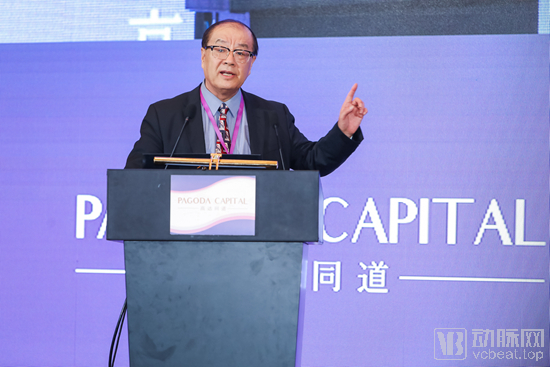
Director Zhang Wanshi Delivers Keynote Address
Jo Dong-sung, a renowned South Korean economist and President of Incheon National University, shared his insights in “Interdisciplinary Integration: Creatively Pioneering the Future of Life Sciences Research,” presenting Incheon National University’s innovative approach to higher education. According to President Jo, Incheon National University has established close collaborations with major South Korean corporations. Upon enrollment, students simultaneously pursue their specialized academic majors and engage in designated roles within partner companies, forming a matrix-style training pathway that enables them to develop and hone their professional competencies through practical experience. President Jo believes that this educational philosophy at Incheon National University will see further advancement over the next decade.
Director Lu Qingjun delivered a keynote speech titled “Opportunities and Challenges of New ‘Internet+ Healthcare’ Business Models in the 5G Era,” introducing China’s practical journey in the field of telemedicine. Director Lu Qingjun pointed out that China has formulated its current policies on telemedicine and internet hospitals based on two decades of experience in healthcare informatization. “China’s definition of telemedicine is relatively more limited compared to academic definitions or Western concepts of telemedicine. Its primary purpose is to assist primary care institutions in delivering standardized diagnosis and treatment, as well as managing complex and refractory diseases. Under such a diagnostic and therapeutic framework, the legal relationships among all parties become clearer.”
Currently, the government has limited the scope of internet hospitals to follow-up consultations due to concerns regarding medical quality and safety. In the next phase, as technologies such as information technology, sensors, and cybersecurity mature sufficiently, consideration will be given to expanding the diagnostic and treatment scope of internet hospitals. The recently emerging 5G technology not only provides high-bandwidth, low-latency communication tools but also supports the implementation of industry innovations empowered by cutting-edge technologies like AI at the grassroots level.
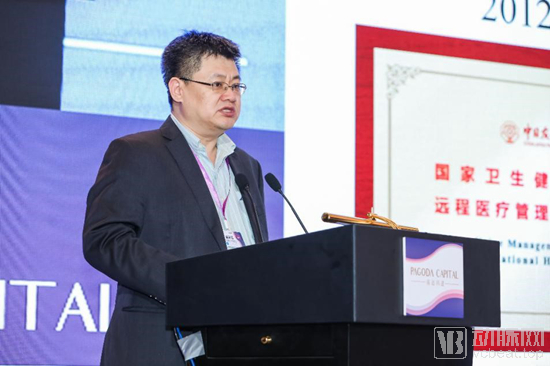
Director Lu Qingjun Delivers Keynote Address
Furthermore, medical experts and executives from innovative enterprises in China, the United States, and South Korea held separate roundtable discussions on medical robotics, consumer healthcare, biopharmaceuticals, and medical artificial intelligence. The sessions, themed “The Past and Present of Medical Robotics,” “The Next Golden Age of Healthcare Driven by Consumer Demand,” “Empowering Operational Services to Implement Frontier Industries,” and “The Progress and Future Direction of AI in Healthcare,” explored cutting-edge innovative technologies and industry foresight.
At the conclusion of the conference, Long Yongtu, former Vice Minister of the Ministry of Foreign Trade and Economic Cooperation, led a fireside chat with attendees to discuss “Outlook for the Development of the Greater Bay Area and Leading China’s Economic Takeoff.”