

Psychosomatic Health Impacts Physical Well-being: Psychosomatic Medicine Reveals How Psychological Factors Influence Health
On the afternoon of November 15, 2019, the Psychosomatic Medicine Committee of the Chinese Medical Doctor Association was established through election. On November 16, the inaugural ceremony of the Psychosomatic Medicine Committee of the Chinese Medical Doctor Association was held at the National Academic Forum on Psychosomatic Medicine in Guangzhou.
This forum was jointly hosted by the Chinese Medical Doctor Association, the Psychosomatic Medicine Professional Committee of the Chinese Medical Doctor Association, the Sleep and Mental Health Professional Committee of the Chinese Sleep Research Society, and the Behavioral and Psychosomatic Medicine Branch of the Guangdong Medical Association, and organized by Guangdong Provincial People's Hospital. Themed "Integrative Psychosomatic Healthcare for Promoting National Health," the forum featured specialized discussions on the future development and practice of integrative healthcare in the psychosomatic field, as well as the application of medical technologies and frontier directions. The event comprised a main forum and four sub-forums focused on "Psychosomatic Medicine," "Behavioral Medicine," "Sleep and Mental Health," and "Double-Heart Medicine." More than 1,000 hospital leaders and experts in the field of psychosomatic medicine participated in the event.
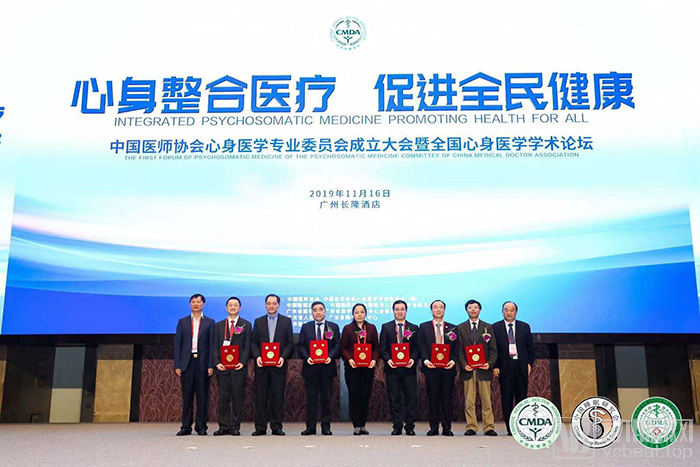
Establishment of the Psychosomatic Medicine Professional Committee of the Chinese Medical Doctor Association
To adapt to the development trends of psychosomatic medicine and promote the construction of this discipline, the Psychosomatic Medicine Professional Committee of the Chinese Medical Doctor Association (CMDA) was initiated by Professor Geng Qingshan, Party Secretary of Guangdong Provincial People’s Hospital; Professor Liu Meiyan of Beijing Anzhen Hospital; and Professor Zhao Xudong of Tongji University School of Medicine, among others. The establishment of the Committee has received strong support from CMDA President Zhang Yanling, Academician Fan Daiming, and Academician Lu Lin, and was officially approved by the CMDA. Its objectives are to facilitate the transformation of the medical model, advocate and promote integrative medicine and the “biopsychosocial” medical model; advance clinical practice, research, exchange, teaching, and training in psychosomatic medicine; and enhance the professionalism and competency of medical personnel and other healthcare providers.
In recent years, Professor Geng Qingshan has dedicated himself to research in the fields of psychosomatic medicine, dual-heart medicine, and integrative medicine. He was the first in China to put into practice the theory proposed by Professor George Engel in the United States in 1977, which advocates a shift from the pure biomedical model to the “biopsychosocial” medical model. His contributions include three major aspects: First, he established industry standards for the psychosomatic integrative medicine model in China for the first time and promoted their application. He authored and facilitated the issuance of the *Notice of the Guangdong Provincial Health Commission on Enhancing the Diagnosis and Treatment Capabilities of Non-Psychiatric Physicians for Psychosomatic Diseases*, making Guangdong Province the first in China to release such a policy, thereby promoting the transformation of diagnosis and treatment service models for psychosomatic diseases in the province. Second, he was the first in China to combine the diagnosis of Mental Stress-Induced Myocardial Ischemia (MSIMI) with virtual reality technology, confirming that psychological stress can induce myocardial ischemia in patients with coronary heart disease. Using cardiac PET-CT as the gold standard for diagnosing MSIMI, he developed clinical pathways for diagnosing MSIMI via echocardiography. Third, he participated in the development of the 3D Medical Psychosomatic Holistic Intelligent Diagnosis and Treatment System and the PEM-D Psychosomatic Holistic Intelligent Diagnosis and Treatment System, both based on big data and possessing independent intellectual property rights, thereby achieving standardization and normalization of holistic psychosomatic diagnosis and treatment.Professor Geng also organized the compilation of China’s first *Training Manual on Diagnosis and Treatment of Psychosomatic Diseases for Non-Psychiatric Physicians* and the *Advanced Tutorial on Dual-Heart Medicine Diagnosis and Treatment*, which was included in the national standardized residency training curriculum. Additionally, he translated one U.S. *Guideline for the Diagnosis and Treatment of Mental Disorders by Non-Psychiatric Physicians*. Through mental health training for non-psychiatric physicians and multidisciplinary joint consultations, he has promoted psychosomatic integrative healthcare and advanced public health.
At the conference, Gao Feng, Director of the Membership Department of the Chinese Medical Doctor Association; Professor Geng Qingshan; Professor Zhao Xudong; and Luo Dongtao, Co-founder and Chief Marketing Officer of Miaoshou Doctors, jointly launched a public welfare project for psychological assistance. Zhang Ni, Chairwoman of Zhongsheng Kaixin Enterprise Group, initiated the big data project on integrated psychosomatic care in general hospitals. It is reported that these two projects will provide patients with professional psychological intervention, psychological assessment, and advanced digital integrated psychosomatic treatment, aiming to deliver high-quality services and further promote the development of psychosomatic medicine in China.
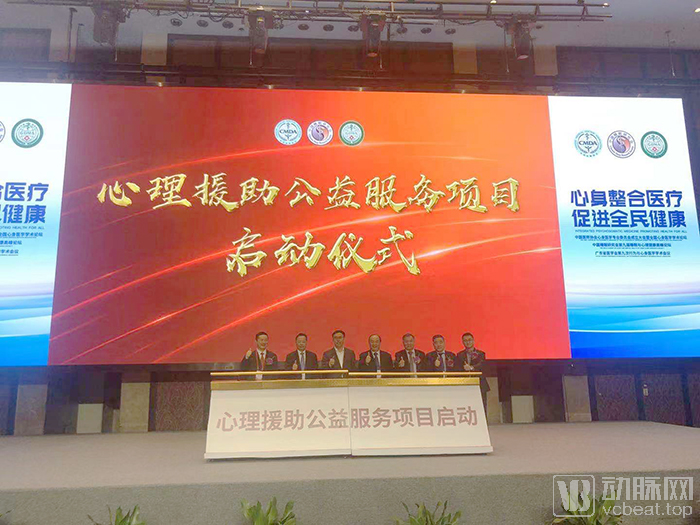
The conference also launched a public welfare project for psychological assistance.
Following the launch ceremony, Academician Lu Lin, President of Peking University Sixth Hospital; Geng Qingshan, Party Secretary of Guangdong Provincial People’s Hospital; Professor Zhao Xudong from Tongji University School of Medicine; Zhang Wei, Party Secretary of West China Hospital of Sichuan University; Professor Jiang Wei from Duke University Hospital; and Lin Feng, Head of the Internet Hospital and General Manager of the Mental Health Business Unit at Beijing Yuanxin Technology Co., Ltd., accepted interviews with VCBeat.
Academician Lu Lin believes that many current psychosomatic diseases are closely related to sleep quality. Sleep disorders are on par with neurological diseases and mental behavioral disorders; insomnia plays a significant moderating role in the relationship between anxiety and comorbid depression. Sleep disorders are closely linked to somatic diseases, cognitive function, emotional issues, and even social functioning.
When discussing the future mission of the Psychosomatic Medicine Professional Committee, Professor Geng Qingshan stated that the committee’s primary task is to promote the transformation of the medical model from a purely biomedical model to a “biopsychosocial” medical model, which can be broken down into three aspects.
First, promote the integration of psychosomatic medicine’s diagnostic and therapeutic skills and methods into all clinical specialties, rather than confining them solely to internal medicine. This requires collaboration with health authorities, industry associations, and relevant experts to provide training in psychiatric and psychological diagnosis and treatment for non-psychiatrist physicians in general hospitals and other non-psychiatric specialized hospitals across China. Such efforts will enable physicians from a broader range of disciplines to identify psychosomatic disorders and deliver timely initial interventions.
Second, a multidisciplinary consultation system should be established, involving departments such as psychiatry and clinical psychology, to conduct joint consultations for patients with complex conditions. Meanwhile, enterprises like Miaoshou Doctor and Zhongsheng Kaixin need to participate in this field by building an online-offline consultation service platform through the development of an internet- and big data-based integrated psychosomatic diagnosis and treatment system. Secretary Geng Qingshan believes that while internet healthcare has certain limitations in treating somatic symptom disorders, it plays a crucial role in advancing the treatment of mental illnesses, facilitating convenient psychological healing for patients and providing counseling support for their families.
Third, timely referral to psychiatry. The limited number of psychiatrists cannot cope with the vast population of patients with mental disorders; therefore, non-psychiatric physicians—including primary care general practitioners, family doctors, community physicians, and non-psychiatric specialists in general hospitals—must be empowered to conduct initial identification and diagnosis, followed by referral to psychiatric services. The development direction of integrated psychosomatic medicine can be summarized in twelve Chinese characters as “specialist consultations, multidisciplinary joint consultations, and timely referrals.” The primary arena for psychosomatic medicine lies within non-psychiatric specialties, with psychiatrists serving as our mentors and guides, which is essential for advancing the discipline.
Professor Zhao Xudong and Professor Jiang Wei introduced the development of psychosomatic medicine in developed countries abroad. The practice models in these countries can be broadly categorized into two types. One is the consultation-liaison model, in which psychiatrists primarily deliver mental health services within general hospitals. The other is the “biopsychosocial” competence model. This competence model emphasizes that all healthcare professionals should acquire knowledge of psychosomatic medicine and master relevant skills.
Germany’s approach to psychosomatic medicine is the most advanced. In Germany, psychosomatic medicine and psychotherapy constitute a comprehensive curriculum; all medical students and residents in standardized training programs undertake extensive coursework known as “Basic Services in Psychosomatic Medicine.” Through intensive training, they acquire the knowledge and skills related to mental health. At another level, specialists in psychosomatic medicine are trained, with diagnosis and treatment ultimately provided by these specialists. Currently, China does not have a dedicated specialty in psychosomatic medicine; it is currently equivalent to the subspecialty of clinical psychology within psychiatry.
In the United States, the model of psychosomatic medicine has evolved from multidisciplinary to interdisciplinary. During the multidisciplinary era, psychosomatic medicine functioned as a distinct specialty, primarily responsible for managing clinically overt psychosomatic disorders. In the interdisciplinary era, multiple disciplines have been integrated, necessitating team-based care provided by healthcare professionals. Whether internists, obstetricians and gynecologists, general practitioners, or nurses, all have received training in psychosomatic medicine.
“Implementing psychosomatic medicine in clinical practice in China is challenging,” said Zhang Wei, Party Secretary of West China Hospital. As early as 2003, West China Hospital began emphasizing the psychological status of hospitalized patients and launched a psychological counseling training program in Sichuan Province. However, patient acceptance was low due to strong stigma associated with mental illness, and healthcare professionals lacked sufficient expertise. It was not until 2015 that comprehensive psychological assessments for hospitalized patients were fully implemented at West China Hospital. The hospital initiated the “Sunshine Hospital” project, innovatively developing a rapid psychological assessment scale for patients, designating mental health status as the sixth vital sign, and establishing a tiered management process for addressing patients’ psychological issues. This has enabled the long-advocated biopsychosocial medical model to be effectively put into practice.
Finally, the head of the internet hospital at Beijing Yuanxin Technology Co., Ltd. addressed how online platforms can play a role in integrated mind-body healthcare. First, Miaoshou Doctor Internet Hospital will serve as an online service platform for physicians and patients in the field of psychosomatic medicine, facilitating physician training, educating patients and their families, and promoting the development of psychosomatic medicine as a discipline. Public awareness of mind-body health remains insufficient, with patients tending to focus more on their physical health. Therefore, the initial step for Miaoshou Doctor is to collaborate with the specialized committee to conduct patient education.
Secondly, patients with psychiatric disorders require long-term follow-up and disease course management. Miaoshou Doctor can serve as an online management platform and tool for physicians, facilitating connectivity between doctors and patients. Once patients are onboarded, subsequent follow-up visits and prescription renewals can be conducted on the internet-based platform, thereby reinforcing and feeding back into the platform’s ecosystem.
At the conclusion of the conference, Professor Geng Qingshan provided a profound summary and outlook for the entire Psychosomatic Medicine Academic Forum. In recent years, psychosomatic medicine worldwide has made significant strides in basic research, clinical practice, and scientific investigation. China’s psychosomatic medicine sector has developed rapidly, keeping pace with developed countries and regions. Looking ahead, the Psychosomatic Medicine Professional Committee of the Chinese Medical Doctor Association will continue to integrate high-quality medical resources, synergizing multi-party healthcare assets to promote the standardized construction and clinical application of big data-based integrated psychosomatic medicine in China. This will be achieved through three key initiatives: first, analyzing and establishing standardized clinical diagnosis and treatment protocols for psychosomatic medicine via self-examination, screening, intervention, assessment, and intelligent diagnosis; second, developing guidelines for integrated psychosomatic clinical treatment, clinical diagnostic and therapeutic standards, and expert consensus through large-sample studies; and third, establishing relevant education, training, and academic journal dissemination systems to accelerate project implementation and promote outcomes. These efforts aim to further enhance clinicians’ diagnostic and therapeutic capabilities for psychosomatic disorders, maximize patient benefits by achieving simultaneous treatment of mind and body, and advance the development of psychosomatic medicine in China.