

Genostics Medical Leverages 'DRTU' Model to Empower Clinical Decision-Making in Urological Oncology
Gloriousmed
Provider of Comprehensive Genetic Testing Solutions
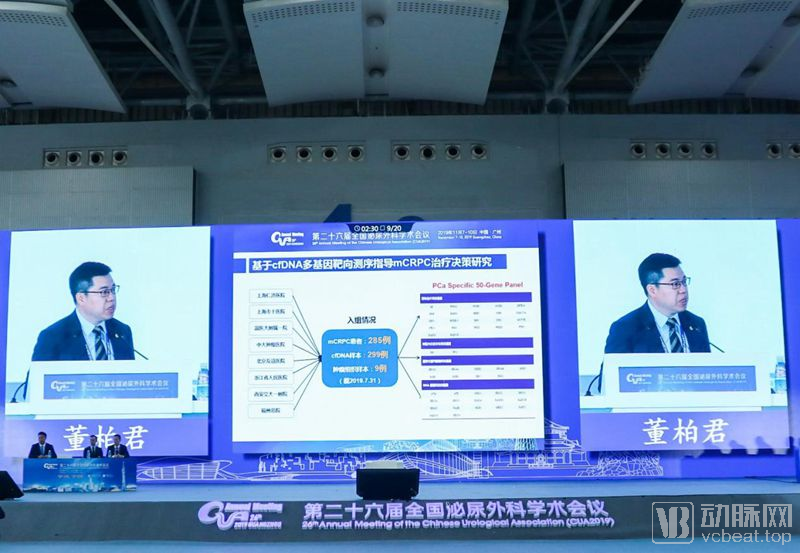
At the recently held 26th National Academic Conference of Urology, Professor Dong Baijun from the Department of Urology at Renji Hospital, Shanghai Jiao Tong University School of Medicine, delivered a presentation sharing collaborative achievements with Gloriousmed. The study, titled “Research on Guiding Treatment Decisions for Metastatic Castration-Resistant Prostate Cancer (mCRPC) Based on cfDNA Multi-Gene Targeted Sequencing,” demonstrated that blood-based liquid biopsy can replace tissue sampling for genetic testing in mCRPC. Furthermore, it identified molecular biomarkers for drugs such as abiraterone and olaparib at the genetic level, thereby guiding personalized medication for mCRPC patients. In the Oncology Subsession of the conference, Professor Fan Liancheng from Renji Hospital presented on “Comparative Genomic Profiling of Chinese Prostate Cancer Patients Before and After Castration Resistance.” He introduced the design of a precision diagnostic and therapeutic gene panel for prostate cancer developed in collaboration with Gloriousmed, as well as the protocols and technical roadmap for molecular subtyping of metastatic Castration-Sensitive Prostate Cancer (mCSPC) based on sequencing results.
Precision oncology is predicated on precise genetic testing. With the continuous market launch of new targeted therapies and immunotherapies, next-generation sequencing (NGS)-based pharmacogenomic testing has gradually become an essential and routine component of cancer treatment. An increasing number of clinicians and healthcare teams are adopting this technology, leading to growing clinical benefits for patients.
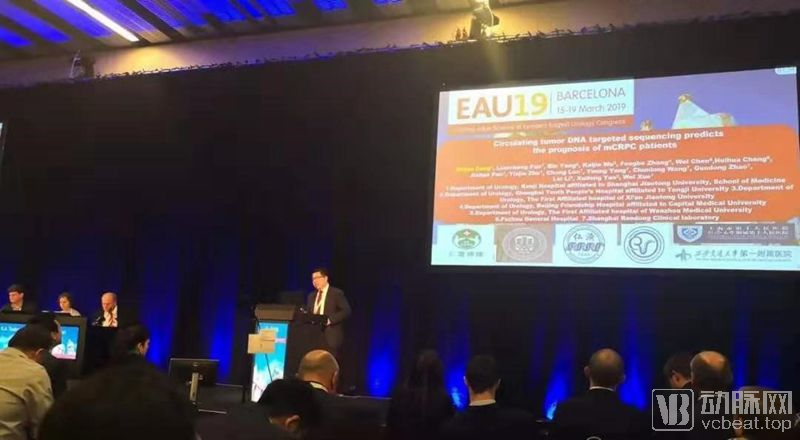
Gloriousmed, in close collaboration with Professor Dong and Professor Fan, has been committed to advancing precision medicine since its establishment in 2015. The company has deeply cultivated specialized oncology fields, particularly urologic tumors, to create a comprehensive, closed-loop system for the precise diagnosis and treatment of specific cancer types. Although Gloriousmed entered the market relatively late, it has emerged as a rising star within just four years, achieving remarkable milestones: In 2017, Gloriousmed launched its first integrated solution for precise tumor immunotherapy and the first ctDNA panel designed to assess the efficacy of tumor immunotherapy. In 2018, the company introduced its prostate cancer diagnostic product and made its debut at the CSCO Annual Meeting. In 2019, Gloriousmed released genetic testing products for renal cell carcinoma and urothelial carcinoma, along with an automated reporting platform and a patient management platform, and presented its latest scientific achievements at the EAU (European Association of Urology) Congress. Over the years, members of the Gloriousmed team have published more than 200 articles in international journals.
According to Cao Jianjun, COO of Gloriousmed, it takes approximately one year for the company’s products to progress from project initiation and scientific research to market launch. CEO Jin Ge stated that this rapid product translation speed is attributed to Gloriousmed’s internally refined “DRTU” R&D management model, which integrates industry, academia, and research. “DRTU” stands for Demand, Research, Translation, and Upgrade, representing D—identifying clinical needs, R—collaborative scientific research, T—product validation and translation, and U—big data-driven iterative updates.
Yang Yining, Medical Director at Gloriousmed, believes that products with genuine clinical application value must be validated through practical clinical use. Accordingly, the design of Gloriousmed’s clinical products consistently adheres to the principle of starting from clinical needs and culminating in clinical implementation. To this end, the Medical Center has meticulously built a multidisciplinary team with extensive research experience—spanning medicine, biology, pharmacy, and other fields—to incubate products that meet clinical demands. In identifying these needs, Medical Science Liaisons (MSLs) serve as the bridge between Gloriousmed and physicians. Externally, they engage in in-depth communication with clinicians through academic exchanges and follow-ups, systematically collecting key clinical pain points from oncology experts across various regions. Internally, they promptly relay frontline clinical information, providing a foundation for the design of research projects by the company’s backend medical R&D department. Researchers and genetic counselors at the Medical Center are responsible for transforming these frontline clinical needs into products capable of addressing challenging clinical issues within the company. Emphasizing evidence-based implementation, where evidence relies heavily on data support, Gloriousmed has independently developed the Haiji System, a one-stop data information interaction workstation. By integrating clinical phenotype and genomic data, the system continuously accumulates evidence to assist in clinical decision-making.

Discussing Real Clinical Needs with Clinicians
Taking the clinical diagnosis and treatment of prostate cancer patients as an example, after several years of therapy, patients’ lesions often metastasize and develop resistance to endocrine therapy, progressing to the stage of metastatic castration-resistant prostate cancer (mCRPC). International prostate cancer database studies have found that patients’ sensitivity to therapeutic drugs is often closely associated with mutations in one or several genes. However, there remain many discrepancies between the actual clinical manifestations in Chinese patients and theoretical research findings. For instance, pathogenic gene mutations are inconsistent with theoretical expectations, and numerous variants of uncertain clinical significance have even been observed.
On the other hand, although the overall duration of treatment efficacy for some patients with advanced metastatic castration-resistant prostate cancer (mCRPC) is only about 2–3 years, many patients can still prolong survival and improve quality of life through certain therapeutic interventions. Clinical studies have shown that in mCRPC patients with definitive DNA repair gene defects, the response rate to the PARP inhibitor olaparib reaches 88%, with a median duration of response of 10–12 months. However, a concurrent clinical challenge is that more than 80% of patients in the mCRPC stage develop bone metastases. Conventional tissue-based testing, which involves obtaining tumor tissue via bone biopsy for genetic analysis, is invasive, time-consuming, and increases patient suffering.
To address these two challenges in mCRPC, Professor Dong Bojun from the Department of Urology at Renji Hospital seeks to explore the value of genetic testing for Chinese patients with metastatic prostate cancer, as well as the feasibility of using circulating tumor DNA (ctDNA) testing in peripheral blood as an alternative to bone biopsy tissue testing.
Leveraging the close and long-standing partnership between Gloriousmed and the Department of Urology at Renji Hospital, the Medical Science Liaison (MSL) team in East China conveyed Professor Dong’s insights and needs to the internal team. In response, the team has been working diligently to address two key priorities: designing and developing genetic testing tools to assist physicians in stratifying prostate cancer diagnoses, and compiling and organizing a Chinese-specific prostate cancer database to support the formulation of effective treatment plans. The outcome of this collaboration was showcased in Professor Dong’s recent academic presentation at the Chinese Urological Association (CUA), titled “Treatment of mCRPC: Precision Targeted Therapy Based on Genetic Testing.”
In the global field of precision oncology, the latest research findings and therapeutic products continue to emerge at annual conferences such as ASCO, ESMO, and CSCO. Clinical treatment is increasingly reliant on genetic testing, while product development remains focused on addressing current clinical needs; these two aspects are mutually reinforcing, accelerating the translation from clinical concepts to genomic products. Within Gloriousmed’s “DRTU” model, during the “R” (Collaborative Scientific Research) and “T” (Product Validation and Translation) phases, the team consistently stays closely aligned with clinical practice by inviting physicians to participate deeply throughout the entire process.
From the conceptual outline provided by physicians to the concrete framework and substance of a product, Gloriousmed’s primary task is to technically verify the product’s feasibility and assess whether its sensitivity and specificity meet the required standards. This point, emphasized by Zhao Guodong, CTO of Gloriousmed, has been substantiated throughout the entire process of product design validation.
Gloriousmed operates multiple mainstream testing platforms, including quantitative PCR, Sanger sequencing, immunohistochemistry (IHC), next-generation sequencing (NGS), digital PCR, and the Leica pathology platform. It also employs bioinformatics analysis platforms such as UMT molecular tagging technology, Super CNV, the one-click Iseq Analysis data processing system, and its proprietary Tumor-specific Driver Identification (TDI) algorithm. Leveraging robust technical capabilities, the Gloriousmed team integrates clinical insights and feedback throughout every stage—from technical and commercial feasibility assessments, product design, and core R&D to small-scale, pilot, and large-scale trials, as well as performance validation and multi-center retrospective and prospective studies. This approach ensures that its products effectively address critical pain points and achieve successful clinical implementation.
Based on the aforementioned understanding of Professor Dong’s needs for mCRPC treatment, Gloriousmed rapidly collaborated with eight urology centers across China to participate in the development of a ctDNA genetic testing product designed as an alternative to tissue biopsy in the mCRPC stage. In accordance with the characteristics of prostate cancer, Gloriousmed partnered with Renji Hospital to research, develop, and design a multi-gene panel specifically targeting prostate cancer, namely the “Prostate Cancer 66-Gene” Panel. The entire product development process took nearly one year.
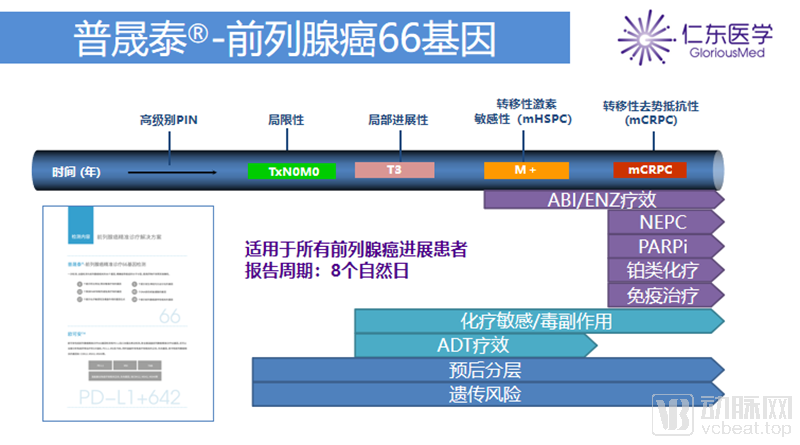
Unlike genetic testing products for personalized medication in general tumors, the Prostate Cancer 66-Gene Panel is an integrated diagnostic and therapeutic solution designed specifically for prostate cancer patients. It assists physicians in molecular subtyping and prognostic stratification, as well as in predicting the efficacy of treatment regimens such as docetaxel-based chemotherapy, platinum-based chemotherapy, and immunotherapy. Notably, this product utilizes blood-based ctDNA testing to identify definitive DNA repair gene mutations in patients with metastatic castration-resistant prostate cancer (mCRPC), thereby predicting the effectiveness of PARP inhibitors.
After one year of clinical validation, Professor Dong’s team discovered that numerous molecular pathways associated with drug resistance undergo alterations as prostate cancer progresses to the metastatic castration-resistant prostate cancer (mCRPC) stage. Furthermore, through peripheral blood testing, the team identified patients with DNA repair gene defects and administered olaparib or platinum-based chemotherapy to those who met the eligibility criteria. The results demonstrated an objective response in 11 out of 12 patients. For these patients with refractory prostate cancer—who had previously undergone systemic chemotherapy and abiraterone treatment, and for whom no effective standard therapies were currently recommended—the team ultimately identified an optimal treatment regimen guided by molecular diagnostics.
With the support of Gloriousmed, through collaborative scientific research (R) and product validation and translation (T), followed by clinical verification, Professor Dong Bojun’s insights and explorations in managing patients with metastatic castration-resistant prostate cancer (mCRPC) have yielded an optimal solution. Patients’ conditions have been tangibly improved, and the team has achieved dual breakthroughs in both academic and clinical domains. During product development, close interaction with clinical practice ensured that the final product quickly garnered positive market reception.
Given the significant discrepancies and even inconsistencies between the actual clinical manifestations and theoretical research findings of Chinese patients and international prostate cancer databases, the collection, organization, refinement, and iterative improvement of clinical samples from domestic prostate cancer patients are of pioneering significance. At Gloriousmed, the panel developed in collaboration with clinical experts, built upon the solid foundation laid by the D, R, and T phases, requires continuous iteration after its launch to achieve optimal application and performance. This precisely embodies the value of the “U” in Gloriousmed’s DRTU framework.
Gloriousmed operates the Shanghai Gloriousmed Clinical Laboratory and the Beijing Gloriousmed Digital Biomedical Research Institute, and also serves as a joint research laboratory established by the Shanghai Institute of Health Sciences of the Chinese Academy of Sciences and Shanghai Jiao Tong University School of Medicine. In collaboration with Renji Hospital, Gloriousmed has generated a comprehensive patient database by testing and collecting molecular diagnostic and clinical medication data from over 1,000 prostate cancer cases, which can be used to guide precise diagnosis and treatment plans tailored for Chinese prostate cancer patients.
With the launch of the 66-gene prostate cancer product, the mCRPC study led by Renji Hospital, which involves eight prostate cancer research centers across China and aims to replace tissue biopsy with ctDNA testing, has rapidly expanded its influence domestically. Gloriousmed has established connections or collaborations with the top 100 hospitals in China specializing in urologic oncology, including leading urology departments at Renji Hospital, Changhai Hospital, Peking University First Hospital, West China Hospital, and Sun Yat-sen University Cancer Center. As these collaborations expand, Gloriousmed is developing a new generation of integrated diagnostic and therapeutic products covering a broader range of genetic testing panels. It is expected to launch a comprehensive Chinese prostate cancer patient database by the end of this year, encompassing data from molecular subtyping to clinical follow-up information.
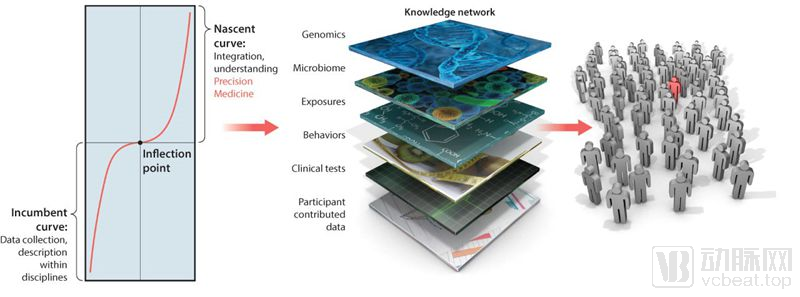
Exponentially Growing Database Rapidly Yields Clinical and Academic ValueA study initiated at Renji Hospital to evaluate the efficacy of treatment regimens—including docetaxel-based chemotherapy, platinum-based chemotherapy, endocrine therapy, and hormonal therapy—for patients with metastatic castration-resistant prostate cancer (mCRPC) has achieved phased results. According to Professor Dong Baijun, this study encompassed prostate cancer patients from 38 hospitals across China. It validated gene mutations in the international prostate cancer database that are closely associated with the efficacy of treatment regimens such as abiraterone, docetaxel, and platinum-based chemotherapy, while also elucidating the clinical guidance value of previously variants of uncertain significance (VUS). Gloriousmed, in collaboration with Renji Hospital and other partner hospitals, will sequentially publish the latest findings from this study.
Through continuous accumulation and iteration, the database for molecular diagnosis and clinical medication in prostate cancer has ultimately benefited patients by enabling personalized precision therapy. This aligns with Gloriousmed’s original mission: to deeply cultivate specialized tumor types, establish a closed-loop system for precision diagnosis and treatment of urologic tumors, and support critical clinical decision-making.
Throughout this process, Gloriousmed has started from clinical needs and moved through to product research and development implementation. By applying the “DRTU” model, it has broken down the barriers between industry, academia, and research, achieving integration across clinical research, publication of academic papers, product translation, and data accumulation for the largest and most comprehensive cohorts in China’s specific cancer subtypes. The rapid translation and implementation of outcomes fully demonstrate the strength and potential of the Gloriousmed team in resource allocation and management. 2017 marked the “Year One” for both Gloriousmed and the industrialization of precision therapy for urological tumors in China.
In the future, Gloriousmed will use its established R&D and commercialization model for diagnostic and therapeutic products targeting prostate, renal, and urothelial tumors as a template. Leveraging the “DRTU” model, the company will continuously iterate and update its product portfolio while developing integrated innovative diagnostic and therapeutic solutions. By deepening its specialized expertise across additional tumor types, Gloriousmed aims to empower clinicians to benefit more patients and accelerate the rapid development of precision oncology diagnosis and treatment in China.