

Junlian Healthcare New Drug Express Issue 31: Highlights and Pipeline Updates
Nov 18, 2019 18:00
CST Updated
18:00

This week, there were 13 new drug data entries, including 3 for oncology, 2 for anti-infectives, 2 for hematology, 1 for nephrology, and 5 for rheumatology and immunology.
❖ BeiGene’s novel BTK inhibitor, zanubrutinib, received FDA approval nearly four months ahead of schedule, while its marketing application in China is currently under regulatory review. Zanubrutinib has demonstrated potential superiority over existing BTK inhibitors; for instance, in mantle cell lymphoma (MCL), it achieved a higher complete response rate compared with approved BTK inhibitors (although not in head-to-head trials).BTK targets globally have alreadyProven to be a blockbuster, Imbruvica generates approximately $5 billion in annual sales. With zanubrutinib now on the market, its planned monthly price in the U.S. is $12,935. Given that Imbruvica’s monthly price is $12,072, zanubrutinib’s pricing does not reflect a significant discount. It is projected that over the next threeWill generate strong cash flow for BeiGene within the year
❖ Lupus Erythematosus IStraightIt is one of the high-ground areas in the field of autoimmune diseases, with a large patient population. In China, there are over 1 million patients, and they often require lifelong medication. However, in the past 60 years, only one new biologic agent has been approved globally—GSK’s belimumab, which had sales of £473 million in 2018. This drug carries the risk of potentially inducing serious adverse psychiatric events. Recently, RemeGen’s telitacicept completed its Phase III trial unblinding and has begun filing for marketing approval in China. Alicorn Therapeutics also announced positive results from the pivotal Phase III trials of its investigational monoclonal antibody anifrolumab. If both drugs are successfully launched, they are expected to provide more treatment options for systemic lupus erythematosus (SLE) worldwide.
Beigene's New Drug Brukinsa Approved for Market Launch
FDA Announces Accelerated Approval of BeiGene’s New Drug Brukinsa (Zanubrutinib) for the Treatment of Previously Treated Mantle Cell Lymphoma
Zanubrutinib is an orally administered, small-molecule BTK inhibitor independently developed by BeiGene. It is characterized by maximized specific binding to the BTK target, thereby minimizing off-target effects and associated toxicities.
Enrollment of 86 previously treated mantle cell lymphoma patients in a single-arm clinical trial
84% of patients experienced tumor shrinkage, with a median duration of response of 19.5 months
Novartis' Sickle Cell Disease Therapy Adakveo Receives FDA Marketing Approval
Novartis Announces U.S. FDA Approval of Its Potential Blockbuster Therapy Adakveo (crizanlizumab, also known as SEG101) to Reduce the Frequency of Vaso-occlusive Crises in Patients with Sickle Cell Disease (SCD) Aged 16 Years and Older
Adakveo is a monoclonal antibody targeting P-selectin, an adhesion molecule found on vascular endothelial cells and platelets that facilitates intercellular interactions, leading to multicellular adhesion and aggregation, thereby causing vascular occlusion.
A randomized clinical trial enrolling 198 patients with sickle cell disease (SCD) and a history of vaso-occlusive crises (VOC).
Patients treated with Adakveo experienced 1.63 vaso-occlusive crises (VOCs) per year requiring treatment, representing a 45% reduction compared to the control group; 36% of patients remained free of any VOCs during the clinical trial, and the time to first VOC after treatment initiation was delayed from 1.4 months to 4.1 months.
Roche’s Oral SMA Therapy Meets Phase 3 Clinical Endpoints
Roche Announces That Its Oral SMN2 Splicing Modifier, Risdiplam, Significantly Improved Motor Function in Patients With Type 2 or 3 Spinal Muscular Atrophy (SMA) in the Pivotal Phase 3 SUNFISH Trial, Meeting the Primary Endpoint
Risdiplam (RG7916) is an oral SMN2 gene splicing modifier that enhances the expression of SMN protein in the central nervous system (CNS) and peripheral tissues by modulating the splicing process of the SMN2 gene.
A double-blind, placebo-controlled Phase 3 clinical trial of risdiplam in patients with type 2 and type 3 spinal muscular atrophy (SMA) aged 2 to 25 years
After one year of treatment, patients in the treatment group achieved a statistically significant improvement from baseline in their Motor Function Measure (MFM-32) scores compared with the placebo group, which constituted the primary endpoint of the trial.
Risdiplam Increases SMN Protein Levels by Modulating SMN2 RNA Splicing
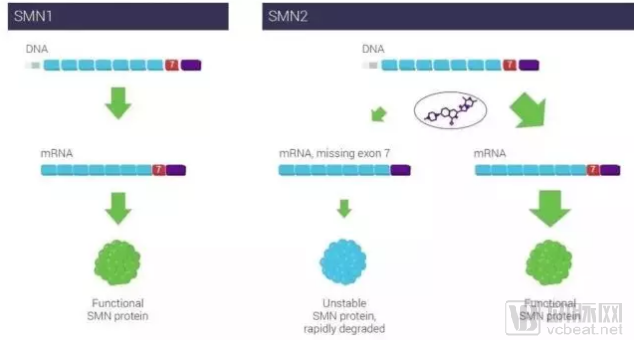
Data source: PTC Therapeutics
Shionogi's Innovative Antibiotic Fetroja Approved by FDA for Market Launch
FDA Approves Shionogi’s Innovative Antibiotic Fetroja (cefiderocol) for the Treatment of Complicated Urinary Tract Infections, Including Kidney Infections Caused by Susceptible Gram-Negative Bacteria, in Patients Aged 18 Years and Older
Fetroja is an investigational novel siderophore cephalosporin antibiotic that employs a unique mechanism to enable the drug to penetrate the cell membranes of Gram-negative bacterial pathogens, including multidrug-resistant (MDR) strains.
A clinical trial was conducted with 448 patients enrolled who had complicated urinary tract infections (cUTI).
Among patients treated with Fetroja, 72.6% achieved symptom resolution and bacterial eradication seven days after completion of therapy, compared with 54.6% in the control group receiving other antibiotics.
Alliscon and Merck & Co.’s Co-Developed MEK1/2 Inhibitor Enters NDA Stage
AstraZeneca and Merck jointly announced that the FDA has accepted the New Drug Application (NDA) for selumetinib, a MEK1/2 inhibitor co-developed by the two companies, for the treatment of patients with neurofibromatosis type 1 aged 3 years and older.
MEK is a key protein kinase in the RAS/MAPK signaling pathway. Selumetinib (AZD6244) selectively inhibits MEK1 and MEK2, thereby restoring dysregulated signaling pathways and alleviating disease symptoms in patients with NF1.
Phase 2 SPRINT Trial to Evaluate the Efficacy and Safety in NF1 Patients with PNs
Patients receiving selumetinib monotherapy achieved an objective response rate (ORR) of 66%, which includes patients who achieved complete response and those with a tumor volume reduction of more than 20%.
Reata’s Nrf2 Agonist Bardoxolone Meets Primary and Key Secondary Endpoints in Phase 3 Clinical Trial
Reata Pharmaceuticals Announces That Its Nrf2 Agonist Bardoxolone Met Primary and Key Secondary Endpoints in the Phase 3 CARDINAL Study in Patients with Chronic Kidney Disease (CKD) Associated with Alport Syndrome (AS)
Bardoxolone is an oral Nrf2 agonist. Nrf2 is a transcription factor that induces multiple molecular pathways, which can alleviate inflammatory responses by restoring mitochondrial function, reducing oxidative stress, and inhibiting pro-inflammatory signaling.
Randomized, double-blind, placebo-controlled trial; the primary endpoint was the improvement in mean estimated glomerular filtration rate (eGFR) after 48 weeks of treatment, and the secondary endpoint was the retention of eGFR four weeks after discontinuation.
After 48 weeks of treatment, compared with the baseline before treatment, the eGFR of patients in the treatment group improved by 4.72 mL/min/1.73 m², while the value in the placebo group decreased by 4.78 mL/min/1.73 m².
GlaxoSmithKline’s IL-5 Inhibitor Meets Phase 3 Primary Endpoint
GlaxoSmithKline (GSK) announced that its IL-5 inhibitor Nucala (mepolizumab) met the primary endpoint in a pivotal Phase 3 study evaluating the treatment of adolescent and adult patients with hypereosinophilic syndrome (HES).
Nucala is a first-in-class monoclonal antibody that selectively recognizes and binds to IL-5, blocking the interaction between IL-5 and its receptors on the surface of eosinophils, thereby reducing eosinophil counts.
Randomized, double-blind, placebo-controlled trial enrolling 108 patients with severe hypereosinophilic syndrome (HES) (who had experienced at least two disease flares in the past 12 months and had an eosinophil count of at least 1,000 cells/μL)
In the Nucala treatment group, 56% of patients experienced a significant reduction in disease exacerbations, compared with 28% in the placebo group—half the rate observed in the treatment group. Compared with the placebo group, the annualized exacerbation rate in the treatment group was reduced by 66% during the study period.
F2G’s Antifungal Drug Olorofim Receives FDA Breakthrough Therapy Designation
F2G Announces FDA Grants Breakthrough Therapy Designation to Its First Candidate Drug, Olorofim, for the Treatment of Patients with Invasive Fungal Infections, Including Refractory Aspergillosis and Infections Caused by Scedosporium prolificans, Hyaline Molds, and Scopulariopsis Species
Olorofim (F901318) is a novel class of DHODH inhibitors that selectively targets fungal dihydroorotate dehydrogenase (DHODH), a key enzyme in the de novo pyrimidine biosynthesis pathway.
Based on preliminary data from a Phase 2b clinical trial, enrolled patients included those with invasive fungal infections, aspergillosis, and refractory cases with suboptimal response to existing antifungal therapies.
Demonstrated good tolerability during treatment, with a median treatment duration of 12 weeks.
Kadmon’s cGVHD Drug KD025 Meets Key Clinical Trial Endpoints
Kadmon Announces That KD025, an Investigational Oral Selective ROCK2 Inhibitor for the Treatment of Chronic Graft-versus-Host Disease (cGVHD), Met the Primary Endpoint of Overall Response Rate (ORR) in the Interim Analysis of the Pivotal ROCKstar Trial
KD025 is a ROCK2 kinase inhibitor. KD025 can downregulate overactivated T cells (Th17) and upregulate Treg cell function by reducing STAT3 phosphorylation and enhancing STAT5 phosphorylation, thereby restoring immune balance.
Patients with cGVHD who had previously received at least two lines of systemic therapy were randomized to receive different doses of KD025.
KD025 achieved a statistically significant ORR, with an ORR of 64% in the 200 mg once-daily group and 67% in the 200 mg twice-daily group.
Lilly’s IL-17 Inhibitor Meets Primary Endpoints in Two Trials
Eli Lilly Announces That Its IL-17 Inhibitor Taltz (ixekizumab) Met Primary and All Key Secondary Endpoints in Two Clinical Trials in Patients with Active Psoriatic Arthritis and Non-Radiographic Axial Spondyloarthritis
Taltz is a monoclonal antibody that selectively binds to interleukin-17A (IL-17A) and inhibits its interaction with the IL-17 receptor.
Phase 3b/4 clinical trial enrolling patients with active psoriatic arthritis who were naive to biologic therapy, randomized to receive Taltz or the common therapy adalimumab, with concomitant use of conventional disease-modifying antirheumatic drugs permitted
After 52 weeks of treatment, the proportion of patients in the Taltz group who simultaneously achieved a 50% reduction in disease activity (ACR50) and complete clearance of skin symptoms (PASI 100) was 39%, compared with 26% in the active control group.
Janssen’s IL-23 Inhibitor Meets Primary Endpoint in Phase 3 Trial
Janssen, a Johnson & Johnson company, announced that its monoclonal antibody Tremfya (guselkumab), which specifically inhibits IL-23, met the primary endpoint in a Phase 3 trial for the treatment of adult patients with active psoriatic arthritis (PsA).
Tremfya is a humanized monoclonal antibody that binds to the p19 subunit of IL-23, thereby blocking the action of IL-23.
A randomized, double-blind, placebo-controlled Phase 3 clinical trial enrolling 739 patients with active psoriatic arthritis (PsA) who were naïve to biologic therapy
After 24 weeks of treatment, the proportion of patients achieving ACR20 in the treatment group was 64%, compared with 33% in the placebo group. In the treatment group, 69% and 71% of patients, respectively, achieved an IGA score of 0/1 or a significant improvement of at least 2 points from baseline in skin symptoms, whereas the corresponding figure in the placebo group was 19%.
AstraZeneca’s Innovative Lupus Therapy Shows Positive Phase 3 Trial Results
AstraZeneca announced that anifrolumab, its investigational monoclonal antibody for the treatment of moderate-to-severe systemic lupus erythematosus (SLE), achieved positive results, including a significant reduction in disease activity, in the pivotal Phase 3 TULIP-2 trial.
Anifrolumab can bind to subunit 1 of the type I interferon receptor, thereby antagonizing all activities associated with type I interferons (IFN-α, IFN-β, and IFN-ω).
365 patients with moderate-to-severe SLE participated in the TULIP-2 trial and were randomized into two groups to receive either 300 mg of anifrolumab or placebo via injection every 4 weeks, in addition to standard therapy.
At Week 52, anifrolumab significantly improved the BILAG-based Composite Lupus Assessment (BICLA) response rate (47.8% vs. 31.5%), meeting the primary endpoint.
Mechanism of Action of Anifrolumab
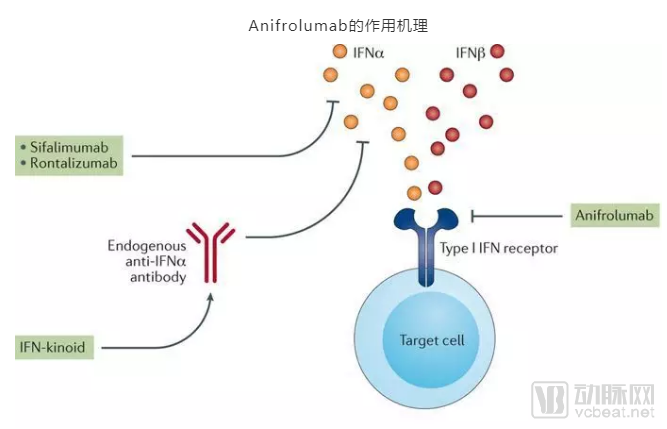
Data source: Nature
Genentech Announces Latest Results of CD20 Antibody Therapy for Lupus Nephritis
Genentech, a member of the Roche Group, announced the latest clinical results for Gazyva (obinutuzumab) in the treatment of proliferative lupus nephritis
Gazyva is a glycoengineered anti-CD20 antibody targeting the Fc fragment, with enhanced capability to clear B cells from tissues.
In a randomized, double-blind, placebo-controlled, multicenter Phase 2 clinical trial, 126 patients received Gazyva in combination with standard therapy or placebo in combination with standard therapy.
Between weeks 52 and 76 of treatment, 40% of patients in the Gazyva group achieved complete renal response, compared with 18% in the control group (p=0.007). Meanwhile, Gazyva improved the overall renal response rate compared with placebo.
❖ Gilead Announces New Clinical Data on GS-9688 (selgantolimod), a Novel Investigational Drug for the Functional Cure of Hepatitis B. GS-9688 is an oral, selective small-molecule Toll-like receptor 8 (TLR8) agonist. In one study, GS-9688 (administered orally once weekly) in combination with oral antiviral agents demonstrated good tolerability over an extended dosing period and exhibited dose-dependent pharmacodynamic activity.
❖Pfizer and Merck announced that in the Phase 3 maintenance therapy study (JAVELIN Gastric 100), Bavencio failed to outperform two other treatment regimens—continued chemotherapy or best supportive care aimed at prolonging survival—in patients with advanced or unresectable gastric cancer who had successfully completed one line of chemotherapy.
❖ GlaxoSmithKline (GSK) Announces Positive Results from Pivotal Phase III Clinical Trial of Nucala for Hypereosinophilic Syndrome (HES). Based on the study results, Nucala is the first medication to demonstrate a reduction in HES flares in the treatment of this rare disease, with the potential to transform the therapeutic landscape for patients with HES.
❖ BioMarin Announces That Investigational Drug Vosoritide Significantly Improves Growth in Pediatric Patients With Achondroplasia in Phase 2 Clinical Trial. Over the 54-month study period, vosoritide resulted in a mean height increase of 9 cm compared with the natural history of the condition.