

Deepwise Unveils Head and Neck Vascular AI at CCR2019, Pioneering a New Era in AI-Assisted Diagnosis

DeepWise
Developer of Artificial Intelligence Medical Imaging Diagnosis System
The 26th National Radiology Academic Conference of the Chinese Medical Association (CCR2019), co-hosted by the Chinese Medical Association and its Branch of Radiology, was officially held at the China National Convention Center in Beijing on November 14, 2019. Themed “Inheritance, Culture, and Development,” the conference aimed to create an international academic platform for multidisciplinary integration in medical imaging, fully showcase the overall level and professional characteristics of radiology in China, and strive to enhance the international status and influence of China’s medical imaging field. The event attracted more than 10,000 participants, including renowned experts, scholars, and medical imaging professionals from both domestic and international radiology communities, marking an unprecedented grand occasion.
As a pioneer in the medical AI industry, DeepWise established a dedicated AI experience zone at its booth to comprehensively showcase various application scenarios of artificial intelligence in the healthcare sector. The company also unveiled its latest Dr.Wise® AI Comprehensive Solution for Neurology, attracting numerous professionals to engage in discussions at the booth.
CT Angiography (CTA) is a crucial imaging modality for vascular analysis. Head and neck CTA can visualize the location of stenosis, as well as the nature and morphology of plaques in the head and neck vessels. It is primarily used to assess vascular stenosis and occlusion, and to analyze organic lesions such as intracranial aneurysms, vascular malformations, and Moyamoya disease. Furthermore, CTA is suitable for patients who cannot tolerate Digital Subtraction Angiography (DSA). It holds significant clinical value for the early diagnosis of cerebrovascular diseases.
At this exhibition, DeepWise unveiled its latest Dr.Wise® AI-Assisted Diagnostic System for Head and Neck Vessels, a one-stop, end-to-end solution that integrates CTA image post-processing, vascular analysis, and assisted diagnosis. Leveraging DeepWise’s cutting-edge AI deep learning algorithms trained and tested on extensive expert-annotated datasets, the system achieves fully automated visualization of head and neck vessels using VR, CPR, and MIP techniques. It intelligently detects and measures vascular stenosis and plaques, while generating structured assisted diagnostic reports that require only final physician confirmation. This one-click reporting capability reduces the overall time for head and neck CTA post-processing and report generation by 90%. The system maintains high detection rates for various vascular pathologies, including stenosis, plaques, intracranial aneurysms, and vascular malformations. Furthermore, vessel separation is no longer affected by bone interference, enhancing diagnostic accuracy and minimizing the risk of misdiagnosis or missed diagnoses.
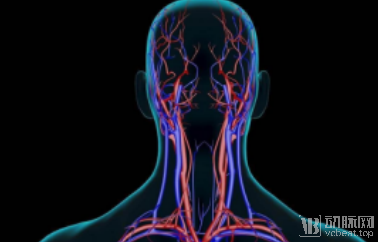
The Dr.Wise® AI-Assisted Diagnostic System for Head and Neck Vessels, combined with DeepWise’s previously launched Dr.Wise® AI-Assisted Diagnostic Systems for Hemorrhagic Stroke and Ischemic Stroke designed for emergency stroke centers, provides clinicians with a comprehensive AI-driven solution for neurological care. This advancement marks a significant step forward in the clinical application of AI-assisted diagnostics. The Dr.Wise® series has evolved from detecting single imaging signs to identifying multiple pathologies within a single organ, culminating in the neurological AI-assisted diagnostic solution unveiled at this conference. This progression underscores DeepWise’s robust innovation and R&D capabilities, leading AI-assisted diagnosis into a new era. Only AI-assisted diagnostic tools that truly meet clinical needs and integrate seamlessly into clinical workflows can be successfully adopted by hospitals and achieve commercial implementation.
In addition to new product launches, DeepWise’s independently developed multi-modal medical research platform has also yielded fruitful results.
Developed based on core AI technologies, this platform features simple and practical algorithmic tools that extensively cover clinical disease research, enabling scientific studies in deep learning and radiomics. The platform not only supports radiomics research on medical images but also facilitates the upload and integration of multimodal data, including clinical text, imaging, and pathology. It provides diverse data processing methods, such as basic statistics, machine learning, and deep learning, along with various automated image annotation tools. Pre-equipped with traditional medical statistical methods, image processing algorithms for radiomics, and advanced mainstream machine learning and deep learning models, the platform supports classification tasks for 2D and ROI-based 3D images. This allows medical researchers to conduct AI-driven scientific research without any coding or statistical expertise. It can be applied to intelligent and precise research on various diseases, including tumors, cardiovascular conditions, neurological disorders, and respiratory diseases, with a particular focus on AI imaging research for early diagnosis, treatment monitoring, and prognosis prediction. This empowers users to conduct research easily and efficiently, rapidly producing high-value scientific outcomes.
To date, DeepWise has published more than 30 papers in top-tier journals and conferences on artificial intelligence and machine learning, such as TPAMI, TCyb, ICML, CVPR, ICCV, ECCV, and AAAI. These publications cover the three premier international conferences in computer vision and pattern recognition. Notably, DeepWise presented academic achievements at the highly prestigious CVPR conference (ranked in the Top 10 of Google’s 2019 Academic Rankings) for two consecutive years, placing it among the leading AI technology companies in China. Meanwhile, in the field of medical image computing and analysis, the company has published nearly 30 papers at top-tier conferences such as IPMI, MICCAI, ISBI, RSNA, and ECR. At this year’s Chinese Congress of Radiology, DeepWise achieved remarkable success, with more than ten papers accepted.
All these achievements stem from DeepWise’s robust DeepWise Research Institute. With a team of nearly 100 members—ranking among the industry’s leading groups—the institute comprises talent from top-tier domestic and international institutions such as Stanford University, Peking University, Tsinghua University, and the Chinese Academy of Sciences. In just over two years since its establishment, DeepWise has yielded significant breakthroughs in deep learning, computer vision, and clinical medical applications, with its overall research output far surpassing that of peers in the medical AI sector. Looking ahead, DeepWise will continue to uphold its innovative DNA, dedicating itself to leveraging cutting-edge artificial intelligence technologies to advance disease research and develop medical application scenarios, thereby promoting the development of China’s healthcare industry.
DeepWise is currently undertaking multiple major special research projects funded by the Ministry of Science and Technology, the National Natural Science Foundation of China, and various major cities across China. The company conducts in-depth collaborations with relevant national departments, scientific research teams at leading universities, and top-tier medical institutions in China. These efforts span numerous fields, including: automated detection of intracranial aneurysms; construction and application research of deep learning models for assessing rupture and recurrence risks; research on novel artificial intelligence algorithms and their application in precise interventional treatment planning for liver cancer; quantitative analysis of vascular wall plaques in stroke-related vessels and development of rupture risk warning models; establishment of an AI-assisted imaging decision support system for pulmonary subsolid nodules based on prognosis; research on predicting the efficacy of PD-1/PD-L1 inhibitor therapy in metastatic bladder cancer using CT radiomics; AI-based applications in pediatric echocardiography; and intelligent diagnostic product solutions and demonstration applications for lung cancer based on next-generation AI technologies. The greatest value of these scientific achievements lies in their ultimate feedback to and service of clinical practice, leveraging cutting-edge AI technologies to assist physicians in clinical decision-making.
By investing in a multimodal medical research platform, DeepWise has achieved outstanding results in scientific output. Medicine is inherently a multimodal data scenario, as most diseases involve multimodal data—including text and images—throughout diagnosis, treatment, and prognosis. With the advancement of computer technology, medical research has gradually expanded from the textual domain to the imaging domain. Radiomics and deep learning are increasingly applied to medical image processing, making multimodal medical research a future trend. Therefore, more intelligent and user-friendly smart research platforms have become key to publishing papers and achieving scientific breakthroughs.
In the future, DeepWise will continuously strengthen its R&D capabilities, promote the integrated development of intelligent new technologies and healthcare, uphold the philosophy of “innovation-driven, efficiency-enhancing,” provide users with highly accurate and robust products and services, and drive innovative development in the healthcare sector and industry.