

Rock Health Releases 2019 Digital Health Consumer Adoption Report: 25% Used Telemedicine, Wearables Emerge as Self-Diagnosis Tools
RockHealth recently released the “2019 Digital Health Consumer Adoption Report,” which surveyed 4,000 U.S. adults to examine their usage of digital health applications. Digital health applications and solutions have become increasingly common components of healthcare for Americans. Over the past five years, RockHealth’s surveys of U.S. adults aged 18 and older have shown a steady rise in the adoption of digital health tools, including telemedicine, wearable devices, and health apps.
By 2019, the adoption rates of these new technologies had stabilized, with overall digital health usage showing a slight decline. However, there was significant variation in the adoption of these tools across broader populations. The findings reported hold substantial implications for entrepreneurs, clinicians, and innovators at both large healthcare corporations and startups.
In its report, Rock Health examined trends in consumers’ use of digital health technologies. Furthermore, the survey explored differences across various demographic groups, thereby painting a more nuanced and complex picture of consumer behavior.
Research Methods for Digital Health Consumers
Rock Health partnered with the Stanford Center for Digital Health to conduct this study.
From July 26, 2019, to August 9, 2019, Toluna USA, Inc. surveyed 4,000 U.S. adults (margin of error: 2%). Respondents completed the survey using their personal desktop computers, laptops, smartphones, or tablets.
Respondents were selected from Toluna’s member network, with samples stratified by gender, age, geographic region, race, and income based on member profiles. Across all surveys, the median completion time was 12 minutes and 32 seconds, the mean completion time was 20 minutes and 58 seconds, and the response rate was 22%. The survey covered the following topics: respondents’ health status, use of digital health tools, perceptions of digital health technologies, and demographic information.
This report also compares the annual consumer survey data collected by Rock Health from 2015 to 2018. Rock Health and the Stanford Center for Digital Health analyzed these de-identified survey datasets to accurately identify the ways, trends, and insights regarding consumers’ actual adoption of digital health solutions.
The proportion of users of digital health applications has stabilized.
In 2019, the overall level of consumer use of digital health applications remained close to the peak levels seen in 2018 (Figure 1). Five-year survey results from Rock Health indicate that a growing number of consumers are engaging with digital healthcare experiences. In 2019:
1. In the past twelve months, one-quarter of respondents used real-time video telemedicine;
2. 44% of respondents reported using digital health models to monitor their health status. Compared with those using other tracking methods, these respondents who utilized digital tools shared their health tracking information with physicians or other healthcare professionals more frequently;
3. One-third of respondents reported that they currently own or have previously owned wearable devices, while one-quarter of device owners use them for self-managed diagnosis;
4. Meanwhile, social networks, review websites, and online communities have opened up new channels for people to share and access health information. Forty-four percent of respondents reported searching for doctors or nurses online, with 66% of those respondents indicating that they selected their healthcare providers based on online reviews found through these searches.

Figure 1
[1] Survey Question: When did you receive medical care or advice from healthcare professionals (e.g., physicians, nurses, therapists) through the following methods, such as real-time video calls via mobile phone, tablet, or computer (including videos from YouTube or other educational/informational networks)?
Answer: Within the past 12 months or more than 12 months ago
[2] Survey Question: Do you own a wearable device or smartwatch that helps you track your health status (Note: This excludes smartphones)? Tracked metrics may include steps/physical activity, sleep, heart rate, or blood pressure.
Answer: Yes or No
[3] Survey Question: How do you currently track the following: weight, heart rate, blood pressure, medications, physical activity (steps, exercise, etc.), diet, sleep, blood glucose, and other metrics?
Selection: Use wearable connected devices (e.g., smart scales, blood glucose meters) or applications not connected to wearable devices, in a digital diary or log
[4] Survey Question: Have you ever used a mobile app or website to find any of the following?
Answer: Specific doctors or nurses, home caregivers (including private duty nurses), hospitals or clinics, pharmacies, nursing homes or long-term care facilities, physical therapists, psychologists, therapists or counselors, integrative therapists, and/or lifestyle medicine practitioners.
[5] Survey Question: Have you ever used a website or mobile app to search for any of the following: information on prescription drugs or their side effects, information on vitamins or supplements, symptom-based diagnosis, or guidance on subsequent treatment options based on your diagnosis?
Answer: More than 12 months ago.
Consumers’ willingness to use digital health solutions serves both as the driving force behind venture capital support for startups and as the key determinant guiding investment and product-development decisions among early movers in corporate healthcare and technology sectors.
However, beneath these trends, the portrayals of consumer sentiment and behavior are in fact more nuanced than we might imagine. Over the past five years, the infrastructure of the digital health consumer market has gradually taken shape, revealing distinct subgroups with varying levels of adoption and diverse motivations for engaging with digital health solutions. Given that many digital health tools entered the market relatively late, our current analysis of these trends—such as the consumer behavior of sharing health monitoring data with physicians—is only now highlighting their truly meaningful aspects, making it feasible to identify the drivers behind these behaviors through subgroup analysis. This report presents three key conclusions derived primarily from research on healthcare data.
1. Patient-Generated Health Data Creates New Industry Opportunities and Brings Potential Challenges
Consumers appear eager to share their health data with healthcare providers. However, the transmission and utilization of such information are not yet seamless. Clinicians report that significant barriers remain in data visualization and clinical integration, hindering effective access to health data generated by patients in their daily lives. This study explores a specific consumer segment—those living with one or more chronic conditions—and examines the current state of data sharing between these patients and their clinicians.
2. Online Health Information Is Reshaping the Patient-Physician Relationship
Consumers now prefer to search online for their symptoms, as well as other information related to their health or healthcare providers. In this process, patients have gained more information, leading them to increasingly use the information found online to inform their medical choices when communicating with healthcare providers, or to share findings from online research during consultations. These resources are changing the way they make care decisions, thereby exerting invisible pressure on the more traditional, supervisory doctor-patient relationship.
3. U.S. consumers’ willingness to share their health data depends on with whom it is shared
When asked about their preferences for sharing health data, consumers are most reluctant to share such data with large technology companies. Consumer sentiment surveys indicate that the tension between innovative technologies—such as AI-driven diagnostics, and technological advances in precision medicine and drug discovery—and data privacy remains unresolved.
Since 2015, Rock Health has conducted annual surveys of 4,000 U.S. adults to track consumer adoption of digital health technologies. These real-world stories from consumers and patients in the digital health space have driven significant progress toward better information, improved communication, and enhanced health outcomes as we navigate the future, despite the considerable challenges that remain.
Topic 1: Patient-Generated Health Data Brings Opportunities and Potential Challenges
From 2017 to 2019, four out of five respondents used either traditional methods (e.g., paper and pen) or digital methods (e.g., apps, smartwatches, or wearable devices) to track at least one of their health metrics annually (Figure 2). During this same period, we observed an increase in the proportion of respondents using digital tracking. In 2019, 44% of respondents used digital tools to track health metrics or physical activity, compared with 33% two years earlier. The growth in the use of digital methods for tracking health metrics may be partly attributable to the continued proliferation of apps, smartwatches, and wearable devices.
Consumers are increasingly sharing their health tracking data with their physicians
In 2019, 56% of respondents discussed their health monitoring data with their physicians or other healthcare professionals, compared to 46% in 2017 (Figure 2). This indicates that a growing number of individuals are engaging in the integration of patient-collected data into clinical practice, suggesting further opportunities to enhance the positive role of such data in patient care. Among survey respondents who used digital tracking tools, a higher proportion shared data with their physicians compared to users of traditional recording methods (paper and pencil). In 2019, 75% of respondents using digital health tracking tools shared their data with healthcare professionals, whereas only 65% of those using traditional tracking methods did so.
Over time, the overall proportion of consumers tracking their health status in any form (whether through traditional or digital means) has remained stable at below 80%, while the proportion of respondents using digital tracking has continued to grow. Over the past three years, the share of consumers sharing data with clinicians has increased: in 2017, 46% of consumers shared health monitoring data with physicians or other healthcare professionals, rising to 56% in 2019 (Figure 2). This trend may be driven by the increasing adoption of digital monitoring tools among consumers and advancements in activity tracking devices.
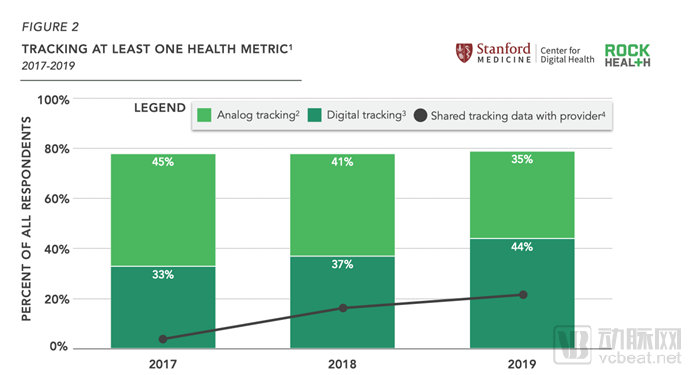
Figure 2
[1] Survey Question: Are you currently tracking any of the following? Responses: Weight, heart rate, blood pressure, medication, physical activity (steps, exercise, etc.), food/diet, sleep, blood glucose, other
[2] Survey Question (for each metric tracked by the respondent): How do you currently record the following: body weight, heart rate, blood pressure, medication, physical activity (steps, exercise, etc.), food/diet, sleep, blood glucose, and other metrics?
Answer: In a paper diary or journal, or in one's mind
[3] Survey Question (for each indicator tracked by respondents): How do you currently record the following: weight, heart rate, blood pressure, medications, physical activity (steps, exercise, etc.), food/diet, sleep, blood glucose, and others?
Mitigation measures: Use wearable connected devices (e.g., smart scales, glucose meters) or applications not linked to wearable devices, in digital diaries or logs
[4] Survey Question (if tracking any metrics): With whom have you shared or discussed this data in the past year?
Answer: Your physician, another healthcare professional
Consumers are tracking sign and symptom data related to their chronic diseases.
Digital monitoring tools are actively driving changes in user behavior, as this tracking encourages individuals to modify health-related habits. We refer to this phenomenon as “trackable conditions,” wherein patients can achieve corresponding health benefits by monitoring clinically relevant behaviors or metrics. Prominent examples include managing obesity through dietary tracking and controlling diabetes through blood glucose monitoring.
Respondents in the “condition-tracking” group exhibited distinct patterns in their use of digital monitoring tools versus traditional methods (Figure 3). For instance, among respondents with obesity as their condition, 68% monitored their body weight, with 23% relying on digital tools. Among patients with diabetes, 29% tracked their blood glucose levels using digital tools. Consumer behavior within this segment aligns with the expectations of startups, investment firms, venture capital funds, and healthcare systems regarding digital health innovation, all sharing a common mission to transform the challenges inherent in diabetes care.
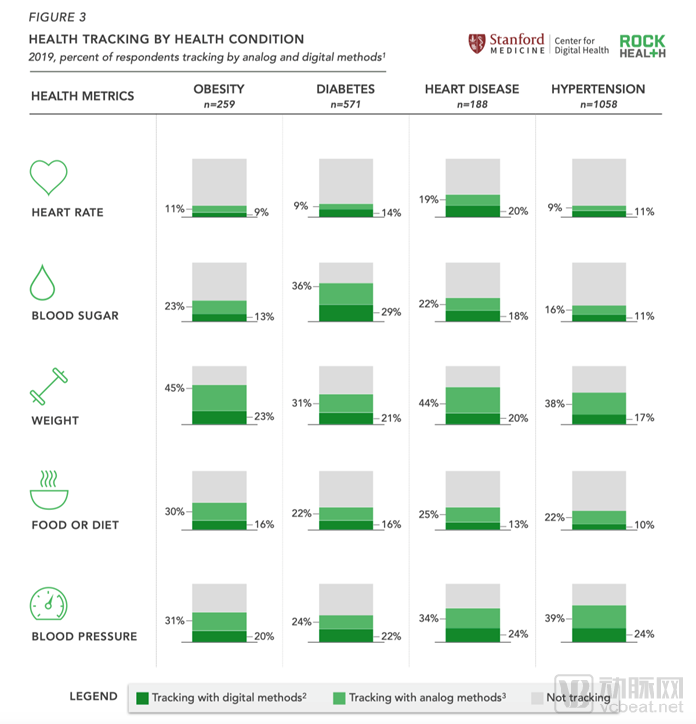
Figure 3
[1] Survey Question: Are you currently tracking any of the following?
Answer: Body weight, heart rate, blood pressure, medication, physical exercise (steps, workouts, etc.), food/diet, sleep, blood glucose, others
[2] Survey Question (for each metric tracked by respondents): How do you currently record the following: weight, heart rate, blood pressure, medications, physical activity (steps, exercise, etc.), food/diet, sleep, blood glucose, and others?
Mitigation Measures: Use wearable connected devices (e.g., smart scales, glucose meters) or applications not linked to wearable devices, within digital diaries or logs.
[3] Survey Question (for each indicator tracked by respondents): How do you currently record the following: weight, heart rate, blood pressure, medications, physical activity (steps, exercise, etc.), food/diet, sleep, blood glucose, and others?
Answer: In a paper diary or journal, in one's mind
Among respondents with heart disease, 20% used digital tools to monitor their heart rate, compared with 19% who used traditional methods. Of the four trackable conditions shown in Figure 3, approximately 50% of consumers monitored their heart rate digitally. Activity trackers and smartwatches have driven widespread adoption of this technology across various consumer devices, and significant product upgrades in the past year may have further accelerated patient uptake.
Among users who have already adopted monitoring behaviors, digital monitoring is the most prevalent. For instance, weight and blood glucose are the two most frequently monitored metrics among patients with obesity, diabetes, and heart disease. These areas represent markets with rigid demand, allowing market pioneers and innovators to attract more consumers to adopt digital monitoring methods. They can then expand into corresponding monitoring software or hardware (for example, in addition to blood glucose tracking, companies can offer a smart scale that connects to smartphones) or into the treatment of related complications (for example, providing digital monitoring tools to assist obese patients with heart disease).
Although certain monitoring software is offered as standalone applications, multi-year datasets on consumer behavior strongly suggest that most monitoring solutions do not perform optimally when relying on a single metric. Instead, it is recommended that digital health companies design more comprehensive digital monitoring capabilities to better manage health and disease.
Established disease management companies such as Omada Health and Livongo Health initially targeted patients with a single chronic condition, typically diabetes. For instance, as part of the health monitoring programs offered by both companies, patients can digitally track their weight and blood glucose levels. Subsequently, Omada and Livongo expanded into another growing subcategory: patients with hypertension. Among survey respondents with hypertension, 63% reported tracking their blood pressure in some manner, while 24% expressed willingness to use digital tools for this purpose. In their latest developments and implementations, both Omada and Livongo appear to be addressing these articulated patient needs—both companies have recently added cuff-style blood pressure monitors that connect to smartphones.
Within the framework of disease management programs, monitoring and care management must be integrated. The vertical integration of monitoring, analysis, guidance, and nursing on a single platform enables different medical departments to collect and process patient-generated health data in a timely and closed-loop manner. Today, most consumers with chronic and complex diseases prefer healthcare institutions that offer digital monitoring for their care. The adoption of data collection devices by consumers, along with their willingness to share data, indicates that future healthcare systems will incorporate more digital health solutions.
Topic 2: Online Health Information Is Reshaping the Patient-Physician Relationship
The most critical aspect of the clinician-patient relationship is information asymmetry. The consultation process is typically described as one in which a trained expert (usually a physician) diagnoses and formulates complex treatment plans for patients who generally lack medical background or the means to independently access necessary medical information. However, several factors are currently reshaping this dynamic, including the greater accessibility of medical information and the healthcare community’s commitment to developing patient-centered care and shared decision-making models.
In 2019, consumers equipped with peer-derived reference information and data from diverse medical reference websites will be empowered to participate in their own care decisions. Digital technologies have accelerated these shifts in three significant ways:
1. Patients brought online health information to their physicians’ offices. Compared with 2015, respondents in 2018 and 2019 more frequently made suggestions to their doctors regarding their care plans based on online information (20% of respondents in 2015 versus approximately 65% in 2018 and 2019);
2. Consumers not only read reviews of online healthcare service providers but also make related decisions based on these reviews. In 2019, 66% of respondents selected their healthcare service providers based on online medical reviews;
3. Patients have an increasing number of options to access a broader range of knowledge—online patient communities are an emerging channel for disseminating health information beyond the traditional doctor-patient relationship. In 2019, 18% of respondents indicated that they would participate in online patient communities at some point.
An Increasing Number of Patients Are Seeking and Using Online Health Information
In 2019, the majority of respondents who searched for health information online took corresponding follow-up actions based on what they learned: 58% presented diagnostic suggestions to their physicians, 56% discussed treatment plans with their physicians, and 53% requested their physicians to prescribe or discontinue specific medications (Figure 4). Between 2018 and 2019, the proportion of respondents taking action based on online information stabilized; however, this rate remained 38% to 79% higher than in 2015 (among the follow-up actions taken by patients).
The shift in the doctor-patient relationship is most pronounced among the younger generation, who report online health information to their physicians more frequently than older respondents (Figure 5).
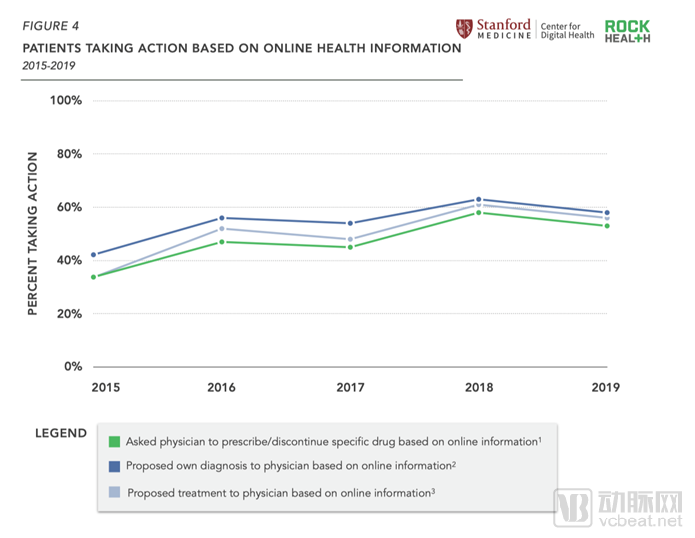
Figure 4
Note: The denominator for each percentage is the number of individuals who provided the following responses to the corresponding online health information:
Survey Question: Have you ever used websites or mobile applications to conduct any of the following searches: information about prescription drugs and/or side effects, symptom-based diagnosis, or treatment options based on a diagnosis? Response options: Within the past 12 months; More than 12 months ago
[1] Survey question: Have you ever asked your doctor to prescribe or stop taking a certain medication based on information found online?
Answer: In the past 12 months, more than 12 months ago
[2] Survey Question: Have you ever presented your own diagnosis to a doctor based on information found online?
Answer: In the past 12 months, more than 12 months ago
[3] Survey question: Have you ever suggested a treatment plan to your doctor based on online information?
Answer: In the past 12 months, more than 12 months ago
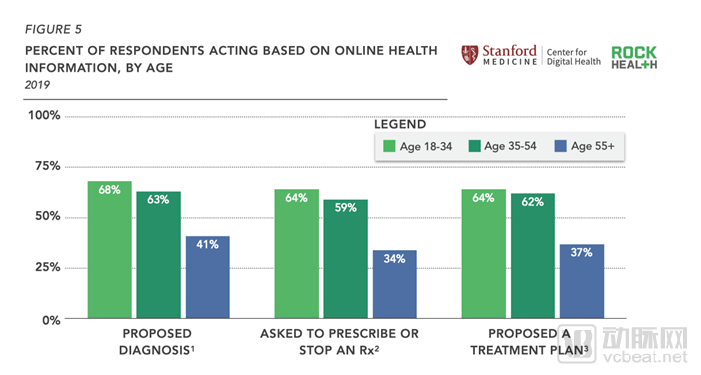
Figure 5
Note: The denominator for each percentage is the number of individuals who provided the following responses to the corresponding online health information:
Survey Question: Have you ever used websites or mobile apps to search for any of the following: information on prescription drugs and/or side effects, symptom-based diagnosis, or treatment options based on a diagnosis? Response options: Within the past 12 months; More than 12 months ago
[1] Survey Question: Have you ever presented your own diagnosis to a doctor based on information found online?
Answer: In the past 12 months, more than 12 months ago
[2] Survey question: Have you ever asked your doctor to prescribe or stop taking a certain medication based on information found online?
Answer: In the past 12 months, more than 12 months ago
[3] Survey Question: Have you ever suggested a treatment plan to your doctor based on online information?
Answer: More than 12 months ago in the past 12 months
Online health information can empower patients and families to collaborate more actively with healthcare providers in developing care plans tailored to their needs when selecting medical service providers. However, not all online medical information is valid or sufficient (misinformation may lead to even more severe consequences). Survey data from the past five years indicate that both patients and physicians clearly recognize that such online information constitutes only a portion of the information flow between doctors and patients; therefore, medical care plans must still be formulated through comprehensive discussions based on all available information.
Consumers Select Providers Based on Online Reviews
In 2018 and 2019, approximately half of the respondents searched online for doctors, hospitals, and pharmacies (Figure 6). Over the past five years, the proportion of surveyed patients who searched for at least one type of healthcare provider has shown an upward trend. For instance, an increasing number of respondents are using the internet to find nursing homes and caregivers; between 2015 and 2019, the search rate for nursing homes increased by 130%, while that for caregivers rose by 214%. These search categories are likely to evolve accordingly as the younger generation of baby boomers comes of age.
Information discovered by consumers during their searches (such as reviews of these healthcare providers) is driving them to take the next step. In 2019, respondents frequently incorporated online reviews into their decision-making process when selecting healthcare providers; for instance, 43% of respondents chose hospitals based on online reviews found through search engines. Additionally, 58% of respondents searched online for physicians or nurse practitioners (NPs) and made their selections based on reviews.
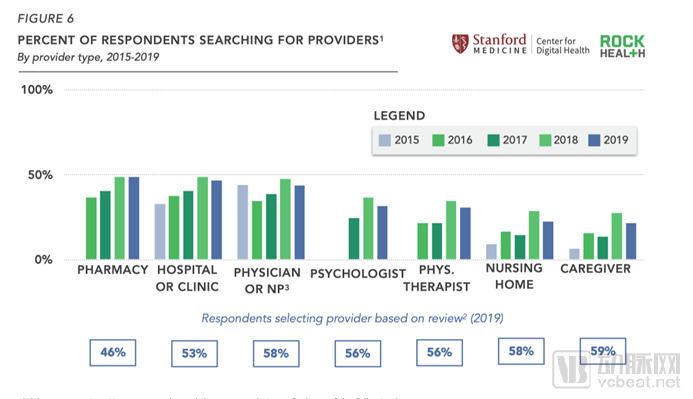
Figure 6
[1] Survey question: Have you ever used a mobile app or website to find any of the following?
Answer: Specific physicians or nurses, home care providers (including private duty nurses), hospitals or clinics, pharmacies, nursing homes or long-term care facilities, physical therapists, psychologists, therapists, or counselors
Note: Any year not reported indicates that the corresponding question was not included in the survey.
[2] Survey Question (asked for each type of provider searched by the respondent): Have you ever chosen a healthcare provider based on online reviews?
Answer: Yes
Note: The denominator is the number of respondents who searched for each type of provider in 2019.
[3] Nurse Practitioner
The primary reasons respondents chose physicians or nurses based on online reviews were service quality (21%), quality of care (20%), or whether the provider accepted the respondent’s insurance (21%). In contrast, respondents were most likely to choose pharmacies based on location (21%).
Patients Are Turning to Online Communities to Enhance Their Relationships with Providers
In 2019, 18% of respondents participated in online forums or patient communities. Individuals engaging in these activities were most likely motivated by acute personal health conditions, followed by chronic personal health conditions (Figure 7). Over time, patients with chronic diseases can acquire tacit knowledge about their own conditions; 23% of respondents indicated that patients share such knowledge with others online.
Among respondents diagnosed with chronic diseases, some indicated that they would participate in an online patient community. These virtual patient communities exist on specific platforms such as PatientsLikeMe, forums associated with healthcare institutions (such as Mayo Clinic Connect), and traditional social networking sites (such as Facebook). In many cases, patient communities provide patients with an opportunity to engage in diverse medical discussions without the involvement of healthcare providers, while receiving listening, understanding, and support from fellow patients. Although there are concerns about the potential spread of incorrect medical advice on such forums, these risks may be mitigated if the online patient communities are carefully screened and effectively managed.
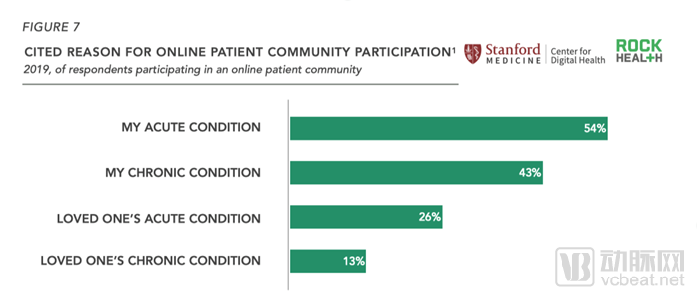
Figure 7
[1] Survey Question (for respondents who have participated in online patient communities): Why did you join online forums or patient communities?
Answer: My own acute conditions, my own chronic conditions, acute conditions of family members or loved ones, chronic conditions of family members or loved ones. Note: The denominator represents the number of respondents to the following survey question: “Have you participated in health-related online forums or patient communities (e.g., PatientsLikeMe, disease-specific Facebook groups)?” (n = 707).
Note: Respondents may choose to participate in online patient communities for multiple reasons; therefore, the sum of the percentages does not equal 100%.
Topic 3: U.S. Consumers’ Willingness to Share Data Depends on With Whom the Data Is Shared
Although Americans are willing to share data with their physicians, they remain hesitant about sharing it with other key stakeholders, particularly insurance companies, pharmacies, research institutions, technology firms, the pharmaceutical industry, and government agencies (Figure 8). Even though they stand to benefit from the advantages generated by such data sharing, the sensitivity of health data makes sharing it with third parties exceptionally complex. For instance, over the past year, public debate has centered on who should have access to consumers’ genetic data. Meanwhile, when The Wall Street Journal reported that Facebook was collecting various types of personal health data from its health-related applications, Facebook found itself having made a critical misstep in this seemingly beneficial initiative—much of this data collection occurred without users’ knowledge or explicit consent.
Respondents indicated that they are most willing to share healthcare information with their physicians. However, even when it comes to sharing with doctors, the willingness to do so has declined over time. In fact, the physician group experienced the largest year-over-year decline in consumers’ willingness to share health data. Following a drop in 2018, the willingness to share health data did not rebound in 2019. Consistent with previous Rock Health consumer adoption survey results, technology companies ranked at the bottom of the list, with only one in ten respondents willing to share health data with these companies. The situation was slightly better for digital health companies, with 23% of respondents willing to share their data with them.
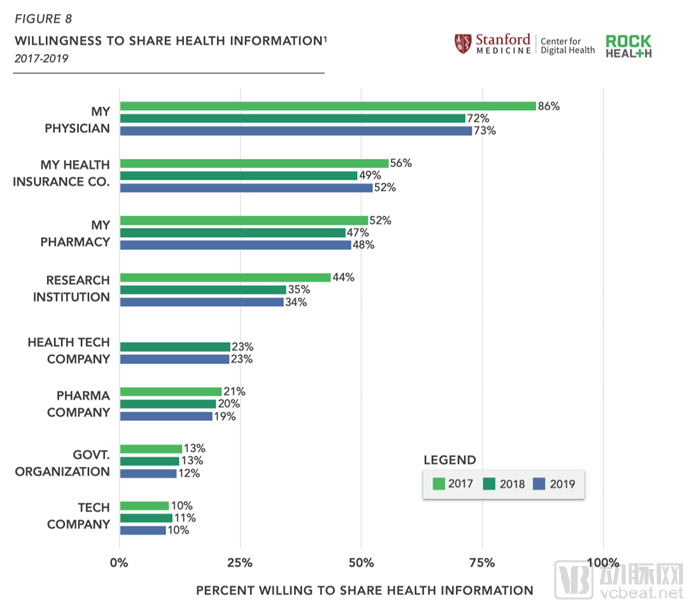
Figure 8
[1] Survey Question: Please indicate which of the following individuals or organizations you are willing to share your health information with (e.g., your medical records, test results, prescription medication history, genetic information, and physical exercise data).
Answer: A technology company, a healthcare technology company, your family members, your health insurance company, your pharmacy, your physician, a research institution, a government organization, a pharmaceutical company, none of the above
Survey questions on data sharing reveal a significant generational gap—older respondents are more willing than younger ones to share personal health data with various healthcare providers (Figure 9). Compared with respondents aged 18–24, those aged 45–54 are three times as likely to be willing to share their data with healthcare providers. The disparity becomes even more pronounced relative to the 18–24 age group: consumers aged 55–64 are eight times as likely, and those aged 65 and older are twelve times as likely, to do so. This indicates that older adults are more willing to share their personal health data with healthcare providers.
It has previously been demonstrated that willingness to share health data is highly correlated with whether individuals have had interactions with traditional healthcare institutions. Respondents who frequently interacted with healthcare providers in the year prior to the survey were more willing to share data with these providers. Conversely, respondents who had previously downloaded health apps were four times less likely to be willing to share health data with healthcare providers compared to those who had not downloaded such apps.
Finally, respondents indicated a greater willingness to share their health data with technology companies from which they had previously downloaded health applications, particularly in comparison to companies whose apps they had never downloaded. The likelihood of consumers sharing health data with technology companies they had never downloaded from or heard of was nearly zero. Overall, general consumers have the lowest level of trust in technology companies. These data may suggest that for the minority of users who adopt digital health solutions, they believe these technology companies are moving away from the problems associated with traditional care, and they are more likely to trust that sharing data with tech companies will improve the services provided to them. Although this consumer segment remains small, it is increasingly moving in the opposite direction from other groups.
Complexity: What Exactly Is Health Data?
From the perspective of HIPAA (the Health Insurance Portability and Accountability Act), not all health data is treated equally. HIPAA requires healthcare organizations, such as hospitals and health insurers, pharmaceutical companies, and their “business associates,” to implement stringent safeguards for personal health information to ensure its confidentiality. This creates legal room for the sharing of two types of data, while simultaneously causing potential confusion for consumers regarding “who can access” or “share their health data.”
1. Data from health apps, direct-to-consumer genetic testing, and other consumer-centric digital health technologies are not necessarily covered by HIPAA.
2. HIPAA-compliant healthcare organizations may share health data with their “business associates,” provided that these entities also comply with HIPAA regulations and execute Business Associate Agreements.
The fact that consumers do not necessarily know where their shared health data is stored adds to the complexity of data sharing. The majority of respondents (82%) expressed a desire to access their own health data and to be informed about who can access it. Meanwhile, 81% wished to receive more information about what happens after their health data has been collected.
Compared with respondents aged 18 to 24, those aged 45 and above are three to five times more likely to want to be informed about which health data are being collected. Just as trust in medical information managers declines, the industry’s demand for data continues to grow, driving advancements in fields such as AI-assisted diagnosis and precision medicine. While companies in the healthcare and technology sectors seek to accumulate large datasets of personal health information, they may also erode consumer trust.
How to Win the Favor of Healthcare Consumers
Healthcare is not limited to healthcare companies. Major technology firms such as Apple, Amazon, Google, and Microsoft are all advancing significant healthcare strategies. However, only 10% of respondents indicated that they were willing to share their health data with these technology companies. Among those consumers who expressed willingness to share, only about 56% indicated a willingness to share with Google, followed by Microsoft and Amazon.
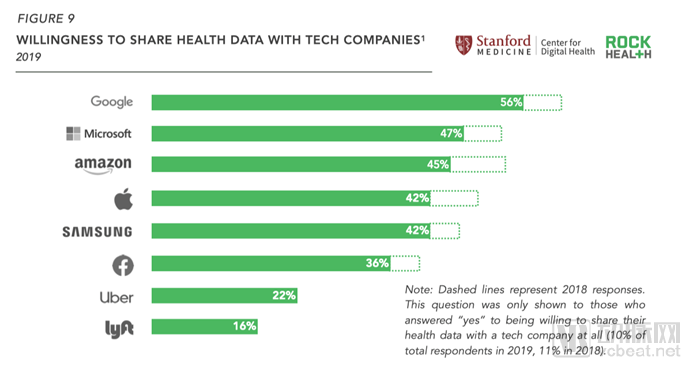
Figure 9
[1] Survey Question (Response to “Which of the following individuals or organizations are you willing to share your health information with?” – “Response regarding a technology company”): Which of the following technology companies are you willing to share your health information with (e.g., your medical records, test results, prescription medication history, doctor visit dates, genetic information, and physical exercise data)?
Answer: Amazon, Apple, Facebook, Google, IBM, Lyft, Intel, Microsoft, Samsung, Uber—none of these.
Between 2018 and 2019, the willingness to share health information with technology companies remained largely unchanged overall. However, when asked about specific tech firms, respondents’ willingness to share data declined. Respondents were least willing to share data with Uber and Lyft, particularly among new users of these platforms.
Interestingly, both ride-sharing companies outlined plans to file their first-quarter applications before their 2019 initial public offerings, aiming to further expand into the healthcare sector, primarily by providing transportation services for patients.
Conclusion
Since the initial release of the “Rock Health Digital Health Consumer Adoption Survey” in 2015, technology has transformed how consumers manage their personal health and navigate medical information. The survey indicates that the majority of U.S. consumers are tracking their health status and increasingly sharing digitally collected data with their physicians. They are leveraging various online health resources to coordinate care plans with healthcare providers and, by reviewing patient feedback on these providers, making more informed decisions regarding their choice of healthcare professionals and the resulting care plans.
Consumers have begun to expect that the benefits of these new technologies will become part of their daily healthcare experience, yet this comes with a trade-off between advantages and disadvantages. As industry players aggregate large patient datasets to drive more advanced technological discoveries and predictive capabilities, consumers are increasingly demanding clarity on who their health data is shared with. There are reasons for cautious optimism: large-scale collaborations between the healthcare and technology sectors, along with the widespread adoption of digital health tools today, promise a more hopeful future for patients in which interoperability, security, autonomy, and safety coexist. As patients and healthcare providers adopt new technologies, distinct new challenges often arise—such as how to establish equitable dialogues that include patients—and addressing these will remain a critical responsibility for all stakeholders in the digital health ecosystem.
Translated by Zhou Qianyun