

Jin Cheng Bio: Pioneer in Implementing the Medical Device Marketing Authorization Holder System and Builder of a '3C Services' Platform
Policies serve as a catalyst for industrial development, particularly in the healthcare sector.
2019 is destined to be a watershed moment for the development of the medical device industry. In August of this year, the National Medical Products Administration (NMPA) issued the *Notice on Expanding the Pilot Program of the Medical Device Registrant System*. The notice explicitly stated that, building upon the initial pilot programs conducted in Shanghai, Guangdong, and the Tianjin Free Trade Zone, the scope of the Medical Device Registrant System pilot would be expanded to 21 provinces, autonomous regions, and municipalities directly under the Central Government, thereby accelerating the innovative development of the medical device industry.
The implementation of the Marketing Authorization Holder (MAH) system for medical devices has spurred the emergence of a large number of Contract Development and Manufacturing Organizations (CDMOs) in the medical device industry. CDMO is an emerging outsourcing service model that deeply integrates with a company’s entire supply chain—including R&D, procurement, and production—across all stages from preclinical research and clinical trials to commercial manufacturing. It provides companies with innovative process development and scaled-up production services, replacing simple capacity output with higher-value-added technology transfer.
As one of the first pilot regions for the Medical Device Registrant System, Shanghai was permitted as early as March 2017 to allow medical device registration applicants within the Pilot Free Trade Zone to entrust Shanghai-based medical device manufacturers with product production.
This is a positive trend, and Jincheng Biologics has detected this “policy direction.” The Medical Device Registrant system is a policy that greatly benefits CROs, CDMOs, and CSOs. It decouples medical device registration from production, allowing medical device companies to outsource multiple stages throughout the product launch process, including facility setup, quality system establishment, raw material screening, process validation, supply chain management, sample production, registration testing, clinical evaluation, and application for production licenses. Furthermore, it permits researchers, institutions, clinicians, and R&D-focused innovation platforms to apply for medical device registration certificates. Previously, only medical device manufacturers were eligible to serve as applicants for medical device registration.
Leng Jihai: Exploring New Industrial Formats and Models Under the Medical Device Registrant System
Long before the full implementation of the Medical Device Registrant System, Jincheng Biotech had already embarked on numerous forward-looking studies as early as 2017. Since the State Council’s issuance of the Plan for Comprehensively Deepening Reform and Opening-up in the China (Shanghai) Pilot Free Trade Zone (hereinafter referred to as the “Plan”), which first mentioned that medical device registrants could entrust Shanghai-based medical device manufacturers to produce their products, Jincheng Biotech assembled its initial team to explore new industrial formats and business models under the Medical Device Registrant System.
Notably, Jincheng Biotech, established later, also became one of the earliest companies in China to implement the Medical Device Registrant System.
From the release of the Plan in March 2017 to the end of that year, Jincheng Biotechnology remained highly active over those ten months. The team first conducted extensive industry research, interviewing more than twenty pharmaceutical associations and relevant universities, and drew on the experience of domestic biomedical industrial parks to formulate a forward-looking industrial development plan. In an interview, Leng Jihai stated that they continued to follow their familiar real estate development model, aiming to achieve an industrial upgrade at the regional level. Consequently, Jincheng Biotechnology established its presence in the Shanghai Free Trade Zone No. 1 Life Science and Technology Industrial Park.
Regarding the decision to establish its registered presence at Shanghai FTZ No. 1 Life Science and Technology Industrial Park, Leng Jihai explained the rationale: “This decision is driven by policy advantages. The Medical Device Registrant System was first piloted in the Shanghai Free Trade Zone (FTZ). Given that 80% of high-end raw materials for medical device R&D require importation, benefits such as expedited customs clearance and tax reductions within the FTZ bonded area provide significant convenience for enterprises. Establishing operations at FTZ No. 1 allows companies to leverage the compounded policy advantages of the Free Trade Zone, the Bonded Zone, and the Greater Zhangjiang Hi-Tech Park. Furthermore, biopharmaceutical giants such as WuXi AppTec, Sinopharm, Shanghai Pharmaceuticals, USP, Roche Diagnostics, Ortho Clinical Diagnostics, Shanghai Blood Products Center, Johnson & Johnson, Siemens, and BD have all established a strong presence here, fostering a robust biopharmaceutical ecosystem with abundant industry resources. In addition, the park offers diverse spatial configurations, with specifications such as ceiling height, floor load-bearing capacity, and structural loading fully meeting the requirements of various biopharmaceutical enterprises. Meanwhile, the park provides human-centric, high-quality one-stop services and a comfortable working environment, helping companies achieve worry-free and rapid development.”
In early 2018, the Jincheng Biotech team ultimately pioneered a novel model—integrating “industry-led development + real estate design + basic operations”—to establish Jincheng Biotech as a third-party, one-stop comprehensive service platform that consolidates CRO, CDMO, and CSO offerings (collectively referred to as “3C services”) within an industrial park framework. Leng Jihai served as the company’s Executive Vice President.
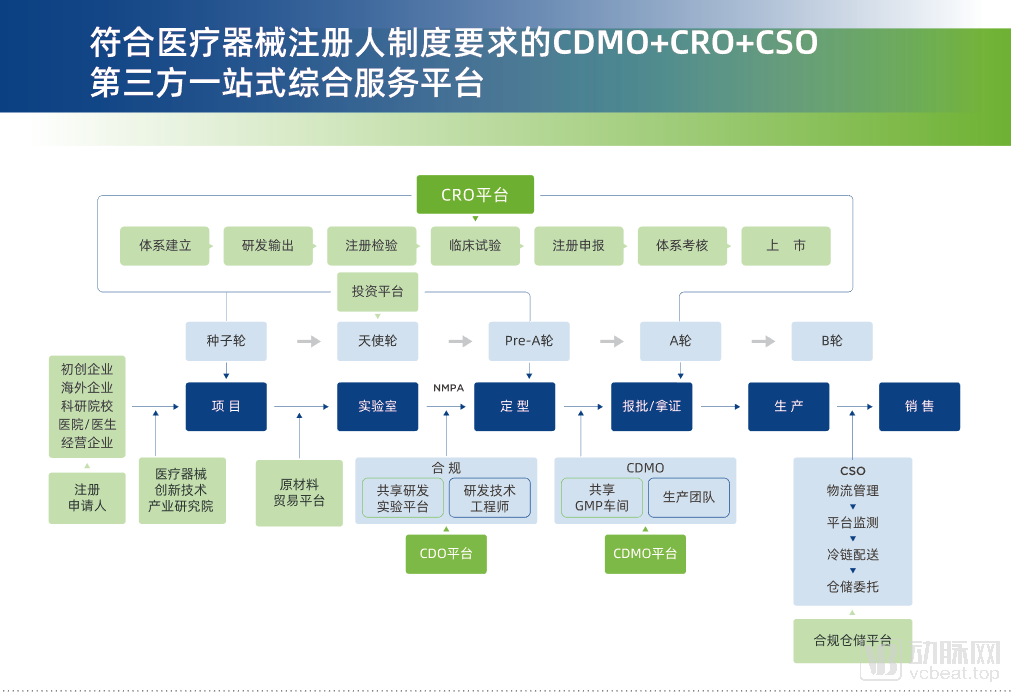
Jincheng Biotech’s Scope of Business Services (Image provided by the company)
Currently, Jincheng Biotech offers a comprehensive suite of services to medical device startups, including technical consulting, process translation, pilot-scale evaluation and validation, contract manufacturing, quality management system establishment and certification, clinical trials, regulatory registration and filing, compliant warehousing and supply chain management, specialized human resources, market promotion, and sci-tech finance. Committed to providing one-stop, full-lifecycle solutions—from product R&D to market launch—for the industrialization of medical devices, Jincheng Biotech aims to create a new model for industry development and foster upstream-downstream collaboration, thereby establishing an international hub for innovative medical device industries.
“Real Estate + Industry” New Model: Covering Four Categories and Six Production Lines, with an Independent Investment and Financing Platform
Since its establishment in 2018, Jincheng Biotechnology has assembled a professional team of nearly 100 members, comprising experienced regulatory affairs specialists, technical experts, production staff, quality assurance personnel, and warehouse operatives from renowned industry enterprises. More than 30% of the team holds master’s degrees. Furthermore, the company occupies a total of 15,000 square meters of space for R&D, production, and warehousing within the Shanghai Free Trade Zone No. 1 Life Science Industrial Park. This includes approximately 9,000 square meters of standard workshop facilities housing six contract manufacturing lines for medical devices. Adhering to stringent internationally recognized quality management systems, the company has obtained ISO 13485 and ISO 9001 certifications.
In terms of production line coverage, Jincheng Biology’s portfolio spans four categories across six production lines: immunodiagnostics, nucleic acid testing, active medical devices, and passive medical devices.
Among themImmunology Production LineEquipped with high-speed refrigerated centrifuges, cell disruptors, and other equipment, it can meet the production requirements for liquid reagents such as biochemical reagents;
Nucleic Acid Production LineEquipped with an independent nucleic acid testing laboratory, a dedicated production workshop for positive quality control materials, and a dedicated production workshop for negative quality control materials, it meets the production requirements for various nucleic acid reagents, including PCR reagents, FISH reagents, sequencing reagents, and liquid bead arrays.
Active Production LineEquipped with functional areas for production and assembly, as well as a series of testing instruments such as UV radiometers and medical leakage current testers, it meets the needs of small and medium-sized active medical devices in terms of production and testing.
Passive Production LineEquipped with an independent microbiological testing laboratory to meet the requirements for sterile product testing.
Jincheng Bio also operates its own investment and financing platform, public R&D laboratory platform, and supply chain management platform. The proprietary fund of the investment and financing platform enables rapid decision-making and agile response to the needs of startups, co-establishes industrial fund alliances with state-owned parent funds, and provides a wide range of debt financing solutions.
In addition, Jincheng Biology operates a 1,350-square-meter high-standard shared R&D laboratory, equipped with standardized nucleic acid R&D laboratories, protein laboratories, pathology laboratories, precision laboratories, chemistry laboratories, microbiology rooms, POCT rooms, cell laboratories, general-purpose laboratories, darkrooms, materials rooms, sample banks, sterilization rooms, and academic exchange areas.
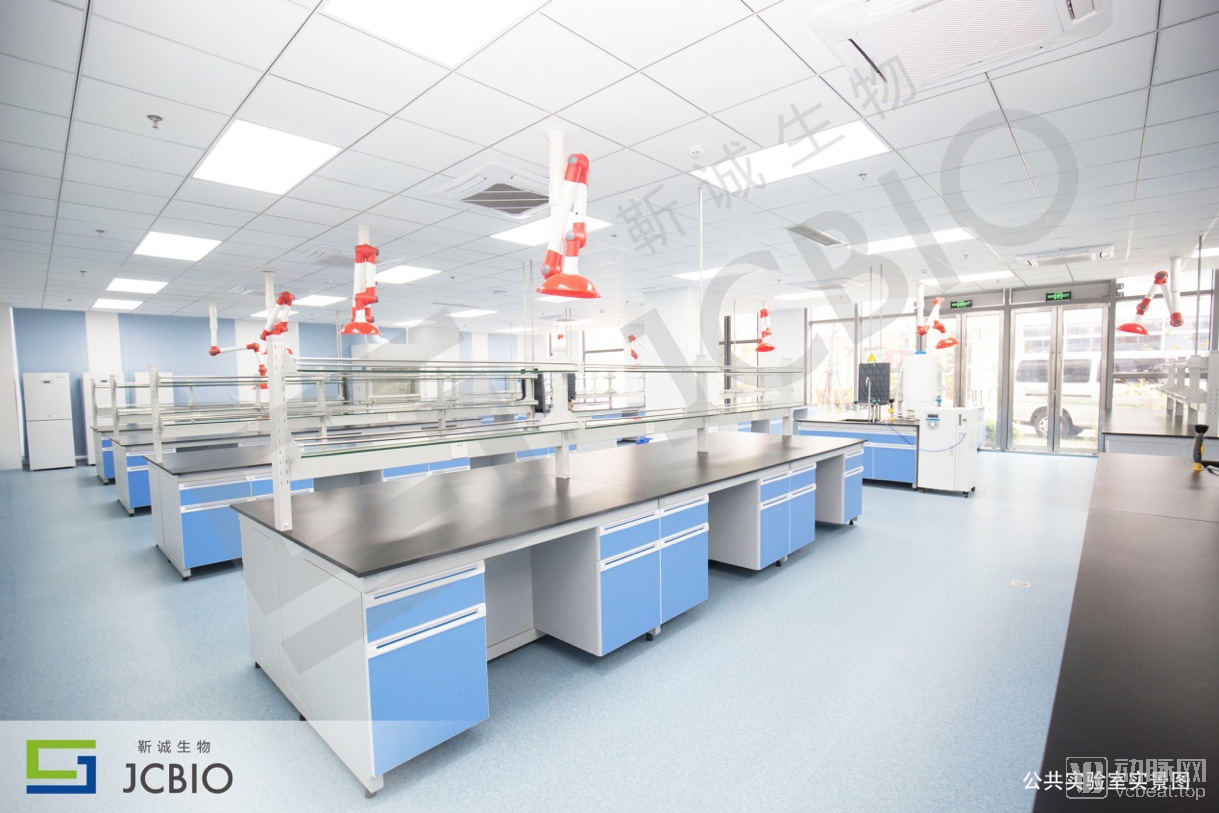
Actual View of the Public Laboratory (Image Provided by the Company)
In addition, Jincheng Bio possesses 3,000 square meters of high-standard, compliant warehousing space. The first phase of the central compliant warehousing facility covers an area of 1,350 square meters and is equipped with raw material warehouses, finished goods warehouses, and other facilities, thereby meeting the diverse warehousing needs of enterprises.
Facilitating the industrialization of startups and reducing R&D costs for medical devices
“The implementation of the Medical Device Registrant System has greatly unleashed R&D and innovation potential,” said Leng Jihai. “This system helps integrate social resources, promote division of labor and collaboration across the upstream and downstream segments of the medical device industry chain, and establish advantages in advanced manufacturing. It facilitates the clustering of scientific researchers, R&D institutions, and innovative enterprises, while optimizing market allocation of innovation resources and curbing low-level redundant construction. This accelerates the market launch of medical devices, thereby meeting citizens’ increasingly urgent demand for high-quality health services. For companies, the system significantly reduces upfront investment costs and shortens time-to-market, boosting the translation of future technological innovations in medical devices and promoting rapid industrial development.”
The Medical Device Registrant System has promoted refined specialization within the industry. This system allows registrants to outsource manufacturing, including multi-site contracted production, thereby eliminating the necessity for companies to build their own facilities. Leng Jihai stated that startups engaging 3C service providers for contracted manufacturing can save approximately RMB 10 million in costs and reduce industrialization time by more than one year.
“Letting professionals focus on their respective specialties” is the best reflection of the implementation of the Medical Device Registrant System. Those skilled in R&D can devote themselves wholeheartedly to research and development, while those adept at manufacturing can strive for perfection in production, thereby significantly improving the utilization efficiency of industry resources. This highly favorable development has drawn considerable attention within the industry to 3C companies such as Jincheng Biology, especially after the pilot program for the Medical Device Registrant System was expanded this year.
“R&D-focused companies may be relatively weak in the commercialization phase, but Jincheng Biology can provide lifecycle services to these startups, facilitating their industrialization,” said Leng Jihai. In the short term, Jincheng Biology will focus on strengthening its service chain across CDMO, CRO, and CSO offerings; in the long run, it aims to become a new industry benchmark.