

Web Summit 2019: Technology Meets Healthcare, Innovation Making the World a Better Place
Three days, 70,000 attendees, and over a thousand entrepreneurs, investors, policymakers, and thought leaders in the technology and innovation sector—Web Summit has been hailed by Forbes as “the best technology conference on the planet.” This year’s event featured industry leaders such as Amazon CTO Werner Vogels and Huawei Rotating Deputy Chairman Guo Ping, alongside policymakers like former UK Prime Minister Tony Blair and Margrethe Vestager, Executive Vice-President of the European Commission, who directly engaged in discussions. The conference also drew numerous prominent investors and CEOs of startup companies.
These participants engaged in intense and highly valuable discussions, ranging from advanced technologies to commercial applications, and further to society-related issues concerning technology.
Overall, this annual conference, which has garnered the most attention in the global innovation arena, reflects two major future trends: the integration of healthcare and technology, and the use of innovation to help human society address existing challenges, driving it forward with greater efficiency and warmth.
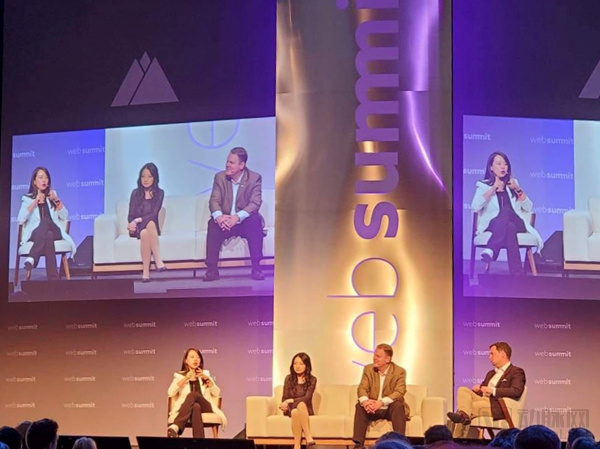
The Integration of Technology and Healthcare Can Go Beyond “Treating Disease”
2019, the year that is about to end, was a highlight year for the biomedical and pharmaceutical sector: it set a record for the number of initial public offerings (IPOs), with post-listing performance exceeding expectations; moreover, increased acquisition interest from more pharmaceutical companies provided abundant exit pathways.
Technologies such as AI, edge computing, and nanorobots are also being closely integrated with the healthcare industry, opening up numerous application windows. From disease prevention and pathological diagnosis to treatment and surgical prognosis, they virtually cover the entire workflow of the existing healthcare system.
At the conference, Zhang Lu, a Silicon Valley investor and founder of Fusion Fund, stated that beyond current advancements, future technologies will aid humanity in more profound ways—ushering in an era of “superhumans.” Technology will enable early disease screening, thereby extending human lifespan and improving quality of life in old age. Furthermore, platform-based technologies can enhance efficiency, boost productivity, and reduce pollution.
In 2018, approximately 18.1 million people worldwide were diagnosed with cancer, and more than 9 million died from the disease. Tens of millions more are engaged in the fight against cancer through chemotherapy, radiotherapy, surgery, targeted therapies, and immunotherapy, often suffering from severe side effects such as intense vomiting, hair loss, dermatological conditions, and impaired liver and kidney function. Amid the global trend of population aging, neurological disorders such as Alzheimer’s disease and Parkinson’s disease have also become significant threats to public health.
“Future ‘superhumans’ may live to be 120 years old. Moreover, the quality of life in old age will see significant improvement—there is a vast difference between spending ten years bedridden after surviving a critical illness and spending those same years from age 90 to 100 with early detection and successful treatment; technology is helping us make the latter a reality,” said Zhang Lu. This perspective also guides her investment focus toward medical technology companies specializing in early diagnosis. For instance, she invested in Mission Bio, which uses single-cell gene sequencing to detect very early-stage small cell carcinoma with high accuracy while providing personalized diagnostic and treatment plans. She also backs Savonix, which enables earlier personalized detection and monitoring of Alzheimer’s disease and other neurodegenerative conditions.
“User health data alone is insufficient, and industry insights alone are also inadequate. We must reflect on and return to the human element,” said Mike Lee, Co-founder and CEO of MyFitnessPal, the fitness app under Under Armour.
As early as the beginning of the last century, a “radical therapy” was advocated for breast cancer treatment, in which surgeons removed not only the affected area but also the muscles beneath the breast, lymph nodes, and even parts of the shoulder bones, aiming to eradicate cancer completely. Driven by compassion for patients and advances in the understanding and treatment of cancer, physicians came to grasp the underlying mechanisms of the disease. They subsequently abandoned overly extensive resections in favor of limited tumor excision combined with chemotherapy. Today, breast cancer treatment no longer results in severe disfigurement, while cure rates have improved significantly.
As technology advances into the 21st century, it remains guided by a deep concern for humanity. Beyond post-diagnosis “treatment,” technologies that enable early diagnosis and drive the development of the broader health sector fundamentally help people lead healthier lives, reduce the likelihood of disease or mitigate its impact on the body, and thereby continuously improve human quality of life.
Is Technology Liberating Humanity?
As mentioned above, the integration of technological innovation and healthcare is in fact influencing not only the matter of “being ill” itself.
For instance, in the medical field, vast amounts of healthcare data previously required manual collection and entry. By leveraging advanced sensor technologies, artificial intelligence can automate this process, thereby reducing physicians’ workload and enabling the acquisition of large volumes of high-quality medical data.
“In the healthcare sector, the integration of software and hardware is an inevitable future trend,” said Dr. Marco Huesch, Managing Director of Ping An Global Voyager Fund. He noted that Ping An Good Doctor, a platform under Ping An, enables patients to share their vital signs data with physicians via IoT sensors to complement online consultations.
On the other hand, technology also enables humans to focus on past “blind spots.”
“There are many patients with neuropsychiatric disorders worldwide, but in the past, medical data was extremely difficult to collect. New technologies are changing this; for the first time in history, we can continuously gather massive amounts of personalized physiological data to aid in diagnosis and treatment,” said Zhang Lu.
Moreover, more powerful mobile devices such as smartphones and tablets enable physicians to better track and assess patient conditions by providing mobile support. For instance, built-in sensors can monitor patients for abnormal behaviors, while continuous physiological data monitoring aids in personalized diagnosis. Zhang Lu mentioned that Catalia Health, a company in this sector that she has invested in, recently secured orders from Novartis and Pfizer, the largest pharmaceutical companies in the United States, and is steadily moving toward market application.
Ali Reza, a scientist at the Rockefeller Research Center, pointed out that innovations in the field of neuroscience are currently largely focused on pathology. He expressed hope that future technological advancements and applications will enable greater exploration and development of human brain functions. This perspective aligns closely with the concept of “superhumans” mentioned earlier by Zhang Lu.
For instance, Paradromics, a brain-computer interface (BCI) company based in Silicon Valley, is leveraging nanorobots to establish an “interface” between the human brain and machines. This technology aims to translate and connect neural signals with external devices, enabling the restoration of brain functions, enhancing cognitive capabilities, and even backing up human consciousness. Neuralink, the BCI company previously founded by Elon Musk, is also conducting animal trials. Its short-term objective is to develop devices for treating severe neurological disorders, while its ultimate goal remains the enhancement of human brain function.
Innovation, as a Form of Goodwill
As a field closely intertwined with everyone’s daily life, healthcare not only draws public attention but also raises critical questions: How should we safeguard our privacy in an era where our lives are permeated by sensors, data, artificial intelligence (AI), analytics, and even future brain-computer interfaces?
“The problem we face today lies in the widespread collection of data—such systems render the vast majority extremely vulnerable when confronted with the privileged class,” said Edward Snowden, the former NSA employee who gained widespread attention for exposing U.S. government surveillance programs, at the 2019 Web Summit.
After a long absence, he shared his thoughts via video on the tension between technological innovation and privacy.

Zhang Lu proposed the concept of “digital assets”: in the future, everyone will own their own digital assets and will need to better understand how to possess, store, and utilize data, as well as how to measure its value. In this way, the next time someone says, “I’ll provide you with free services in exchange for your data,” people will be able to recognize how much of their “digital assets” they are paying for that free service.
As Edward reflected on privacy and digital assets, one point emphasized by the many entrepreneurs, investors, and policymakers at the conference was that technology must return to its human-centric roots.
At the conference, Google’s Sustainability Officer, Kate Brandt, announced Google’s first Sustainability Accelerator, providing tools and resources to help startups in Europe, the Middle East, and Africa that are committed to sustainability goals grow.
“It is worth noting that pursuing tech for good does not require sacrificing financial returns. Rather, we have observed a current trend in which the value of tech for good is increasingly recognized by society and consumers. What we are doing is identifying outstanding companies that will generate significant positive impact in the future,” said Zhang Lu.
Previously, This is L, a U.S.-based startup specializing in feminine hygiene products, experienced rapid growth and a swift increase in its market share in the United States. Several years after its founding, it was acquired by the consumer goods giant Procter & Gamble (P&G). Its prominence among numerous feminine care companies was largely attributable to its commitment to “tech for good.” The company developed environmentally friendly organic feminine hygiene products that better aligned with contemporary consumer demands, which was one of the key reasons P&G held the company in high regard. This company, in which Zhang Lu invested, delivered returns of more than tenfold within three years.
“We may have newer technologies, but we do not have a new set of values—dignity, integrity, humanity, and equality; we still cherish these qualities.” These words from Margrethe Vestager, Executive Vice-President of the European Commission, served as the concluding remark.
While technological innovation is exciting, what is even more moving is the enduring concern for and respect for humanity that underpins it. This will serve as a powerful driving force propelling the vessel of technological innovation ever forward, ushering humanity into an uncharted era of technology.