Another Domestic Shingles Vaccine Gets IND Approval: Hualan Biological Enters the Billion-Dollar Race

Hualan Bio
Biologics Developer

GSK
Pharmaceutical R&D Manufacturer
 At the beginning of 2026, a new player has entered the shingles vaccine research and development track in China.
On January 20, according to the information on the official website of the Center for Drug Evaluation (CDE) of the National Medical Products Administration (NMPA), Hualan Biological Engineering, Inc.'s recombinant zoster vaccine (CHO cell) obtained tacit approval for clinical trial application (IND) with the acceptance number CXSL2500935, classified as a Category 1.3 new drug.
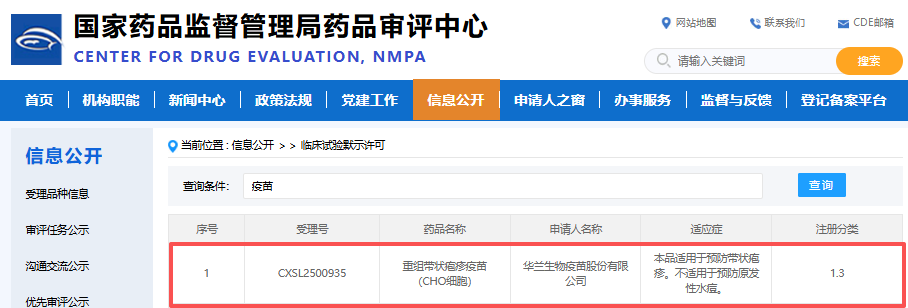
This means that another major player in China's vaccine industry has officially entered this increasingly intense competition in the billion-dollar track.
I.Market Landscape: Import-Dominated, Domestic Production Catching Up
Herpes Zoster, commonly known as "缠腰龙 (shingles)," is an infectious skin disease caused by the reactivation of the varicella-zoster virus. It has a high incidence rate among middle-aged and elderly people, with symptoms often worsening with age. Vaccination is currently the most cost-effective means of preventing this disease.
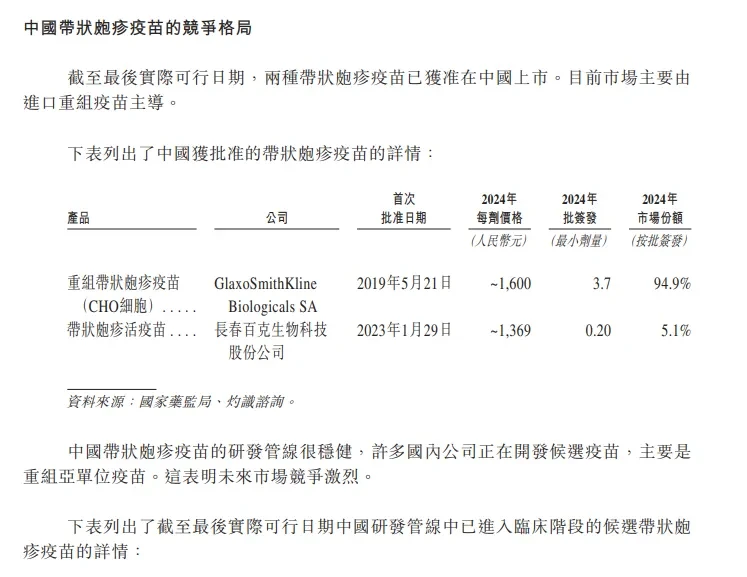
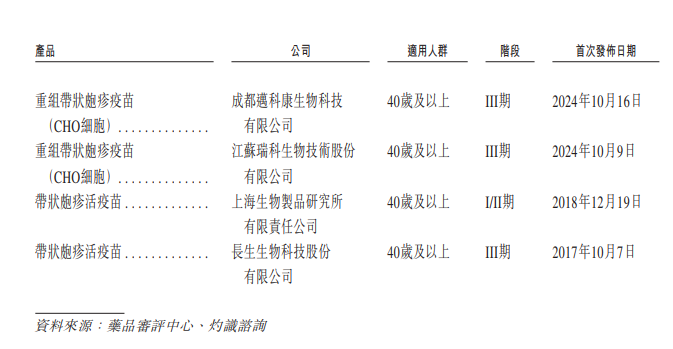
As of now, there are two shingles vaccine products available on the market in China: one is the recombinant shingles vaccine from GSK, represented by Zhifei Biological, and the other is the attenuated live shingles vaccine from Changchun Baike. The market structure shows a clear dominance by imported products. According to data from CIC Consulting, as of the latest practicable date, GSK's vaccine holds a market share as high as 94.9%, while the vaccine from Changchun Baike, which was only approved in 2023, has a market share of 5.1%.
2.R&D Pipeline: Diverse Technologies in the Race
Despite the market being dominated by imported products, the R&D enthusiasm of domestic companies has reached an unprecedented high, with pipeline competition being extremely fierce. The recent IND approval obtained by Hualan Biological Engineering, Inc. is the latest wave in this surging tide.
In terms of technical routes, domestic research and development mainly focuses on two major directions: recombinant subunit vaccines and mRNA vaccines.
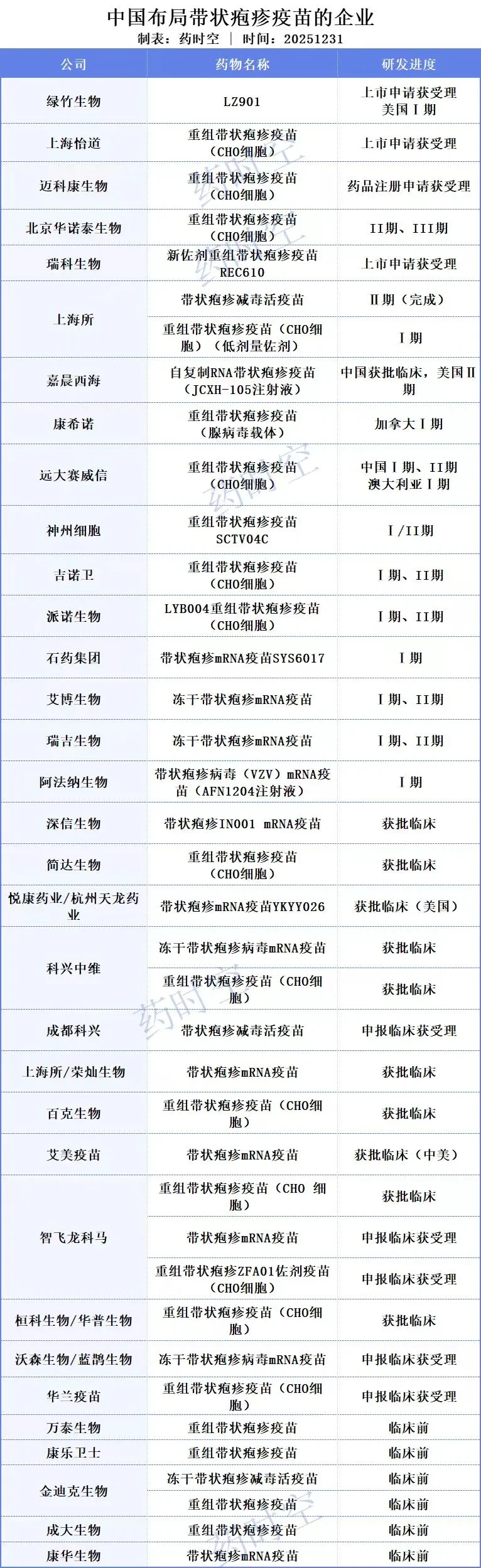
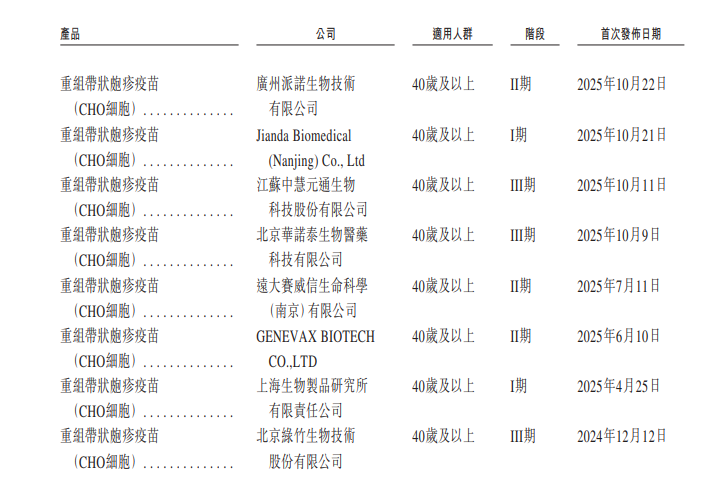
In the recombinant technology pipeline, in addition to Hualan Biological Engineering, Inc., products from several companies such as Jiangsu Recbio, Luzhu Biotech, and Jia Chen Xi Hai have advanced to different stages, including Phase III and Phase II clinical trials. Notably, 2025 marks the harvest phase for domestically produced recombinant shingles vaccines in China, with the recombinant shingles vaccines from Luzhu Biotech, Yidao Biotech, Maikang Biotech, and Recbio having successively applied for market approval.
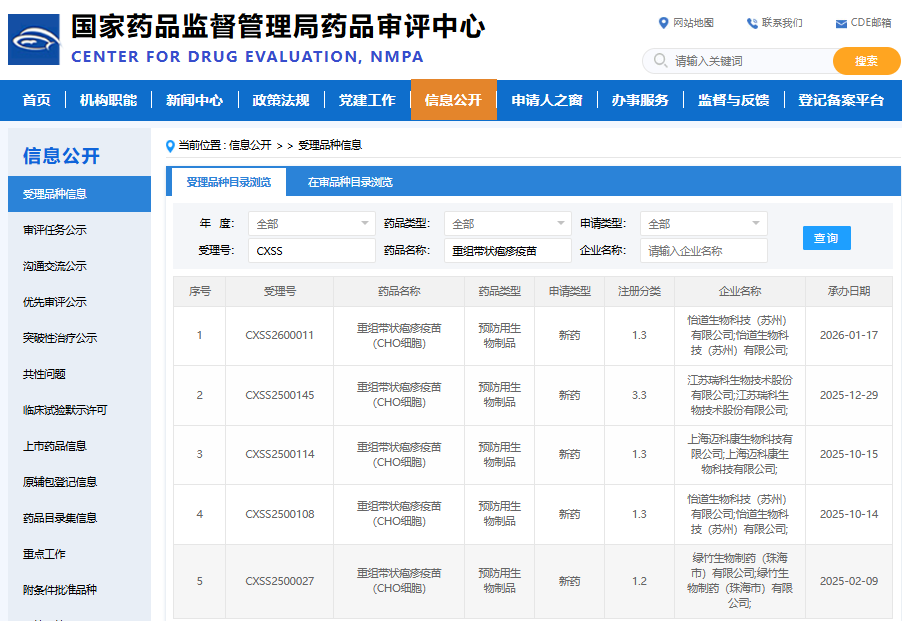
In the more cutting-edge mRNA technology field, companies such as CSPC, Sinovac Zhongwei, and Zhifei Biological Products have also made investments, with some projects already entering Phase II clinical trials or receiving IND approval. This indicates that the future shingles vaccine market will be a stage where recombinant protein and mRNA technologies compete.
3.Future Outlook: A Billion-Dollar Blue Ocean, Accelerating Replacement
China's Shingles Vaccine Market Seen as Rapidly Growing Blue Ocean
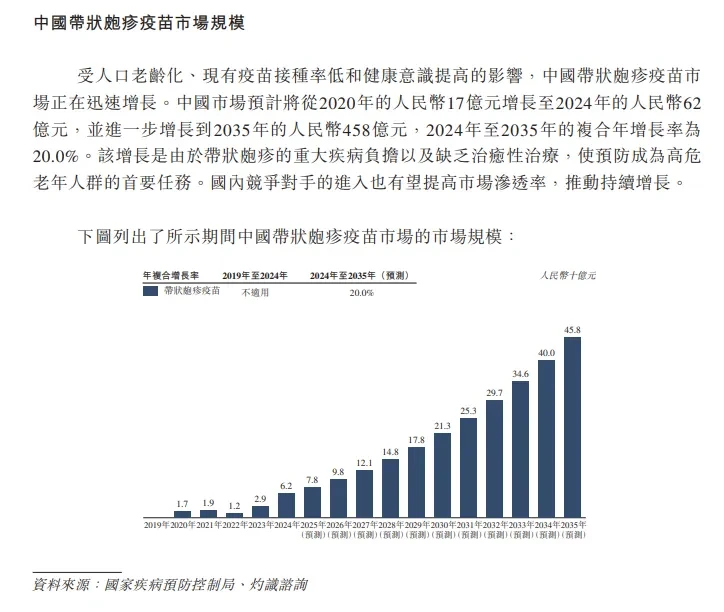
Hualan Biological Engineering, Inc. has been approved this time based on its mature CHO cell platform, aiming to express the key protein of the varicella-zoster virus and prevent the disease by inducing an immune response. As a leading company in China's blood products and influenza vaccine fields, Hualan Biological Engineering, Inc. has profound expertise in vaccine research and production, and its entry into the competition will undoubtedly further intensify market competition.
It is foreseeable that as products from more powerful players like Hualan Biological Engineering, Inc. gradually advance to clinical stages and eventually come to market, the current market landscape dominated by imported products will be disrupted, and the process of substitution with domestically produced alternatives will accelerate comprehensively. For the vast potential vaccinated population aged 40 years and above, a wider variety of vaccines with higher accessibility will soon become available, which is undoubtedly a significant positive development in combating shingles, often referred to as "the pain that breathes."
 This competition surrounding a billion-dollar market has just entered the halfway point.