

Qiming Information Advances Precision Medicine with Gene Sequencing and Bioinformatics Platform GCBI
High costs have long been a major pain point in the gene sequencing industry. In recent years, with the widespread adoption of high-throughput sequencing instruments, the cost of gene sequencing has dropped significantly, driving the increasing popularity of genetic testing. Data from the National Human Genome Research Institute shows that in 2001, the cost of sequencing the human genome was as high as $95.263 million; by 2018, this cost had fallen to just a few thousand dollars.
With the widespread adoption of genetic testing, the volume of generated genetic data has continued to grow, bringing another pain point to the forefront.
Li Qi, founder of GMINIX, has many years of experience in the field of genetic testing. He previously worked at Shanghai Biochip, where he was responsible for market development and project collaboration for whole-genome testing products. He stated, “Most doctors and laboratory personnel lack the time to learn programming languages, and their limited ability to analyze raw data has become a major pain point in the field of genomic data analysis.”
GCBI, the bioinformatics platform under GMINIX, was specifically developed to address the pain points in gene data analysis. After 14 years of development, GCBI now receives over 5 million annual visits and has become a highly influential website in the industry.
GMINIX was founded in 2005 by a team of biotechnology experts specializing in gene sequencing and IT architecture professionals from the internet sector. The company is dedicated to the research and development of GCBI, a comprehensive platform for whole-genome testing and bioinformatics analysis. With over a decade of development in the fields of genetic testing and bioinformatics, GMINIX has assisted medical clients in publishing nearly 1,000 scientific papers and completing approximately 10,000 precision medicine projects.
On GCBI, users can search biomedical literature, locate gene sample data, design analysis pipelines online, and perform gene data analysis. The entire product design and development are based on the usage habits of Chinese researchers. By clicking and dragging modules, users can interactively view results. The process is flexible and easy to operate, requiring no programming skills, and is highly favored by Chinese medical researchers.
Li Qi remarked, “GCBI is the culmination of GMINIX’s bioinformatics technology.”GCBI boasts over 30 million medical literature articles, 3 million sample datasets, more than 100 annotation databases, and numerous analysis modules, comprehensively meeting users’ needs for clinical applications and scientific research.
Data security and upload speed are the top concerns for users. Li Qi stated, “During the platform’s development, one-third of the time was dedicated to security hardening, including the development of encryption algorithms, anti-theft technologies, and the configuration of data-sharing permissions.” Regarding how to improve data upload speeds, Li Qi said, “The company has adopted measures such as data compression to enhance upload performance. With the advent of the 5G era, transmission speeds will see a significant increase in the future.”
Leveraging its extensive scientific research service capabilities, robust bioinformatics expertise, leading-edge cloud computing infrastructure, and efficient, stable sequencing capacity, GMINIX has emerged as one of the leading enterprises in China’s genomic cloud computing sector, attracting numerous businesses and institutions to seek collaboration.
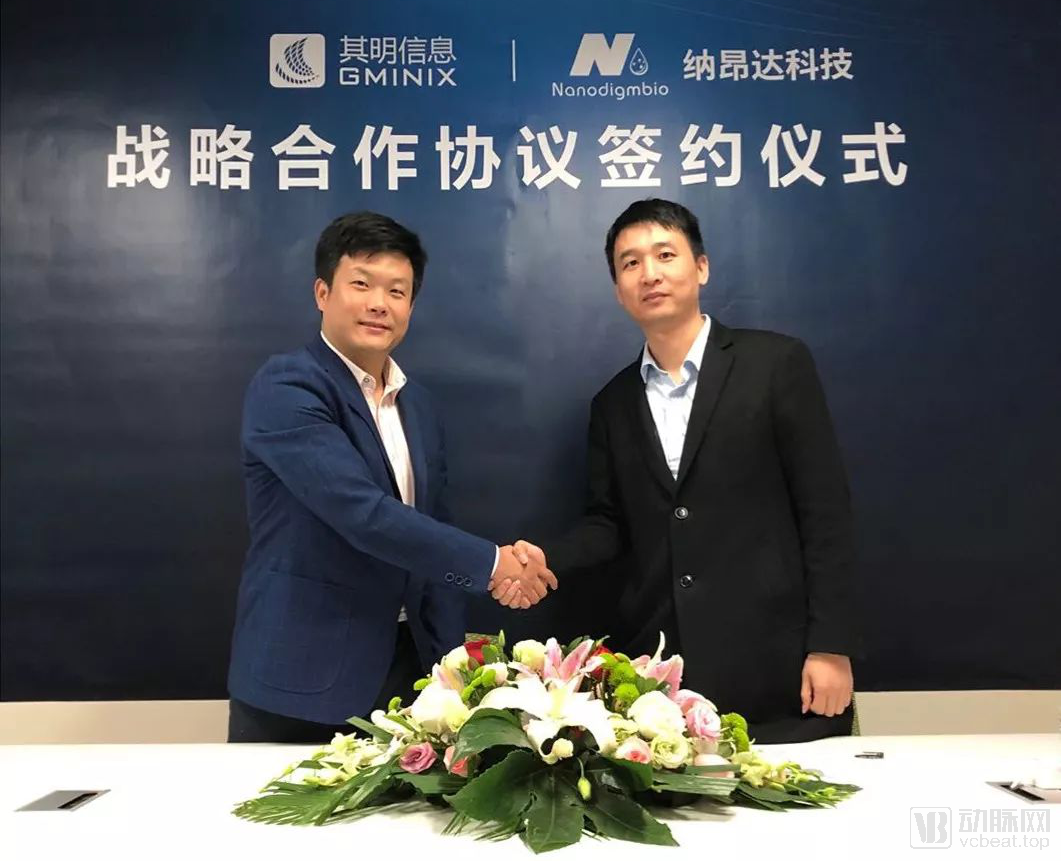
On November 20, 2019, GMINIX and Naonda Technology announced the establishment of a strategic partnership.
Both parties will engage in comprehensive cooperation in the fields of genetic testing and precision medicine, fully leveraging Naonda Technology’s integrated advantages in the research, development, and production of targeted sequencing products, as well as GMINIX’s technical strengths in bioinformatics analysis platforms. Together, they aim to create flagship products for the genetic testing industry and address the challenges associated with commercializing high-tech innovations in this sector.
According to Li Qi, GCBI’s user base covers nearly 3,000 medical institutions across China, with over 80% being hospitals. The platform receives more than 5 million visits annually, and its annual user growth rate is 30%.It meets the clinical application and scientific research needs of a large number of medical professionals.
In addition, GMINIX has expanded GCBI’s capabilities by launching a Molecular Assisted Diagnostic System. Designed for hospitals, third-party medical laboratories, and other institutions, departments, or units involved in molecular testing and analysis, this system provides an integrated, automated solution that spans from raw molecular data output to final report generation. It enables users to manage clinical and molecular data, while offering functionalities for molecular data analysis, annotation, interpretation, report editing, and generation.
Currently, GMINIX holds 2 patents and 34 software copyrights. Its gene testing platform and GCBI have been cited in over 1,000 publications, with users spanning more than 20 provinces and municipalities across China.
GMINIX has successively undertaken two major national special projects funded by the Ministry of Science and Technology of China: “Prevention and Control of Major Infectious Diseases such as AIDS and Viral Hepatitis” and “Construction and Promotion of a Demonstration System for Comprehensive Precision Medicine Services Based on Remote/Mobile Healthcare Networks,” as well as multiple research projects supported by the Shanghai Municipal Science and Technology Commission.
Li Qi stated, “With the advent of whole-genome sequencing technology, it is now possible to simultaneously analyze 31 bases and tens of thousands of genes. However, the current data scope remains insufficient. The future trend will undoubtedly involve detecting every cell, every gene, and every mutation, and integrating this information with complex clinical or physiological phenotypes for comprehensive analysis.”
Aligning with and leading the development trends in gene testing and bioinformatics analysis, GMINIX is actively expanding its strategic layout. Li Qi noted that single-cell sequencing technology enables the detection of individual cells, addressing cell-specificity issues and making it possible to characterize each cell. GMINIX currently operates two single-cell sequencing platforms—the industry-renowned 10x Genomics platform and its self-developed ICB-scSeq platform—to meet the diverse needs of medical research users.
Unlike similar products,ICB-scSeq single-cell sequencing is compatible with fixed cells as experimental materials and is not limited to fresh samples.This allows single-cell researchers to ship samples using dry ice at any time after sampling, providing flexibility in terms of timing and geography. Additionally,ICB-scSeq single-cell sequencing enables researchers to profile up to 300,000 single cells in a single run, meeting the demands of in-depth single-cell research.。
Moving forward, GMINIX will continue to focus on single-cell sequencing, developing and optimizing products around customer needs, and leveraging genetic data to advance medical scientific research.