

Microsoft's Healthcare Chatbot Strategy: Powering the Future of Digital Health Engagement

Microsoft
Computer software development, manufacturing, licensing, and service provider
Microsoft recently launched its Power Virtual Agents tool this month, a chatbot development platform touted as accessible to all users without requiring programming skills. In the healthcare sector, Microsoft officially released Healthcare Bot on Azure Marketplace in February and announced the Healthcare Bot Partner Program in July, expanding its partnership network to include hospitals, pharmaceutical companies, insurers, health maintenance organizations (HMOs), and telemedicine providers. As an upstream technology service, what value market is Microsoft targeting with its healthcare chatbot, and how much potential impact could it catalyze?
“A Position in ‘Azure + AI + Healthcare’”
Microsoft’s financial results for the first quarter of fiscal year 2020 were impressive, driven by the growth of its Azure business. Over the past two years, the gap between Azure and Amazon Web Services (AWS), the market leader, in terms of scale and market share, has been gradually narrowing. As a cloud platform, Azure integrates numerous functional modules, among which its AI capabilities hold strategic significance. In the field of natural language processing (NLP), Microsoft’s technological position is formidable, with chatbots being a well-established niche area of focus. Three years ago, Microsoft launched the Microsoft Health Bot project (named “Health” rather than “Healthcare” at the time), as part of its Healthcare NExT innovation initiative initiated during the same period. Healthcare NExT aims to drive transformation in the healthcare industry by leveraging Microsoft’s AI technologies and the Azure cloud platform. According to official data, as of July this year, more than 360,000 developers had registered to use the Azure Bot Service.
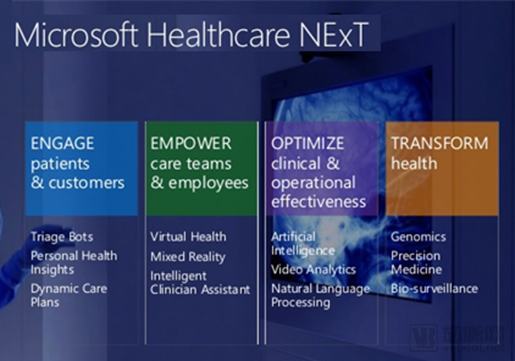
Microsoft Healthcare NExT Innovation Program Content
Through the Health Bot project, Microsoft aims to make it easier for healthcare industry partners to create intelligent, interoperable virtual assistants or chatbots. Equipped with cognitive services capabilities and rich, authoritative medical content, these bots primarily provide partners with two key functionalities: enabling customers to self-serve certain processes and facilitating access to healthcare information.
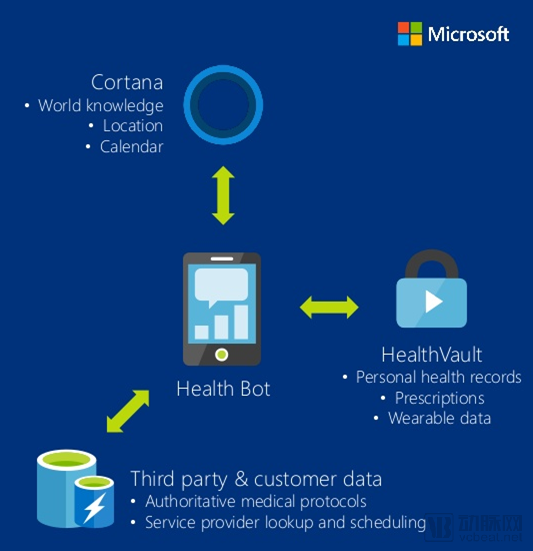
Microsoft Health Bot Service Diagram
In February this year, Microsoft Healthcare Bot was officially launched on the Azure Marketplace. Microsoft Healthcare Bot features built-in language modules capable of understanding medical intents and terminology. Leveraging content provided by authoritative sources, it enables inquiries related to symptoms, medication information, physician details, and symptom checking. The solution is customizable and scalable, allowing partners to integrate their own business processes and systems. It complies with various industry-specific security standards, including ISO 27001, ISO 27018, HIPAA, Cloud Security Alliance (CSA) Gold, and GDPR, while providing developers with tools and functionalities to meet additional security requirements.
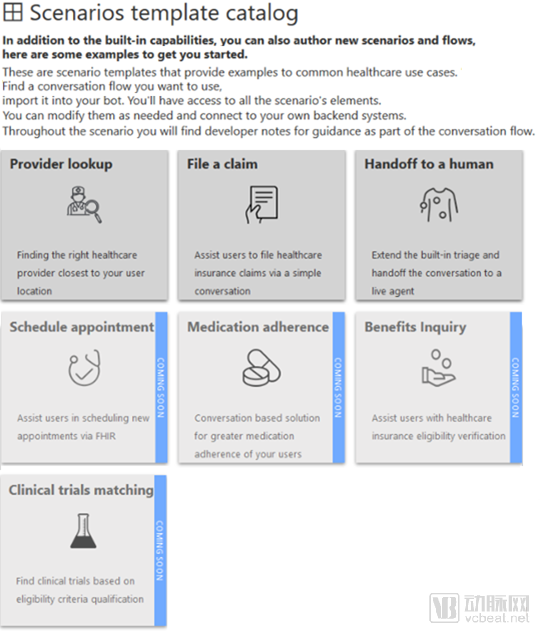
Microsoft Healthcare Bot Template Directory
The Healthcare Bot template directory contains seven templates, including healthcare provider location, claims filing, triage and transfer to human agents, appointment scheduling, medication adherence, benefits inquiries, and clinical trial matching. Furthermore, from another perspective of positioning classification, Microsoft, which primarily relies on NLP technology, offers the Virtual Assistant service segment; its cross-industry application in healthcare mainly includes the Healthcare Bot Service and the EmpowerMD project, which serves as a physician assistant to automatically document records during doctor-patient communications.
Clinical Medicine Specialization Has a Threshold
In summary, Microsoft Healthcare Bot provides a chatbot development tool that meets the industry-specific requirements of the healthcare sector. Customizability and scalability are common capability requirements in the software industry. Regarding security, while there are industry-specific requirements involving special personal health information privacy regulations such as HIPAA, achieving compliance is not particularly difficult. However, it remains uncertain how proficient the bot can be in understanding medical intents and terminology. Evidently, Microsoft’s official diagrams deliberately emphasize its capabilities in comprehending medical terminology and complex medical issues.
It is worth mentioning Health Navigator, the technology provider for Microsoft’s healthcare chatbot. Founded in 2014, Health Navigator positions itself as a digital clinical content service provider, delivering its solutions via APIs to healthcare chatbots, electronic health records (EHRs) systems, telemedicine companies, and medical call centers.
Health Navigator’s clients include a range of digital health companies such as TytoCare, Pager, Avizia, and MDLive, as well as Microsoft. The partnership with Microsoft began in 2017 with the Health Bot project. The triage engine and diagnostic engine are two product directions of Health Navigator, directly applied to the Health Bot project.
Yet, interestingly, just last month, Amazon announced the completion of its acquisition of Health Navigator. This puts Microsoft in a somewhat awkward position; however, with an increasingly open mindset, Microsoft is opting for collaborative development—embracing competition while advancing together.
Early Adopters of the End-to-End Medical Consumption Experience Have Emerged
This July, Microsoft continued to roll out its Healthcare Bot Partner Program. So, which industry roles are these “partners” actually meant to serve? Microsoft has encompassed nearly all key stakeholders across the healthcare ecosystem, including healthcare providers, pharmaceutical companies, payers, health maintenance organizations (HMOs), and telehealth organizations. Compared with 2017, this year’s Healthcare Bot clearly targets a broader scope, reflecting the expanding range of real-world application scenarios in the industry.
Brian Kalis, Director of Digital Health and Innovation at Accenture’s Health Practice, pointed out late last year that early adopters have already begun using chatbots throughout the entire healthcare consumer experience. Survey analyses from multiple sources corroborate this view.
In a hospital innovation report released this year, Frost & Sullivan outlined the distribution of AI applications across various service stages within healthcare provider settings. The two chatbot application areas highlighted in yellow are initial consultation support and patient engagement. Frost & Sullivan has assessed the market adoption stage for both areas as “Emerging,” positioned between the nascent and growth phases.
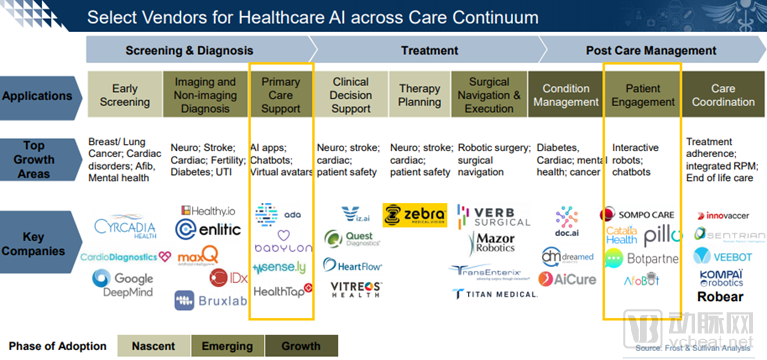
Frost & Sullivan: Distribution of Major Players in Medical AI (2019)
According to a Statista survey, 27% of consumers are willing to use virtual assistants to seek answers to health-related questions. In addition to convenience, personalization, and interactivity, virtual assistants are more suitable for asking certain embarrassing questions compared to consulting doctors, thus providing at least one alternative option. A study published by Juniper Research in 2018 stated that AI-powered chatbots would soon become the primary channel for healthcare providers to respond to the general public. The volume of such interactive responses was projected to reach 2.1 million in 2018 and grow at an annual rate of 167%, reaching 2.8 billion per year by 2023.
In October this year, Voice.ai and Orbita, a vertical AI voice service provider for the healthcare sector, jointly released the 2019 Report on U.S. Consumer Acceptance of Healthcare Voice Assistants. The survey revealed that approximately 7.5% of American consumers were already using healthcare voice assistants, while 51.9% expressed interest in such services. The report concluded that the application of intelligent voice assistants in the healthcare industry remains in its early stages and is poised for growth.
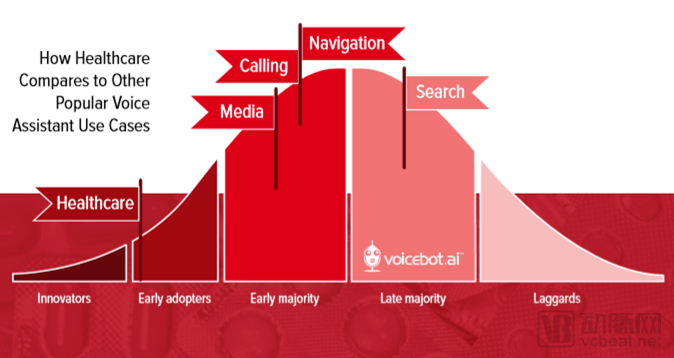
Voicebot.ai: Market Acceptance of Intelligent Voice Assistants Is in Its Early Stages
How did early adopters proceed?
Over the three-year period from 2017 to 2019, Microsoft accumulated numerous cases of its healthcare chatbot technology services, featuring multi-role and multi-functional applications. These collaborative initiatives with Microsoft have indeed revealed a cohort of early adopters across the entire spectrum of the medical consumer experience.
Healthcare Providers: Pre-consultation Triage Before Visits
[Innovation Drive >> Optimized Resource Allocation]
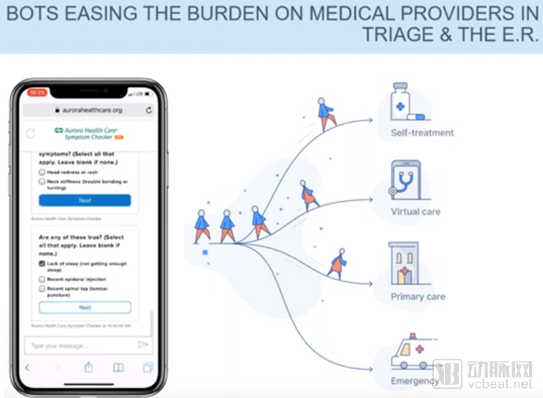
Aurora Health Care, a U.S. healthcare organization, operates 15 hospitals, 150 clinics, and 70 pharmacies. To address the substantial consumption of medical resources caused by triage and emergency department pressures, Aurora Health Care has partnered with Microsoft Health Bot to leverage chatbot technology as a mitigating solution.
This collaborative project, initiated in 2017, was among the earliest to leverage Microsoft’s Health Bot service. Functioning as a digital virtual medical guide, the partnership between Microsoft and Aurora emphasized using chatbots to create a seamless healthcare consumer experience. By prompting users to answer key questions, the app analyzes reported symptoms to identify potential causes, perform an initial triage assessment of urgency, determine the appropriate level of medical care required, and guide users toward scheduling their next medical appointment. Such medical chatbots represent one of the most common entry points in digital health, starting with preliminary self-assessment and ultimately facilitating appointment booking.
Similarly, with the help of Microsoft’s technology, MDLive, a telemedicine service provider, enables users to self-assess their symptoms via chatbots for triage purposes before engaging in video consultations with physicians.
Healthcare Provider: During Visit, In-Hospital Service Assistant
[Innovation Drive >> Enhanced Consumer Experience]
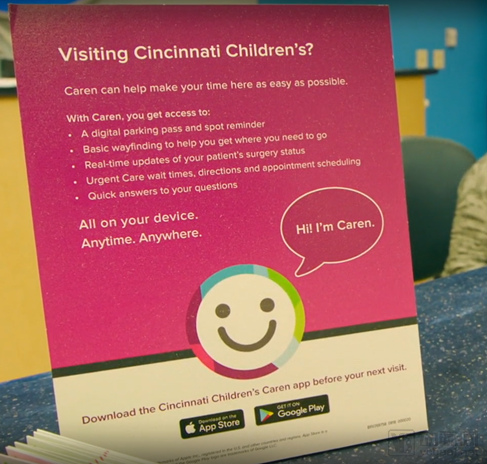
In 2018, Cincinnati Children's Hospital Medical Center leveraged Microsoft Azure Bot to develop their app named Caren. The chatbot interface primarily serves as a hospital triage and information assistant, while also providing comfort and entertainment for pediatric patients during their visits.
Cincinnati Children’s Hospital Medical Center aims to further enhance the end-to-end experience for its patients and families. With Caren, patient families can easily locate their care facilities, find emergency department locations, check wait times, and receive real-time updates on their child’s surgery. Caren even offers digital parking services, including issuing parking permits and recording parking locations. Additionally, Caren can answer a wider range of questions through conversational interactions that are not available in the app’s menu interface, and it can entertain children by telling jokes and organizing treasure hunts.
Healthcare Provider: Patient Virtual Assistant Throughout the Service Journey
[Innovation Drive >> Upgraded Consumer Experience]
This year, Quest Diagnostics, a U.S.-listed diagnostic testing and healthcare services organization, launched its patient service bot, Quest Chat, using Microsoft Healthcare Bot Service. The bot assists patients in locating service centers, scheduling appointments, and answering non-clinical questions related to service processes, such as how long blood tests take and when results will be available. For inquiries the bot cannot address, patients are transferred to human professionals for assistance.
Insurance Payer: Insured Member Tool
[Innovation Drive >> Cost Reduction]
Premera Blue Cross, the largest health insurer in the Pacific Northwest, serves 2.2 million members. Powered by Microsoft’s Healthcare Bot technology, Premera Blue Cross launched a chatbot named “Premera Scout” on Facebook Messenger in 2018. As a virtual assistant, it helps insured members understand policy details, access benefits, file claims, and utilize other Premera services.
An Accenture survey found that 68% of insurance companies currently use chatbots across various aspects of their operations. By leveraging artificial intelligence to manage customer interactions, health insurers can save more than $2 billion annually. Premera Blue Cross believes that customers feel more comfortable and find it easier to seek assistance from bots in certain scenarios. This application reduces the volume of calls to contact centers, freeing employees from low-end, tedious tasks so they can focus on handling more complex customer inquiries. Premera Blue Cross stated that extensive research into user experience has revealed a growing willingness among individuals to adopt such technological solutions rather than communicate directly with human agents, with health insurance customers becoming increasingly accustomed to this human-machine interaction model. The project will also continue to enhance its capabilities by leveraging call-in and chat data.
Pharmaceutical Company: Recruitment for Drug Research Trials
[Innovation Drive >> Enhancing Efficiency]
Half of new drug development efforts struggle to recruit a sufficient number of patients for clinical trials. Meanwhile, many patients are unable to identify suitable trials among the approximately 50,000 medical studies conducted globally, each often burdened with 20–30 complex and obscure eligibility criteria. Even when physicians attempt to quickly search on behalf of their patients, finding appropriate options remains challenging. In 2019, Microsoft’s healthcare team in Israel developed a clinical trial chatbot to help screen and match suitable volunteers for clinical trials. This chatbot enables patients and physicians to search for research related to specific diseases and, through a series of question-and-answer interactions, recommends the most appropriate trial options. Pharmaceutical companies can also leverage this chatbot to identify eligible trial participants.
For example, a patient inquires: “Clinical trials for a 52-year-old female with breast cancer in California.” The bot responds and asks a series of follow-up questions: whether chemotherapy has been administered for metastatic disease, whether the cancer has spread, and how far the patient is willing to travel. Additionally, it provides five options for the patient to select from to describe their current health status and level of self-care ability. Based on the patient’s multiple-choice answers, the software generates the next question and an updated list of available trials. The bot continues to ask follow-up questions based on the patient’s responses, further refining and filtering the list of potential trials.
Healthcare Professionals: Convenient Access to Professional Information
[Innovation Drive >> Enhancing Efficiency]
In 2017, Microsoft partnered with Weill Cornell Medicine to develop the Precision Medicine Knowledgebase Bot (PMKB), which is currently an open-source resource. Unlike previous chatbots, this one is designed for healthcare professionals rather than patients. The knowledge base supports 163 gene sets and 518 variants, along with 404 clinical annotations. Built on the Microsoft Bot Framework, the chatbot enables pathologists and researchers to access the knowledge base through multiple channels, including instant messaging platforms such as Skype, Slack, and WeChat. With support for both text and voice interactions, it ultimately enhances the efficiency of clinical decision-making.
Review
As we can see, the various categories of partners proposed by Microsoft—including healthcare providers such as hospitals, clinics, laboratory centers, and telemedicine companies; payers such as health insurance companies or HMO groups; and pharmaceutical companies—are all within its scope of service. Furthermore, the scenarios covered by the Microsoft Healthcare Bot do not encompass the full range of AI conversational applications in the healthcare industry. For instance, applications aimed at improving patient medication adherence for pharmaceutical companies, pharmacies, and health insurers exist but are not included in Microsoft’s case studies. Beyond Microsoft, there are several other conversational AI technology providers with distinct specialties focused on the healthcare sector. Overseas examples include Sensely, which recently secured $15 million in funding last month; Orbita, which focuses on intelligent voice interaction; and Conversa Health and LifeLink, which excel in patient engagement. In China, the Beijing-based startup Echo-Wall has already implemented multiple practical AI projects in collaboration with domestic and international pharmaceutical companies and commercial insurers. More detailed discussions will follow.
Among the early adopters with implemented use cases we have observed, some have begun to integrate this unique personalized conversational capability throughout their entire service workflow, while others have focused on deepening its application at specific points to centrally address challenges in those areas. It is foreseeable that AI-driven conversations will expand across various dimensions within the healthcare industry, appearing wherever information exchange and mutual communication are required among different stakeholders and stages, thereby becoming a connector within the industrial ecosystem.
>> Entrepreneurs, industry practitioners, and investment firms interested in this field are welcome to connect. WeChat ID: gugreaty