

Genetron Health Files for Nasdaq IPO Just One Day After Securing Over RMB 500 Million in New Funding

Genetron Health
Researcher of Precision Personalized Diagnosis and Treatment Solutions for Cancer
On November 22, 2019, shortly after announcing the completion of a new round of financing exceeding RMB 500 million, Genetron Holdings Limited filed its prospectus with the NASDAQ.
Genetron Holdings May Become the First Chinese Cancer Genetic Testing Company Listed on Nasdaq.
As a leading oncology genetic testing company in China, Genetron Holdings’ consecutive moves have boosted industry morale. Through the data provided in Genetron’s prospectus, we can gain insight into the current state of the oncology genetic testing industry after a year of stagnation.
In 2013, Wang Sizhen, who had just concluded his first entrepreneurial venture, met Professor Yan Hai at a gathering. As a biology enthusiast, Wang engaged in an inspiring conversation with Professor Yan. At that time, Professor Yan had already discovered that genes such as IDH and TERT not only played a decisive role in gliomas but were also key driver genes in other cancer types. Molecular subtyping was gradually evolving from a conceptual framework into clinical practice, making the accessibility of precision medicine increasingly evident.
At that time, the field of molecular medicine was still a blue ocean. Two like-minded individuals sparked an entrepreneurial vision, and thus Genetron Holdings Limited was born.
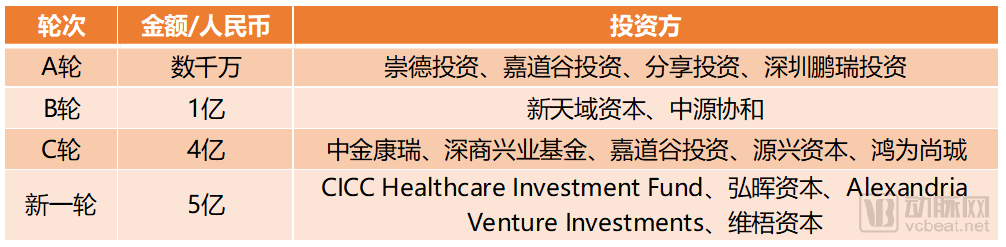
Genetron Holdings Limited Financing History
And so Genetron Holdings Limited embarked on its journey in the field of tumor genetic testing.
Since its inception, Genetron Holdings Limited has completed four rounds of financing, totaling over RMB 1 billion. Its latest funding round attracted several renowned investment institutions, including CICC, Honghui Capital, Vivo Capital, and Alexandria Venture Investments.
Amid a cooling investment climate, Genetron Holdings Limited still secured over RMB 500 million in a new round of financing by year-end, becoming the cancer genetic testing company that raised the largest amount of funding in 2019.
Genetron Holdings Limited’s appeal to primary market investors is closely tied to its robust R&D capabilities.
Yan Hai, the company’s Chief Scientist, is the Edmund T. and Jane E. Pratt Professor of Neuro-Oncology and a tenured professor in the Department of Pathology at Duke University in the United States. His outstanding achievements in glioma research and cell-free DNA detection form the technological foundation of Genetron Holdings Limited.
Building on Professor Yan Hai’s areas of expertise and expanding outward, Genetron Holdings Limited has developed diagnostic and monitoring services and products that cover eight of the ten most prevalent cancer types in China, achieving particular success in the brain cancer detection market.
Genetron Holdings Limited divides its business into three main segments: Diagnosis and Monitoring, Cancer Early Screening, and Pharmaceutical Services.
In Diagnosis and Monitoring,Genetron Holdings Limited provides comprehensive diagnostic and monitoring services and products through its Laboratory Developed Tests (LDT) services and In Vitro Diagnostic (IVD) products. Its LDT service portfolio includes specially designed genomic testing services, ranging from single-gene to 21,000-gene panels, catering to patients with varying needs and affordability levels. In terms of sequencing instruments, Genetron’s digital PCR system, Genetron 3D Biochip Reader, and IDH1/TERT gene detection assay for glioma were approved in 2017; the Genetron S5 received market approval from the National Medical Products Administration (NMPA) in November 2019.
For the cancer early screening business,Genetron Holdings Limited has developed a variety of laboratory-developed test (LDT) services for early cancer screening in asymptomatic individuals at elevated risk of developing cancer due to multiple factors. Its liver cancer early screening product is currently undergoing registration with the National Medical Products Administration (NMPA), while its lung cancer and pan-cancer screening products are also at the forefront of its research and development pipeline.
Meanwhile, Genetron Holdings Limited began early on to strategically position itself for the B2B market.Pharmaceutical ServicesAs of the release of the prospectus, Genetron Holdings Limited had established collaborations with 57 hospitals, 16 biopharmaceutical companies, and 15 research institutions across China. Through these partnerships, Genetron addresses its partners’ needs in genomic research and clinical development. Biopharmaceutical companies have applied Genetron’s products in multiple areas, including biomarker assessment for molecular targeted therapy and immunotherapy, patient enrollment in clinical trials, companion diagnostic development, and drug approval following joint marketing efforts.
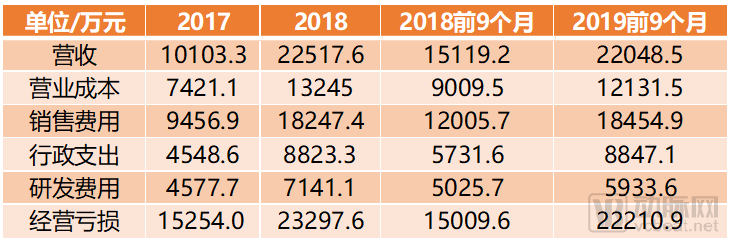
Selected Financial Data of Genetron Holdings Limited Since 2017
Driven by growth across its three major business segments, Genetron Holdings Limited achieved an overall revenue increase of 122.9% from 2017 to 2018.
In the first nine months of 2019, Genetron Holdings Limited achieved operating revenue of RMB 220 million, approaching its full-year total for 2018. The gross profit margin increased from 26.5% in 2017 to 45.0% in 2019.
Selling expenses, administrative expenditures, and research and development (R&D) expenses increased proportionally with Genetron Holdings Limited’s revenue. In recent years, Genetron has continued to invest heavily in its R&D operations. R&D expenses reached RMB 71.411 million in 2018, and R&D investment continued to grow during the first nine months of 2019.
As we can see, under the combined pressures of sales expenses, R&D costs, and administrative expenditures, Genetron Holdings Limited has yet to achieve profitability to date; however, its loss-to-revenue ratio has improved significantly compared with 2017.
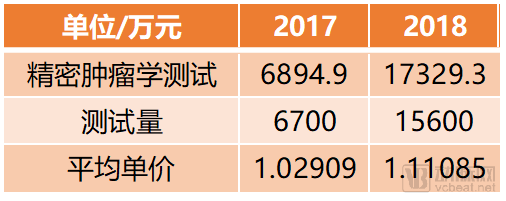
Genetron Holdings’ Revenue from Precision Oncology Testing
From 2017 to 2018, Genetron’s precision oncology testing services served as the primary driver of its performance growth, with revenue increasing by 151.3% and gross profit rising by 218.6%. During this period, however, Genetron’s average revenue per user (ARPU) did not show a significant increase.
The primary driver of growth in oncology testing services was the test volume of Genetron Health. From 2017 to 2018, Genetron Health’s test volume increased from approximately 6,700 tests to approximately 15,600 tests. In the first nine months of 2019, Genetron Health performed approximately 16,500 tests, compared to approximately 10,800 tests during the same period in 2018.
How Did Genetron Holdings Limited Achieve Nearly 150% Customer Growth? A Successful Sales Strategy Played a Key Role.
Sales Team Scaling, Significant Resource Investment
According to the prospectus, Genetron Holdings Limited’s sales team had grown to 180 members by the end of 2017 and expanded to 240 in 2018. As of September 30, 2019, the company employed 276 staff in sales, product, and marketing roles, accounting for 41.6% of its total workforce, with its direct sales team covering 415 hospitals.
Sales and marketing expenses are currently the largest component of Genetron Holdings Limited’s expenditures, accounting for 83.7% of its revenue. This situation is not uncommon among domestic cancer genetic testing companies.
As a molecular diagnostic technology that has gradually matured in recent years, tumor genetic testing remains relatively unfamiliar to patients and physicians in China. It is therefore necessary for companies to invest substantial resources in market education, such as by organizing medical conferences and seminars, raising awareness, and establishing collaborations with leading key opinion leaders (KOLs). This approach is not uncommon among domestic tumor genetic testing enterprises. For instance, sales expenses constitute the largest component of expenditures for Amoy Diagnostics, a company listed on the A-share market.
Online and offline, B2B and B2C in parallel
Genetron Holdings Limited has systematically structured its sales team in alignment with the characteristics of its three core business segments.
Diagnostic and monitoring services primarily cater to hospitals and patients, requiring the team to maintain long-term engagement with precisely targeted populations. Consequently, the sales force for this segment focuses on offline sales, interacting with physicians across various specialties during regular meetings and visits to help them better understand the service offerings and product functionalities, thereby enhancing brand awareness.
Early screening primarily serves the majority of healthy individuals, yet direct-to-consumer (DTC) marketing poses significant challenges. Consequently, the sales team for early screening products focuses on health checkup centers and corporate clients, aiming to integrate early screening services as one of the test items in their physical examination and health assessment programs. Additionally, the early screening services sales team leverages extensive e-commerce sales experience to promote these services through online platforms.
Pharmaceutical enterprise services are a type of service exclusively tailored for the corporate sector. The sales team focuses more on selling to biopharmaceutical companies, formally demonstrating their robust capabilities to maintain stable cooperative relationships.
Direct Sales as the Focus, Extensive Distribution Coverage
Direct sales constitute the core force of Genetron Holdings’ offline sales operations. The company’s direct sales team covers more than 35 cities across over 25 provinces in China, with a significant deployment of direct sales personnel in key markets such as Beijing, Shanghai, and Guangzhou to ensure deep market penetration.
Meanwhile, Genetron Holdings Limited also sells its products through approximately 20 domestic distributors, leveraging their networks to reach third- and fourth-tier cities and establish a broader, more comprehensive sales channel. This dual-pronged approach enables Genetron to continuously expand its market coverage while concentrating limited resources on the most strategically valuable markets.
Multi-Party Collaboration to Broaden Promotion Pathways
The collaborative initiatives disclosed in the prospectus highlight Genetron Holdings Limited’s new efforts to expand its sales channels. Both “genetics + insurance” and “genetics + health checkups” represent novel approaches to implementing genetic testing, with the ultimate aim of broadening the distribution pathways for genetic testing products.
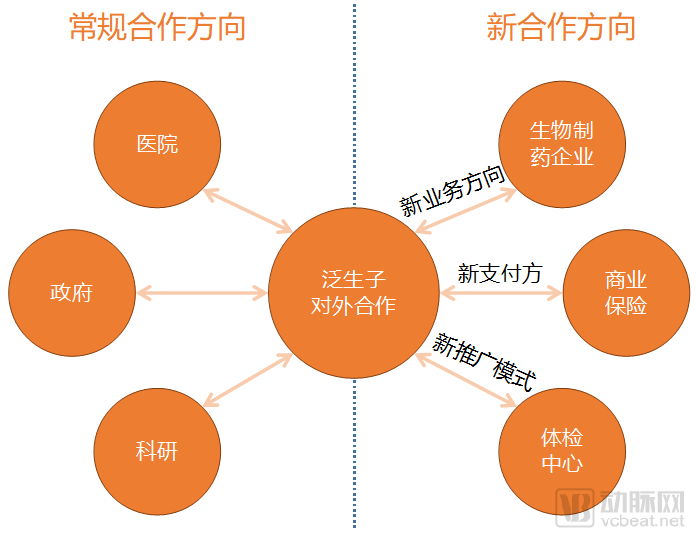
In addition to maintaining ongoing communication with government agencies, hospitals, and research institutions, Genetron Holdings Limited is gradually expanding its scope of partnerships.
Genetron Holdings Limited is collaborating with other sectors of the healthcare industry, including health examination centers, biopharmaceutical companies, and commercial insurance providers. These three new strategic partnerships facilitate more efficient market entry for Genetron’s products by driving business expansion, shifting payment responsibilities, and broadening distribution channels.
Collaboration with health examination centers represents an excellent pathway for the implementation of early cancer screening products. Genetron Holdings Limited has recently entered into a cooperation agreement with iKang Healthcare Group to promote and provide early liver cancer screening test services through iKang’s nationwide network of health examination centers. Both health examinations and early cancer screening are preventive screening solutions targeted at healthy populations, demonstrating strong synergistic potential.
This collaborative model will not only accelerate the commercialization of Genetron’s early cancer screening products, but also help Ikang Guobin enrich its service offerings.
In its collaborations with biopharmaceutical companies, Genetron Holdings Limited is seeking to broaden its business scope by identifying synergies with the rapidly growing innovative drug sector. On one hand, it provides companion diagnostic solutions to support the approval and commercialization of therapeutic agents; on the other, it assists clients in conducting prospective screening and patient referral, thereby accelerating enrollment in clinical trials. The extensive patient data accumulated by Genetron to date can also be leveraged to expedite drug discovery.
“Genes + Insurance” was a hot topic in 2019, and Genetron Holdings Limited clearly recognized this trend and made early strategic arrangements.
Commercial insurance companies can provide policyholders with market-leading genomic testing services and products, thereby enhancing differentiation from other insurance offerings. Genetic testing companies can also leverage the extensive customer base and diverse product promotion channels of commercial insurers to market their own services and products. Genetron Holdings Limited believes that collaborative models with the insurance industry can create synergies and facilitate resource sharing among participants.
Collaboration between genetic testing companies, research institutions, and hospitals has become standard practice. In an interview with VCBeat, Genetron Holdings Limited established a strategic framework that advances both medical research and clinical services in parallel. The combination of hospitals, research institutions, and government entities constituted the primary landscape during Genetron’s early development.
We have observed that Genetron Holdings Limited has consistently prioritized scientific research collaborations and has applied for and led numerous major national and provincial/municipal science and technology special projects. Through Professor Hai Yan’s connections, Genetron has established a long-term, in-depth partnership with Duke University.
Regarding overseas universities, Genetron Holdings Limited has also established an exclusive strategic partnership in China with the team of Professor Bert Vogelstein at Johns Hopkins University.
In China, Genetron Holdings Limited has also established collaborative mechanisms with multiple renowned Grade-A tertiary hospitals, including Beijing Tiantan Hospital, the Cancer Hospital of the Chinese Academy of Medical Sciences, Peking University Cancer Hospital, and Zhejiang Provincial People’s Hospital. Its research areas cover a wide range of cancers, such as brain tumors, lung cancer, gastric cancer, esophageal cancer, colorectal cancer, liver cancer, breast cancer, and thyroid cancer.
Since 2014, Genetron Holdings Limited has maintained productive collaborations with these hospitals and research institutions, resulting in the co-publication of 18 academic papers. Notably, seven papers were published in 2018 alone, including articles in high-impact journals such as *Cancer Cell*, *Nature Communications*, and *PNAS*. Genetron also closely attends to the needs of hospital experts by providing proprietary technologies and databases to assist physicians in selecting cancer treatments and managing and monitoring the treatment process.
Genetron Holdings Limited has been actively engaging with the government to help the genetic testing industry advance along the path of standardization and regulatory compliance, while also leveraging governmental influence to raise public awareness and adoption of early screening services. For example, Genetron is collaborating with a municipal government to provide early liver cancer screening tests to 10,000 individuals.
To date, Genetron Holdings’ TERT and IDH1 IVD assays have been approved for inclusion in the centralized procurement of medical supplies through the Sunshine Procurement Platform in seven provinces, including Zhejiang, Guangdong, Sichuan, and Shandong, with approvals pending in four additional provinces.
In addition, Genetron Holdings Limited’s LDT service offerings are progressively being included in provincial medical service catalogs. Several of its products have already been listed in the relevant catalogs in Shandong Province and Guangzhou City, and corresponding proposals have been submitted to the Yunnan Provincial Healthcare Security Administration. Beijing has also expressed recognition for five of Genetron’s LDT services.
The development of the genetic testing sector has been fraught with twists and turns. After the surge of excitement sparked by the successive IPOs of BGI Genomics and Berry Genomics, the industry quieted down in 2019. By the end of 2019, however, the sector received some encouraging news as Genetron Holdings Limited filed its prospectus and Novogene updated its prospectus.
Genetron Holdings’ move may sound the horn for another wave of IPOs among genetic testing companies. Beyond the U.S. stock market, the STAR Market and the Hong Kong Stock Exchange are both viable options for unprofitable genetic testing firms. If Genetron successfully lists on the Nasdaq, several genetic testing companies of comparable size may sequentially initiate their own IPO processes.
How to commercialize genetic testing products has long been a challenge in the industry. Genetron Holdings Limited has offered a potential solution through multi-faceted approaches, which appear to be working well so far.
As an emerging testing modality, genetic testing indeed requires companies to intensify their marketing efforts to educate the market. As the market gradually matures in the future, sales expenditures in this area will naturally decline over time. A combination of diverse marketing strategies is an effective approach to rapidly expand sales channels. The successive entry of insurance providers and health checkup services into the sector has further enhanced the potential for future market expansion.