

WuXi AppTec Diagnostics: Building a New Diagnostic Ecosystem and Targeting the Emerging Niche Testing Market
“Our physiological activities do not follow fixed patterns like rocket propulsion or nuclear fission. The human body is an exceptionally complex molecular system, with ever-changing relationships among its various components, and each individual possesses unique characteristics. We understand only a small fraction of human physiological activities; to this day, we remain unable to elucidate how the vast majority of molecules in the body actually function.” Thus wrote Dr. Donald R. Kirsch in The Drug Hunters, lamenting our limited insight into the human body.
Dr. Kirch previously served as a drug development scientist at several renowned pharmaceutical companies. As a frontline researcher, he found that even with the greater resources available within pharmaceutical enterprises, it was impossible to accurately predict the specific reaction between a given compound and a particular human molecule.
For clinicians, it is even more challenging to obtain patient data at the specific level of molecular responses. Although technologies such as molecular diagnostics, gene sequencing, and mass spectrometry are transforming the field of medical testing, these technologies remain far removed from clinical practice.
As technology continues to advance, how to leverage integrated diagnostics to drive progress in precision diagnosis and treatment has become a hot topic in the industry.
At the “Moving Forward with Innovation, Empowering through Intelligence: 2019 International Summit on New Diagnostics,” co-hosted by WuXi Diagnostics Lab and Mayo Clinic Laboratories, renowned clinical, pathology, and laboratory medicine experts from China and abroad, along with leading academics and industry elites, gathered to engage in in-depth exchanges and share insights on cutting-edge technologies, development trends, and innovative practices in clinical diagnosis and treatment. More than 500 attendees focused on the new concept of integrated diagnostics, committed to jointly building a new ecosystem for clinical diagnostics.
Dr. Liu Fujun, CEO of WuXi Diagnostics Lab, stated, “WuXi Diagnostics Lab has always focused on clinical diagnostics, persisted in R&D innovation, and promoted the clinical practice of integrated diagnostics by aligning with the realities of diagnosis and treatment in China, thereby realizing our vision of ‘making no disease difficult to diagnose.’”
It is reported that WuXi Diagnostics Lab focuses on high-end specialized testing services. By collaborating with Mayo Clinic Laboratories (MCL) to create an innovative diagnostic empowerment platform, it integrates advanced diagnostic technologies with Mayo Clinic’s years of established diagnostic pathways, introducing them into the domestic clinical environment in real time.
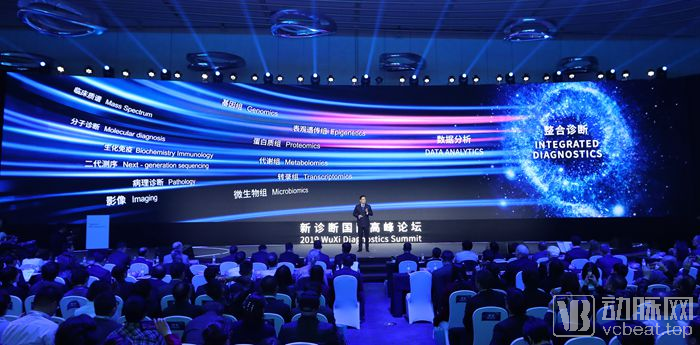
Professor William G. Morice, President of Mayo Clinic Laboratories, stated at the “2019 International Summit Forum on New Diagnostics”: “In the 19th century, Mayo Clinic was merely a small building; today, it has become the world’s leading medical research institution and has been ranked the No. 1 hospital in the United States for consecutive years. The most critical factor behind Mayo Clinic’s success is that, in diagnosis and treatment, we do not simply manage patients’ individual diseases according to clinical practice guidelines; rather, we treat each patient as a whole, unique individual.”
It can be said that integrated laboratory diagnostics has been a critical pillar of the sustained success of Mayo Clinic’s healthcare delivery model for over 150 years. Mayo Medical Laboratories not only assists physicians in making precise disease diagnoses but also plays a vital role in optimizing medication use, disease prevention, and prognosis management, serving as an essential tool for clinical research.
Taking hypertension, a condition widely recognized by the general public, as an example, its routine diagnosis is not particularly difficult despite being a high-prevalence chronic disease. However, within the spectrum of hypertension lies a subtype known as endocrine hypertension. With advancements in diagnostic technologies and the widespread adoption of screening, this previously rare condition now accounts for up to 10% of all hypertension cases, affecting an estimated 27 million patients.
Failure to accurately diagnose endocrine hypertension will delay treatment and may even cause damage to target organs (heart, brain, blood vessels, and kidneys).
By leveraging mass spectrometry, the “gold standard” for hormone testing, it is possible to accurately and rapidly detect metabolites associated with endocrine hypertension and low-abundance endogenous substances. This enables precise disease diagnosis, optimization of clinical pathways, early screening and diagnosis for patients with endocrine hypertension, and improved cure rates.
In fact, beyond hypertension, integrated diagnosis is also a crucial tool for precision treatment and management in another major chronic disease: diabetes.
At the New Diagnosis Summit Forum, Professor Weng Jianping, Executive Dean of the Clinical Medical College of the University of Science and Technology of China and Vice President of the First Affiliated Hospital of the University of Science and Technology of China, stated, “Chronic diseases such as diabetes require precise prediction, precise diagnosis, precise treatment, and precise management. Without precision, we foresee a substantial burden on both the nation and the globe. We need to integrate multi-omics testing information, multifactorial patient-specific analyses, and comprehensive data from the entire disease course to enable earlier prediction of disease onset, select the most appropriate therapeutic interventions, and adopt a holistic approach to disease management.”
WuXi Diagnostics Lab targets the specialty testing market, focusing primarily on high-end diagnostics for novel biomarker targets and innovative detection technologies, with coverage spanning infectious diseases, oncology, genetic disorders, autoimmune diseases, and other conditions.
Currently, with the development of high-throughput sequencing technology, liquid biopsy technology, new drugs and new treatment technologies, as well as the trend towards precision medicine and personalized use of traditional drugs, the special testing market is developing rapidly and continuously expanding.
WuXi Diagnostics Lab has never aimed to simply provide testing services—“giving a man a fish”—but rather to “teach him how to fish” by offering comprehensive solutions for clinical diagnosis and treatment decision-making, thereby enabling personalized, precision medicine throughout the entire patient journey.
In the practice of personalized medication, Dr. Jiang Jieling from Ruijin Hospital, Shanghai Jiao Tong University School of Medicine, introduced that the Department of Hematology at Ruijin Hospital is conducting clinical research on therapeutic drug monitoring of busulfan, a preconditioning agent for bone marrow transplantation. This research is supported by WuXi Diagnostics’ innovative platform adhering to international standards, with the aim of establishing medication standards for the Chinese population, guiding precision medicine, and maximizing patient benefits.
In addition to empowering clinical research, WuXi Diagnostics Lab has also developed a disease diagnosis enablement package, bridging the last mile between advanced testing technologies and their application by clinicians.
The Disease Diagnosis Empowerment Package is built upon the clinical pathways, laboratory testing technologies, and clinical diagnostic and therapeutic expertise of Mayo Clinic, the world’s top-ranked hospital. It also aligns with Chinese clinical guidelines and local healthcare contexts. Centered on four key indicators across the entire disease course, this package integrates relevant testing items into a cohesive solution, delivering value in four core scenarios: early screening and diagnosis, precise diagnosis, decision support, and prognosis management.
Taking the Precision Medication Enablement Package for Depression as an example, psychiatry experts at the Mayo Clinic increasingly recognize that patients’ genetic variations may alter the efficacy and toxicity profiles of antidepressant medications. The Disease Enablement Package facilitates precision initial medication selection guided by pharmacogenomics, optimizes therapeutic outcomes through therapeutic drug monitoring, and avoids drug-induced toxicity.
WuXi Diagnostics Lab not only provides a precise testing platform and technology, but also offers personalized medication guidance based on Mayo Clinic’s clinical practices.
In terms of market potential, independent clinical laboratories have developed well in the United States, Europe, and Japan. Based on the annual reports of four industry leaders—Quest Diagnostics, Labcorp, Labco, and BML—the market sizes for independent laboratories in the U.S., Europe, and Japan are estimated to have reached $20 billion, $14.5 billion, and $10 billion, respectively, with penetration rates of approximately 38%, 50%, and 67%.
In this field, there are also specialized testing service providers in China. However, WuXi Diagnostics Lab is not merely establishing a specialized in vitro diagnostics (IVD) testing service platform. The ultimate goal of integrated diagnostics is to drive medical innovation, and WuXi Diagnostics Lab aims to become a dual platform for specialized IVD testing services and healthcare innovation.
This model has been successfully validated countless times at Mayo Clinic Laboratories (MCL) in the United States. Physicians identify new clinical challenges and propose innovative ideas during patient care; these frontline clinical insights are developed into a series of novel diagnostic assays at MCL, which are subsequently validated in clinical practice at the Mayo Clinic.
Fundamentally, the growth of the specialized testing market is driven by two major factors: first, advances in diagnostic technologies themselves, such as the discovery of new biomarkers and the application of novel diagnostic techniques that introduce new methodological approaches; second, improvements in clinical treatment standards, such as the clinical use of targeted therapies, which necessitate companion diagnostics for personalized medication (pharmacogenomics). In the specialized testing industry, laboratories, equipment, and talent are equally important.
In the field of diagnostic technologies, WuXi Diagnostics Lab’s wholly-owned subsidiary, WuXi ZeKang, is engaged in the research and development, registration, production, and sales of medical devices and clinical diagnostic reagents, as well as the development, technology transfer, consulting, and services related to clinical diagnostic medical technologies.
Compared to routine testing, specialized testing has not yet achieved automation, making it difficult for clinicians to directly interpret raw laboratory data. In the United States, physicians require over a decade of training before they are qualified to perform subspecialty pathology examinations and issue reports.
Through its collaboration with Mayo Clinic Laboratories (MCL), WuXi Diagnostics Lab can provide Chinese clinicians with clinical interpretations of diagnostic data and offer tailored diagnostic recommendations based on Mayo Clinic’s clinical practice guidelines.
Compared with the Mayo Clinic, China’s top-tier medical institutions serve a larger patient volume. With WuXi Diagnostics Lab establishing an integrated diagnostic empowerment platform that fuses multi-platform, multi-omics, and clinical big data, we can anticipate the emergence of Chinese medical institutions that will achieve renown comparable to that of the Mayo Clinic.