

2019 Medical Data Science Conference Kicks Off in Jinan
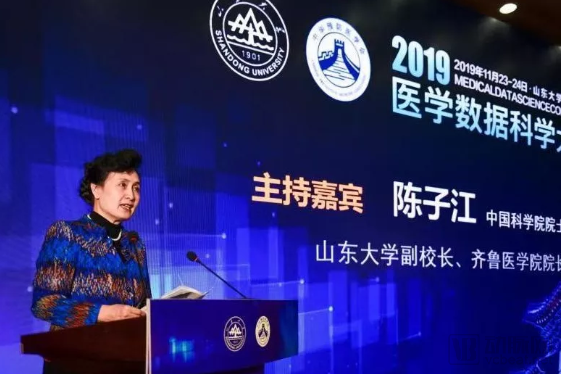
In his address, Sun Jiye extended congratulations to Professor Chen Zijiang and Professor Li Shucai, Vice President of Shandong University, on their respective elections as academicians of the Chinese Academy of Sciences and the Chinese Academy of Engineering. He pointed out that Shandong Province regards the development and application of medical big data as a key lever to promote the interactive and integrated growth of both the healthcare sector and the health industry. The province is deeply advancing the application of medical data in areas such as healthcare industry governance, clinical research, and public health, continuously improving policy coordination and system integration capabilities, striving to cultivate and strengthen new business models in health and medical big data, and creating distinctive features and highlights in the application of health and medical big data in Shandong.
He stated that Shandong Province has established a provincial population health information platform, achieving interconnectivity with national, municipal, and county-level platforms across four tiers. This has formed a fundamental framework wherein data is aggregated on the platform, business operations are conducted through it, and decision-making is supported by it. Currently, efforts are being accelerated to build the Northern Center for National Health and Medical Big Data. By mining and analyzing massive volumes of health data, the center will provide comprehensive, lifecycle-spanning health services to the public. He emphasized the hope that this conference will serve as an opportunity to further improve support platforms for the development of the medical data industry, drive the construction of a health industry chain, and continuously foster new technologies, industries, business formats, and models. The goal is to strive to create a “Shandong Model” for the application and development of medical data, generate more experiences with distinctive Shandong characteristics, and make greater contributions to the building of a Healthy China and a Healthy Shandong.
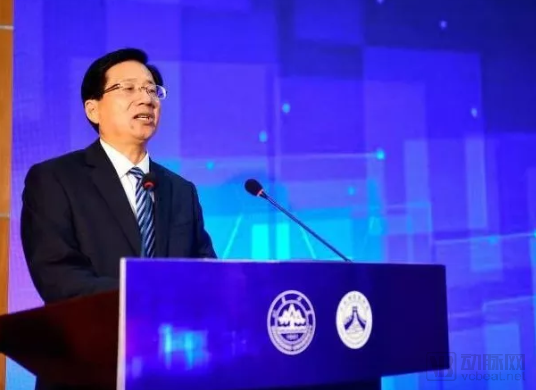
In his address, Sun Shutao introduced the development of medical data in Jinan City. Regarding the aggregation and development of healthcare big data, health and medical data have been consolidated from 21 data departments, 96 hospitals, and over 3,200 primary healthcare institutions, accumulating 187 TB of data. This has resulted in 5.4 million electronic health records and more than 410 million imaging files. A storage center for the Northern Medical Big Data Center, with a scale exceeding 20,000 square meters, has been established. In terms of application scenarios, Jinan has researched and formulated the province’s first action plan led by Class I health and medical big data, promoting data integration, application, and innovative development. Regarding support from high-end frontier technologies, the city has fostered the development of industries in big data, artificial intelligence, cloud computing, and blockchain, providing crucial infrastructural guarantees for the advancement of medical data. In cultivating related industries, Jinan is developing bio-genetics and medical equipment industries supported by medical big data, nurturing new health and medical technologies and smart hardware industries, building a batch of health and medical industry incubation parks and health demonstration towns, and accelerating the construction of projects for the International Applied Science Center. He stated that it is essential to fully leverage the innovative leading role of universities, achieve four-party collaboration among the government, enterprises, medical institutions, and academia, jointly promote the widespread application of medical big data, and contribute to the initiatives of Healthy China and Healthy Jinan.
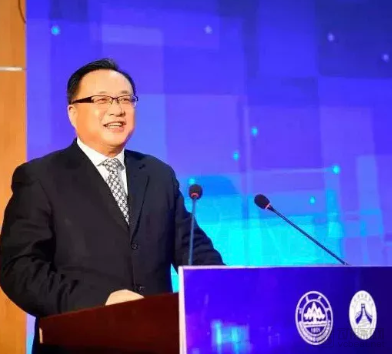
In his address, Guo Xinli welcomed the guests and expressed gratitude for their care and support of Shandong University’s reform and development. He stated that Shandong University is actively responding to the national big data development strategy, leveraging its interdisciplinary advantages as a comprehensive university, planning to establish an Institute of Health and Medical Big Data, and actively exploring a distinctive path for the development of health and medical big data disciplines at Shandong University. Currently, through close collaboration with government departments such as the Shandong Provincial Health Commission and the Shandong Provincial Department of Human Resources and Social Security, as well as with multiple general hospitals, healthcare institutions, and renowned enterprises, the university has jointly established a collaborative innovation model for health and medical big data characterized by “government-led platform building and policy formulation, enterprise funding to drive industrial development, university discipline construction to create theoretical frameworks and methodologies, and promotion and application by hospitals and related healthcare institutions.” He emphasized making full use of this valuable opportunity for exchange, earnestly learning from the new insights and concepts shared by experts and scholars, actively drawing on their best practices and experiences, accelerating the development of world-class medical data science disciplines and the Institute of Health and Medical Big Data, and injecting strong momentum into the continuous innovation—and even global leadership—of medical data science research.
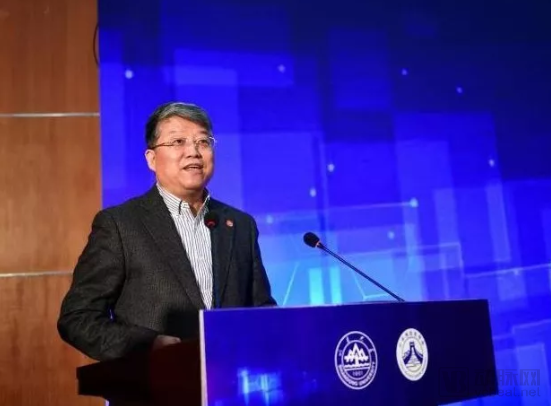
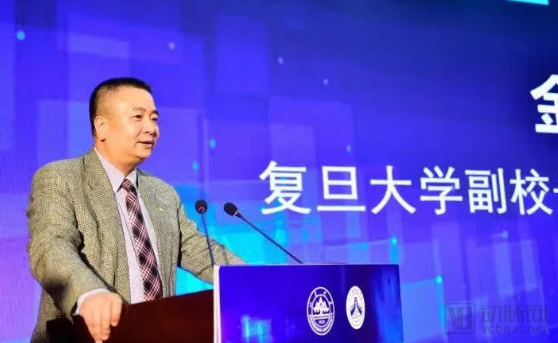
In his address, Liang Xiaofeng, Executive Vice President of the Chinese Preventive Medicine Association (CPMA), first extended a warm welcome to all attendees on behalf of the CPMA and expressed gratitude for the steadfast support provided over the years by the Shandong Provincial People’s Government, the Shandong Provincial Health Commission, and Shandong University. He highlighted the work undertaken by the CPMA’s Professional Committee on Health Insurance, expressing hope that this conference would serve as an opportunity to fully leverage Shandong Province’s health and medical big data resources. Against the backdrop of “Internet Plus” and big data, and aligned with the strategic needs of the Healthy China initiative, he called for exploring new paradigms for the cross-sector integration of health management and health insurance.
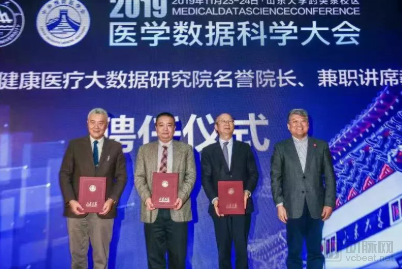
The opening ceremony also featured an appointment ceremony for the Honorary Dean and Chair Professors. Academician Jin Li was appointed as the Honorary Dean of the Institute of Health and Medical Big Data at Shandong University, while Academicians Zhao Guoping and Zhou Honghao were appointed as Adjunct Chair Professors at Shandong University. Guo Xinli presented the appointment letters to the three academicians.
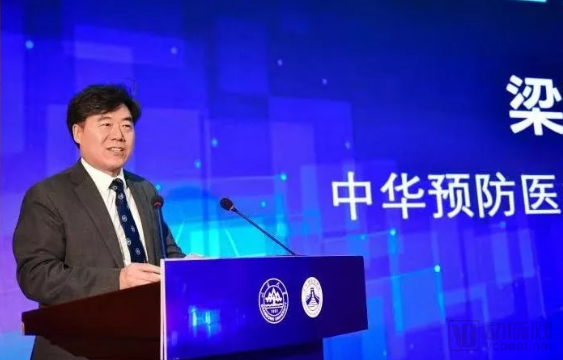
Following the appointment ceremony, Academician Jin Li delivered a speech. He stated that the establishment of the Institute of Medical Big Data at Shandong University demonstrates strong foresight. By focusing on medical big data as a research direction, leveraging the respective strengths of Shandong University and Shandong Province, and strengthening collaboration with Inspur Group, this initiative will serve as an exemplary model for the development of medicine, Shandong Province, and the nation.
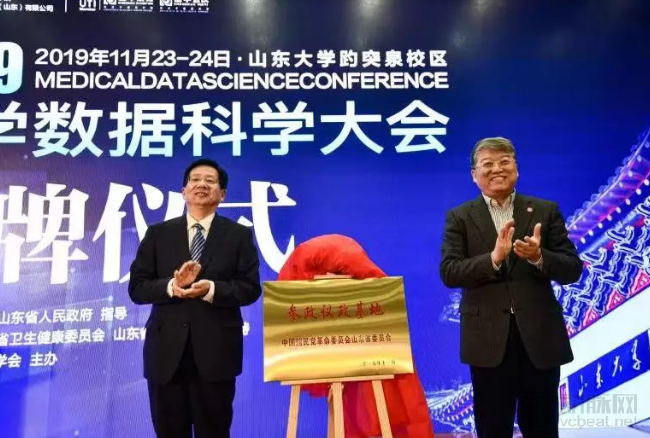
At the opening ceremony, Sun Jiye, a member of the Standing Committee of the Central Committee of the Revolutionary Committee of the Chinese Kuomintang (RCCK) and Chairperson of the RCCK Shandong Provincial Committee, together with Guo Xinli, unveiled the plaque for the “RCCK Shandong Provincial Committee’s Base for Participation in the Deliberation and Administration of State Affairs.” Relying on the Institute of Health and Medical Big Data of Shandong University, the base leverages the integrated advantages of Shandong University’s medical data resources and talent pool, as well as the policy advisory expertise of the RCCK Shandong Provincial Committee. It aims to jointly build a high-level platform for participation in the deliberation and administration of state affairs to support the Healthy Shandong Initiative, promote the construction of Shandong Province as a national demonstration province for the integration of medical care and elderly care, and gather synergy, inject momentum, and invigorate the development of medical data science.
At the Academician Forum following the opening ceremony, Academicians Jin Li, Zhao Guoping, and Zhou Honghao delivered keynote addresses titled “From Genomics to Phenomics,” “From Genomic Research to Precision Medicine,” and “Current Status and Prospects of Personalized Medicine,” respectively. Over the next two days, more than ten renowned experts and scholars from around the world will engage in discussions under the theme “Data-Driven Innovation in Medical Research and Demand-Led Integration of the General Health Industry.” Topics will include medical data research and applications, the domestic healthcare reform environment, health insurance and health big data, and issues related to general health and health management.
Prior to the meeting, Sun Jiye, Sun Shutao, and Guo Xinli met with a delegation led by Academicians Jin Li, Zhao Guoping, and Zhou Honghao. The parties exchanged views on the establishment of the Institute of Health and Medical Big Data.
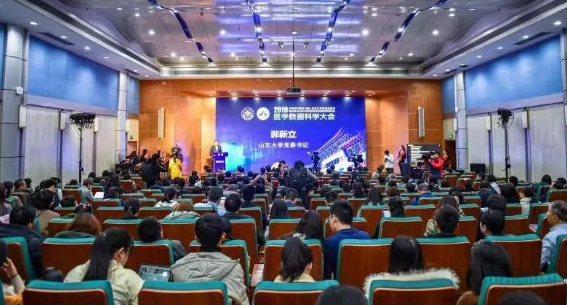
Guided by the National Health Commission of the People's Republic of China and the People's Government of Shandong Province, and supported by the People's Government of Jinan City and the Health Commission of Shandong Province, this conference is hosted by Shandong University and the Chinese Preventive Medicine Association, and jointly organized by Cheeloo College of Medicine of Shandong University, Institute of Data Science of Shandong University, School of Public Health of Shandong University, Talent Valuation (Shandong) Co., Ltd., and Shanda Hualian Health and Medical Big Data Innovation Center.
The conference provided an important platform for interactive exchanges, partnership matchmaking, and collaborative innovation among government bodies, academic communities both in China and abroad, and the business sector. It played a positive bridging role in advancing scientific research innovation and technological progress in the field of medical data science, strengthening communication and exchange among experts and scholars, and promoting the deep integration of government, industry, academia, research, and application. More than 300 participants attended the conference, including leaders from universities, hospitals, and enterprises in the national healthcare and pharmaceutical industries, as well as experts, scholars, faculty and student representatives, and journalists from news media.