

Guangdong Med Valley: A Global Hub for Biomedical Innovation and Enterprise Incubation
How to Build an International Medical Industry Innovation Center with a Global Reach and a High-End Biotech Cluster on a Former Banana Plantation in Just Five Years? How to Attract and Help Over 100 Medical Companies Achieve Rapid Growth? Guangdong Medical Valley (MEDV) is the Comprehensive Medical Industry Investment and Incubation Platform That Has Unlocked These Achievements.
Guangdong Medical Valley, established in 2014, is a comprehensive investment and incubation platform dedicated to the medical device and biopharmaceutical industries. Its core business activities include the development and operation of medical industry incubators, equity investment in medical projects, and the provision of integrated supporting services for the medical industry.
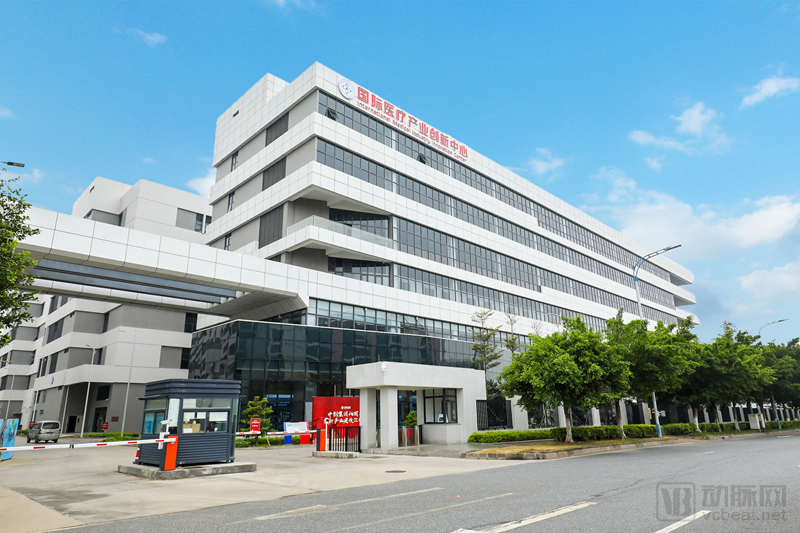
Guangdong Medical Valley Nansha Industrial Incubator is located in the core area of the Guangzhou Nansha Free Trade Zone. With a total construction area of 180,000 square meters, it integrates seven major modules: incubation, office space, R&D, production, warehousing, talent services, and general support services, providing comprehensive supporting services for tenant enterprises. According to reports, the Guangdong Medical Valley Nansha Industrial Incubator is a key project and priority-supported entity in Guangzhou. It features national-level public laboratories, testing facilities, and a national third-party pharmaceutical logistics platform, with plans to attract 500 medical enterprises.
MEDV chose to establish its presence in the Nansha Free Trade Zone due to its promising development prospects. Xie Jiasheng, Executive President of MEDV, stated, “Nansha District enjoys a unique geographic advantage, situated at the Pearl River estuary and the southernmost tip of Guangzhou, making it the geographical center of the Guangdong-Hong Kong-Macao Greater Bay Area (GBA). Within a 100-kilometer radius of Nansha lie all 11 cities of the GBA and five major international airports, positioning it as a critical hub connecting urban clusters on both sides of the Pearl River estuary with Hong Kong and Macao.”
In 2012, Nansha District was approved as a national-level new area;
In 2014, the China (Guangdong) Pilot Free Trade Zone was established. As the largest area within the zone, Nansha New Area was positioned as a demonstration zone for in-depth cooperation among Guangdong, Hong Kong, and Macao, an important hub for the 21st Century Maritime Silk Road, and a pioneer in China’s new round of reform and opening-up.
In 2016, Nansha was designated as Guangzhou’s only urban sub-center;
In 2017, Nansha was positioned as a sub-center of Guangzhou, tasked with serving as a gateway hub.
Nansha District’s strategic importance at the national, provincial, and municipal levels continues to rise. In 2019, Nansha was designated as a Demonstration Zone for Comprehensive Cooperation among Guangdong, Hong Kong, and Macao, tasked with joining hands with Hong Kong and Macao to build a high-level gateway for opening-up, a demonstration zone for innovation-driven development, an important platform for financial services, and a high-quality living circle.
Initially, the MEDV team evaluated numerous locations and determined that Nansha District was well-suited for developing the medical and health industry, recognizing its strategic significance. Consequently, MEDV established its presence in Nansha District in 2014. “The development of Nansha District in recent years, along with the continuous strengthening of its strategic positioning, has validated our initial judgment,” said Xie Jiasheng.
Since then, medical enterprises settled in MEDV have not only been able to enjoy the preferential policies of the national new area but also benefit from the pilot development policies of the Free Trade Zone and the National Health Tourism Demonstration Base. In 2017, Nansha District released the “1+1+10” industrial policy system for investment promotion, providing up to RMB 100 million in construction and operational subsidies for newly introduced new-type R&D institutions; offering up to RMB 12 million in settlement rewards and up to RMB 200 million in fixed asset investment subsidies for newly established non-headquarters advanced manufacturing enterprises; and granting up to RMB 10 million in housing subsidies or up to 200 square meters of talent apartments for high-end leading talents. In addition, MEDV has also introduced innovation reward measures, with a maximum reward of RMB 50,000, to encourage technological innovation among park enterprises.
In addition to policy advantages, Guangdong Medical Valley is also equipped with various public service facilities, including talent apartments, staff canteens, cafes, and shuttle buses, providing superior infrastructure and comprehensive supporting services for the development of enterprises within the park.
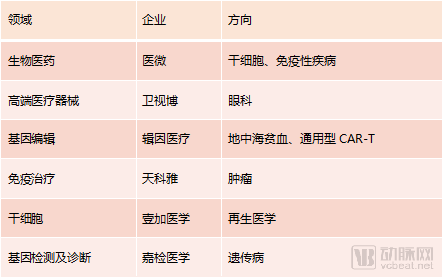
(Some projects settled in Guangdong Medical Valley)
As of now, MEDV has attracted more than 150 enterprises, including two founded by academicians, covering sub-sectors such as biopharmaceuticals, high-end medical devices, gene editing, immunotherapy, stem cells, logistics and distribution, and healthcare industry funds. This achievement is attributable not only to the strategic positioning and policy advantages of Nansha District, but also to MEDV’s hardware facilities and professional supporting services.
MEDV optimizes hardware facilities for the medical industry to meet the specific needs of healthcare enterprises regarding environmental protection, ceiling height, and load-bearing capacity. Xie Jiasheng stated, “We provide specialized designs for medical device and biopharmaceutical companies, with a ground-floor ceiling height of 7 meters and 5 meters for the second floor and above; the ground-floor load capacity is 1 ton per square meter, while floors two through six have a capacity of 800 kg/m².”, the upper floors have a load-bearing capacity of 500 kg/m². Additionally, our power supply is highly reliable to ensure stability.”
In addition, MEDV will establish national-level public laboratories, testing facilities, a national third-party pharmaceutical logistics platform, and GMP-compliant manufacturing facilities. Xie Jiasheng stated, “By integrating upstream and downstream resources through direct investment or collaboration with third-party service providers, we offer comprehensive services to resident medical enterprises, including technology support, financing, testing, certification and registration, warehousing and logistics, sales channels, and online-to-offline trading platforms. This ensures that companies can operate without concerns regarding funding, technology, or talent.”
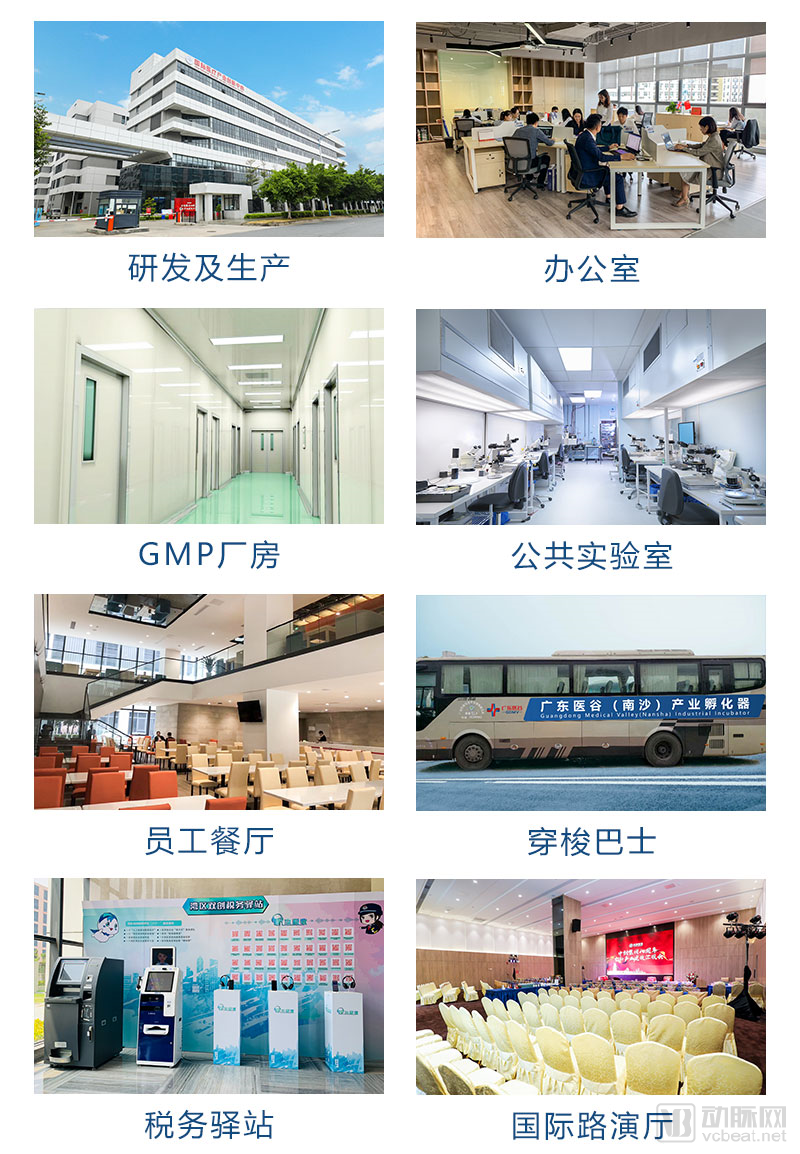
(Image provided by the company)
Such comprehensive consideration stems from the Guangdong Medical Valley team’s awareness of the numerous challenges faced by entrepreneurs in the healthcare industry. “Healthcare enterprises are both technology-intensive and capital-intensive. Without sufficient funding or technological support, it is extremely difficult for founders to succeed,” Xie Jiasheng told VCBeat. Having early exposure to and investment experience in numerous healthcare projects, the Guangdong Medical Valley team has accumulated rich expertise. Leveraging this, they established Guangdong Medical Valley as a professional platform to support healthcare startups, alleviating their concerns regarding funding and technology.
Building on a thorough understanding of the healthcare industry ecosystem, Guangdong Medical Valley (MEDV) has established a comprehensive support service system. This system includes platforms for startup mentoring and policy application, human resources, industry exchange, technology crowdsourcing, industrial finance, international resource matchmaking, CDMO+CRO services, and customs-supervised warehousing. Upon settling in the park, enterprises can access MEDV’s “one-stop” services covering every stage from product R&D to market launch, and from policy applications to financing support. This approach aims to minimize operational costs, enhance service efficiency, and improve the success rate of project incubation.
Taking talent recruitment and development as an example, MEDV has established a human resources service platform and forged partnerships with universities such as Sun Yat-sen University, South China University of Technology, Guangzhou University of Chinese Medicine, Guangzhou Medical University, and Guangdong Food and Drug Vocational College, while also setting up scholarships at multiple institutions. Furthermore, serving as an internship base for several universities, MEDV jointly established the “Internship and Employment Base for Hong Kong and Macao Youth Students” with the Communist Youth League Committee of Nansha District. This initiative aims to enhance students’ practical skills, help them gain corporate insights, facilitate connections between enterprises and outstanding candidates, and regularly organize campus recruitment events for park-based companies. In addition, MEDV assists enterprises with social recruitment by posting relevant information on major platforms according to corporate requirements, thereby reducing costs and achieving better results.
Leveraging its startup mentoring and policy application service platform, MEDV helps companies liaise with the government, providing assistance with subsidy applications, intellectual property filings, and more. To date, MEDV has helped its resident enterprises secure nearly RMB 100 million in subsidies.
Among these services, the industrial financial service platform provides enterprises with investment and financing as well as fiscal and tax advisory services. In terms of investment and financing, MEDV, as a primary investor, has launched specialized medical industry funds primarily aimed at investing in high-potential enterprises within the park. Additionally, MEDV maintains close collaborations with renowned investment institutions such as IDG Capital, Sequoia Capital, Fosun Pharma, Sinopharm Capital, Fortune Capital, and Northern Light Venture Capital. It also partners with multiple banks and securities firms to offer enterprises flexible and convenient financing solutions, including equity financing, debt financing, and guarantee-based credit services.
Xie Jiasheng stated, “As a comprehensive investment and incubation platform, MEDV places great emphasis on financial services. Given that biopharmaceutical and medical device companies are capital-intensive with substantial funding needs, we have chosen to issue funds and collaborate with investment institutions. By introducing high-quality projects to these investors, we facilitate easier access to financing for healthcare enterprises, allowing them to focus on their core operations without being burdened by capital concerns.”
It is worth highlighting the team at Guangdong Medical Valley (MEDV). In addition to its own experienced operations and management team, which provides “one-on-one” professional services to enterprises, MEDV boasts a “star-studded” expert advisory team. This team includes experts with extensive experience in medical investment, professors researching cutting-edge medical technologies, and leaders from industry associations. Xie Jiasheng stated, “Our teams are highly professional. Whether it involves policy application, product certification and registration, promotional campaigns, or venture capital matchmaking, our responsible teams possess rich experience to support tenant companies.”
MEDV has built a resource-rich industry exchange and service platform, regularly hosting various industry events such as MEDV Open Day, the “MEDV Cup” Medical and Health Entrepreneurship Competition, Guangdong International Medical Industry Expo, China Medical Industry Summit Forum, and the Top 50 Biotech Innovation Enterprises in the Guangdong-Hong Kong-Macao Greater Bay Area.
MEDV Open Day is a project roadshow and exchange platform established by MEDV to foster mutual communication within the broader health industry. Held every Wednesday afternoon, the event has reached an offline audience of over 50,000 participants. Projects featured in the roadshows receive professional guidance from MEDV’s specially appointed mentor team, helping them identify issues and secure financing. To date, MEDV has provided advisory services to more than 500 enterprises from across China, successfully facilitating investment for numerous projects.
The annual “Guangdong Medical Valley Cup” Healthcare and Wellness Entrepreneurship Competition has been held for three editions, aiming to further accelerate the industrialization of healthcare startup projects. The competition connects entrepreneurial innovation with market resources, offers prize money to support promising healthcare initiatives, provides a platform for showcasing innovations, enhances visibility, and assists enterprises in securing financing.
The China Healthcare Industry Summit, held quarterly, is a high-end forum regularly organized by MEDV to promote industry exchange and resource integration. Distinguished attendees include academicians from China and abroad, executives of listed companies, and expert professors from hospitals and universities. Xie Jiasheng stated, “The China Healthcare Industry Summit covers premium medical resources both domestically and internationally, reaching an audience of over one million. In addition, MEDV regularly hosts events such as the Top 50 Biotech Innovation Enterprises in the Greater Bay Area selection and overseas project matchmaking sessions.”Thereby promoting exchanges and the flow of factors within the industry.”
In addition to domestic industry exchanges, Guangdong Medical Valley (MEDV) also aligns with international standards by leveraging its international resource matchmaking service platform,Actively promote international cooperation and exchanges, establishing close partnerships with more than twenty countries and regions with advanced medical industries, including Australia, the United Kingdom, Israel, Belgium, Canada, the Netherlands, the United States, Japan, South Korea, France, Germany, the 16 Central and Eastern European countries, Taiwan, and Hong Kong. More importantly, MEDV has achieved fruitful results in its international exchanges and cooperation:
In December 2017, the China-Australia Medical Industry Innovation Center was established at Guangdong Medical Valley;
In January 2018, the Sui-Tai (Nansha) Biomedical Industry Cooperation Base was established at Guangdong Medical Valley;
In May 2018, the Australia Office of the China-Australia Medical Industry Innovation Center was established in Sydney;
In September 2018, the China-Israel Medical Industry Innovation Center was established at Guangdong Medical Valley (MEDV).
In April 2019, the China-Belgium Biomedical Innovation Center was established in Guangdong Medical Valley.
On November 2, 2018, Stephanie Fahey, Global CEO of the Australia Trade and Investment Commission, presented MEDV with the “Outstanding Contribution Award for China-Australia Healthcare Cooperation” in recognition of its contributions to exchanges and collaboration between China and Australia in the healthcare sector.
(Images provided by the company)
Currently, in addition to outstanding domestic enterprises in the fields of medical devices and biopharmaceuticals, Guangdong Medical Valley has attracted excellent companies from the United States, Israel, Japan, Taiwan, and Hong Kong. Xie Jiasheng introduced, “The tenant enterprises are primarily high-tech firms engaged in the research, development, and production of biopharmaceuticals and medical devices, including those specializing in gene editing, precision medicine, genetic testing, companion diagnostics for oncology, stem cells, and high-end medical devices.”
In fact, after five years of development, MEDV has cultivated a group of outstanding enterprises, such as Ji Yin Medical, Vistabio, Jia Jian Medicine, Laso Bio, Tian Ke Ya, Long Xiang Medicine, Wei Wo Bio, Yi Wei Bio, Bai Sheng Bio, and Hua Fei Di Tong.
Case 1: Visionary Medical Systems—A Model of Transitioning from “Made in China” to “Created in China”
Guangzhou Weishibo Biotechnology Co., Ltd. (hereinafter referred to as “Weishibo”) was established in 2007. It is a national high-tech enterprise dedicated to the research and development, production, and sales of innovative ophthalmic products. In 2013, Weishibo was shortlisted among the top 100 enterprises in the Growth Enterprise Category of the China Innovation and Entrepreneurship Competition and the Guangdong “Pearl River Angel Cup.” In 2017, it was recognized as one of the first batch of high-tech enterprises in Guangdong Province.
According to reports, Vesber owns a six-story standalone headquarters building covering an area of over 5,000 square meters in the Guangdong Medical Valley Industrial Park. The facility houses Class 10,000 cleanrooms, the Vesber Research Institute, the Vesber Engineering Center, and a Clinical Training Center, among others. As of 2019, Vesber had secured investments from several state-owned enterprises (such as Yueke and Kaide) and companies listed on the ChiNext board (such as Autek China).
Weishibo’s main products include the Foldable Capsular Vitreous Body (FCVB), the posterior scleral reinforcement system for myopia, and the periocular sustained drug release system. Among these, the flagship product FCVB is an internationally pioneering artificial organ designed to salvage the eyeball, capable of precisely mimicking the structure and function of the human vitreous body. This product was included in the Ministry of Science and Technology’s 2018 Catalog of Innovative Medical Devices. Furthermore, in the National Medical Products Administration’s review commemorating the 40th anniversary of reform and opening-up, it was cited as a typical example of “Made in China” evolving into “Created in China.”
In addition, the product has received funding from programs such as the Ministry of Science and Technology’s 863 Program and the National Key Technology R&D Program during the 12th Five-Year Plan period, and holds 22 patents in China, the United States, Russia, Australia, Japan, and other countries.
Currently, the primary clinical treatment for retinal detachment is vitrectomy combined with a vitreous substitute, among which silicone oil is commonly used. However, silicone oil has a high probability of emulsification or displacement, necessitating multiple surgeries for patients. Fortunately, Weishibo’s innovative product, FCVB, introduces a new theory simulating the natural vitreous body and the concept of an artificial vitreous. It features a solid, foldable artificial vitreous balloon designed to mimic the shape of the human natural vitreous cavity, achieving long-term stability in tamponading the retina. This product can remain in the eye for extended periods, addressing issues such as the inability of vitreous substitutes to stay in the eye long-term, provide sustained retinal tamponade, or avoid repeated surgeries, thereby preventing enucleation and orbital implantation of artificial eyes.
In China, the annual volume of such surgeries is substantial, with each procedure costing tens of thousands of yuan, thereby imposing a heavy burden on society and families. In contrast, intraocular implantation of the Foldable Capsular Vitreous Body (FCVB) requires only a single surgery to address issues such as uneven local retinal tamponade and the inability to provide long-term retinal support, thus conserving medical resources and reducing healthcare costs.
After obtaining the medical device registration certificate, Weishibo has conducted artificial vitreous implantation surgeries across China, covering more than 40 regions including Guangdong, Beijing, and Shanghai. Furthermore, the product has obtained the CE certificate and ISO 13485 certificate issued by SGS, and has been successfully applied in clinical practice and widely sold in countries such as the United Kingdom, Belgium, Greece, Turkey, and Russia.
Weisibo, based in MEDV, not only sells innovative products in the domestic market but also amplifies China’s voice on the global stage.
Case 2: T-CAR, on a Mission to Conquer Cancer
“On the Path to Conquering Cancer.” Tiankeya Biotechnology Co., Ltd. (Tiankeya) is driven by its mission to conquer cancer, dedicated to helping patients and physicians transform cancer into a manageable chronic condition, with the ultimate goal of achieving cures. As an innovative biopharmaceutical enterprise, Tiankeya focuses on the research, development, and industrialization of tumor immunocellular therapies. Its TCR development platform, along with its viral and cellular engineering and manufacturing technology platforms, has garnered recognition from experts across the field.
As of the end of 2018, Tiankeya had over 70 employees, more than 40% of whom held doctoral degrees. By bringing together top-tier talent in the field of immune cell therapy from both China and abroad, Tiankeya has completed the preclinical development of more than ten product pipelines, with primary indications covering a variety of tumors, including advanced recurrent and metastatic cervical cancer, nasopharyngeal carcinoma, head and neck cancer, lung squamous cell carcinoma, colorectal cancer, and ovarian cancer.
In addition, Tiankeya is collaborating with renowned hospitals such as Sun Yat-sen University Cancer Center, the Institute of Cancer Research of the Third Military Medical University of China, West China Hospital, and Beijing Tiantan Hospital to conduct clinical translational research and human clinical trials.
Tiankeya has established four core technology platforms centered on the research and development of tumor immune cell therapy products, including a TCR immunogenomics and big data analytics platform, a cloning and assembly platform for personalized tumor antigen-specific TCRs, a gene engineering technology platform based on T-cell biological characteristics, and an industrial-scale clinical-grade viral transgene vector production platform.
Its core products primarily include: off-the-shelf T cell receptor-engineered T cell (TCR-T) therapy; personalized TCR-based tumor immunocyte custom therapy; memory-enhanced and resistance-to-suppression chimeric antigen receptor T cell (CAR-T) and TCR-T therapies; clinical immune monitoring and immunotherapeutic efficacy assessment; and outsourced technical services for virus and vector production.
Leveraging its advanced technology and robust product portfolio, T-CAR has secured two rounds of financing. According to the VCBeat Dongguan Knowledge Base, T-CAR completed its Series A financing in December 2018, with investments from Jiadaogu Investment and Fangsheng Fund. In April 2019, the company closed its Series B round, backed by Fenxiang Investment, Zhihe Kangdao, and Yonyou Venture Capital.