

Building an Integrated 'Medical Care, Rehabilitation, Elderly Care, and Nursing' Service System: 5 Key Characteristics and 18 Industry Trends
VCBeat (WeChat ID: vcbeat) has learned that the “2019 The 3rd National Health and Elderly Care Industry Innovation Summit, the Inaugural Meeting of the Smart Medical-Nursing-Care Committee of the Chinese Society for Health Information and Big Data in Healthcare, and the 2nd Qianjiang International Forum on Rehabilitation Education” was held at Tianyuan Building in Hangzhou on November 20–21, 2019. The event was hosted by the Smart Medical-Nursing-Care Committee of the Chinese Society for Health Information and Big Data in Healthcare, Zhejiang Chinese Medical University, and the National Health and Elderly Care Network, and organized by the School of Humanities and Management of Zhejiang Chinese Medical University and Hangzhou Kangjiu Medical Investment Management Co., Ltd.
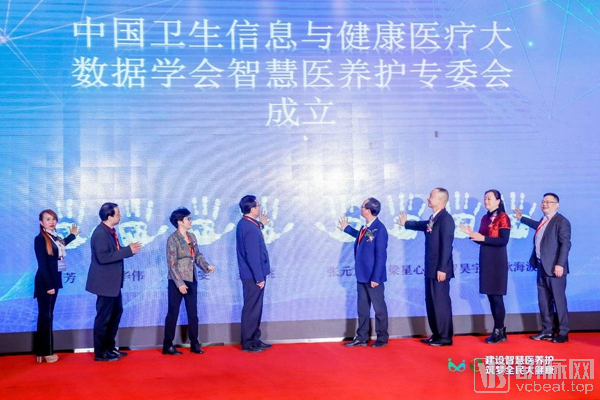
At the conference held on November 20, themed “Building Smart Medical and Elderly Care Services, Realizing the Dream of Universal Health,” speakers delivered addresses on topics such as policy trends, the path to health development with Chinese characteristics, and explorations in the growth of the health industry. VCBeat has compiled the conference proceedings by integrating relevant materials.
Jin Xiaotao: People to do the work, funds to get things done, and innovation to achieve success
Jin Xiaotao, former Vice Minister and Party Leadership Group Member of the National Health and Family Planning Commission, and President of the Chinese Society for Health Informatics and Medical Big Data, stated at the conference that the issue of aging should not be confined solely to medical care and rehabilitation; from the perspective of elderly care, health is of paramount importance.
Both the “Outline of the Healthy China 2030 Planning” and the “Healthy China Action” place significant emphasis on safeguarding the health of older adults. It is understood that although the official retirement age is 60, the actual average retirement age is only 54.5 years. This relatively young and vibrant demographic has an even more urgent need for physical activity and engagement than younger individuals. How, then, can the needs of this population be met? The current shortage of available spots in universities for the elderly serves as a typical example.
With regard to elderly health, we should approach it with the same priority given to the health issues of toddlers and children. Just as the state has established several pediatric medical centers, equivalent high-quality medical resources must be guaranteed for the elderly, thereby forming an integrated elderly care system that combines medical treatment, rehabilitation, nursing, and custodial care.
In fact, for any consortium (or enterprise) aspiring to enter the elderly care industry, the key takeaways can be summarized in three phrases: “Have personnel to do the work, have funds to get things done, and innovate to achieve success.”
Someone is working., through the integration of government, medical institutions, industry, academia, research, and application, various societal forces can be consolidated on a specific platform (or within an enterprise) to form a robust workforce for health, medical care, nursing, and elderly care services; without such a workforce, it would undoubtedly be difficult to carry out these essential tasks.
Funding Available for Operations, are factors driving the progress of undertakings and industrial development. However, it is crucial to remember that public welfare must be the guiding principle of the medical, health, and elderly care sectors. Elderly care is not an industry for making quick or excessive profits; nevertheless, it is inherently profitable, representing a sunrise industry with sustainable growth potential.
Innovation Drives SuccessSpecifically, it is essential to cultivate distinctive features, such as promoting the integrated development of traditional Chinese medicine and Western medicine. Furthermore, leveraging the opportunity presented by the national pilot program for the application of health and medical big data and the construction of industrial parks, we should fully utilize cutting-edge and advanced technologies to advance the cause of elderly care and promote the integrated development of related industries.
Cheng Haijun: Five Characteristics of the Implementation of Integrated Medical and Elderly Care
Cheng Haijun, Deputy Secretary-General of the China Social Welfare and Elderly Care Association, Deputy Secretary-General of the Medical-Nursing Integration Summit, and representative of the Ministry of Civil Affairs’ Training Center, stated at the conference that over the past six years, the elderly care industry has garnered significant attention from the government, market, and society, with approximately 300 to 400 policy measures introduced by the government.
However, several contradictions still exist in the elderly care service industry:
First, the contradiction between the scarcity of available beds and the surplus of bed capacity. As of the end of last year, there were approximately 30,000 elderly care institutions directly registered (including registrations with the Administration for Industry and Commerce, civil affairs departments, and social organizations), providing a total of 7.56 million beds nationwide. This roughly translates to 31 beds per 1,000 elderly individuals. On one hand, given the large number of disabled and semi-disabled elderly people in China, there is an overall insufficiency in the total supply of beds; on the other hand, the overall occupancy rate of elderly care institutions remains low, at only around 40%.
Second, the contradiction between multi-level services and single-source supply. Currently, services provided to the elderly primarily meet basic needs such as clothing, food, housing, transportation, medical care, and safety. However, there are relatively fewer offerings in areas with deeper substantive value, such as integrated medical and elderly care, informatization, specialization, standardization, smart elderly care, mental health, rehabilitative care, and social work. In reality, the needs of the elderly are becoming increasingly personalized, multi-layered, and diversified.
Third, the contradiction between high service fees and the limited payment capacity of the elderly. For instance, the minimum monthly fee at a private non-enterprise elderly care institution in Beijing is currently 5,000 yuan, whereas the average monthly pension for enterprise retirees in Beijing stood at 4,175 yuan by the end of last year, indicating a notable gap between affordability and the cost of institutional care.
Cheng Haijun further reviewed the policies of recent years, highlighting three key points:
Propose a Pilot Program: Currently, 90 cities and more than 4,000 hospitals across China have launched pilot programs for the integration of medical care and elderly care.
Emphasizing Long-Term Care:In July this year, the National Health Commission proposed accelerating the pilot program for the long-term care insurance system and promoting the development of the "sixth insurance."
Reform of Decentralization, Regulation, and Service:The core strategy is for the government to liberalize the elderly care services market, encouraging social and market entities to participate in order to maximize market vitality and endogenous momentum. For instance, on December 28 last year, the State Council’s executive meeting abolished pre-approval and licensing requirements for establishing elderly care institutions, along with the requirement for capital verification certificates. Previously, under the new Company Law implemented on April 1, the business registration system for commercial for-profit entities shifted from a paid-in capital system to a subscribed capital system; banks eliminated the need for capital verification certificates, and six administrative permits were cancelled. In this year’s Government Work Report, the Premier proposed maximizing the implementation of “delegation, regulation, and service” reforms, reducing taxes and fees, and advancing policies for community-based elderly care services, including our integrated medical and elderly care services.
During his research on the promotion of integrated medical and elderly care, Cheng Haijun identified several key characteristics:
No.I. Interdepartmental Coordination to Form SynergyGovernment-led, government-guided, departmentally accountable, socially participatory, and publicly beneficial. From this perspective, local governments across China are exploring various approaches, including issuing joint policy documents, piloting new models, incorporating services into medical insurance pilot programs, providing policy support, and subsidizing non-profit hospital beds.
Second, Exploration of Five Models for the Integration of Medical and Elderly Care
1. Elderly care institutions can establish medical institutions, and following the “decentralization, control, and service” reforms, they are subject to direct registration under a filing-based system; for Level II institutions, the processes for filing, establishment, and licensing are integrated into a single certificate (“two certificates merged into one”).
2. Idle resources in medical institutions can be developed into elderly care zones; it is understood that many existing medical institutions have already established geriatric nursing areas;
3. Primary healthcare institutions provide elderly individuals with rehabilitative care, health management, and medical services;
4. Elderly care institutions establish medical consortiums and form direct collaborations with medical institutions through green channels;
5. Integration of Traditional Chinese Medicine into Elderly Care Services.
3. Talent Development Model
Talent development in the elderly care service industry has become a widespread concern in recent years. The core objective of the joint policy issued by nine ministries is to establish a talent cultivation system with vocational colleges as the main body and undergraduate universities playing an expanding role. Taking Shandong Province as an example, the province released 40 documents related to the elderly care service industry last year. These initiatives include government procurement of elderly care services and subsidies for education and training. Currently, there are 13 vocational colleges in Shandong receiving such support, with each institution granted an annual subsidy of RMB 1 million.
Fourth, revitalize resources.Support the transformation of underutilized hospitals into elderly care facilities. Currently, many township hospitals have a high vacancy rate for beds; therefore, elderly care institutions and dedicated elderly care beds can be established within these facilities.
5. Project-driven approach.For example, Panzhihua in Sichuan Province integrates projects, medical care, rehabilitation, and elderly care.
Meanwhile, challenges persist, including inconsistent perceptions, fragmented management with insufficient coordination, a significant supply-demand gap, insufficiently detailed policies, and a shortage of specialized talent. Moving forward, policy recommendations will lean more toward trend-oriented and principle-based guidance, with central-level top-down design aiming to unleash greater market vitality.
Liu Chenghai: 18 Development Trends in the “Elderly Care Industry + Health and Wellness Industry”
Liu Chenghai, Head of the Investment and Financing Services Department of the China Non-Public Medical Institutions Association, outlined 18 development trends for the “elderly care industry + health and wellness industry” at the conference.
I. 9073
The “9073” elderly care phenomenon refers to a model in which approximately 90% of seniors age at home, 7% receive community-based care, and 3% opt for institutional care. There is no need to take the specific figures in the “9073” model too literally; variations such as “9064” and “90631” have also been proposed, but they are based on the same underlying principle.
II. Home-Community-Institution-Medical and Elderly Care Integration
Establishing an elderly care service system that is home-based, community-supported, institution-supplemented, and integrates medical and elderly care services is a national policy. The integration of medical and elderly care services is, in particular, a national policy.
III. CCRC
“CCRC,” short for Continuing Care Retirement Community, originated in the United States. It enables older adults to receive continuous care and reside in a familiar environment as their self-care abilities change with age. CCRCs primarily include Independent Living (IL) apartments, Assisted Living (AL) apartments, Nursing Homes (NH), Memory Care (MC) facilities, Long-Term Care Hospitals (LTCH), and Rehabilitation Hospitals (RH). The main business models are ownership-based, sales-based (membership and deposit systems), and a hybrid of leasing and sales.
IV. Public Construction, Private Operation
“Publicly Built, Privately Operated” refers to the model wherein, during the construction of new elderly care service institutions, governments at all levels, adhering to the development principle of “separating administration from operation,” provide funding and invite social organizations or service groups through bidding to handle management and operations, while the government remains responsible for oversight and supervision. In contrast, “Publicly Owned, Privately Operated” elderly care institutions refer to existing public elderly care facilities that, through systemic reform and innovation, introduce private organizations or enterprises to manage and operate them. The primary models include entrusted operation, leasing, and Build-Operate-Transfer (BOT).
V. Elderly Care
The national government has issued the Basic Standards for Nursing Homes (2011 Edition), which clearly specify requirements for departmental setup, staffing, equipment, facilities, and bed capacity. In the future, forming a strategic partnership with rehabilitation hospitals will undoubtedly make them highly favored by investors and operators.
VI. Long-Term Care Insurance
Long-Term Care Insurance, also known as LTC insurance (nursing care insurance), primarily refers to insurance that provides nursing services for individuals who have lost the ability to perform activities of daily living due to old age, illness, or disability, thereby requiring long-term care. It significantly reduces the financial burden of paying for care expenses.
VII. Elderly Care Assessment
Elderly Care Service Assessment is a comprehensive analysis and evaluation conducted by professionals in accordance with relevant standards, assessing the physiological, psychological, mental, economic, and living conditions of older adults. This assessment aims to scientifically determine the types of service needs and levels of care required, as well as to clarify eligibility for subsidies related to nursing and elderly care services.
VIII. Rehabilitation and Elderly Care
Guided by the Traditional Chinese Medicine theory of “preventing disease before it occurs, preventing progression once disease has developed, and preventing recurrence after recovery,” as well as the internationally advocated concept of “use it or lose it,” we aim to extend the period of healthy, independent living as much as possible and to facilitate a rapid transition from disability to a state of assisted semi-independence.
IX. Sojourn-based Health and Wellness
Sojourn-based elderly care and community-based elderly care, vividly described as “snowbird-style” and “vacation-style” aging. A comprehensive service platform, a robust membership platform, and an extensive base network—powered by smart interconnectivity and shared collaboration. Standardized services connect seniors to a vibrant lifestyle, beginning with sojourn living.
X. Inclusive Elderly Care
Document No. 333 (2019) of the National Development and Reform Commission’s Department of Society, “Implementation Plan for the Special Action on City-Enterprise Collaboration to Promote Inclusive Elderly Care (Trial),” marks the launch of the era of inclusive elderly care, primarily addressing the difficulties faced by urban seniors—particularly those with low to middle incomes who are disabled or partially disabled—in accessing elderly care services, namely issues of unavailability, unaffordability, poor quality, and lack of security.
XI. Smart Elderly Care
MIIT Joint Electronic [2017] No. 25 Document, Action Plan for the Development of the Smart Health and Elderly Care Industry (2017-2020), is currently guiding medical and elderly care institutions, community service centers, and related organizations to participate in and support the demonstration construction of application pilot projects, aiming to support the exploration of scalable and replicable smart health and elderly care service models.
XII. Focus on Segmentation
The future of elderly care belongs to an era characterized by rational division of labor, collaborative efforts, and shared success. Older adults are categorized into three groups: the “Go-Go” seniors (GG), aged 55–75; the “Slow-Go” seniors (SG), aged 70–85; and the “No-Go” seniors (NG), aged 80 and above.
XIII. Small and Exquisite
18 Development Trends in the “Elderly Care + Health and Wellness” IndustriesIn the future, it will become standard practice for most residential communities to be planned with embedded micro elderly care facilities, achieving a level of ubiquity comparable to community kindergartens. This will also give rise to integrated models such as “elderly care + kindergarten” or “childcare + elderly nursing homes.”
14. Products for the Elderly
Intelligent products leveraging next-generation information technologies such as artificial intelligence, the Internet of Things, cloud computing, and big data are particularly worthy of study, including models like elderly care nursing robots, assistive devices for seniors, and GG Mall, a marketplace for senior citizen products.
XV. Talent Development
Industry consensus holds that the key to elderly care services lies in talent: frontline caregiving professionals and management personnel with business acumen. However, elderly care operations are characterized by the “Seven Extremes”: the dirtiest, the hardest, the most difficult, the most exhausting, the lowest-paid, the least respected in terms of professional dignity, yet the most promising in terms of development prospects. The shortfall of qualified and professional elderly care workers stands at 7.8 million. The demand gap was 8.4 million in 2020, is projected to reach 10.4 million by 2030, and will hit 20.4 million by 2050.
16. Brand Licensing
Deepening the Elderly Care Brand: Profitability Follows Naturally. Value Chain + Supply Chain + Industry Chain; Model, Brand, Standards — Exporting Brand, Team, Management, Model, Standards, and Culture, Ultimately Achieving Brand Awareness, Reputation, and Loyalty.
XVII. Modern Service Industry
The integration of modern service industries and high-end service industries constitutes the health and wellness service sector. The future belongs to modern health and wellness services; the trend in the future elderly care industry (health and wellness industry) is toward high-end modern services.
XVIII. Professional and Dedicated
Professionalism First, Unbeatable Dedication. As the elderly population born in the 1960s, 1970s, and 1980s awakens to proactive aging awareness, demand will surge explosively; “Exquisite Service, Professional Dedication” is the ultimate and unparalleled key to perfection.
Note: All images in this article are sourced from live on-site photo streaming.