

Shenzhen CoreMed Secures Tens of Millions in Angel Funding to Advance GMP Facility and Development of World’s Smallest Magnetically Levitated Centrifugal Artificial Heart
Recently, VCBeat learned that Shenzhen Core Medical Technology Co., Ltd., a developer of artificial hearts, secured tens of millions of yuan in angel-round financing from Hetang Venture Capital Management (Beijing) Co., Ltd. The funds will be primarily used for the construction of a GMP-compliant workshop, as well as for the research and development, manufacturing, and animal testing of its magnetically levitated centrifugal artificial heart, with the aim of accelerating the product’s entry into clinical application.
Founded in 2016, Shenzhen Core Medical Technology Co., Ltd. is a national high-tech enterprise dedicated to the research and development of artificial hearts and ventricular assist devices (VADs). Its core product, the “Ultra-Compact Magnetically Levitated Centrifugal Artificial Heart,” measures only 34 mm in diameter and 26 mm in thickness, and weighs approximately 90 grams. Compared with existing fully magnetically levitated artificial hearts on the market, it features a 40% reduction in diameter and a 60% reduction in weight. Based on officially published data in the VAD field both domestically and internationally, it is recognized as the smallest and lightest magnetically levitated centrifugal artificial heart globally.
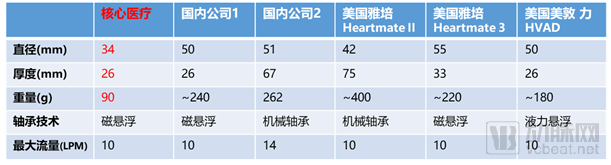
(Figure 1: Comparison of Key Data on Artificial Hearts in China and Abroad)
Currently, the product has initiated preclinical animal studies and successfully completed batch internal animal experiments. Data from multiple animals with survival exceeding 100 days demonstrate that all performance indicators surpass international standards.
Artificial hearts are a life-saving great invention.
The "Report on Cardiovascular Diseases in China 2018" shows that cardiovascular disease accounts for more than 40% of total resident disease deaths, ranking first and higher than tumors and other diseases. There are 4.5 million heart failure patients in China, and with the intensification of aging in China, the prevalence rate continues to rise.
Heart transplantation is currently the only recognized and effective treatment for patients with end-stage heart failure. However, due to a shortage of donors, only slightly more than 300 heart transplants are performed annually in China. In this context, the emergence of artificial hearts has brought new hope to many heart failure patients. An artificial heart uses a mechanical pump to deliver blood into the human circulatory system, thereby assisting or replacing the pumping function of the natural heart. Owing to the significant technical challenges involved in its development, the artificial heart is often referred to as the “gem on the crown of medical devices.”
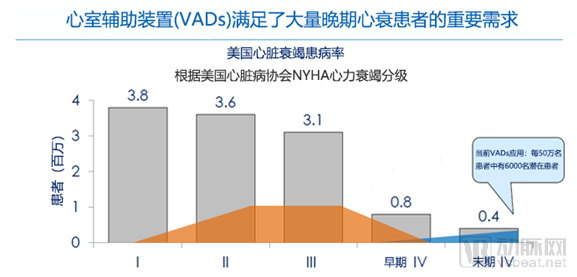
(Figure 2: NYHA Functional Classification for Heart Failure by the American Heart Association)
Referring to the New York Heart Association (NYHA) classification for heart failure, patients are categorized into Class I, II, III, and IV. The final stage, Class IV, is further subdivided into early-stage Class IV and end-stage Class IV. Statistics indicate that among every 500,000 heart failure patients, 6,000 are in end-stage Class IV. The application scope of artificial hearts has expanded from early-stage and late-stage Class IV to include Class III.
In the United States, Europe, and Japan, artificial hearts have been established as a standard treatment for heart failure and are widely used in the clinical management of heart failure and other cardiac conditions characterized by impaired myocardial function. Currently, HeartMate 3, one of the commercially available products in clinical use worldwide, has demonstrated a two-year survival rate of 74.7%, which is increasingly approaching the 84% survival rate associated with heart transplantation. Existing technologies have already significantly improved patient survival rates and quality of life.
International research and development of artificial heart technology began in the 1950s. To date, the field has undergone several transformations, yielding four distinct types: pneumatic pumps, mechanical bearing pumps, hydrodynamic bearing pumps, and magnetically levitated centrifugal pumps.
Among these, pulsatile blood pumps have gradually been phased out of clinical use due to their bulky size and severe damage to blood components. Similarly, mechanical-bearing pumps and hydrodynamic-bearing pumps also cause significant blood trauma. To reduce the risk of hemolysis, research and development in artificial heart technology has increasingly shifted toward fully magnetically levitated centrifugal pumps.
Due to the high technical barriers and the need for long-term technological accumulation associated with fully magnetically levitated artificial hearts, only a few medical companies worldwide have developed technologies mature enough for clinical application.
Focusing on the current state of China’s artificial heart industry, a comparison of officially published data on ventricular assist devices (VADs) from domestic and international sources reveals that Shenzhen Core Medical Technology Co., Ltd. is an emerging leader in this field. The company’s core team comprises top technical experts from China and the United States, with extensive experience in the commercial development of ventricular assist device (VAD) products and other medical devices.
From a technical perspective, the ultra-miniature magnetically levitated artificial heart developed by Core Medical Shenzhen employs an optimized main magnetic field and secondary flow field structure, advanced design and control technologies for the maglev motor, and integrated multi-redundant non-contact bearing technology. This innovation reduces blood residence time and microcirculation time, lowers the risk of blood damage, improves hemocompatibility, and achieves lower costs, thereby effectively alleviating the financial burden on patients.
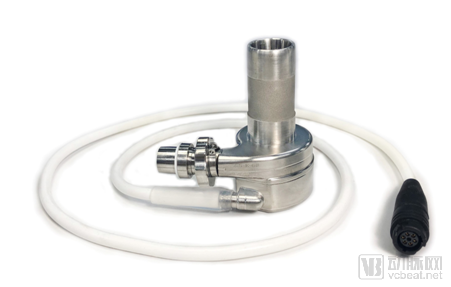
(Figure 3: Product image of the ultra-miniature magnetically levitated artificial heart developed by Core Medical Shenzhen)
Experimental test data demonstrate that the ultra-miniature magnetically levitated artificial heart developed by Core Medical (Shenzhen) exhibits excellent hemocompatibility and reliability, featuring low power consumption, minimal heat generation, and the absence of hemolysis, thrombosis, or other damage to blood cells.
As the world’s most populous country, China has a substantial number of patients with end-stage heart disease. However, research and development (R&D) of artificial heart technology in China remains in its early stages, with the development and clinical application of such medical devices lagging significantly behind those in Europe, the United States, and Japan. Given the large patient population with heart disease, R&D efforts in artificial hearts are gaining momentum, offering broad prospects for future growth.
Whether for short-term auxiliary therapy to restore cardiac function, bridging therapy prior to heart transplantation, or even as a long-term cardiac replacement, the ultra-miniature magnetically levitated centrifugal artificial heart can be effectively utilized. Furthermore, the development of this technology can be applied to other extracorporeal circulation and emergency assist medical devices. Meanwhile, the patient population benefiting from this technology will continue to expand; in addition to patients with end-stage disease, it will also be suitable for aiding cardiac functional recovery in patients with mid-stage disease, as well as providing adjunctive treatment for children and adolescents with congenital myocardial insufficiency.
To meet R&D requirements, Shenzhen Core Medical has independently constructed a GMP-compliant Class 10,000 cleanroom production workshop spanning over 800 square meters, and established laboratories for engineering and biomedical sciences, thereby building a comprehensive research and production platform for the scientific study and development of ventricular assist devices.
It is reported that Shenzhen Core Medical’s magnetically levitated centrifugal artificial heart has completed the design finalization of its first-generation product, CorHeart 6, and has initiated the regulatory registration process. As research and development efforts continue to advance, this will accelerate the market entry of China-made fully magnetically levitated artificial hearts, offering new hope to a broader population of patients with heart disease.
Furthermore, building on its deep expertise in artificial heart technology and products, Shenzhen Core Medical is expanding its medical device industry chain in the cardiovascular field. The company plans to provide a series of products and equipment for the diagnosis, treatment, monitoring, and surgical mechanical circulatory support of various types of heart disease patients.