

Intelligent Integrated Medical and Elderly Care Services: A Strategic Investment Opportunity in the Aging Economy
VCBeat (WeChat: vcbeat) reported that from November 20 to 21, 2019, the 3rd National Health and Elderly Care Industry Innovation Summit, the Inaugural Meeting of the Smart Medical-Nursing-Care Committee of the China Health Information and Healthcare Big Data Society, and the 2nd Qianjiang International Rehabilitation Education Forum were held in Hangzhou. Themed “Building Smart Medical-Nursing-Care Systems and Realizing the Dream of Comprehensive Public Health,” the event was hosted by the Smart Medical-Nursing-Care Committee of the China Health Information and Healthcare Big Data Society, Zhejiang Chinese Medical University, and the National Health and Elderly Care Network, and jointly organized and undertaken by the School of Humanities and Management of Zhejiang Chinese Medical University and Hangzhou Kangjiu Investment Management Co., Ltd. Discussions covered topics such as the integration of medical and elderly care, elderly care real estate, smart medical-nursing-care, rehabilitation education, and industry investment and financing.
The meeting held on November 21 explored key issues such as models of integrated medical and elderly care, financing and investment for such integration, and talent education and training. VCBeat has compiled the meeting content based on relevant materials.
Lin Jianqiang: How Should Medical and Elderly Care Models Be Combined?
Lin Jianqiang, President of the Rehabilitation Physicians Branch of the Zhejiang Medical Doctor Association and Chairman of the Rehabilitation Professional Committee of the Zhejiang Socially-Run Medical Institutions Association, stated that in general, nursing homes lack the capacity to provide professional medical services required by the elderly. Consequently, such patients are typically treated in geriatric departments, where care is characterized by short durations, high technical intensity, and substantial costs. In contrast, long-term care involves a significantly higher proportion of labor costs.
So, how exactly is the integration of medical care and elderly care achieved? Models include combining home-based care with community hospitals or clinics; integrating community-based elderly care with hospitals; developing elderly-oriented real estate with supporting medical facilities; establishing specialized rehabilitation hospitals and nursing homes; building hospitals within elderly care institutions; and incorporating elderly care facilities within hospitals. The key lies in the proximity and convenience between medical institutions and elderly care facilities, emergency response channels and travel time for sudden illnesses among the elderly, the relative independence and integrity of the elderly care environment, as well as barrier-free design and age-friendly design in the architectural planning of both hospitals and elderly care facilities.
So why do some elderly care institutions with medical facilities perform well, while others without them also thrive? Observing several large-scale projects reveals that their medical units are often operating at a loss. However, as an ancillary component of senior living real estate, these medical facilities enhance the overall supporting infrastructure, increase property value-added, and ultimately contribute to greater profitability.
In terms of profitability, Lin Jianqiang’s 2018 survey of 458 formal elderly care institutions revealed that only 4.6% could recoup their investments within 1–3 years; 19.5% required 4–6 years; 13.5% needed 7–10 years; and 62.4% took more than ten years to break even. Currently, among elderly care institutions, 4.0% are operating at a surplus, 32.8% are breaking even, and 32.6% are incurring losses.
Specifically, it is essential to mitigate risks, leverage government resources, and adopt a diversified operational model. For instance, the first and second floors can be designated as rehabilitation and nursing care areas, while the third and fourth floors serve as elderly care zones.
Huang Xin: Intelligent New Services Are the Hotspot for Future Investment
Huang Xin, founding partner of Zhejiang Cyborg Partners, stated that elderly care services must keep pace with the times, transitioning from traditional models to smart elderly care. The emerging model—leveraging internet and Internet of Things (IoT) technologies, along with smart wearable devices, to provide seniors with a comprehensive suite of services covering daily living, health management, and even cultural enrichment—is undoubtedly poised to become a major focus for future investment.
Currently, the entire elderly care industry chain is not yet fully mature, with many enterprises deriving their revenue from government public funding. While it is undeniable that the elderly care sector possesses a certain degree of social public welfare nature, it is essential to identify viable business models and explore how to deliver社会化 (socialized) services. Enterprises must undertake a series of product innovations to meet the diversified and multi-level demands for elderly care services. Therefore, smart healthcare and elderly care represent an excellent entry point. By leveraging technologies such as the Internet, the Internet of Things (IoT), augmented reality (AR), and data services, a comprehensive suite of services can be provided to older adults. These services encompass daily living, health management, medical care, and rehabilitation, addressing both the physiological and psychological needs of the elderly, as well as their cultural and financial requirements, thereby continuously enhancing their quality of life.
Liu Dan: Elderly Care Workers Deserve Greater Respect
Liu Dan, Strategic Development Director at Ruilai China, believes that while many initially perceived elderly care as lacking the specialized expertise characteristic of healthcare, deeper industry engagement has revealed its own distinct professionalism. This encompasses all aspects of daily life, including the psychological well-being of both the elderly and staff. Furthermore, beyond professional competencies, the industry demands candidates with comprehensive qualities, holistic learning abilities, and even strong communication and reporting skills when interacting with leadership.
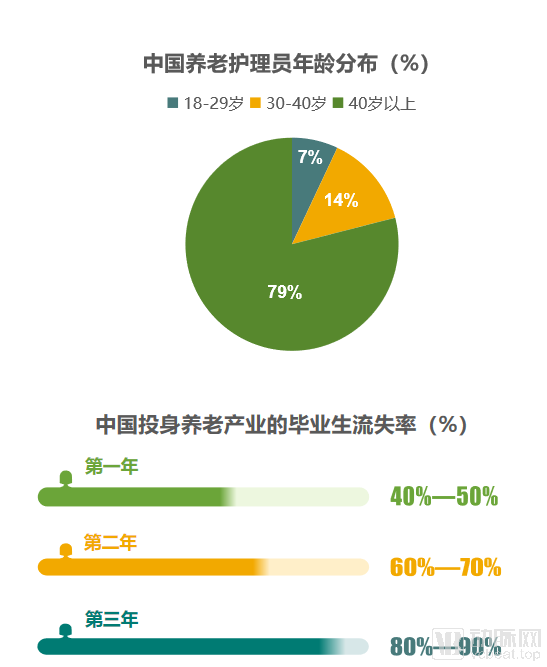
The Biggest Challenge for Elderly Care Enterprises in Scaling Up Is the Human Resource Issue. In fact, there is an abundant labor supply today. So why has the elderly care sector consistently struggled with a shortage of workers, a lack of professional competence among staff, a severe scarcity of specialized talent, and significant talent attrition during the training process?
Source: Ruilai China Presentation PPT
According to data provided by Ruilai China, nearly 20% of nurses leave the profession within their first year, and another one-third depart within two years. Among survey respondents, 58% cited burnout as the reason for leaving, 47% plan to retire within the next decade, and 22% intend to retire within five years. Meanwhile, staff turnover incurs substantial costs, including expenses for new employee training and separation costs.
How can companies retain top talent? There are seven core elements: talent screening, onboarding experience, corporate culture, performance appraisal, compensation and benefits, learning and development, and exit interviews. Liu Dan cited an example: personnel screening involves assessing and selecting candidates based on their psychological readiness for the role. For instance, new hires are required to take a course on “aging” on their first day, using empathy to understand the challenges associated with aging—a process so impactful that it left them unsettled for a week.
Furthermore, Liu Dan emphasized that personnel screening should prioritize candidates who demonstrate compassion, patience, and even perseverance. Through its onboarding experiences, Ruilai China has collaborated with numerous institutions, including interns, students from school-enterprise partnerships, and dispatched workers. It was found that most job seekers prioritize the work environment and the level of respect they receive, with compensation being a secondary consideration. Respect is manifested in three aspects: first, respect from colleagues and supervisors; second, respect from the elderly residents; and third, respect from their family members. This sense of respect constitutes part of the post-hiring experience, through which employees also gain an understanding of the corporate culture.
Most importantly, learning and development are paramount; providing employees with opportunities for growth is a profound demonstration of respect. Although the daily 12-hour shifts are arduous, staff members are eager to learn, recognizing that without continuous education, they cannot effectively address practical challenges. For instance, when bathing elderly residents who are uncooperative, untrained staff previously spent over two hours—from initial communication through the bathing process to helping the resident back into bed—leaving them physically and mentally exhausted. After receiving training, however, staff can complete the bathing in just half an hour by playing the residents’ favorite music to enhance their mood and cooperation.
Yang Deyuan: Core Resources for Scenario-Based Marketing
Yang Deyuan, Dean of the Guangdong Institute for the Aging Industry, stated that in Japan, there is an unwritten rule: regardless of one’s background, entry into this sector requires starting as a caregiver to gain familiarity with various operational aspects within facilities. Consequently, whether in management or marketing roles, professionals can develop a thorough understanding of client needs.
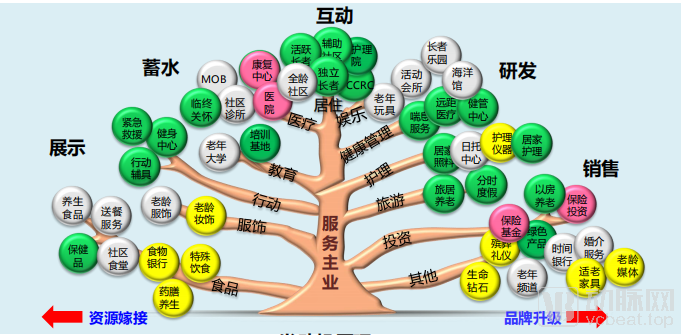
In scenario-based marketing, it is by no means as simple as creating a model room; it requires addressing key pain points such as capital recovery, rapid marketing, brand elevation, market feedback, and precision services.
Source: Yang Deyuan's Presentation Slides
In implementing scenario-based marketing, it is essential to fully integrate insights from marketing theory, cognitive psychology, advertising science, architecture, and behavioral science. This approach aims to achieve a seamless blend of virtual and physical elements within a limited space, fostering continuous customer interaction and engagement.
Source: Yang Deyuan's Presentation Slides
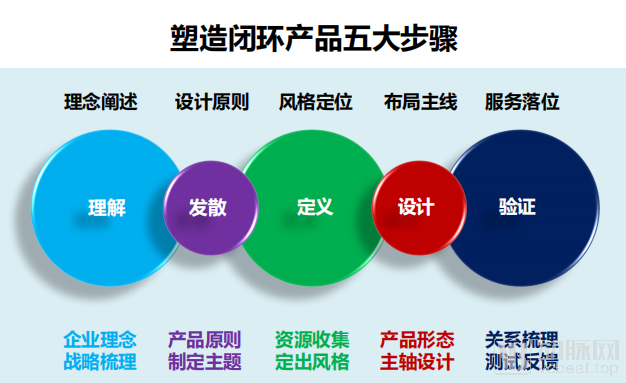
When developing elderly care services, it is essential to clarify the value that a specific area can generate. Scenario-based design comprises four key elements, which further break down into five dimensions: target population, timing, location, scenario, and value proposition. Once these requirements are defined, the focus should shift to learning and replication, including scenario-based replication, integration, and layering. This process ultimately establishes a five-tier living ecosystem encompassing interactions between individuals and their inner selves, among individuals, between individuals and objects, between individuals and intelligence, and between individuals and devices, thereby completing the nine major service systems covering basic needs such as clothing, food, housing, and transportation.
Pan Pan: 40% of elderly people in Beijing are willing to move into care facilities
Pan Pan, Project Director of the Office of the Pilot Project for Age-Friendly Residential Communities in China, stated that while senior living real estate projects originated with Beijing’s Sun City in 2005, the starting point can be more accurately set at 2008, given the relatively successful cases to date. Looking back over the past decade, the industry has experienced significant fluctuations.
From 2008 to 2013, industry players engaged in frenzied exploration and experimentation. Companies with projects in 2013 underwent significant expansion in 2014 and 2015. Following a period of validation in 2016 and 2017, by 2018, companies had begun to think rationally and implement contractionary adjustments.
After a decade of ups and downs, three key insights have emerged. First, the product line: from initially lacking clarity on the distinctions among various types and underestimating the importance of services, to now clearly defining segments such as high-end, mid-range, CCRC (Continuing Care Retirement Communities), and integrated complexes. Second, the corporate structure has gradually taken shape. Third, regarding the profit model, there is currently no universally applicable model that works across all regions.
Currently, elderly care institutions have largely shifted their focus from filling capacity gaps to enhancing service quality. Rather than blindly expanding outward to increase the number of facilities, they are returning to meticulous internal management, clarifying profitability and financial models, ensuring accurate accounting, and refining their operational models. At present, the health and elderly care industry in China has formed four major clusters: the Beijing-Tianjin-Hebei urban agglomeration, the Yangtze River Delta urban agglomeration, the Pearl River Delta urban agglomeration, and the Central China urban agglomeration, supplemented by sojourn-based elderly care in Hainan.
Regardless of the location, demand is the core factor, defined as the combination of volume and willingness. Surveys show that 40% of elderly individuals in Beijing are willing to move into care institutions, while the figure is 11.5% in Chengdu. Compared to other cities such as Chongqing and Wuhan, these percentages are already quite high. Therefore, companies must clearly calculate their financial projections and define their project positioning during the early stages.
Furthermore, enterprises must clarify their value logic. From an investment perspective, one must consider monetization strategies; rapid early-stage monetization may cap later operational revenue potential and hinder long-term operations. From an asset perspective, projects must clearly define KPIs to ensure market acceptance. From an operational mindset, the focus should remain on revenue generation and cost control.
Zhang Huazheng: The 12-Step Planning Method
Zhang Huazheng, Chairman of Huazheng Elderly Care, stated that policy is the “father,” the market is the “mother,” culture is the “head,” the business model is the “feet,” and a professional team serves as the backbone.
Prior to project initiation, the project is divided into twelve phases: site assessment, policy alignment, market research, feasibility analysis, first expert review meeting, design brief, planning and design proposal, second expert review meeting, project approval, business plan, business model, and top-level design.
For health and wellness initiatives, fully leverage natural resources by capitalizing on local endowments—such as natural, ecological, humanistic, historical, and cultural assets—to develop distinctive health and wellness projects centered around these competitive advantages.
Health technology projects must be driven by industrial innovation. They have specific requirements for building capabilities to attract, aggregate, and facilitate the collaboration of industries and talent. Their core business sectors will primarily focus on biotechnology, pharmaceutical R&D, venture capital incubation, education and research, and medical services.
For healthcare projects, medical services should be introduced. Leveraging the local natural environment and transportation accessibility, we will plan, introduce, and establish a high-quality healthcare service system to serve the local population as well as specific target audiences or elderly groups within its reach and attraction zone, thereby building a healthcare industry characterized by specialized medical and health services.
Zhang Hui: Empowering Elderly Care Institutions Across China with New Technologies
Zhang Hui, Senior Vice President of Kangjiu Group, pointed out that a significant number of beds in our existing elderly care institutions and community-based home care centers remain idle and fail to generate profits. Therefore, we argue that the “spring” of the elderly care industry has arrived only at the level of demand. The surge in demand for elderly care services and the growing diversity of such services urgently call for improvements in service content and standards, a shift in operational mindsets, and solutions to the shortage of management and caregiving talent. Additionally, ensuring the sustainable development of the elderly care industry in the future is a critical challenge we must address in this new era. In other words, market opportunities coexist with investment risks; it is not the case that simply entering the elderly care industry will guarantee substantial returns just because the “spring” has come.
For enterprises, it takes prolonged refinement to establish a proprietary business model. Taking Kangjiu as an example, the company integrates and “aggregates energy” across branding, healthcare, new products and services, technology, government relations, talent recruitment and training, and overseas resources. It then leverages emerging technologies—such as the internet, artificial intelligence (AI), and big data—to “empower” elderly care institutions nationwide by providing support in institutional operations, integrated medical and elderly care, information system enhancement, and personnel training. The goal is to create a regional tech-enabled elderly care ecosystem encompassing all resources, all data, and all population groups, thereby constructing a new four-in-one technological elderly care ecology that integrates government, institutions, communities, and households.