

Jianke Unveils New 'H2H' Strategy, Building an Integrated Industry Chain to Break Down Scenario Barriers
VCBeat (WeChat ID: vcbeat) has learned that on November 27, 2019, Jianke, a well-known domestic online smart healthcare service platform, held its 2019 Jianke Partner Conference in Guangzhou under the theme “New Ecosystem of Smart Pharmaceuticals.” The event attracted more than 400 attendees, including representatives from renowned pharmaceutical companies in Singapore, South Korea, India, and other countries, as well as medical investors, expert physicians, and relevant government officials. On the same day, Jianke also entered into strategic partnerships with HEC Group and the China Patient Assistance Alliance, further expanding the boundaries of doctor-patient scenarios for Jianke Internet Hospital.
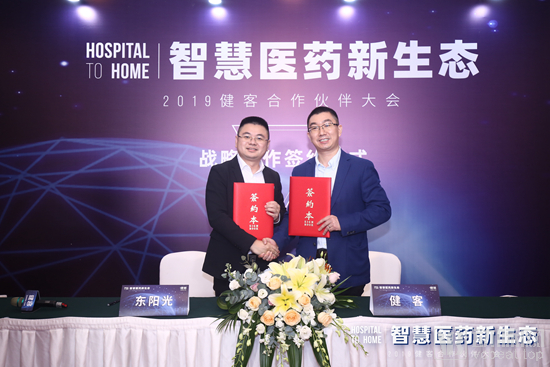
Jianke and HEC Group Enter into Strategic Partnership
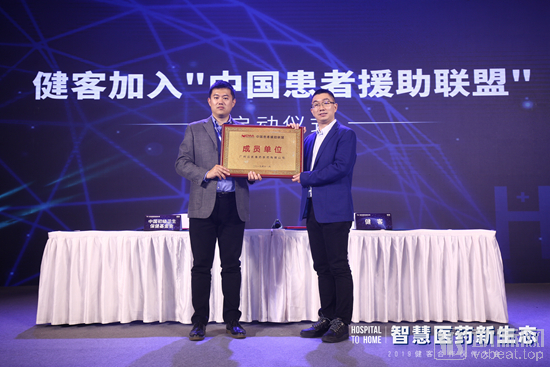
Jianke Enters into Strategic Partnership with China Patient Assistance Alliance
As a pioneer in the “Internet + Healthcare” sector, Jianke shared its practices and achievements with hundreds of partners from various industries and sectors present at the event, and unveiled its strategic plan for the coming year.
According to Xie Fangmin, CEO of Jianke, the company will leverage its superior technology and resource integration capabilities to undertake a strategic upgrade in 2020 on the basis of its existing business. It aims to build a new future intelligent hospital, namely the Hospital to Home (H2H) model. This signifies that Jianke’s business model will advance from the mobile healthcare development stage, driven by the dual engines of “medical services + pharmaceuticals,” into the smart health stage.
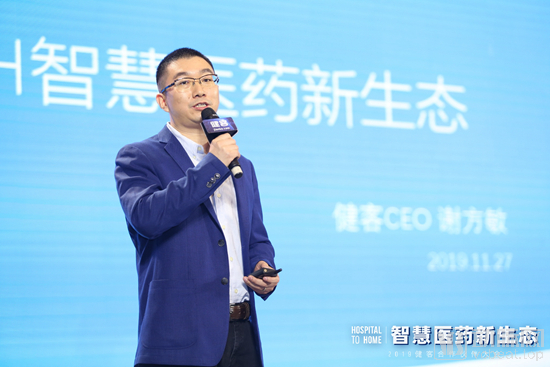
Jianke CEO Xie Fangmin Releases New Year Strategic Plan
This model signifies a scenario shift driven by new ideas and technologies, migrating medical services, pharmaceutical services, and chronic disease management from hospitals to patients’ homes. It improves patients’ care experience, enhances the immediacy of medical services and the accessibility of pharmaceutical services, thereby ultimately improving the quality of life for every patient.
It is evident that Jianke has reached a new height in its understanding of healthcare. The H2H model, on one hand, breaks down scenario barriers by evolving medical consultations from purely offline visits to a hybrid model of initial offline diagnosis followed by online follow-ups, thereby shifting care settings from traditional hospitals to out-of-hospital and home environments. On the other hand, Jianke leverages internet technology to overcome temporal barriers, transitioning from “treatment at the backend” to “prevention at the frontend,” thus transforming medical care into health management and truly achieving full-cycle coverage. This represents significant positive news for the health management of patients with chronic diseases such as liver disease, diabetes, and cardiovascular and cerebrovascular disorders.
It is worth noting that, as the flagship product of Jianke’s internet healthcare services, Jianke Internet Hospital has become the leading internet healthcare platform in China, ranking first in the industry for the growth rate of its physician network, the volume of prescriptions issued, the number of partnered pharmaceutical companies, and revenue growth. The platform delivers medical services tailored to patient needs, including online follow-up consultations, post-diagnosis management, and disease-related science popularization and education. It also serves as the cornerstone product for building future smart hospitals.
It is reported that Jianke Internet Hospital has demonstrated strong performance and maintained a dynamic presence since its establishment. It took the lead in partnering with renowned Grade-A tertiary hospitals in China to jointly establish the Inflammatory Bowel Disease (IBD) Specialty Center and the Men’s Health Management Service Center under its internet hospital platform. Professor Wu Xiaoping, Professor of Gastroenterology at the Second Xiangya Hospital of Central South University and Deputy Leader of the IBD Specialist Group under the Chinese Society of Gastroenterology, and Professor Mo Suilin from the First Affiliated Hospital of Sun Yat-sen University, serve as Senior Advisors to these centers, respectively. Together, they provide comprehensive online-and-offline integrated health management solutions for a broad patient population.
Jianke’s business landscape also bears a strong “technological” imprint. Xie Fangmin, CEO of Jianke, has repeatedly emphasized that Jianke is an internet innovation enterprise with technological expertise and has made continuous and substantial R&D investments in technology. This signifies that Jianke is not merely an internet company, but rather a technology-driven innovative enterprise.
Jianke’s strategic layout also demonstrates its robust integration capabilities built upon a strong technological foundation. In the field of smart healthcare, Jianke will collaborate with numerous partners to achieve interconnectivity and jointly build a new ecosystem for online intelligent health management. By leveraging informatization driven by AI, big data, and other technologies, Jianke links hospitals, physicians, pharmaceutical companies, and patients. This approach reflects Jianke’s adoption of the H2H (Hospital-to-Home) model in response to national policies promoting tiered diagnosis and treatment as well as chronic disease management.
In 2020, a comprehensive strategic upgrade was implemented, transitioning from a dual-engine model of “medical care + pharmaceuticals” to an H2H (Hospital-to-Home) smart health service platform. This new concept proposed by Jianke aims to break down barriers through digitalization, enabling the rapid and orderly implementation of traditional family doctor services and tiered diagnosis and treatment models at low cost. It empowers every physician to fully leverage their expertise within their respective specialties, delivering precise healthcare services to each household. In the future, the platform will further integrate physical examinations, insurance, home-based elderly care, and medical finance, thereby creating immense market potential that is difficult to predict.
While the strategy has evolved, what remains unchanged is Jianke’s steadfast commitment to its mission of “making everyone healthier” and its pursuit of the vision to “become the most trusted smart health service platform.”
Xie Fangmin, CEO of Jianke, has repeatedly emphasized in various settings that the core key lies in being “professional and trustworthy.” He stated that the direction of industrial advancement must directly address people’s livelihood pain points; only by meeting the public’s needs can enterprises thrive. This is also the secret behind Jianke’s success—navigating through the perilous startup battlefield, overcoming numerous obstacles, and ultimately standing out as one of the two internet healthcare companies to secure U.S. dollar financing.
At the Jianke Partner Conference, the venue was filled with hundreds of partners from diverse sectors of the healthcare industry. Attendees included representatives from multinational pharmaceutical giants such as AstraZeneca, Bayer, Sanofi, Eli Lilly, Gilead Sciences, and Pfizer; leading figures from prestigious universities and hospitals, including Southern Medical University, Jinan University, the Second Xiangya Hospital of Central South University, the First Affiliated Hospital of Sun Yat-sen University, and Lingnan Hospital of the Third Affiliated Hospital of Sun Yat-sen University; as well as international companies such as BioFourmis from Singapore. Participants engaged in lively discussions centered on themes such as “Building a Multi-Stakeholder Win-Win Ecosystem for Prescription Drug Retail,” “New Opportunities for Online Pharmaceutical Development Brought by National Centralized Procurement,” and “How Digitalization Drives Smart Growth in the Pharmaceutical Industry.”
Among them, Kuldeep Singh Rajput, Founder and CEO of Singapore-based BioFourmis, shared the company’s latest advancements in technological innovation at the conference. He stated that BioFourmis’ core business lies in optimizing treatment regimens to enhance patient care outcomes and health status. Over the past year, BioFourmis has continued to strengthen its proprietary health monitoring platform while also establishing collaborations with numerous global pharmaceutical companies to advance the implementation and application of its products.
According to reports, Biofourmis’ digital health platform, Biovitals, successfully integrates wearable smart sensors, intelligent applications, medical databases, and big data computing centers. By leveraging AI technology for data research and analysis, the platform designs targeted, personalized healthcare services for patients, thereby enabling physicians to make more accurate and timely diagnoses, improving patient survival rates and quality of life. Currently, Biofourmis’ data sources encompass over 100,000 patients, with this number continuing to rise.
In the first half of this year, Biofourmis publicly announced that it had completed a $35 million Series B financing round. The round was reportedly led by Sequoia Capital, Singapore’s EDBI, MassMutual Ventures from the United States, and Jianke. Jianke’s investment in Biofourmis indicates, to some extent, that its chronic disease management system, built around internet hospitals, is gradually evolving toward greater technological sophistication and intelligence. The export of these diverse capabilities is expected to introduce new variables into China’s healthcare sector, particularly in the realm of chronic disease management.
It is reported that Guangdong Jianke Medicine Co., Ltd. is expected to introduce this technology to China next year.
On the day of the event, Jianke added two new strategic partners, establishing strategic collaborations with the pharmaceutical company HEC Group and the China Patient Assistance Alliance (CPAA), respectively.
Among these initiatives, HEC Group will collaborate with Jianke to implement an internet hospital project, leveraging their respective strengths in pharmaceutical healthcare and digital medicine. The partnership will encompass cooperation in areas such as internet hospitals, online pharmacies, drug accessibility, chronic disease management, patient education, physician education, grassroots public benefit programs, and medical big data, aiming to explore integrated pharmaceutical and healthcare services. Additionally, the two parties will jointly launch the H2H Winter Influenza Home Medication Protection Plan.
As one of the leading innovators among China’s private pharmaceutical enterprises, HEC Group has long achieved independent R&D and self-registration. It is a Chinese manufacturer of finished pharmaceutical products that has simultaneously passed GMP certifications from the U.S. FDA, the European Union, the World Health Organization (WHO), Australia, and China’s CFDA.
Unlike previous collaborations among other internet healthcare companies, HEC Group and Jianke are not only expanding into the out-of-hospital market but also jointly advancing winter influenza prevention and treatment. They aim to create a closed-loop system that delivers a high-quality diagnostic and therapeutic experience for influenza patients, shifting influenza care from hospitals to homes, and working together to provide medication security services for winter influenza to hundreds of millions of households across China.
On that day, Cheng Ji, Secretary-General of the Management Committee of the China Patient Assistance Alliance, presented Jianke with the plaque designating it as a member unit of the “China Patient Assistance Alliance.” This marks Jianke’s formal entry into the organization, which calls upon all sectors of society to join forces in safeguarding the rights and interests of patients in China, actively promoting quality and safety assurance for pharmaceuticals, enhancing access to medicines, and implementing initiatives that tangibly benefit patients and improve their quality of life.
It is reported that the “China Patient Assistance Alliance” (CPAA) was jointly proposed and established by Chen Zhu, Vice Chairman of the Standing Committee of the National People’s Congress; Zhong Nanshan, Academician of the Chinese Academy of Engineering; Professor Michael Sparer, Chair of the Department of Health Policy and Management at Columbia University Mailman School of Public Health in the United States; Yang Qingbin, Deputy Secretary-General of the China Primary Health Care Foundation; and Liu Ying, Secretary-General of the China Center in Düsseldorf, Germany, at the inaugural China Physician Public Welfare Conference. By joining the CPAA, Jianke will leverage its internet platform to provide more patients with online services such as health education, disease management, free clinic consultations, and assistance for those in financial hardship, thereby further enriching the scope and impact of the CPAA.
Under these two strategic collaborations, Jianke can leverage its comprehensive medical services—including its internet hospital, chronic disease management platform, online prescription circulation, and home medication delivery—to intelligently record and analyze patient data. This provides reference support for physicians’ diagnoses, thereby assisting them in formulating specific medication recommendations and ensuring patients’ rational and safe use of medicines. Meanwhile, both parties will jointly promote influenza science education among physicians and the general public, which will play a comprehensive and positive role in improving China’s future disease prevention environment and advancing the “Healthy China” initiative.
“Jianke’s internet technologies, AI-driven analytics, and chronic disease management expertise will also contribute to pharmaceutical R&D.” Regarding the exploration of development models in internet healthcare, Xie Fangmin, CEO of Jianke, offers his own perspective. He believes that internet healthcare is an emerging field, and the next focal point for the industry will be a shift from a disease-oriented to a health-oriented paradigm, requiring companies to develop mature and diversified business models.
“Looking forward to working hand in hand with our partners for mutual growth and sharing, integrating more advanced technologies with an open mindset, deeply rooting ourselves in internet healthcare, and exploring a new smart healthcare platform to benefit more people,” said Xie Fangmin.