

BB-care Files IPO Prospectus: Leading Pediatric Follow-up Platform Serving 200,000 Patients Across 22 Provinces
Ten Months of Pregnancy, One Day of Delivery. Hearing the newborn’s cry, some families smiled, while others found their smiles turning to tears.
Preterm birth is the leading cause of neonatal mortality and the second leading cause of death in children under five years of age, after pneumonia. Data indicate that many preterm infants who survive face lifelong disabilities and other health complications.
According to a report released by the World Health Organization (WHO), more than 15 million preterm infants are born worldwide each year, with China’s preterm birth rate standing at approximately 10%. To raise greater awareness of preterm birth and encourage effective actions to reduce health complications and mortality associated with prematurity, the WHO has designated November 17 as World Prematurity Day.
Preterm infants, known as “early angels,” are live-born infants delivered before 37 completed weeks of gestation. Their organ systems are immature, with poor functional capacity and adaptability, necessitating specialized care. For preterm infants to grow up healthily, in-hospital nursing care is essential, and post-discharge follow-up is equally important.
BB-care is an innovative enterprise dedicated to building a comprehensive follow-up service platform for preterm infants. By facilitating joint follow-up between families and hospitals, and integrating extensive online and offline assessment, monitoring, and intervention programs, it provides holistic follow-up management for affected infants.
In 2013, founder Hua Xiang was accidentally exposed to home monitoring for preterm infants during his work. At the same time, the Shanghai Municipal Government was conducting a research project on home monitoring for preterm infants. After carrying out market research and other related tasks, Hua Xiang and his partners decided to launch their startup focused on home monitoring for preterm infants.
Prior to founding his venture, Hua Xiang served at Tiandi Digital, a Hong Kong-listed company, where he accumulated extensive experience in smart hardware development and offered unique insights into project coordination and strategic planning. His partners include serial entrepreneurs with over a decade of deep immersion in the healthcare industry and substantial medical resources, as well as senior professor-level experts serving as the company’s Chief Scientist, effectively making BB-care a comprehensive knowledge hub.
In 2014, Hua Xiang successfully secured funding from the Shanghai College Student Entrepreneurship Fund, and BB-care was established in the same year. In 2014, BB-care received support from Shanghai Science & Technology Investment Co., Ltd. (Shanghai Kechuang), a key state-owned venture capital firm under the supervision of the State-owned Assets Supervision and Administration Commission (SASAC). In 2016, Beisheng Medical was awarded the Shanghai Entrepreneurship Fledgling Award.
“Essentially, BB-care is the outcome of an industry-academia-research project.” A chance encounter introduced Hua Xiang to the field of post-discharge follow-up care for premature infants.
After receiving appropriate treatment in the hospital, preterm infants whose health has improved are discharged to continue their growth at home. However, if post-discharge care is inadequate, these infants are prone to bronchopulmonary dysplasia or other health complications. Enabling physicians to accurately assess the child’s developmental progress at home “represents a significant pain point for neonatologists.”
It is understood that both neonatologists and patients’ families have strong demands for follow-up care for preterm infants. For physicians, out-of-hospital follow-up not only enables them to monitor infants’ vital signs and growth and development in the home setting, thereby facilitating precise diagnosis and treatment, but also ensures the completeness of patient data, which supports clinical scientific research. From the patients’ perspective, weekly hospital visits are burdensome and time-consuming, and frequent travel is detrimental to young children’s growth and well-being.
Pediatric follow-up care shares similarities with chronic disease management but also has its distinctions. Hua Xiang notes that chronic disease management focuses more on adults, particularly the elderly, and enjoys broader coverage under medical insurance schemes. In contrast, pediatric follow-up care targets infants and children, among whom patients’ willingness to pay is comparatively stronger.
Moreover, follow-up services at some hospitals currently remain limited to satisfaction surveys, which are primarily an administrative requirement. “However, with advances in medicine and rising public expectations for quality of life, satisfaction-based follow-ups no longer meet the needs of either patients or healthcare providers. There is substantial market demand for personalized patient follow-up services offered by hospitals,” said Hua Xiang.
“A more comprehensive follow-up system should be implemented in a systematic and standardized manner, organized by department and guided by specialty.” In addition to clinical and health-maintenance follow-ups, research-oriented follow-ups require robust personalized support. However, most pediatric departments currently rely on other information systems and lack dedicated follow-up platforms, leaving the needs of both physicians and patients unmet.
BB-care has gained an in-depth understanding of the needs of both physicians and patients. By focusing on the field of preterm infants, it has developed a medical follow-up platform for preterm infants. This platform assists physicians in creating customized follow-up plans, collects user data from various channels—such as vital sign parameters including oxygen saturation, pulse rate, and body temperature, as well as growth and development data like height, weight, neuropsychological status, and developmental behavior—and achieves deep integration with hospital information systems, thereby providing comprehensive patient management and services. The BB-care product meets the personalized requirements of different physicians; it currently covers thousands of pediatricians and serves 200,000 patients.
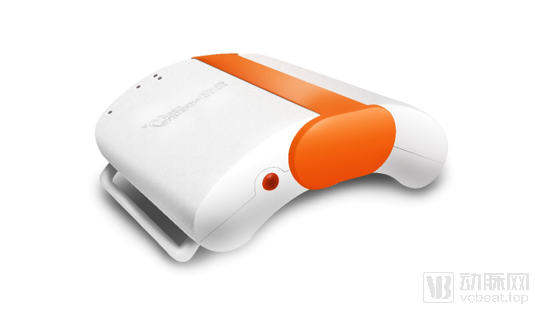
Self-developed Smart Home Pulse Oximeter with Medical Device License (Image provided by the interviewee)
BB-Care Pediatric Medical Follow-up Platform features a leading cloud-based follow-up service platform that integrates advanced technologies such as mobile health and the Internet of Things (IoT), providing comprehensive follow-up service support and deeply integrating with multiple departments, including neonatology, child healthcare, hematology, obstetrics, and ophthalmology.
BB-care focuses primarily on neonatal follow-up. Generally, children aged 0–6 years are the target population for follow-up observation. Regular developmental assessments and child healthcare follow-ups facilitate the early detection of developmental delays or latent conditions. For preterm infants, regular follow-up is even more critical to enable targeted early interventions and reduce the incidence of neurodevelopmental disorders. Follow-up intervals vary according to the infant’s age. The frequency is highest for infants aged 0–1 year, and even higher for preterm infants. Based on the infant’s age in months and specific medical conditions, BB-care assists hospitals in establishing follow-up schedules, with the platform automatically issuing follow-up reminders.
For physicians, the follow-up platform provides comprehensive data to facilitate high-quality scientific research. The BB-care platform can integrate with hospital information systems to access patients’ medical and health information. After treating patients, physicians can upload data centrally to the platform. Patients can also upload their monitoring data to the WeChat interface after using home terminal devices.
Hospitals can leverage the BB-care follow-up platform to establish a multi-center, cross-institutional follow-up system, facilitating collaborative research projects among various hospitals. However, data security and patient privacy remain unavoidable concerns. To address this, BB-care has implemented a management process for informed consent forms. If multiple hospitals wish to collaborate using patient data, they must not only establish inter-institutional cooperation agreements but also obtain signed consent from the patients.
BB-care has now established a unique product matrix, which specifically includes the Intelligent Follow-up System for High-Risk Infants, the Early Childhood Development Management System, the Maternal and Child Health Care Management Platform, the Follow-up Support System for Pediatric Hematologic Diseases, the Children's Eye Health Management System, the Perinatal Research Follow-up Management Platform, a series of user follow-up mini-programs, and the Yangleduo Home Smart Pulse Oximeter.
Among them, the High-Risk Infant Intelligent Follow-Up System is one of BB-care’s most distinctive products. It has covered 22 provinces and municipalities across China and is one of the few systems nationwide that possess advanced data aggregation capabilities as well as follow-up decision support capabilities.
It is worth noting that BB-care also features two exclusive products: Intelligent Developmental Assessment and Parenting Environment Assessment. The Intelligent Developmental Assessment utilizes animated scales to help parents preliminarily evaluate their child’s developmental status and determine whether development is within the normal range. The Parenting Environment Assessment is an imported product that has undergone localization design, enabling quantitative evaluation of children’s growth environments.
Currently, the BB-care Pediatric Medical Follow-up Platform has established collaborations with nearly 100 hospitals, including four of China’s top ten pediatric hospitals: Shanghai Children’s Medical Center affiliated with Shanghai Jiao Tong University School of Medicine, Shanghai Children’s Hospital, Xinhua Hospital affiliated with Shanghai Jiao Tong University School of Medicine, and Shanghai First Maternity and Infant Health Hospital.
Next, BB-care will continue to expand its market share in the follow-up platform sector, providing more hospitals with project development and operational support for pediatric follow-up programs, while offering comprehensive data support services and home-based follow-up care to both patients and physicians. Hua Xiang revealed that, regarding consumer-facing wearable hardware products, BB-care also seeks to collaborate with hardware manufacturers in the market. Institutions interested in the company should contact DongMai_Investent, the financing assistant.