

Newly Revised Pharmaceutical Administration Law Takes Effect Today with Key Highlights
On December 1, 2019, the newly revised Drug Administration Law of the People's Republic of China came into effect. This revision marks the first major overhaul of the Drug Administration Law in 18 years. Many elements of this revision reflect policies issued in recent years.
On the eve of the implementation of the new regulations, the National Medical Products Administration (NMPA) issued the “Announcement of the National Medical Products Administration on Matters Concerning the Implementation of the Drug Administration Law of the People’s Republic of China,” which once again highlighted the five key points to be implemented starting from December 1, underscoring the significant importance of this regulatory rollout. The five key points are as follows:
Fully implement the Marketing Authorization Holder (MAH) system for pharmaceuticals.Any enterprise holding a drug registration certificate (including a drug approval number, an Import Drug Registration Certificate, or a Medical Product Registration Certificate) shall strictly fulfill the obligations of the Marketing Authorization Holder (MAH) and, in accordance with the law, assume responsibility for the safety, efficacy, and quality controllability of drugs throughout the entire process of their research and development, production, distribution, and use.
Drug clinical trial institutions are subject to filing management.Applications for qualification accreditation of clinical trial institutions that had been accepted but not yet approved shall no longer undergo approval; instead, they shall be filed in accordance with relevant regulations.
Cancel GMP and GSP certifications; cease accepting applications for GMP and GSP certification; and discontinue the issuance of drug GMP and GSP certificates.
Chemical active pharmaceutical ingredients (APIs) are no longer issued drug registration certificates; instead, chemical API manufacturers shall register on the Raw Materials, Excipients, and Packaging Materials Registration Platform, where they undergo joint review and approval.
Relevant illegal acts shall be determined based on the time of occurrence.The relevant illegal acts committed prior thereto shall be governed by the Drug Administration Law before its revision; where the newly revised Drug Administration Law does not deem such acts illegal or provides for lighter penalties, the newly revised Drug Administration Law shall apply; illegal acts committed thereafter shall be governed by the newly revised Drug Administration Law.
The newly revised regulations contain many noteworthy points, such as whether prescription drugs can be sold online and how drug traceability should be implemented. They also include regulatory changes such as the nationwide expansion of the Marketing Authorization Holder (MAH) system and the provision that legally marketed foreign drugs are no longer treated as counterfeit drugs.
What are the specific impacts of these changes on various industries? Which sectors stand to benefit, and which are poised for transformation? VCBeat takes a closer look at the significant implications of the implementation of the New Drug Administration Law for the healthcare industry.
Article 61 of the latest Drug Administration Law states that “drug marketing authorization holders and drug distributors selling drugs online shall comply with the relevant provisions of this Law regarding drug distribution,” while not explicitly prohibiting the sale of prescription drugs. Earlier drafts of the Drug Administration Law had included language stating that “prescription drugs shall not be sold directly through third-party online drug sales platforms,” but this provision was ultimately not enacted into law.
On the other hand, just a few days ago, the National Development and Reform Commission (NDRC) and the Ministry of Commerce released the 2019 edition of the Negative List for Market Access, which further reduced the number of items by 20 compared to the 2018 edition. Among these, the provision stating that “drug manufacturers and distributors shall not sell prescription drugs directly to the public through mail order or online transactions in violation of regulations” was interpreted as a comprehensive ban on the online sale and mailing of prescription drugs. Notably, this item is marked with a ★ symbol. According to the explanatory notes, items marked with ★ indicate management measures that are temporarily included in the list due to insufficient legal authority for their establishment but are deemed necessary; legislative procedures for these items should be improved as soon as possible.
Both policy documents indicate that while the state has not explicitly banned the online sale of prescription drugs, it does not intend to allow unchecked growth within the industry. Instead, subject to certain regulatory requirements, the government hopes that the pharmaceutical distribution sector will cautiously explore this new channel for terminal drug sales.
Regarding the online sale of prescription drugs, the authenticity of prescriptions is currently the most significant challenge. Notably, during incidents in 2019, media investigations revealed that multiple online pharmacies and third-party platforms facilitating drug transactions continued to sell prescription medications to patients without requiring valid prescriptions.
The “Administrative Measures for the Classification of Prescription and Over-the-Counter Drugs (Trial)” explicitly stipulates that prescription drugs are medications that may only be dispensed, purchased, and used with a prescription from a licensed physician or licensed assistant physician. If prescription drugs are directly displayed for open-shelf sales to patients, allowing them to select medications based solely on reading package inserts, concerns arise regarding medication safety and rational use. However, whether offline or online, the issue of purchasing prescription drugs without a valid prescription persists in practice.
Therefore, the key to ensuring compliance in the online sale of prescription drugs currently lies in how to guarantee the authenticity and security of prescriptions during their circulation process.
Prescription Circulation Platform: Top-Level Design Enables Secure Prescription Circulation
Paper-based prescriptions previously issued by hospitals are susceptible to tampering; if patients directly carry them from medical institutions to pharmacies or upload them to pharmaceutical e-commerce platforms, their authenticity is difficult to guarantee. In contrast, electronic prescriptions offer greater efficiency during circulation and can ensure security through encryption measures.
To enable the secure and efficient circulation of electronic prescriptions among various healthcare service providers, an intermediary platform is required to facilitate this process. Relevant government authorities have recognized the need for infrastructure development in this area and have begun to undertake top-level design for prescription circulation platforms.
On April 28, 2018, the General Office of the State Council issued the “Opinions of the General Office of the State Council on Promoting the Development of ‘Internet + Healthcare’.” Subsequently, provinces and municipalities across China responded in succession by issuing their own corresponding policy documents.
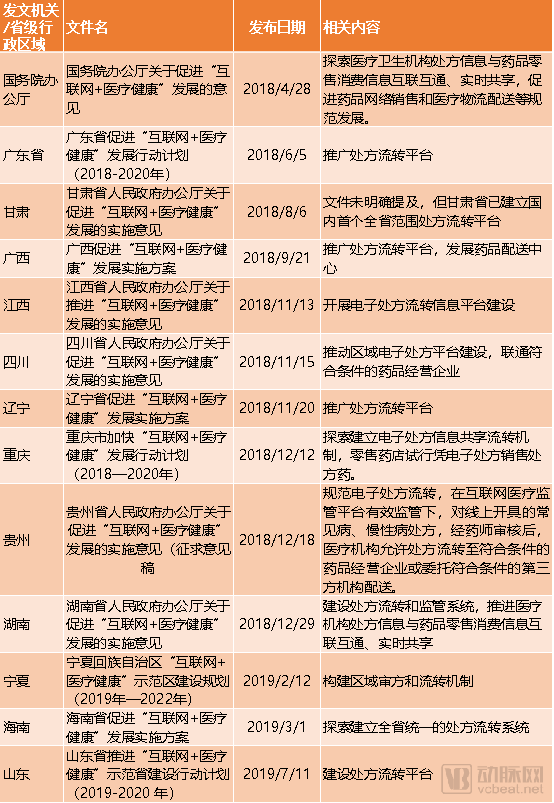
Selected Policy Documents and Content Related to Prescription Circulation Platforms
Among the documents issued by 11 provincial-level administrative regions, there are clear references to the establishment of provincial prescription circulation platforms or similar regulatory systems. Recently, China’s first provincial-level electronic prescription information-sharing platform, developed with the support of Yifuzhen in Gansu Province, was officially launched and put into operation. This development signifies that the authenticity of prescription sources will be better ensured, laying a solid foundation for regulatory oversight.
Therefore, from a policy perspective, establishing prescription circulation platforms has essentially become a consensus among provinces regarding the regulation of prescription circulation.
Prescription Circulation Platform: The Pathway for Prescription Circulation Gradually Becomes Clear
In previous prescription circulation processes, we categorized the entities receiving outsourced prescriptions into retail pharmacies, hospital-adjacent pharmacies, DTP (Direct-to-Patient) pharmacies, internet hospitals, pharmaceutical e-commerce platforms, and prescription circulation platforms. However, as prescription circulation platforms have become a development target for provinces across China, the methods of prescription circulation have become clearer, and each participant in the prescription circulation process has assumed a new role within the emerging landscape.
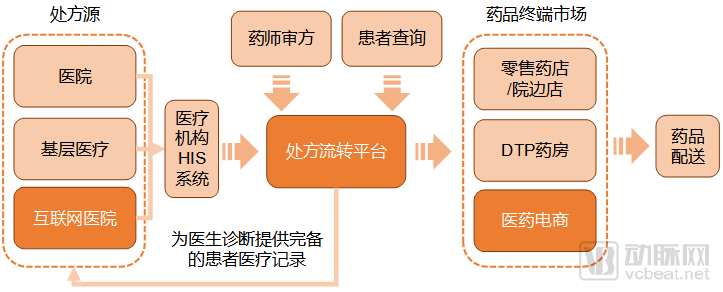
Prescription Circulation Structure After the Intervention of the Prescription Circulation Platform
Prescription sources primarily include hospitals, primary healthcare institutions, and internet hospitals. The prescription circulation platform integrates with their Hospital Information Systems (HIS). After communicating with patients, physicians issue prescriptions, which are then subject to dual review by both hospital pharmacists and platform pharmacists. Upon approval, the prescriptions are directly transmitted via the prescription circulation platform into the information systems of various terminal pharmaceutical market channels, primarily including retail pharmacies, hospital-adjacent pharmacies, Direct-to-Patient (DTP) pharmacies, and pharmaceutical e-commerce platforms.
In the pharmaceutical distribution market enabled by prescription circulation platforms, patients can freely choose their preferred methods of consultation and medication acquisition based on their individual needs. Offline prescriptions can be transmitted to online platforms through information systems, while online prescriptions can be routed to offline pharmacies via the same systems. The prescription circulation platform ensures the authenticity and reliability of prescriptions throughout the transfer process.
Based on data from the initial offline consultation, patients can also use prescription circulation platforms for online follow-up visits and prescription renewals, opting to pick up medications at a nearby pharmacy or have them delivered to their doorstep. This enables “online ordering with in-store pickup” and “online ordering with home delivery,” truly allowing patients to complete the entire process of diagnosis, treatment, and medication purchase without leaving home. Of course, in accordance with national regulations, this healthcare service chain applies only to follow-up patients and excludes the sale of drugs under special state control.
In addition, the prescription circulation platform records patients’ prescription histories, enabling relevant medical institutions to access accurate prior prescription information when patients seek care at different facilities. This helps healthcare providers understand patients’ medical histories and facilitates the healthcare process.
Prescription circulation platforms interpose themselves to sever the direct link between prescription sources and the terminal pharmaceutical market. While this provides patients with a wider range of options, it deprives prescription sources of their ability to drive traffic to the terminal market, potentially forcing certain industry players to adjust their profit models.
Current prescription circulation platforms still face challenges that need to be overcome, such as insufficient informatization at primary healthcare institutions and inconsistent physician prescription information. These issues must be gradually addressed during the operation of the prescription circulation platforms.
Moreover, the largest prescription circulation platform in China is currently limited to the interconnectivity of medical resources within individual provinces. There is still much work to be done to achieve integration across the national healthcare system.
Beyond Prescription Authenticity, Online Sales of Prescription Drugs Require Greater Self-Discipline from Participants
VCBeat previously summarized four key aspects from the press conference on the Drug Administration Law held by the General Office of the Standing Committee of the National People’s Congress.
Qualifications must be clearly defined., the entity engaged in online sales must be a licensed enterprise;
Requirements Must Be Followed, online drug sales must also comply with the requirements for retail operations under the new Drug Administration Law;
Information must be accurate., to ensure the authenticity of prescription sources and safeguard patients' medication safety;
Standardize Distribution, and distribution must also comply with the requirements of the Good Supply Practice (GSP) for pharmaceutical products.
After the prescription circulation platform has addressed the issue of information authenticity, the remaining three aspects require e-commerce platforms selling prescription drugs to maintain a high degree of self-discipline in their development.
E-commerce platforms must still verify the authenticity of transactions, establish quality control systems, conduct qualification reviews for pharmacies and pharmaceutical products, and implement timely tracking and dynamic evaluations. Correspondingly, in the home delivery segment, it is essential to verify patient identities and provide follow-up pharmaceutical care services.
Furthermore, more specific regulatory constraints and greater industry self-discipline are needed to address issues such as physicians issuing non-compliant prescriptions, pharmacists conducting lax prescription reviews, and pharmaceutical distributors dispensing medications without proper prescriptions.
Ma Guanglei, General Manager of a third-party prescription circulation service platform facilitating easy follow-up consultations, stated: “The online sale of prescription drugs should not be treated as a special case; regulation must adhere to the principle of integrated oversight for both online and offline channels. Just as offline pharmacies are required to dispense medication only against a valid prescription, online pharmacies must be held to the same standard. In recent years, issues such as insufficient authenticity of prescription sources and prevalent unauthorized aggregation of prescription data in the online sale of prescription drugs still require further resolution.”
The Drug Administration Law explicitly states that “the State shall establish and improve a drug traceability system. The drug regulatory department under the State Council shall formulate unified standards and specifications for drug traceability, promote the interoperability and sharing of drug traceability information, and ensure that drugs are traceable.” It further stipulates that “drug marketing authorization holders, drug manufacturers, drug distributors, and medical institutions shall establish and implement a drug traceability system, provide traceability information in accordance with regulations, and ensure that drugs are traceable.” Failure to establish and implement a drug traceability system as required, if not corrected after warning, shall result in a fine of not less than RMB 100,000 but not more than RMB 500,000.
Before and after the release of the new Drug Administration Law, the National Medical Products Administration (NMPA) successively issued multiple guidance documents, including the Guiding Opinions on the Construction of an Information-based Drug Traceability System, the Guidelines for the Construction of an Information-based Drug Traceability System, and the Basic Data Set for Traceability by Drug Manufacturers (Draft for Comment). Under the overarching framework of the new Drug Administration Law, implementing drug traceability is mandatory.
The Three-Part Traceability System: Each Component Fulfills Its Distinct Role
Under the top-level design of the National Medical Products Administration, the drug informatization traceability system consists of three components: the regulatory system, the collaborative service platform, and the traceability system.
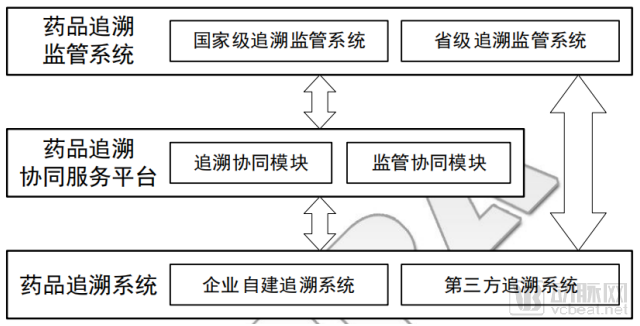
The underlying drug traceability system is primarily provided by pharmaceutical-related enterprises and third-party institutions, which collect, store, and share traceability information throughout the entire lifecycle of drugs, including production, distribution, and usage.
The regulatory system is monitored by the national government and each province, collecting data from below according to regulatory needs, monitoring the flow of drugs, and exercising functions such as intelligent early warning, recall management, and information release based on data conditions;
The collaborative service platform in the middle serves as a communication bridge between upper and lower levels, facilitating the interconnectivity of different drug traceability systems.
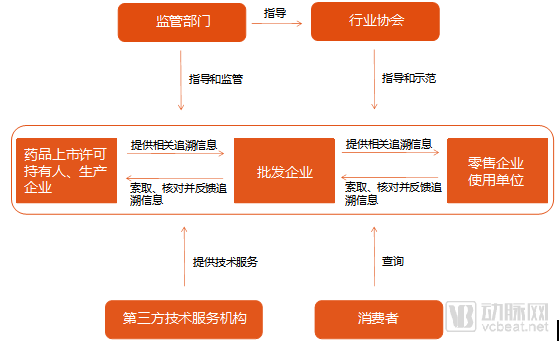
These three components work in concert to form a comprehensive drug traceability system. Within this framework, multi-party, multi-directional information exchange and communication occur among all stakeholders, key stages, and processes, with each participant playing an indispensable role.
Pharmaceutical Companies Bear Primary Responsibility, While Third-Party Tech Firms See Significant Opportunities
Pharmaceutical companies bear significant responsibility in establishing drug traceability systems. In particular, as the new Drug Administration Law mandates full lifecycle management of pharmaceuticals, these companies have an unequivocal obligation to ensure drug traceability.
In accordance with policy requirements, pharmaceutical manufacturers bear the primary responsibility for establishing drug traceability systems. Drug distributors and end-user institutions shall cooperate to establish a comprehensive drug traceability system and fulfill their respective traceability obligations.
To establish a traceability system, pharmaceutical companies must not only cover the upfront costs of hardware infrastructure—such as computers, barcode scanners, and encryption devices—but also bear the expenses for software development, ongoing maintenance, and the hiring of relevant professionals, which entails continuous cost outlays.
Prior to the introduction of relevant policies, many enterprises had already established drug traceability mechanisms; however, coding methods were not standardized, and the presentation formats of these codes varied widely. Following the issuance of the latest national policies, the primary concern for enterprises that have already participated in the construction of traceability systems is whether their existing equipment and systems can comply with the new regulations, and whether significant additional capital investment will be required for modification or reconstruction.
The good news is that the general principles outlined in the "Coding Requirements for Drug Traceability Codes" by the National Medical Products Administration allow traceability codes to be designed or selected based on coding rules widely used by relevant enterprises. Formats such as one-dimensional barcodes, two-dimensional barcodes, or RFID tags can all be utilized. This means that many enterprises can continue to use their existing drug traceability systems.
Third-party companies hold a natural advantage in the development of drug traceability systems. By pooling high-quality resources for system R&D, replication, and personalized customization, third-party technology firms can reduce costs—a feat difficult for individual enterprises to achieve through in-house development.
As pharmaceutical regulations become increasingly stringent and distribution channels diversify, the demand for drug traceability technologies will continue to grow. This also means that third-party companies will seize significant opportunities in this area.
1.GMP/GSP Certification Officially Abolished; Multiple Provinces Issue Documents to Begin Implementation
Under the new provisions of the Drug Administration Law, the sections pertaining to Good Manufacturing Practice (GMP) and Good Supply Practice (GSP) certification were removed from the original regulations, although the abolition of such certifications was not explicitly stated. Subsequently, in the “Notice of the National Medical Products Administration on Studying and Implementing the Drug Administration Law of the People’s Republic of China,” the NMPA clarified these matters, requiring that “dynamic supervision be strengthened, GMP and GSP certifications for drug manufacturing and distribution be abolished, and drug regulatory authorities conduct inspections of GMP and GSP compliance at any time.”
Following the National Medical Products Administration’s explicit issuance of a document announcing the cancellation, provinces including Guangxi, Zhejiang, Hebei, and Jiangxi have successively released relevant announcements stating that “as of December 1, 2019, applications related to Good Manufacturing Practice (GMP) and Good Supply Practice (GSP) certifications for pharmaceuticals will no longer be accepted.” China’s pharmaceutical quality management system has officially transitioned from the certification era to an era characterized by comprehensive unannounced inspections.
The implementation of Good Manufacturing Practice (GMP) and Good Supply Practice (GSP) certifications over the past three decades has largely established the stable operation of China’s drug supervision and administration system. However, the certification regime has gradually become inadequate in meeting the state’s “high standards and strict requirements” for pharmaceutical production and distribution systems. Consequently, since 2014, there have been continuous calls to abolish GMP and GSP certifications and strengthen routine supervisory inspections.
The cancellation of certification does not mean that pharmaceutical companies can act arbitrarily. GMP and GSP standards will be incorporated into the inspection processes for drug production and operation licenses. Companies failing to meet these standards will directly lose their drug production or operation licenses, effectively merging the two certifications. This approach reduces the frequency of certifications while raising the requirements for pharmaceutical enterprises.
In recent years, the unannounced inspection system has shouldered the critical responsibility of daily supervision. The latest revision of the Drug Administration Law specifically proposes “establishing a specialized and professional team of drug inspectors.”
In this regard, the General Office of the State Council specifically issued the “Opinions of the General Office of the State Council on Establishing a Professional and Specialized Team of Drug Inspectors,” proposing that “by the end of 2020, the drug regulatory department under the State Council and provincial-level drug regulatory departments shall basically complete the development of the institutional framework for a professional and specialized team of drug inspectors. On this basis, another three to five years shall be devoted to building a system of professional and specialized drug inspectors that basically meets the requirements of drug regulation.”
The increased frequency of unannounced inspections, coupled with the enhanced professionalism of inspection teams, will further constrain non-compliant practices by pharmaceutical companies and strengthen regulatory oversight of drug safety.
2. Legally marketed drugs from overseas are no longer treated as counterfeit drugs
Previous regulations encompassed both “scientific falsity” and “legal or procedural falsity.” The new Drug Administration Law has revised the definition of counterfeit drugs; imported drugs without approval are no longer classified as counterfeit, and the designation of counterfeit or substandard drugs is now directly tied to their efficacy.
Meanwhile, the regulations also include the provision that “the unauthorized import of small quantities of drugs already legally marketed abroad may be subject to mitigated or exempted penalties in less serious cases,” offering a glimmer of hope for overseas purchasing agents.
However, during the regulatory process, further legal specifications are needed to define “small quantities of drugs” and to establish criteria for verifying that such drugs are legally circulated abroad.
3. The Marketing Authorization Holder (MAH) System for Drugs is Expanded Nationwide
The Marketing Authorization Holder (MAH) system was a pilot program launched in 2015 in selected provinces, cities, and autonomous regions across China. Having achieved positive results during its more than three years of implementation, the system has been incorporated into the newly revised Drug Administration Law and is now being formally implemented nationwide.
The MAH system assigns drug-related liabilities to specific entities, requiring Marketing Authorization Holders (MAHs) to assume comprehensive responsibility for all stages of a drug’s lifecycle. On this basis, it liberalizes the manufacturing and distribution sectors by permitting “contract manufacturing” and “contract distribution,” thereby breaking the previously integrated “R&D, production, and sales” structure of the pharmaceutical industry.
With the fragmentation of drug-related processes, companies at each stage can form flexible partnerships to fulfill their respective roles and enhance the efficiency of drug innovation. Meanwhile, the pharmaceutical contract outsourcing sector (including CROs, CDMOs, etc.) has gained greater legitimacy and is poised for significant growth opportunities in the future.