

On the 32nd World AIDS Day: HIV Therapeutics Are Advancing Toward Long-Acting Regimens
To raise public awareness of AIDS, the World Health Organization designated December 1st each year as World AIDS Day in January 1988. In China, AIDS has become the seventh most common infectious disease in terms of new cases and the leading cause of death among infectious diseases. Although incurable, HIV infection can be managed as a chronic condition through medication if detected early. In this year’s national medical insurance negotiations, elvitegravir/cobicistat/emtricitabine/tenofovir alafenamide was included in the national medical insurance list at a price of RMB 43 per tablet, offering a new and effective treatment option for people living with HIV/AIDS.
In the current landscape of new drug development, HIV/AIDS remains the most prominent infectious disease target. Similar to other chronic conditions, antiretroviral therapies are increasingly shifting toward long-acting formulations. In this transition toward long-acting HIV treatments, Chinese enterprises appear to have taken a leading position in the development of anti-HIV drugs.
AIDS is a highly harmful infectious disease caused by the human immunodeficiency virus (HIV). HIV attacks the human immune system, extensively destroying lymphocytes and leading to the loss of immune function. Therefore, AIDS itself is not directly fatal; however, patients with AIDS, having lost their immune function, become susceptible to various infections and ultimately die from AIDS-related complications.
There is currently no fully curative treatment regimen for AIDS. However, combination therapy with medications such as dolutegravir, abacavir, and lamivudine can inhibit the spread of HIV, enable post-exposure prophylaxis (PEP), and allow patients in the early clinical stages of AIDS to manage disease progression through chronic disease management strategies.
In 2007, an HIV patient was miraculously cured through bone marrow stem cell transplantation and became known as the “Berlin Patient.” Twelve years later, the Berlin Patient remains in good health, with gradual recovery of both body weight and physical strength. In May 2016, an HIV patient in London who received a similar treatment also appeared to be cured; after discontinuing antiretroviral therapy in September 2017, the patient has maintained sustained remission. However, this therapeutic approach requires highly precise HLA matching and is not yet feasible as a routine treatment for HIV infection.
According to data from China’s 2019 Statistical Yearbook of Health and Family Planning, HIV/AIDS became the leading cause of death among infectious diseases in China in 2018, with a total of 18,780 deaths, while tuberculosis, ranking second, accounted for only 3,149 deaths. Most infectious diseases can now be effectively controlled, but HIV/AIDS remains an unresolved challenge.
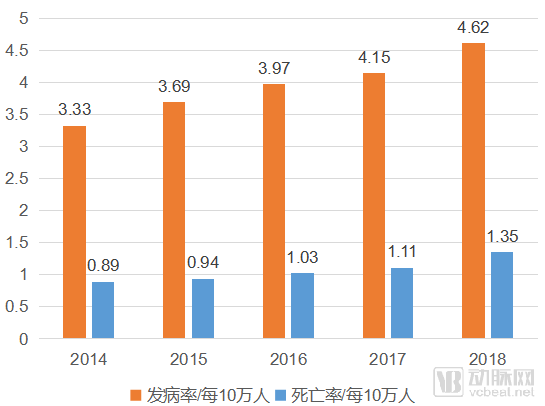
Current Status of HIV/AIDS in China
Since 1997, both the incidence and mortality rates of AIDS in China have continued to rise. The mortality rate has remained at approximately 27% of the incidence rate. In other words, one in every four AIDS patients faces the threat of death.
Due to the lack of viable treatment options, prevention has always been a key focus in HIV/AIDS control and prevention. The main modes of HIV transmission are through blood, sexual contact, and mother-to-child transmission. These routes of transmission are not ones that most people encounter in their daily lives. Consequently, neglect of the risk of HIV transmission has led to persistently high incidence rates of HIV/AIDS in China.
Currently, there are five major classes of antiretroviral drugs used to treat HIV/AIDS.
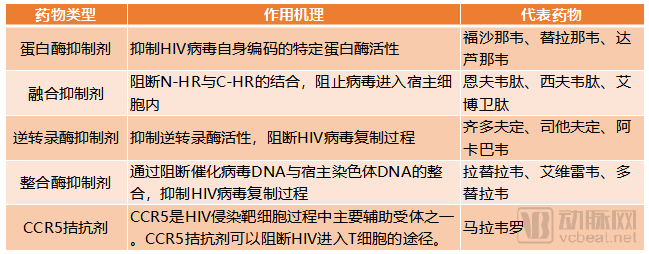
In clinical practice, the “cocktail therapy” is widely adopted, which involves selecting therapeutic agents with different mechanisms of action to target HIV at various stages, thereby avoiding the high drug resistance associated with monotherapy.
In the late 2019 adjustment of the National Reimbursement Drug List (NRDL), the imported drug elvitegravir/cobicistat/emtricitabine/tenofovir alafenamide (Genvoya, manufactured by Gilead) was included in the reimbursement coverage. The price per tablet was set at RMB 43, representing a reduction of over 50%. At a dosage of one tablet per day, the annual treatment cost under the NRDL reimbursement price is only RMB 15,695, with the estimated out-of-pocket expense for patients being less than RMB 2,000. This significantly alleviates the financial burden on people living with HIV/AIDS, compared to the previous annual out-of-pocket cost of RMB 30,000 for self-purchased medication.
According to data obtained by VCBeat from ClinicalTrials.gov on July 30, 2019, there were 149 active clinical studies directly related to HIV worldwide, making it the most prevalent infectious disease indication in global clinical research.
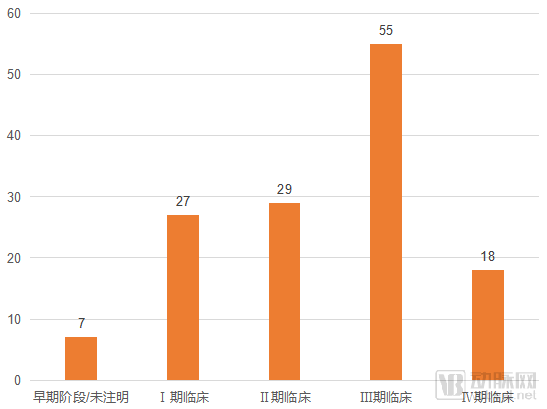
Global Distribution of Clinical Trial Phases for HIV/AIDS-Related Research
Among all clinical trials, there were 55 Phase III and Phase II/III trials, accounting for 37% of the total. These included high-profile drugs such as ViiV Healthcare’s cabotegravir, GSK’s dolutegravir, Merck & Co.’s MK-1439, and Gilead Sciences’ new combination drug Descovy.
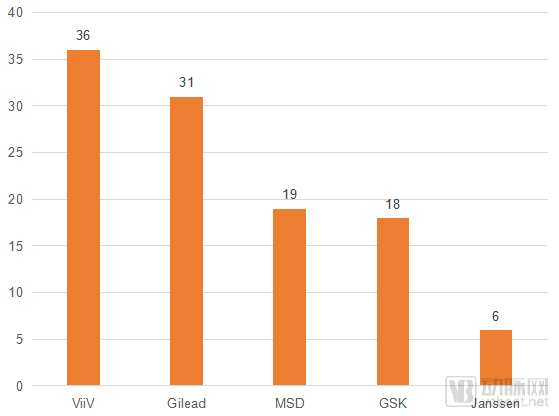
The Five Major Giants Conducting Research on Anti-HIV Drugs
ViiV Healthcare, a joint venture between Pfizer and GSK, is currently the most active company in the field of HIV drug research and development, with GSK collaborating on multiple clinical trials. Gilead Sciences, which has made significant achievements in the fields of HIV and liver diseases, continues to invest in HIV research. In addition, Merck & Co., GSK, and Janssen Pharmaceuticals, a subsidiary of Johnson & Johnson, are also closely monitoring developments in the HIV sector.
Over the past two years, China’s drug approval process has continued to focus on the field of HIV/AIDS. In 2018, six new HIV drugs were launched in the Chinese market, including three combination therapies: Triumeq (dolutegravir/abacavir/lamivudine tablets), Genvoya (elvitegravir/cobicistat/emtricitabine/tenofovir alafenamide tablets), and Descovy (emtricitabine/tenofovir alafenamide); one reverse transcriptase inhibitor with a low side-effect profile, Edurant (rilpivirine tablets); one long-acting viral fusion inhibitor, Aikening (albuvirtide for injection); and one protease inhibitor with a favorable resistance profile, Prezcobix (darunavir/cobicistat tablets). In 2019, another combination therapy from Gilead, Biktarvy, was also approved for marketing.
Among the new drugs approved in 2018, Genvoya was the first to be included in the National Reimbursement Drug List through medical insurance negotiations, significantly reducing the medication burden for patients with HIV/AIDS.
Domestic pharmaceuticals have begun to gain momentum in the past two years. On September 2, 2018, China’s first original anti-HIV new drug, Aikening (Albuvirtide), was approved for market launch. ACC007, a novel reverse transcriptase inhibitor developed by Adda Pharmaceuticals, has also entered Phase III clinical trials, with observations expected to conclude and a marketing application to be filed in the first half of next year.
Most currently approved HIV medications require daily dosing, a regimen that significantly hinders patient adherence. Similarly, antidiabetic drugs, which also fall under the category of chronic disease management, are increasingly shifting toward long-acting formulations. In recent years, research focus in the HIV field has likewise turned to the development of long-acting agents, with several products already beginning to enter the market.
1. Aikening (Marketed)
Aikening, developed by Frontier Biotechnologies, is China’s first original novel anti-HIV drug and the world’s first long-acting HIV-1 fusion inhibitor, which received final approval after sixteen years of clinical research.
In the previously announced interim results of the Phase III clinical trial, the simplified antiretroviral regimen of Albuvirtide combined with Kaletra showed no significant differences in efficacy and tolerability compared with the standard second-line regimen (Kaletra + lamivudine + tenofovir/abacavir/zidovudine).
2. Ibalizumab-ukyk (approved in the US, brand name Trogarzo)
On March 7, 2018, the U.S. FDA approved the marketing of ibalizumab, an anti-HIV monoclonal antibody drug developed by Taiwan’s TaiMed Biologics, in the United States, making it the first innovative HIV therapy approved in a decade. Prior to approval, ibalizumab had been granted Fast Track designation, Priority Review, Breakthrough Therapy designation, and Orphan Drug designation by the U.S. FDA. Trogarzo is also the first sterile biologic product manufactured in China to receive U.S. FDA approval for clinical trials in the United States.
In the Phase III clinical trial of ibalizumab, patients receiving intravenous ibalizumab underwent dosing every two weeks. Within 14 days, 82.5% of patients exhibited a significant reduction in viral load; after 24 weeks of treatment, 43% achieved undetectable viral loads, and 50% maintained viral loads below 200 copies/mL. Ibalizumab is also the only antiretroviral therapy that does not require daily administration.
3.Cabotegravir
Cabotegravir, jointly developed by ViiV Healthcare and GSK, submitted its New Drug Application to the FDA on April 29, 2019. It is administered as a long-acting dual-drug regimen of “cabotegravir + rilpivirine (CAB/RPV).” This dual-drug regimen is the world’s first long-acting HIV medication, indicated for patients with HIV who have achieved viral suppression. In clinical trials, this treatment regimen demonstrated robust viral control, along with favorable safety and tolerability profiles, holding promise for further improving adherence among patients living with HIV.
With the use of cabotegravir + rilpivirine, patients only need to receive intramuscular injections once a month. In further clinical trials, ViiV and GSK are exploring a bimonthly dosing regimen.
In a Phase III clinical trial of cabotegravir, patients receiving once-every-four-weeks CAB/RPV therapy demonstrated similar virologic suppression rates at 48 weeks compared to those taking oral Triumeq daily, with essentially no safety concerns reported. Furthermore, patient satisfaction was significantly higher among those receiving CAB/RPV in satisfaction surveys. Consequently, cabotegravir is regarded as a highly competitive option among long-acting HIV medications.
4. islatravir(MK-8591)
Islatravir, currently undergoing Phase II clinical trials, is also considered a strong contender in the field of long-acting HIV medications. Animal studies conducted in rhesus macaques demonstrated that weekly administration of 10 mg of MK-8591 significantly reduced the risk of infection by 41.5-fold. At the 2019 International AIDS Society (IAS) Conference, Merck & Co. presented the Phase I clinical trial results for islatravir. Subcutaneous implants containing varying doses of islatravir or placebo were implanted into the upper arms of healthy participants. During one year of follow-up, implants containing 62 mg of islatravir maintained drug levels well above the therapeutic threshold throughout the 12-month period. These findings suggest that islatravir has the potential to become a novel annual treatment regimen for HIV, marking a significant advancement in the development of long-acting antiretroviral therapies.