

FTC2019 | President Tao Liang of Asia Heart Hospital: Establishing a Tiered Treatment System to Strengthen Talent Development as the Lifeline for Cardiothoracic Surgery in Private Hospitals
The shortage of talent in private hospitals has long been a significant challenge. How can these institutions retain and cultivate talent without the backing of prestigious large hospital affiliations? At the inaugural FTC 2019 China Forum on Frontier Technologies in Cardiac Surgery, Professor Tao Liang, President of Wuhan Asia Heart Hospital (hereinafter referred to as “Asia Heart Hospital”), shared the hospital’s practical experiences in talent development through his presentation, “Building the ‘Lifeline’ of Talent Development: The Path to Constructing a Cardiac Surgery Department.” VCBeat (WeChat ID: vcbeat) has compiled and edited the highlights of his speech.
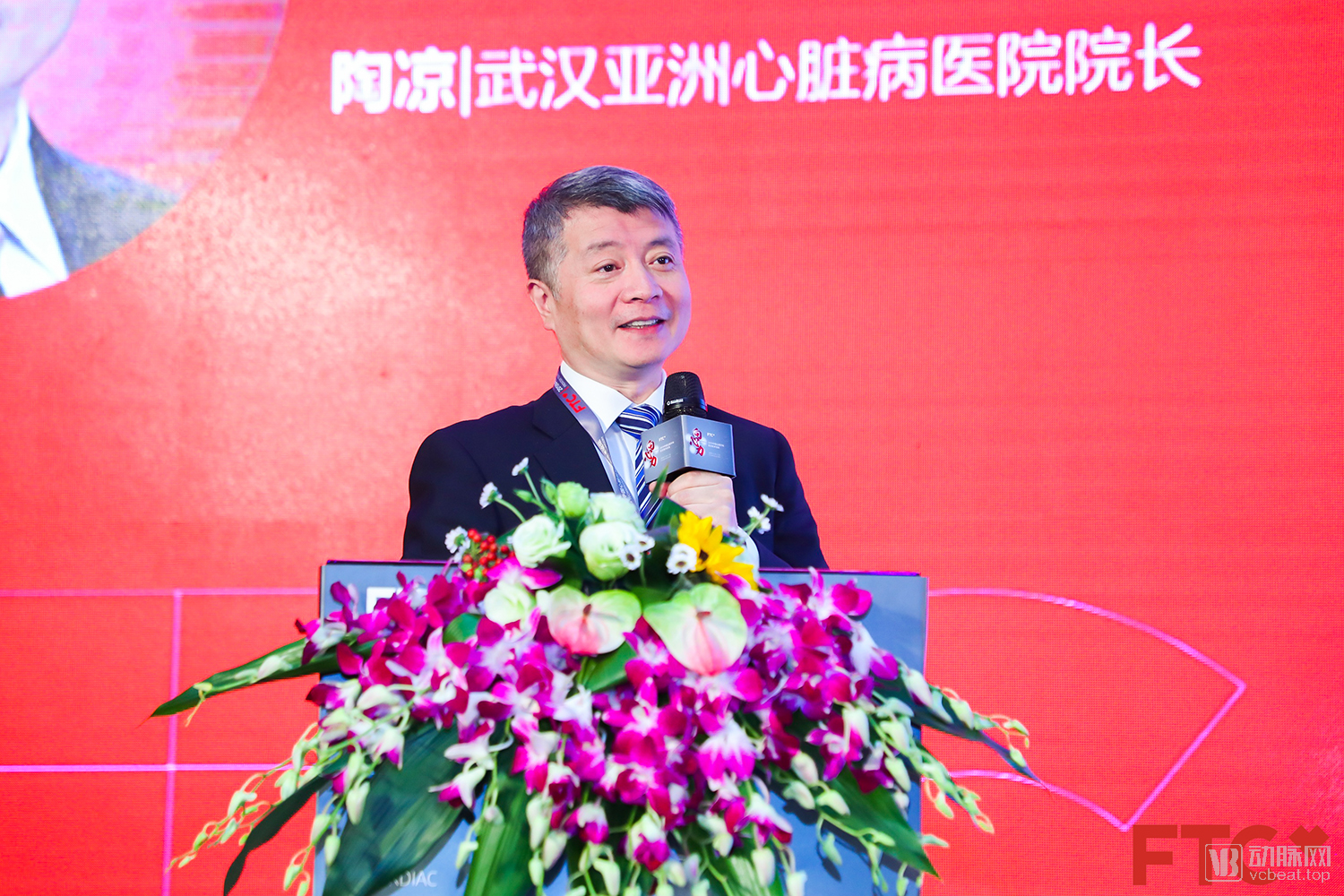
President Tao Liang Delivered a Speech at FTC 2019
According to the latest white paper on cardiac surgery, Wuhan Asia Heart Hospital has ranked third nationwide in surgical volume for 15 consecutive years. The hospital’s uninterrupted development is closely tied to its talent cultivation strategy implemented from the outset.
First, whether private hospitals can retain talent mainly depends on two factors: first, whether there is a platform for doctors to utilize their professional expertise; second, whether there is a decent income. In the past, state-owned hospitals mostly adopted an “apprenticeship” model for talent development, and this system persisted for a long time. However, private hospitals cannot adopt this model, especially in their early stages when qualified physicians are already scarce. Therefore, Wuhan Asia Heart Hospital has made certain adjustments based on this traditional system.
"Our private hospital's reserve talent pool is largely composed of candidates selected from affiliated hospitals. To ensure the quality of our personnel while establishing our own operational framework, we have implemented a tiered treatment system."
Only when critically ill patients are treated by experienced physicians can mortality and complication rates be effectively reduced, thereby ensuring the quality of medical care.
The tiered treatment system is designed to allocate resources where they are most effective, ensuring that ward physicians focus on inpatient care and surgical specialists concentrate on operations. For instance, surgeons can dedicate themselves exclusively to surgical procedures, while other qualified healthcare professionals handle logistical management and postoperative support. Key personnel involved in critical surgical stages are recruited through targeted talent acquisition strategies, whereas physicians performing routine tasks are hired through standard recruitment processes. This approach not only guarantees the quality of medical practitioners but also establishes training and management models distinct from those of public hospitals.
Specialized hospitals require scaled development, necessitating the implementation of phased, specialized technical training for physicians. This training platform can incorporate assessments for a variety of diseases, with evaluation standards generally benchmarked against lead surgeons at Grade 3A hospitals. Post-training, physicians can be subspecialized, which facilitates better professional positioning, ensures surgical quality control, and supports performance evaluation. This approach also helps mitigate psychological trauma from failed cardiac surgeries, thereby preventing impediments to professional growth.
Regarding income, we divide it into two components: fixed salary and performance-based pay. At Asia Heart Hospital, a physician’s performance-based pay is three to four times their fixed salary, or even higher. This creates an incentive mechanism that makes it clear to doctors that higher income is contingent upon greater work output. In terms of accountability, we implement a surgeon-responsibility system; if any issues arise during surgery, the operating surgeon cannot evade responsibility, thereby fostering a stronger sense of accountability among physicians.
Furthermore, we spare no effort in cultivating new talent. All physicians newly joining Wuhan Asia Heart Hospital are provided with equitable training opportunities. We structure our training in accordance with the developmental trajectory of cardiac surgeons, allowing doctors to undergo phased training and exploration over a specified duration and case volume. This skills-based training is integrated with psychological conditioning and self-directed learning, with particular emphasis placed on psychological support; self-directed learning permeates the entire process. We aim to help physicians gradually cultivate the habit of self-reflection after surgeries. Relying solely on external instruction without self-directed learning makes it difficult to become an accomplished physician.
At Wuhan Asia Heart Hospital, training centers on the role of first assistant. Physicians undergo an average of six years of first-assistant training, ensuring that novice surgeons observe all types of procedures and work with all attending surgeons. This exposure enables them to learn from each surgeon’s strengths and weaknesses, and to distinguish successful operations from those with elevated risk. This phase is the most critical stage in a surgeon’s professional development, as it narrows the learning curve during the transition to independent practice, leading to higher success rates and fewer complications.
After completing training as a first assistant and subsequently undergoing training as the primary surgeon, physicians who pass the primary surgeon certification examination are qualified to perform 90% of cardiac surgeries. We then assign subspecialties based on individual physician interests.
How is theoretical training conducted? We require physicians to interpret and share one academic paper each morning, followed by commentary from senior clinicians. This approach helps junior doctors understand the current state of development in a specific disease or field, with insights provided by experienced practitioners. Additionally, we hold specialized lectures on weekends to provide a systematic understanding of specific disease categories.
Asia Heart Hospital also has a retraining system, under which physicians are required to review and present their key takeaways and reflections after attending conferences or completing overseas fellowships. They must then field questions from their peers; those who perform poorly will have their opportunities for future conference attendance reduced. In addition, we conduct bi-monthly ward rounds led by the hospital president. Upon completion of each thematic study module, we gain new insights into the topic. We then assign research subtopics, primarily categorized by specialty, with each individual conducting an in-depth exploration of their assigned subject.
We advocate for a tiered teaching approach of “letting go without taking our eyes off,” meaning that the supervising physician assumes responsibility for any risks during surgery. Consequently, supervisors remain vigilant, ensuring that trainees develop technical proficiency as well as psychological resilience and self-training capabilities over time.
We classify the complexity of cardiac surgical procedures into four levels: A, B, C, and D. Each level has a corresponding certification examination, and physicians are permitted to perform procedures only after obtaining the relevant certification. Since surgical scheduling is handled by administrative staff rather than department heads, and physicians must possess the appropriate credentials to be assigned specific cases, this system prevents unauthorized performance of surgeries beyond a physician’s certified competency level.
Regarding the disciplinary system, penalties should be issue-based rather than person-oriented. First and foremost, accountability inevitably falls on a specific individual; typically, the lead surgeon bears this responsibility. Whether the issue arises from anesthesia, extracorporeal circulation, or intensive care, ultimate accountability is traced back to the surgeon. This is because anesthesiologists and other related specialists are required to follow the surgical team’s directives, and the surgeon also holds supervisory responsibility.
However, disciplinary action is a multidimensional construct; some cases warrant punishment while others do not, and the severity of penalties varies, necessitating clear rationale. We categorize surgeries into simple, moderately complex, and complex, implementing a 27-point accountability framework. This approach not only ensures appropriate positioning but also incorporates humanistic considerations.
Our design principles are primarily based on the following aspects: 1. The developmental trajectory of surgeons; 2. The severity and complexity of patients' conditions; 3. Alignment with human physiological and psychological development patterns; 4. The technical difficulty of surgical procedures; 5. Reduction of complications and mortality rates.
Young physicians are the future of hospitals. Without this training system, even if young doctors receive your training, they will leave once they become seasoned practitioners. I believe that during the golden stage of their careers, young doctors require robust training; only with such training—specifically, the talent development strategy of Asia Heart Hospital—will they truly integrate into your system.
Senior surgeons bring extensive operative experience, while younger doctors offer agility in hand-eye coordination. We must institutionalize technical proficiency as a habit and align physicians’ career development with the hospital’s goals. Only then can we build a robust hospital system, ensure sustainable talent succession, and foster a virtuous cycle of growth.
About Tao Liang
Tao Liang, President of Wuhan Asia Heart Hospital (hereinafter referred to as "Asia Heart Hospital"), has been engaged in clinical cardiac surgery for 30 years. He previously worked in the Department of Cardiac Surgery at Singapore General Hospital for three years. In 2010, he was awarded the "Golden Scalpel Award" by the Cardiovascular Surgeons Branch of the Chinese Medical Doctor Association. He specializes in various surgical procedures, including complex congenital heart disease, minimally invasive valvular heart disease, coronary artery disease, diseases of the heart and great vessels, cardiac tumors, and heart transplantation. His uniquely developed reconstructive techniques for aortic valve replacement with single, double, or triple leaflets, as well as certain innovative surgical procedures for complex congenital heart defects, have been widely acclaimed by domestic and international experts for their volume and outcomes. Under his leadership, the cardiac surgery team has performed more than 50,000 cardiovascular surgical procedures, ranking among the top three nationwide in surgical volume for many consecutive years. Personally, he has led and completed over 10,000 cardiovascular surgical cases.