

JunLian Healthcare Global New Drug Insights Weekly – Issue 33
Dec 02, 2019 18:00
CST Updated
18:00

This week, there were 11 new drug data entries, including 4 in oncology, 2 in neurology, 2 in metabolism, 1 in hematology, 1 in hepatology, and 1 in vaccines.
❖ Intercept's Obeticholic Acid ReceivesFDA Priority Review Designation, expectedLaunched in Q1 2020. InNASHaspect, obeticholic acid is the onlyFDAInvestigational drugs granted Breakthrough Therapy Designation are simultaneously the world’s firstOne entered, and it was also the first investigational drug to successfully complete Phase III clinical trials (GileadA Sigh for Selonsertib). However, even with obeticholic acid achieving a breakthrough from zero, there remain many unsatisfactory aspects, includingElevated LDL levels, severe pruritus, and the inability to reduce lipid accumulation have made the drug’s market launch a turbulent journey. Given the vast market potential for NASH, combination “cocktail” therapies are likely to emerge in the future. Building on obeticholic acid (an FXR agonist) for improving fibrosis, these regimens would combine lipid-lowering and anti-pruritic agents to establish a long-term treatment strategy.
❖ RocheTecentriqCombinationAvastinFor the Treatment of Liver CancerThe IMbrave study has officially released its data, achieving dual primary endpoints of superiority in both overall survival (OS) and progression-free survival (PFS). Although the median OS has not yet been finalized, existing data already demonstrate a significant advantage over sorafenib. Since sorafenib was launched in 2007 for the treatment of liver cancer, it has been widely criticized for its limited efficacy. It was only in the past three years that strong challengers have gradually emerged, including monotherapies such as pembrolizumab (“O”), nivolumab (“K”), and lenvatinib. While their objective response rates (ORR) initially appeared promising, only lenvatinib successfully challenged sorafenib’s status and became the new first-line standard. Even so, lenvatinib demonstrated non-inferiority rather than superiority in OS (ORR: 40.6% vs. 12.4%; PFS: 7.4 months vs. 3.7 months; OS: 13.6 months vs. 12.3 months). Now, Roche’s atezolizumab plus bevacizumab (“A+T”) combination has successfully ushered in a new chapter in liver cancer treatment. The focus now shifts to whether the combination of pembrolizumab and lenvatinib can achieve even greater breakthroughs on this foundation.
AstraZeneca’s New Small Cell Lung Cancer Drug Imfinzi Granted FDA Priority Review
AstraZeneca Announces U.S. FDA Acceptance of Supplemental Biologics License Application (sBLA) for Immunotherapy Imfinzi (durvalumab) and Grants Priority Review
Imfinzi is a PD-L1 inhibitor
Open-label, randomized, global Phase 3 clinical trial in which patients with extensive-stage small cell lung cancer (SCLC) were enrolled and randomly assigned in a 1:1:1 ratio to receive one of three treatment regimens. The primary endpoint was overall survival (OS), and the secondary endpoint was objective response rate (ORR).
The risk of death was reduced by 27%, with a median overall survival of 13.0 months. In contrast, the control group receiving standard chemotherapy alone had a median overall survival of 10.3 months.
Zogenix’s Innovative Therapy for Rare Neurological Diseases Granted Priority Review
Zogenix Announces FDA Acceptance of NDA for Fintepla for the Treatment of Seizures Associated with Dravet Syndrome, Grants Priority Review with PDUFA Date Set for March 25 Next Year
ZX008 is a liquid formulation of low-dose fenfluramine. It reduces the frequency of seizures by modulating serotonergic mechanisms and sigma-1 receptor activity.
Based on the Phase 3 clinical trial and interim analysis of the ongoing open-label extension study, enrolled patients received treatment for up to 21 months.
Compared with the placebo group, Fintepla reduced the mean monthly frequency of tonic-clonic seizures by 54.7% (p<0.001).
Sanofi's Long-Acting Insulin Approved for Expanded Indications
U.S. FDA Approves Expanded Indication for Sanofi’s Long-Acting Insulin Glargine Injection, Toujeo, for the Treatment of Children and Adolescents Aged 6 Years and Older with Type 1 Diabetes
Toujeo is a long-acting insulin glargine injection with an insulin concentration three times that of standard insulin (100 units/mL). The primary activity of insulin is to regulate glucose metabolism.
Aim to verify the efficacy of Toujeo in treating type 1 diabetes patients aged 6 to 17 years.
After 6 months of treatment, patients in the Toujeo group met the non-inferiority criteria for reducing glycated hemoglobin (HbA1c) levels compared with Toujeo Gla-100, thereby achieving the primary endpoint of the study.
Incyte’s Innovative Cholangiocarcinoma Therapy Granted Priority Review
Incyte Announces FDA Acceptance of New Drug Application (NDA) for Pemigatinib, an FGFR1/2/3 Inhibitor, for the Treatment of Patients with Previously Treated Locally Advanced or Metastatic Intrahepatic Cholangiocarcinoma (iCCA) Harboring FGFR2 Fusions or Rearrangements
Pemigatinib is an oral small-molecule inhibitor targeting FGFR1, 2, and 3; its preclinical data demonstrate excellent efficacy and safety in tumors harboring FGFR genetic alterations.
Phase II trial enrolling patients with previously treated locally advanced or metastatic intrahepatic cholangiocarcinoma to demonstrate efficacy and safety
In the subgroup of patients with FGFR2 gene fusions or rearrangements, pemigatinib monotherapy achieved an objective response rate (ORR) of 36% and a median duration of response (DOR) of 7.5 months.
Intercept’s Obeticholic Acid Granted FDA Priority Review
Intercept Pharmaceuticals Announces FDA Acceptance of New Drug Application (NDA) for Obeticholic Acid (OCA) and Grant of Priority Review
OCA is a specific farnesoid X receptor (FXR) agonist. FXR is a key nuclear receptor that regulates liver health and modulates multiple physiological processes, including bile acid metabolism, inflammation, fibrosis, glucose metabolism, and lipid metabolism.
Enrolled patients were randomly assigned to receive treatment with different doses of OCA or placebo. The primary endpoint was defined as an improvement in liver fibrosis by at least one stage without worsening of NASH, or resolution of NASH without worsening of liver fibrosis.
Among the intent-to-treat population receiving different doses of obeticholic acid (OCA) at 18 months of treatment, the proportion of patients with an improvement in liver fibrosis by more than one stage and no worsening of NASH was 17.6% (10 mg) and 23.1% (25 mg), compared with 11.9% in the placebo group.
FXRSystemic Effects of Receptors
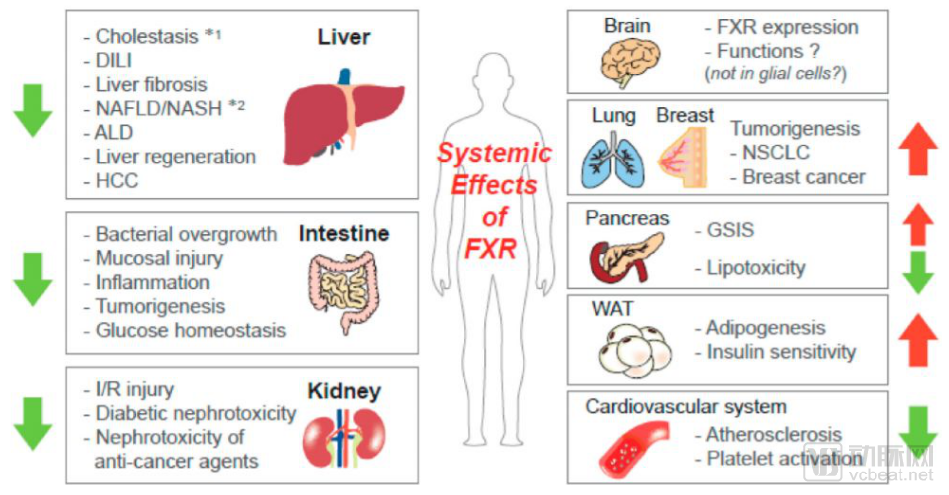
Data Source: FXR Biology
Keytruda Combination Therapy Approved in China for First-Line Treatment of Non-Small Cell Lung Cancer
Merck & Co. (MSD) announced that the China National Medical Products Administration (NMPA) has approved its blockbuster PD-1 inhibitor, Keytruda, in combination with carboplatin or paclitaxel, for the first-line treatment of patients with metastatic squamous non-small cell lung cancer (NSCLC).
Keytruda is a PD-1 inhibitor
Based on Interim Analysis Data from the Chinese Subgroup (Including the Chinese Expansion Cohort)
The pembrolizumab combination therapy group demonstrated a 56% reduction in the risk of death compared to the chemotherapy-alone group, whereas this figure was 29% in the global study.
Poxel SA’s Innovative Oral Therapy for Diabetes Yields Positive Phase 3 Clinical Data
Poxel SA Announces Positive Top-Line Results from the Open-Label Extension Phase of the Phase 3 TIMES 3 Clinical Trial of Imeglimin, an Innovative Oral Therapy for Type 2 Diabetes Developed by the Company
Imeglimin is the world’s first glimin-class drug, featuring a novel mechanism of action that targets the three major organs—the liver, muscle, and pancreas. It holds promise for promoting insulin secretion, enhancing insulin sensitivity, and inhibiting gluconeogenesis.
In the open-label extension study, all patients received treatment with imeglimin in combination with insulin.
After 36 weeks of treatment, HbA1c levels decreased by 0.64% and 0.54% from baseline in patients originally assigned to the imeglimin group and the placebo group, respectively.
Global Blood Therapeutics’ Innovative Small-Molecule Therapy for Sickle Cell Disease Receives FDA Accelerated Approval
The U.S. FDA Announces Accelerated Approval of Global Blood Therapeutics’ Innovative Therapy Oxbryta (voxelotor) for the Treatment of Sickle Cell Disease (SCD) in Adult and Adolescent Patients Aged 12 Years and Older
Voxelotor targets the hemoglobin polymerization process and achieves therapeutic efficacy by increasing hemoglobin's affinity for oxygen.
SCD Patients Treated with Different Doses of Oxbryta or Placebo
In the group of patients receiving voxelotor at a dose of 1,500 mg, 59.5% experienced an increase in hemoglobin levels of more than 1 g/dL, compared with 9.2% in the placebo group.
Roche’s Oral SMA Therapy Granted Priority Review
Roche Announces FDA Acceptance of New Drug Application for Risdiplam, Granting Priority Review; Risdiplam Is an SMN2 mRNA Splicing Modifier for the Treatment of Spinal Muscular Atrophy (SMA)
Spinraza uses antisense oligonucleotides (ASOs) to modulate RNA splicing, aiming to increase and maintain SMN protein levels throughout the central nervous system and peripheral tissues.
A pivotal, single-arm trial evaluating risdiplam enrolled infants with type 1 SMA; a pivotal, double-blind, placebo-controlled clinical trial was conducted in children and young adults (aged 2–25 years) with type 2 or type 3 SMA.
Among the 17 patients who received treatment, 7 infants (41.2%) were able to sit independently for more than 5 seconds, 9 infants (52.9%) were able to maintain head control, and 1 infant (5.9%) achieved the motor milestone of standing. The average SMN protein expression level increased by more than two-fold, and 58% of patients showed an improvement of at least 3 points in their MFM32 scores compared to baseline.
Risdiplam Increases SMN Protein Levels by Modulating SMN2 RNA Splicing
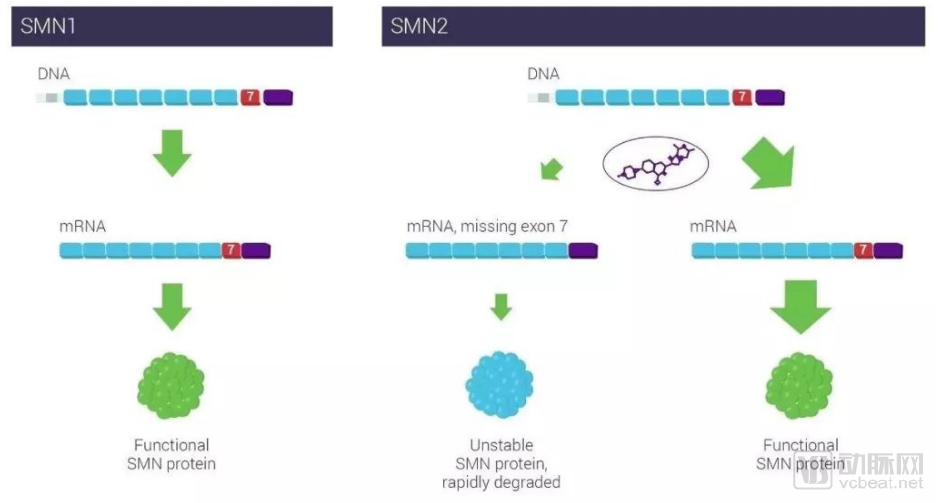
Data Source: PTC Therapeutics
Takeda Dengue Vaccine Shows Positive 18-Month Clinical Results
Takeda announced that the overall vaccine efficacy (VE) of its tetravalent dengue vaccine, TAK-003, in the pivotal Phase 3 clinical trial remained largely consistent with the data from the previous primary endpoint analysis, and all secondary endpoints validated by sufficient case numbers were also met.
TAK-003 is a tetravalent dengue vaccine, a live attenuated vaccine designed based on the type 2 virus.
A 4.5-year, randomized, double-blind, placebo-controlled pivotal trial to evaluate the efficacy of TAK-003 in preventing dengue among children aged 4 to 16 years, both with and without prior dengue exposure
TAK-003 demonstrated 73.3% efficacy in preventing dengue fever, which is largely consistent with the 80.2% reported in the previous primary endpoint analysis. Furthermore, all secondary endpoints of the trial were met.
Roche’s Tecentriq + Avastin Combination Therapy Outperforms Current First-Line Standard of Care in Liver Cancer
Roche Announces Positive Results from Phase 3 Trial of Tecentriq (atezolizumab) in Combination with Avastin (bevacizumab) for Patients with Unresectable Hepatocellular Carcinoma Who Have Not Received Prior Systemic Therapy
Tecentriq (atezolizumab) is a PD-L1 antibody, and Avastin is an antibody targeting vascular endothelial growth factor (VEGF) that interferes with tumor blood supply by directly binding to VEGF, thereby inhibiting tumor growth and spread.
Enrolled patients with hepatocellular carcinoma received first-line treatment with either the Tecentriq/Avastin combination or sorafenib.
Compared with sorafenib, the Tecentriq/Avastin combination reduced the risk of death by 42% and lowered the risk of disease progression or death by 41%. This immunotherapy combination is the first new treatment in a decade to be confirmed by clinical studies as superior to the existing standard-of-care therapy, sorafenib.
❖ Biogen Recently AnnouncedDetailed Data from the Phase III EVOLVE-MS-2 Study of Vumerity. Vumerity, an oral novel drug approved by the U.S. FDA in late October for the treatment of relapsing forms of multiple sclerosis, demonstrated improved patient-reported gastrointestinal tolerability compared with Tecfidera.
❖Takeda announced that the company’s next-generationThe ALK inhibitor Alunbrig (brigatinib) demonstrated favorable long-term efficacy in a Phase 3 clinical trial for patients with ALK-positive non-small cell lung cancer; Takeda presented the latest data from the pivotal Phase 3 TIDES trial of its tetravalent dengue vaccine, TAK-003, at the 68th Annual Meeting of the American Society of Tropical Medicine and Hygiene.
❖ Aquestive Therapeutics Announces FDA Approval of Exservan (Riluzole) Oral Film for the Treatment of Patients with Amyotrophic Lateral Sclerosis. In January 2018, the FDA granted Exservan orphan drug designation for the treatment of this disease.
❖Usona Institute Announces FDA Grants Breakthrough Therapy Designation to Psilocybin for the Treatment of Depression. This designation will facilitate the smooth progress of research and development projects on psilocybin for treating depression.