

WeDoctor Wins Three National Awards for Digital Health Innovations Amid Accelerated Industry Adoption
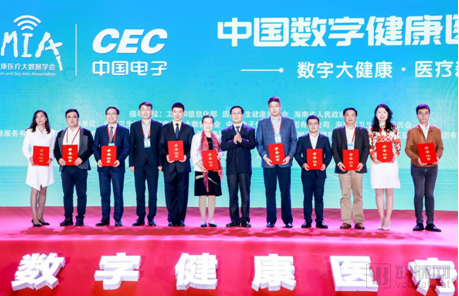
On November 30, the China Digital Health and Medical Conference was held in Haikou, Hainan Province. At the conference, the Chinese Society of Health Informatics and Medical Big Data (hereinafter referred to as the “Society”) presented the 2019 China Smart Healthcare Awards. Innovative projects submitted by Peking University, Tsinghua University, Jiangsu Provincial Health Statistics and Information Center, Guangdong Provincial Hospital of Traditional Chinese Medicine, WeDoctor Group, and other institutions were selected as Annual Innovative Achievements and Outstanding Achievements. These projects actively leveraged digital technologies such as the internet, big data, and artificial intelligence to explore new technologies, models, and services.
Digital health innovation is driving China’s healthcare reform from a “disease-centered” model to a “health-centered” 3.0 era. In China’s digital health sector, more innovative practices are emerging that integrate technological, talent, financial, and organizational resources. A representative example is the “Digital Health Community,” jointly proposed by WeDoctor, in collaboration with the Haixi Pharmaceutical Trading Center and Yilianzhong.
It is understood that the Digital Health Community is health-centered and digitally supported, vertically integrating medical institutions at the municipal, county, township, and village levels, while horizontally promoting coordination among healthcare services, pharmaceuticals, medical insurance, and elderly care. Its ultimate goal is to enhance regional medical standards, improve public health indices, and reduce the growth rate of medical insurance expenditures. Currently, eight provinces, including Fujian, Hubei, Henan, Shandong, and Ningxia, are gradually establishing digital health communities with local characteristics, covering a population of over 25 million. This initiative has received the 2019 China Smart Healthcare Innovation Achievement Award.
Digital health is accelerating the transformation of how the healthcare industry operates and how medical and health services are delivered. As early as 2015, China’s first internet hospital—the Wuzhen Internet Hospital—was officially established, pioneering the integration of online and offline diagnosis and treatment through internet technologies. This initiative created a new business model for internet hospitals and spurred the rapid development of the “Internet + Healthcare” sector. In April 2018, the General Office of the State Council issued a document encouraging the vigorous development of internet hospitals.
As of October 2019, Wuzhen Internet Hospital had connected with more than 3,200 medical institutions across 30 provinces and municipalities in China, engaged over 300,000 physicians, and established partnerships with more than 100 leading overseas medical institutions in the United States, Japan, Germany, Hong Kong (China), and other regions. In recognition of these achievements, Wuzhen Internet Hospital was awarded the 2019 China Smart Healthcare Innovation Award.
In the face of the dilemma faced by grassroots healthcare—characterized by weak medical capabilities, scarce medications, and insufficient diagnostic resources—digital technology has once again played a pioneering role in innovation. In grassroots communities across Henan, Hubei, Ningxia, Xinjiang, and other regions, WeDoctor Group’s self-developed “WeDoctor Mobile Hospital” operates daily, providing integrated online and offline “Internet + Healthcare” services. These services include intelligent diagnosis and treatment, medical collaboration, cloud-based Hospital Information Systems (HIS), health maintenance, and smart diagnostic testing exemplified by cloud-based mobile clinic vehicles. Affectionately referred to by local residents as the “Smart Hospital on Wheels,” this initiative earned the project “5G-Based Cloud Mobile Clinic Intelligent Diagnosis and Treatment Platform” the 2019 China Smart Health and Healthcare Outstanding Achievement Award from the Society.
The World Health Organization’s Global Strategy on Digital Health clearly states that, on a global scale, the potential of digital health to support healthcare systems in all countries and to promote health and disease prevention has been widely recognized. At the conference, Jin Xiaotao, former Deputy Director of the National Health and Family Planning Commission and President of the Chinese Society for Health Informatics and Medical Big Data, pointed out that digital health technologies will stimulate innovation through technological convergence, bringing about profound changes to people’s production, daily lives, and socioeconomic development.
“Digital health is the broadest track in the future digital economy. By accelerating the adoption of appropriate digital health solutions, we can effectively improve everyone’s health,” said Zhang Xiaochun, Co-founder and Chief Strategy Officer of WeDoctor, in his conference speech. He stated that, with the aid of digital health tools, it is expected to accelerate the realization of a new healthcare service paradigm where 50% of disease prevention and treatment is completed at home, 35% at primary care facilities, and only 15% at large hospitals.