

2019 China Medical Artificial Intelligence Industry Summit Successfully Held: Insights and Innovations from Over 10 AI Experts
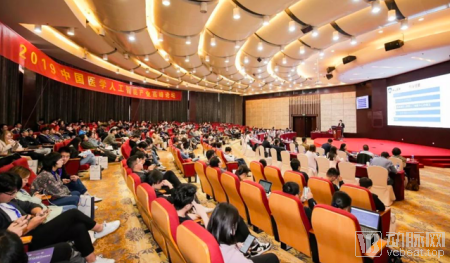
On November 16, the “2019 China Medical Artificial Intelligence Industry Summit” was successfully held in Hangzhou, hosted by Zhejiang University and co-organized by the International Cooperation and Exchange Committee of the Chinese Society for Health Information and Medical Big Data and the Zhejiang Medical Data Industry Research Association.
On the day of the conference, distinguished scholars delivered insightful presentations, including Ziyi Chen, Tenured Professor at the University of Notre Dame, IEEE Fellow, and ACM Distinguished Scientist; Xifeng Yan, Tenured Professor and Venky Chair Professor in the Department of Computer Science at the University of California, Santa Barbara; Xifeng Wu, Dean of the School of Public Health at Zhejiang University and Director of the National Institute for Big Data in Health and Medical Care at Zhejiang University; Huiying Liang, Director of the Data Center at Guangzhou Women and Children’s Medical Center; Daoqiang Zhang, Deputy Dean of the College of Computer Science and Technology at Nanjing University of Aeronautics and Astronautics; Xinjian Chen, Distinguished Professor at Soochow University; Youxin Chen, Executive Deputy Director of the Ophthalmology Department at Peking Union Medical College Hospital and Director of the Key Laboratory of Fundus Diseases at the Chinese Academy of Medical Sciences; and Jian Wu, Director of the Ruiyi Artificial Intelligence Research Center at Zhejiang University and Vice Chairman of the Zhejiang Medical Data Industry Research Association.
Professor Chen Ziyi primarily presented relevant work in the field of cancer radiotherapy. Typically, physicians need to confirm the shape and location of a patient’s tumor, as well as the distribution of surrounding organs, based on medical imaging. Subsequently, during radiation therapy, energy matrix calculations and multi-leaf collimator control are employed to adjust equipment angles, ensuring precise radiation dosage and distribution. Professor Chen’s algorithm focused on addressing two key issues, ultimately reducing radiotherapy procedure time from 1 hour and 20 minutes to just 20 minutes, significantly shortening treatment duration while improving quality. Professor Chen also introduced other scenarios where radiotherapy collaborates with intelligent computing.
Notably, Professor Chen Ziyi believes that deep learning algorithms are merely one of the processing tools used to improve surgical precision and reduce operative time. In many cases, physicians still attempt to employ various algorithms to address image processing and matching challenges. Deep learning is not the sole core of development; rather, the diverse algorithms required in radiology must advance in tandem.
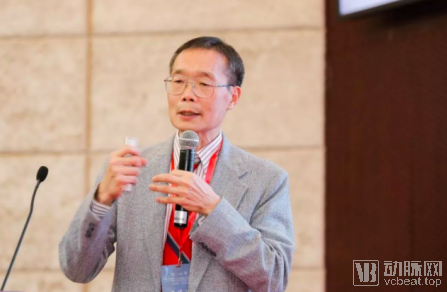
Ziyi Chen, Tenured Professor at the University of Notre Dame, IEEE Fellow, and ACM Distinguished Scientist
Dean Wu Xifeng delivered a keynote address on the theme of “Precision Prediction, Prevention, and Treatment Based on Big Data and Artificial Intelligence.” She emphasized that prediction is the core component of precision health, and achieving accurate predictions requires the establishment of large-scale databases with broad coverage and high-quality, valid data.
Currently, the Zhejiang University Alliance of General Practice and Health Management, the Zhejiang University Center for Healthcare Security and Policy Research, and the Zhejiang University Center for Health Policy and Hospital Management are collaborating to establish an alliance and centers built upon a cross-disciplinary value-added big data platform.
It is anticipated that the alliance will establish a smart big health data platform capable of hosting world-class big data and biospecimen platforms; develop an intelligent analysis system integrating multi-source data fusion, multi-omics bioinformatics analysis methods, and new artificial intelligence analytical technologies; standardize clinical testing indicators, including liquid biopsy markers, susceptibility gene loci, and treatment response indicators; create clinical support tools that integrate personalized risk prediction, screening, intervention, and treatment; and improve the talent development model for cultivating interdisciplinary professionals in “public health + X.”
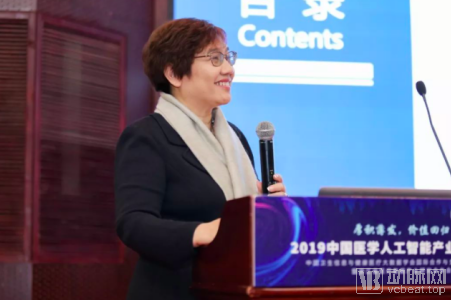
Wu Xifeng, Dean of the School of Public Health, Zhejiang University, and Dean of the National Institute of Health and Medical Big Data, Zhejiang University
Director Chen Youxin introduced the progress in AI research for ophthalmic imaging. He stated, “‘AI + innovative medical devices’ may be the solution to this problem.”
Since 2016, Chen Youxin has engaged with more than ten AI products. He stated that for artificial intelligence products to follow a formalized path, they must be standardized and regulated, and validated using standard training and testing datasets. Therefore, the next step for AI remains obtaining regulatory approval, followed by independent, third-party testing post-approval.
In the field of AI, Director Chen Youxin and his team have conducted extensive research, including the identification of lesions in severe diabetic retinopathy (DR), the recognition of diabetes-related CIDEM, studies on the activity level of neovascularization (NV) following laser surgery, and GAN-based predictions for outcomes after wet age-related macular degeneration (AMD) treatment.
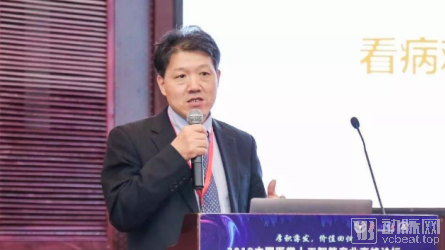
Chen Youxin, Executive Deputy Director of the Department of Ophthalmology at Peking Union Medical College Hospital, and Director of the Key Laboratory for Fundus Diseases at the Chinese Academy of Medical Sciences
Professor Zhang Daoqiang presented on the applications of AI in brain science at this conference. He has long been dedicated to decoding neural activity, diagnosing neurological disorders, and analyzing associations between genetic factors and neuroimaging data.
Generating Brain Networks from Imaging Data: A Novel Direction in Which Researchers Construct Networks by Establishing Numerous Nodes to Facilitate the Study of Specific Brain Regions.
The neural networks of the brain are vast, requiring researchers to examine insights from omics-based case studies, including the mechanisms underlying disease pathogenesis. Many connections depend not only on individual nodes but also on the interrelationships between them; indeed, significant information is embedded within the edges linking these nodes.
In constructing brain networks, the traditional approach is based on the correlation of time series between two brain regions. This method has a limitation: it can only reflect the relationship between two brain regions but not their interactions. Professor Zhang Daoqiang introduced a new tool that enables the construction of connections among three brain regions simultaneously.
Next, Professor Zhang Daoqiang will continue to explore multiple scenarios and multiple brain regions. This process requires the use of imaging data from multiple time points, namely dynamic data between multiple brain regions.
Furthermore, beyond merely leveraging imaging data, researchers can reconstruct brain networks from neuroimaging and identify associations through subnetwork analysis; however, further in-depth investigation in this area is still warranted.
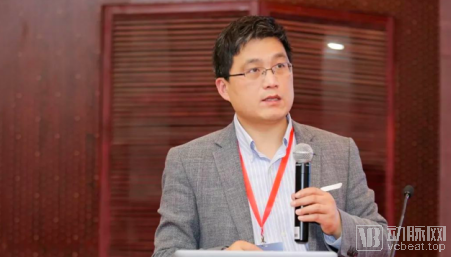
Zhang Daoqiang, Deputy Dean of the College of Computer Science and Technology at Nanjing University of Aeronautics and Astronautics
Professor Chen Xinjian, who also specializes in ophthalmology, discussed innovations in the treatment of eye diseases amidst a vast patient population. In optical coherence tomography (OCT), retinal layer segmentation is a highly challenging task. To address this, Professor Chen’s team proposed a novel graph search algorithm. Taking retinal detachment as an example, the algorithm first detects the lesion area and then applies specific functions to solve for segmentation in subsequent steps. Furthermore, for segmenting images of central serous chorioretinopathy, the team introduced a random forest combined with a composite curve algorithm, which has yielded remarkably impressive results.
In the field of image segmentation, Professor Chen Xinjian has also conducted extensive in-depth research. For instance, his team proposed a shape-constrained graph cut algorithm to achieve segmentation of serous pigment epithelial detachment lesions in the retina; employed an AdaBoost classifier algorithm to realize three-dimensional automatic detection of traumatic disruption of the retinal photoreceptor ellipsoid zone; and introduced point-set positional constraints to optimize feature points, thereby enhancing the registration accuracy between color fundus photography and fluorescein angiography. This approach reduced registration time by 40% while achieving a sensitivity greater than 90%.
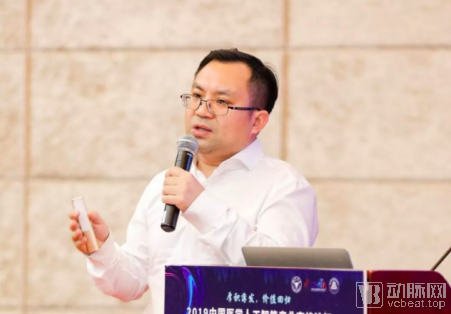
Chen Xinjian, Distinguished Professor at Soochow University
Director Liang Huiying addressed the topic of “Applications of Artificial Intelligence in Pediatrics.” During his presentation, he introduced the “Mimixiong” (Miimu Bear) family of AI solutions developed by the Guangzhou Women and Children’s Medical Center. This AI system comprises five products covering health management, patient triage, medical imaging, fever assessment, and clinical consultation.
According to Director Liang Huiying, the product “ImageBear” was trained using a transfer learning algorithm on 1.26 million images from the ImageNet database for a 1,000-class classification task. The successfully trained model was first transferred to a dataset of 200,000 Optical Coherence Tomography (OCT) images for a 4-class classification of ophthalmic diseases, and then further transferred to a dataset of 10,000 chest X-rays for a 2-class classification of severe pediatric pneumonia. This approach significantly enhanced the model’s generalization capability. Furthermore, the related deep learning paper was accepted by MICCAI 2019.
“FeverBear” focuses on common fever-related diseases in children. Leveraging knowledge-based texts such as authoritative guidelines, expert consensus statements, and over 3 million medical records, it integrates natural language processing technologies and machine learning algorithms to provide accurate auxiliary diagnosis for common pediatric fever-related conditions. By seamlessly embedding into electronic medical record systems, it serves as a dedicated assistant for outpatient physicians.
MiMu Bear’s other capabilities were also developed based on the specific needs of clinical scenarios, allowing them to quickly align with physicians’ requirements during use. Moving forward, MiMu Bear will continue to expand its capabilities to provide more intelligent assistance for children.
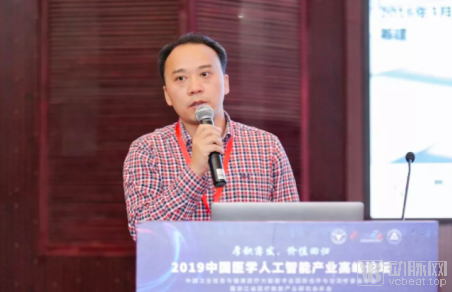
Liang Huiying, Director of the Data Center, Guangzhou Women and Children's Medical Center
VCBeat also interviewed Wu Jian, Director of the Zhejiang University Ruiyi Artificial Intelligence Research Center and Vice Chairman of the Zhejiang Medical Data Industry Research Association, who served as the moderator for this conference.
Professor Wu Jian stated that ZheDa RuiYi focuses on imaging data and health insurance data, leveraging artificial intelligence to process these datasets for AI-assisted diagnosis, health insurance operations, and cost containment. Specifically, these technologies are being applied in scenarios such as radiological imaging, pathological imaging, and medical record quality control.
Furthermore, Ruiyi is dedicating more resources to addressing data quality issues. For instance, it employs AI in medical record quality control to identify discrepancies between the front page of medical records and diagnostic results, thereby enhancing the accuracy of the front page and laying the groundwork for the development of DRG policies and the construction of Clinical Decision Support Systems (CDSS).
Regarding the highly anticipated approval process, Professor Wu Jian believes that the AI approval framework is being driven by the state. What enterprises need to do is to enhance product quality as much as possible, conduct rigorous clinical trials, and prepare all necessary regulatory submission materials. As long as a product truly meets clinical scenario requirements, addresses physicians’ needs, and benefits the general public, it holds significant value. Likewise, given its direct impact on the public, a more deliberate pace in the approval process is warranted.
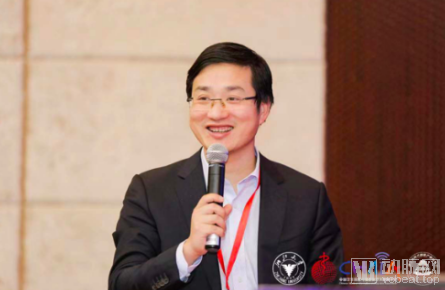
Wu Jian, Director of the AI Research Center at Zhejiang University’s Ruiyi Medical Institute and Vice Chairman of the Zhejiang Provincial Medical Data Industry Research Association
Overall, the conference extensively showcased the potential applications of artificial intelligence in healthcare. It is evident that many scholars have made concurrent advances in the three key elements—computing power, algorithms, and data—prioritizing breakthroughs in algorithm innovation, enhancement of data quality, and the construction of deep learning databases as core objectives.
Furthermore, the integration of industry, academia, and research constitutes a key theme of this conference. With the establishment of alliances and centers built upon cross-domain value-added big data platforms, and through the concerted efforts of various stakeholders in Zhejiang Province, the development of medical artificial intelligence in the new era is poised to achieve further advancements.