

CelNovte Biotech Founder Qi Hua: Nine Years of Unwavering Commitment to Building a Domestic Pathology Diagnostics Powerhouse
“You can praise him, you can insult him, you can say whatever you want about him, but there is one thing you cannot do: you cannot ignore him.” — Steve Jobs
InQi Hua, Founder of Celnovte-Bio (hereinafter referred to as "Celnovte")It seems that the statement Steve Jobs made upon his return to Apple resonates deeply with his current state of mind.
In 2010, he transitioned from trade agency into the biotechnology sector and single-handedly founded Celnovte. Nine years on, driven by reverence for the industry and unwavering dedication to product development, Celnovte has become a renowned biotechnology enterprise in China, possessing multiple core technologies and independently developing a range of tumor pathology diagnostic instruments as well as hundreds of reagents.
“On this path, I have no retreat; like a ship venturing out to sea, with towering waves ahead and the shore invisible behind. Charging into the waves may offer a glimmer of hope or lead to total annihilation. At every moment, all I can do is fight with every ounce of my strength,” said Qi Hua.
The path of research and development is fraught with challenges; beyond undergoing its own painful transformation, one must always be prepared to compete with industry giants, as a single lapse in attention can lead to being pushed off the stage and suffering total defeat.
How Did Celnovte-Bio Advance Step by Step? And How Did It Withstand Pressure from Foreign Companies Through Product Innovation? Recently, VCBeat interviewed Qi Hua, founder of Celnovte-Bio, to hear him recount the tumultuous journey he and his team have endured.
I first met Qi Hua at the 9th National Pathology Annual Conference. Dressed in a sharp suit, he was exceedingly approachable. After a brief exchange of pleasantries, Qi Hua enthusiastically told us,This year’s pathology conference held in Zhengzhou attracted more than 6,000 attendees, a several-fold increase compared with previous years.
“The importance of pathological diagnosis is becoming increasingly prominent year by year,” commented Qi Hua.
Pathological diagnosis is the widely recognized “gold standard” for disease diagnosis in the medical community and serves as the fundamental guarantee for providing personalized treatment to patients.Qi Hua introduced that in the past, pathology was undervalued, with a shortage of specialized talent and lagging development. With advancements in biotechnology and the emergence of new concepts such as targeted therapy, pathology has finally ushered in its own spring.
“Nowadays, within the context of precision medicine, traditional pathological diagnosis is expanding from histopathology to encompass cytopathology, immunopathology, molecular pathology, as well as digital pathology and intelligent diagnostics,” said Qi Hua.

(Pictured: Qi Hua, founder of celnovte-bio)
Although pathology has made significant progress over the past five years, there remains a substantial gap between China’s pathology industry and its international counterparts.Currently, pathological products used by medical institutions in China are still largely dependent on imports.The domestic market for high-end, cutting-edge pathology products is almost entirely monopolized by imports., the situation is not very optimistic.
After graduating from Henan Medical University, Qi Hua long served in teaching and research roles at the medical school. “In 2000, by chance, I began working as a distributor of medical devices, engaging in sales,” Qi Hua recounted, sharing how he became involved in pathology.
Having worked in trade agency for nearly a decade, Qi Hua led his team to represent more than ten internationally renowned brands, once serving as the exclusive general distributor in Henan Province.
“I believe that every trade agent harbors a dream of developing their own proprietary product. This dream accompanied me for a long time, and when I felt the time was right, Celnovte was born,” said Qi Hua. Product development is a dream, or perhaps, more accurately, a quest for a sense of belonging. For he had endured the pressures of being squeezed from both sides to the utmost limit.
““Working as an agent, you have to deal with manufacturers above and customers below. It’s like raising someone else’s child: if you don’t do it well, it’s unacceptable; if you do it well, it’s still not acceptable.”Qi Hua said.
With two decades of experience in basic medical education and research, coupled with over a decade in product sales, Qi Hua felt it was time to embark on a new venture.
Entrepreneurs all have a fire within them, and Qi Hua is no exception. Full of ambition,In 2010, Henan Celnovte Bio-Technology Co., Ltd. was officially established.
“I’m not afraid to laugh at myself—back then, I was so bent on starting a business that I impulsively purchased a 600-square-meter factory building. When the designer asked me what products I planned to manufacture, I replied, ‘I don’t know!’ Logically speaking, product definition should precede facility planning. At that time, I was completely at a loss, charging ahead driven solely by an impulsive desire to transform.” Recalling his younger self, Qi Hua couldn’t help but laugh with a touch of embarrassment.
Impulse aside, if you are unsure of what to do, start by understanding and integrating into the market.
“I told myself that a company must choose the right direction and stick to the industry it knows best,” said Qi Hua. If the direction is wrong, all efforts will be in vain. Which direction to take? Qi Hua took stock of himself: with a medical background, the field he was most familiar with was laboratory medicine. However, there were already too many companies in China producing diagnostic products, so that path was not viable. If laboratory medicine was not feasible, perhaps pathology could offer a breakthrough.
“Fewer professionals are engaged in pathology, resulting in a weak foundational base, while the field’s development trend is gradually shifting upstream. Once the overarching direction is established, one must focus on a specific niche. I have identified opportunities in tumor pathology.”Qi Hua said.
In pathology, tumor pathology is a significant field that cannot be overlooked. Data has revealed thatChina Has the Highest Cancer Incidence Rate Worldwide, with an average of more than 10,000 new cancer cases and 6,000 cancer-related deaths per day.
Behind the massive data lies a market waiting to be tapped. Ultimately, Qi Hua will lead the companyPositioned to engage in the research and development, manufacturing, service, and sales of in vitro diagnostic reagents and instruments for tumor pathology and hematologic malignancies.
During the first three years after committing to oncology pathology products, Celnovte underwent a stumbling period of exploration. From 2010 to 2013, Qi Hua focused on market research, reagent aliquoting, and learning product development.
Since 2013, Qi Hua has gradually shifted celnovte-bio’s focus toward research and development. On one hand, the company introduced external products for analysis and learning, while maintaining operations through large-scale reagent aliquoting; on the other hand, it began to concentrate on independent in-house R&D.
“The path of R&D is one where failures far outnumber successes. ‘Almost all our funds were poured into it; we even mortgaged our family home. At the most difficult point, I even used the Lunar New Year gift money my daughter received to cover operational costs,’ said Qi Hua.”
Fortunately, after years of continuous exploration and R&D, celnovte-bio’s product pipeline has become increasingly diverse.Gradually established a comprehensive production line encompassing immunohistochemistry products, molecular pathology products (probes), pathological staining products, chromosome culture products, Mycobacterium tuberculosis culture and identification products, and instruments.
Its independently developed secondary antibody polymer technology has broken the long-standing monopoly held by foreign companies.Celnovte’s secondary antibody polymer technology employs next-generation chemical conjugation to achieve quantitative coupling. Its multi-layer polymerization technique significantly enhances the sensitivity of secondary antibodies and controls the molecular weight of the polymers, resulting in greater sensitivity and stability.
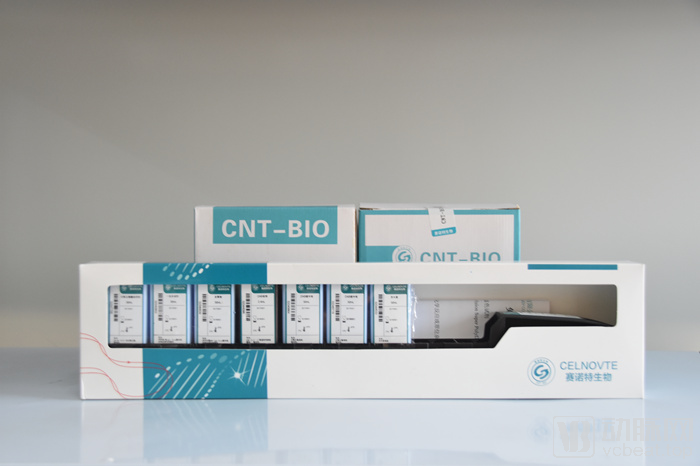
(Figure shows the onboard secondary antibody)
Qi Hua introduced that, in addition to the research and development of leading-edge technologies, the number of approved products under its portfolio is also reaching new highs.The company has obtained 350 product registration and filing certificates, offers over a thousand product specifications, serves more than 400 end customers across China, and works with nearly 100 distributors.
Celnovte-bio’s accelerated growth has drawn the attention of multinational corporations at the pinnacle of the industry. Qi Hua described that, just as it began to emerge, it faced intense suppression.
“This has been the most difficult period since Celnovte’s inception; we had to grin and bear it,” said Qi Hua. Competitors unceremoniously prohibited their distributors nationwide from using or purchasing Celnovte products, delivering a catastrophic blow to the company, which had just entered the market and was still building its product portfolio, brand recognition, and sales channels.
Growing up in Henan, a spirited region of the Central Plains renowned for the Shaolin Temple, Qi Hua embodies the qualities of “fortitude” and “self-reliance.”Qi Hua knows full well that only by becoming stronger can one avoid being controlled by others.
From 2016 to 2019, celnovte-bio accelerated its R&D efforts, broke through technical barriers, and truly achieved technological originality and leadership.
Newly Launched Instruments:CNT330 Fully Automated Immunohistochemistry Stainer, featuring full automation, high throughput, high clarity, ease of operation, cost-effectiveness, reliability, and traceability.
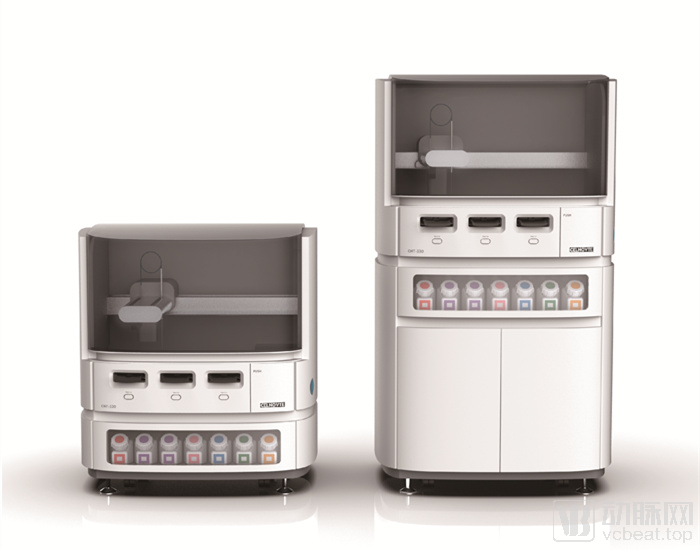
(Figure: Fully automated immunohistochemistry stainer)
“The most distinctive feature of our instrument is that it was independently developed by us. For a long time, the immunohistochemistry staining machine market has been monopolized by three major brands,”This product not only integrates the strengths of leading international products but also features multifaceted improvements and innovations, backed by our own core patents.“The performance and quality are comparable to those of imported brands, yet the price is significantly lower than that of foreign brands. The product has been installed in more than ten provinces across China and has received positive feedback from users,” introduced Qi Hua.
Furthermore, leveraging our independently developed core technology—the high-sensitivity secondary antibody polymer MicroStacker™,Celnovte launched the intraoperative rapid PolyStacker™Plus immunohistochemistry detection kit.
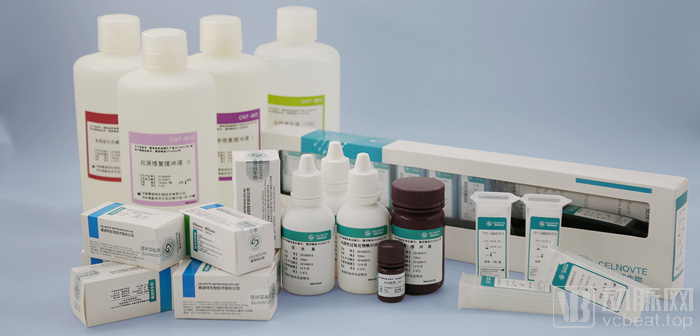
(Figure shows a series of immunohistochemistry reagents)
This product is specifically designed for intraoperative frozen section immunohistochemistry and can be used for chromogenic detection of mouse- or rabbit-derived antibodies.Building upon the micro-polymer lamination method, the addition of a peroxidase autonomous polymerization (Poly-HRR) protocol has enabled the new generation of polymer-enzyme conjugation chemistry, “PolyStacker,” to further enhance the sensitivity and specificity of polymers, thereby achieving rapid and precise intraoperative immunohistochemical staining.
“Intraoperative frozen section is a critical step, providing an essential means for precise pathological diagnosis during surgery. However, since fresh intraoperative tissues are unfixed, their morphology differs from that of routinely processed tissues, posing diagnostic challenges and placing high demands on pathologists,”Achieving efficient diagnosis requires technological breakthroughs. Celnovte-Bio’s frozen section immunohistochemistry products have reduced the turnaround time from the conventional three to four hours to just 10–12 minutes.“Qi Hua said.”
In addition to the above products, celnovte-bio has achieved a series of breakthroughs in tumor molecular pathology diagnostic products, genetic disease and prenatal diagnosis products, as well as Mycobacterium tuberculosis culture and drug susceptibility identification products.
Adherence to technology is the key to breaking through impasses, and technology relies on the aggregation of talent.At Celnovte, there are 200 employees, with 30% holding master’s or doctoral degrees.The data is still on the rise.
“Development must focus on attracting talent,” Qi Hua pointed out. In order to attract more talent,In addition to the R&D center established in Zhengzhou, Qihua has also set up R&D centers in the United States and Shenzhen, respectively.
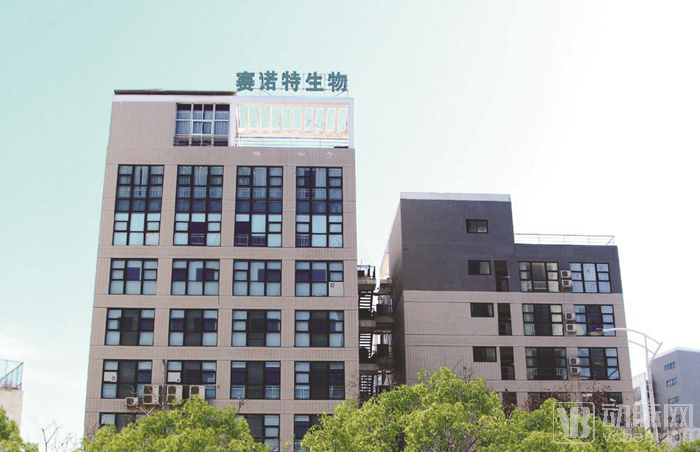
(The image shows the exterior of Celnovte-bio)
“We were also unfamiliar with the United States, but we were determined to break through in secondary antibody technology and committed to making our products better. So we just went for it,” said Qi Hua. In 2015, Celnovte-bio first established its presence in Boston, USA“US Celnovte Bio”, with subsequent relocation to Maryland, a state that places greater emphasis on technological translation. The U.S. R&D center is led by Dr. Liu Chang, a senior expert in the field of biopolymers and a graduate of Brown University. The team consists primarily of foreign-born Ph.D. holders who possess core industry technologies.
With breakthroughs in reagent technology innovation secured, equipment development must not lag behind. In 2016, Qi Hua traveled to Shenzhen for an inspection and promptly established"Shenzhen Celnovte Bio", dedicated to the research, development, and production of instruments. “In fact, I had only visited Shenzhen once before making my second trip there to invest. I was truly determined to create a high-quality product, regardless of the cost,” said Qi Hua.
Qi Hua summarized that Celnovte-Bio has taken a reverse path. While most startups begin with an idea, then achieve technological breakthroughs and develop products, Celnovte-Bio started by identifying market needs and existing products, gradually exploring and building its own brand system step by step.
Today, Celnovte’s products have been adopted by numerous renowned tertiary hospitals and leading clinical laboratories across China, including Southwest Hospital of Army Medical University, The First Affiliated Hospital of Zhejiang University School of Medicine, Ningbo Pathology Center, Tongji Hospital, The Second Xiangya Hospital, Henan Cancer Hospital, Jiangxi Cancer Hospital, and KingMed Diagnostics.Through relentless effort and perseverance, coupled with a high-quality product and service system, the external pressures have subsequently collapsed on their own.
Qi Hua revealed,In the future, celnovte-bio will deepen its engagement in the field of immunohistochemistry, establish a presence in molecular pathology, and collaborate with AI companies to align with the development trends of digital pathology, thereby comprehensively expanding its product pipeline while accelerating time-to-market.
After nine years of entrepreneurship and countless challenges, Qi Hua has been sustained by his unwavering conviction. “Sometimes, success is only possible when there is no turning back,” he said with a deep sigh of relief.