

FTC2019 | Professor Zhu Junming of Anzhen Hospital: Two Decades of Exploration to Improve Survival in Pregnant Patients with Aortic Dissection
In November 2019, the FTC 2019 Inaugural China Frontier Technologies Forum in Cardiac Surgery was held in Beijing. The event was hosted by the Cardiac Surgery Professional Committee of the Chinese Medical Education Association and the Cardiovascular Surgical Technology and Engineering Branch of the Chinese Medical Biotechnology Association, co-organized by Da Yisheng Bingqipu, and undertaken by VCBeat.
At the conference, Professor Zhu Junming from the Heart and Great Vessels Center of Beijing Anzhen Hospital shared his research on treatment protocols for pregnant women with aortic dissection, spanning over two decades. This article compiles the highlights of his presentation.

Professor Zhu Junming, Anzhen Hospital
The World Health Organization primarily evaluates the healthcare standards of a country or region based on three key indicators: life expectancy and quality of life; mortality rates among children under five years of age, including neonates; and maternal and fetal mortality rates. Over the past two decades (1991–2014), China’s under-five mortality rate decreased from 79.2‰ to 11.7‰, and the infant mortality rate declined from 50.2‰ to 8.9‰. In 2014, the maternal mortality ratio stood at 21.7 per 100,000 live births, representing a 76% reduction compared to 1990.
Overall, China has made tremendous progress in the treatment of maternal and neonatal conditions over the past two decades. As a National Center for Maternal Care and Cardiac Treatment, Beijing Anzhen Hospital has continued to advance in the management of aortic dissection complicating pregnancy.
Acute aortic dissection refers to the formation of a false lumen when blood within the aorta enters the medial layer of the aortic wall through an intimal tear. This is a critical aortic condition characterized by sudden onset, rapid progression, and high severity. Acute aortic dissection complicating pregnancy is a life-threatening emergency that directly endangers both maternal and fetal lives, posing significant challenges for surgical intervention. However, due to its extremely low incidence (accounting for 0.1–0.4% of all aortic dissections), clinical evidence is limited to case reports and small cohort studies; only 180 cases were reported in English literature from 1944 to 2016, further complicating management. Major risk factors include hypertensive disorders of pregnancy and pre-existing aortic pathologies (such as Marfan syndrome [MFS], Loeys-Dietz syndrome [LDS], Ehlers-Danlos syndrome [EDS], and Turner syndrome).
In 1998, Professor Sun Lizhong received the first patient with pregnancy complicated by aortic dissection. The patient was at full term and had Marfan syndrome (MFS). At that time, there was no specialized department for treating such cases. The cardiovascular department led by Professor Zhu Junming, under the guidance of Professor Sun Lizhong, had extensive experience in treating cardiovascular diseases but lacked experience in managing pregnancy complicated by aortic dissection. Consequently, they pioneered the first multidisciplinary collaborative approach. Ultimately, the patient underwent aortic dissection repair surgery, followed by cesarean section and hysterectomy. The mother survived, but the fetus died, and the patient lost her fertility permanently.
By 2010, Professor Zhu Junming encountered another patient with the same condition. Drawing on the experience gained from a similar case nine years earlier, Professor Zhu’s team at Beijing Anzhen Hospital had developed refined protocols for managing such high-risk pregnancies. They adopted a strategy of prioritizing fetal rescue, followed by maternal stabilization, and ultimately performing a cesarean hysterectomy combined with surgical repair of aortic dissection complicating pregnancy. The entire procedure proceeded smoothly. Following treatment, both mother and child survived without complications; however, the patient lost her fertility due to the hysterectomy.
In 2011, Professor Zhu Junming treated a pregnant patient with preterm gestation complicated by aortic dissection. Through the continuous exploration of a multidisciplinary medical team, the patient ultimately underwent aortic dissection surgery while preserving intrauterine fetal development. The fetus survived postoperatively and was delivered normally at term. This marked the first case among Professor Zhu’s patients with pregnancy-complicated aortic dissection in which the fetus continued to develop in utero following aortic dissection surgery performed during preterm gestation, resulting in a full-term delivery. Several key treatment experiences were summarized from this case, including: 1) Use of normothermic cardiopulmonary bypass (natural cooling) to avoid fetal death caused by hypothermia; 2) Administration of potassium-free cardioplegic solution; 3) Implementation of dual-site perfusion strategies, such as femoral artery perfusion or simultaneous upper and lower extremity perfusion, to ensure adequate perfusion of the patient’s lower body during cardiopulmonary bypass. Furthermore, fetal health monitoring was maintained throughout both the intraoperative and postoperative periods.
In 2015, Beijing Anzhen Hospital successfully treated another patient with aortic dissection complicating pregnancy. The medical team not only saved both the mother and the fetus but also preserved the patient’s uterus postoperatively, marking another significant breakthrough. By 2015, Professor Zhu Junming’s team had performed surgery on a total of 25 cases of aortic dissection complicating pregnancy, with an all-cause mortality rate of 16% and a maternal surgical mortality rate of 13%.
After more than two decades of effort, by 2018, Anzhen Hospital had established a comprehensive multidisciplinary collaborative team covering cardiac surgery, anesthesiology, extracorporeal circulation, obstetrics and gynecology, and neonatology for the management of pregnancy complicated by aortic dissection.
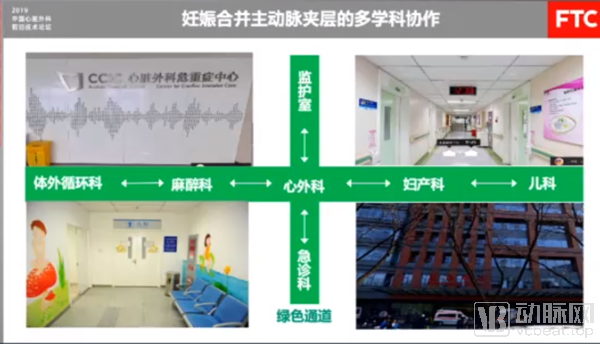
Multidisciplinary Collaboration for Pregnancy Complicated by Aortic Dissection at Anzhen Hospital
By 2019, Anzhen Hospital admitted a pregnant patient with aortic dissection who was carrying twin IVF fetuses. Drawing on years of clinical experience, Professor Zhu Junming rapidly established the diagnosis, streamlined intermediate processes to secure more treatment time, and promptly convened a multidisciplinary team comprising specialists from anesthesiology, cardiopulmonary bypass, cardiac surgery, obstetrics and gynecology, and neonatology. Through precisely dosed anesthesia and seamless coordination by the obstetricians, a cesarean section was swiftly performed, followed by cardiac surgeons conducting surgery for pregnancy-complicated aortic dissection. Ultimately, both the mother and her twin babies were successfully rescued from the brink of death.
Over more than two decades of managing aortic dissection complicating pregnancy, Professor Zhu Junming’s team has continuously accumulated clinical experience. Among these patients, 68% were diagnosed with Marfan syndrome (MFS). Women with MFS can conceive and successfully deliver, but they require pre-conception multidisciplinary consultation and appropriate MFS-related treatment. Guidelines in the United States, Europe, Canada, and China recommend that women with MFS whose aortic diameter exceeds 40 mm should undergo MFS-specific interventions, including surgical repair, before considering pregnancy.
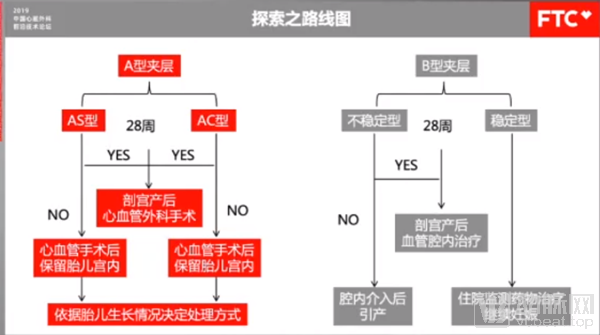
Exploration of Aortic Dissection Complicating Pregnancy
Finally, Professor Zhu Junming summarized the treatment strategies developed over the years for pregnant women with Marfan syndrome (MFS) and patients with aortic dissection complicating different types of pregnancy. From the initial goal of saving the mother, to ensuring the safety of both mother and child, and further to preserving the uterus to allow preterm fetuses to continue developing and be born after maternal aortic dissection surgery, Professor Zhu Junming and his multidisciplinary team have played a pivotal role. They have truly realized the concepts of “one blood vessel, one life,” “one blood vessel, two lives,” and “one blood vessel, three lives.”
About Zhu Junming
Zhu Junming, Professor at the Heart and Great Vessels Center of Beijing Anzhen Hospital, Capital Medical University, and Director of the Seventh Department of Cardiac Surgery. He specializes in the diagnosis and treatment of cardiovascular surgical diseases, such as aortic diseases (aortic dissection, aneurysm, aortic ulcer, and intramural hematoma), coronary artery disease, valvular heart disease, and congenital heart disease. Professor Zhu’s expertise in the diagnosis and treatment of aortic diseases is leading in China, and he has earned international acclaim through numerous exchanges.