

From Smartisan to Sharklet: Luo Yonghao's Health-Tech Pivot and IPO Filing
Yesterday, Luo Yonghao, who had already been placed on the “restricted high-consumption” list, made a comeback and once again stood in the spotlight.
As a longtime fan of Luo Yonghao’s stand-up comedy for over a decade, I feel deep sympathy for him. After leaving New Oriental, his ventures—Bullog.cn and Smartisan Technology—were marked by his solitary and disheartened presence. Subsequent endeavors, including Bullet Messenger, Chat Treasure, and the Xiao Ye e-cigarette brand, saw him chasing one trend after another. Yet, Luo Yonghao’s business pursuits have arguably been far less successful than his stand-up performances.
Lao Luo’s journey has been far from easy. It is often said that only the paranoid succeed, yet Lao Luo, who has become obsessively driven, has encountered one setback after another along the way.
After a series of setbacks, Luo Yonghao did not give up. He aims to fully repay his debts within the foreseeable future, pledging that even if his company is completely shut down due to force majeure, he will personally settle all outstanding obligations through means such as “performing arts.” In his own words, “As long as the warrior stays on the battlefield, anything is possible.”
What was released this time is no longer an electronic product, but a cutting-edge physical antimicrobial material.
Luo Yonghao’s Appeal for Help on Weibo
One month ago, Lao Luo frequently sought assistance on Weibo. For 14 consecutive days, he posted messages expressing his desire to connect with executives from major corporations across a wide range of industries. The products he aimed to engage with included brands in categories such as yoga mats, tableware, children’s toys, home appliances, contact lenses, adult novelty items, bathroom fixtures, medical devices, and apparel.
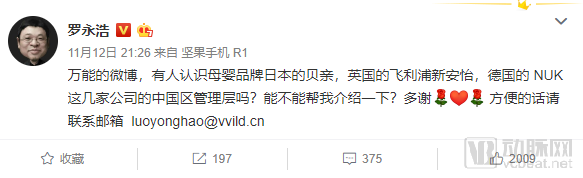
The frequent demands have made it clear that Old Luo is once again on the entrepreneurial path, but the specific direction remains puzzling.
On November 20, after keeping the public in suspense, Luo Yonghao finally announced the theme and date of his press conference. He will return to the public eye on December 3 with a presentation themed “The Old Man and the Sea.” While specific product details remain unknown, it is speculated that the unveiling may involve a cutting-edge health-related technology.
At that time, I speculated that everyone might see news about Lao Luo on VCBeat.
“The Old Man and the Sea”: A Cutting-Edge Innovation from the Ocean
On December 3, this cutting-edge technology was finally unveiled.
At the start of the press conference, Luo Yonghao opened with a simple “thank you.” In response to shouts of “awesome,” he remarked, “I’m not sure what’s so awesome about this. Running a business landed me on the list of individuals subject to consumption restrictions. Although I just managed to get off the list, which allowed me to fly to Beijing, today we have even more uplifting topics to discuss.”
On-site mishaps are a common occurrence at Luo Yonghao’s product launches. Right after his opening remarks, a blunder occurred when the page-turner failed to work. It seems that Luo Yonghao’s streak of bad luck has never left him.
After getting the correct page turner at the side of the stage, Lao Luo began to joke, "This is terrible." The audience also cooperated by letting Lao Luo go back on stage once again, pretending that none of this had happened.
After much anticipation, the star of the press conference finally made its debut: Luo Yonghao was about to unveil a physical antibacterial technology named Sharklet.
Behind every groundbreaking technology lies a fascinating story. Nineteen years ago, the U.S. Navy sought to address the severe biofouling of warships by marine organisms such as algae. This fouling not only increased fuel consumption and reduced speed but also corroded hulls, thereby shortening vessel lifespan. To tackle this issue, they invited a group of scientists to convene in Hawaii.
At the conference, Dr. Anthony Brennan, a materials engineering expert from the University of Florida, raised a question: Why do whales, despite being large marine organisms like sharks, suffer from the same problem as naval vessels—namely, heavy fouling by algae and barnacles—while shark skin remains remarkably smooth?
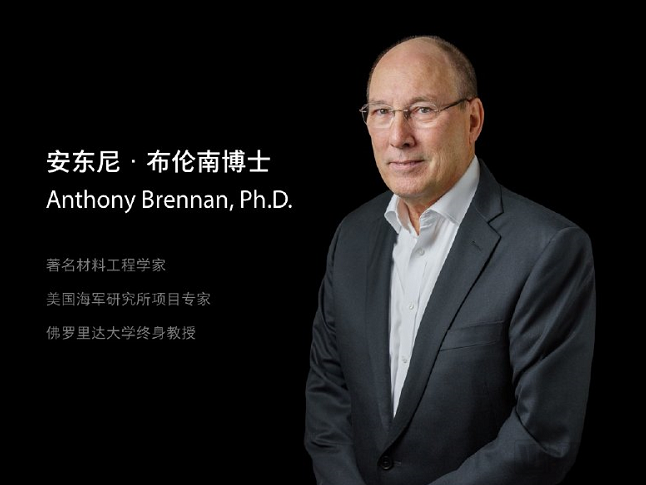
The “elderly person” in the theme of this press conference is Professor Brennan from the story.
In subsequent research, Professor Brennan managed to obtain rubbings of shark skin. Under microscopic examination, he discovered the unique structure of shark skin, characterized by a minute texture known as diamond-shaped dermal denticles. The professor hypothesized that this structural feature itself might be responsible for the smoothness of shark skin.
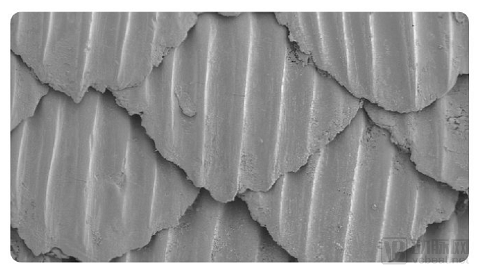
Microscopic View of Shark Skin Denticles
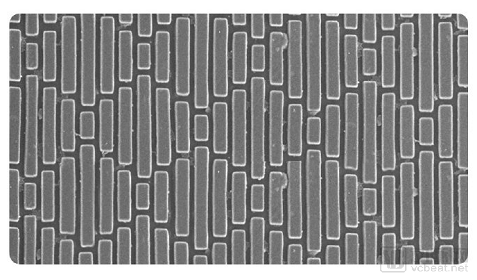
Physical Structure Mimicking Shark Skin
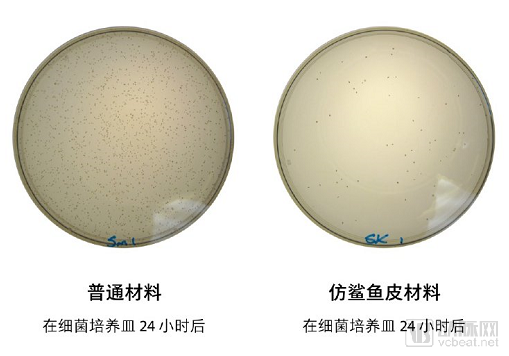
Following testing, materials with this structure resisted 85% of algal attachment. Although this finding was not ultimately applied to naval vessels, the experimental results were highly effective. More surprisingly, Professor Brennan’s students accidentally discovered that the anti-fouling properties of materials with this structure were also effective against bacteria. After seven days of cultivation in bacterial petri dishes, the shark-skin-textured material showed significantly fewer bacteria compared to conventional materials.
Anthony named this technology Sharklet, meaning shark skin. In 2007, he founded a company called Sharklet Technologies.
The micro-ridges on the surface of this material are measured in microns, with a width approximately one-tenth that of a human hair. As this Sharklet surface structure does not alter the intrinsic nature and properties of the base material, it achieves an antibacterial efficacy of 90% to 99.99% against various bacteria.
This technology is referred to as “black tech” because it employs physical methods for antibacterial action. Unlike chemical disinfectants, it does not drive the evolution of superbugs, is non-toxic, and causes no secondary pollution.
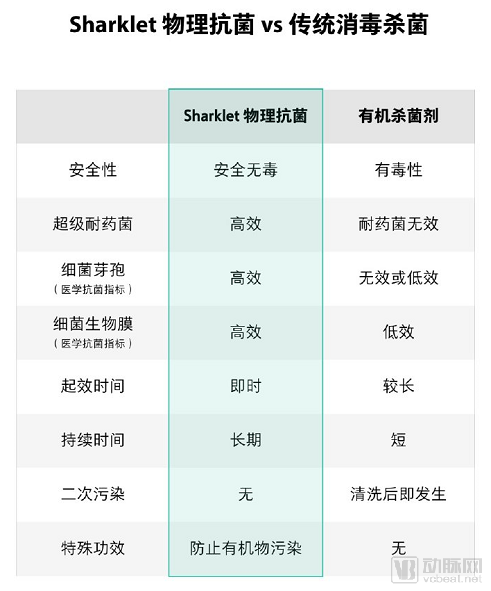
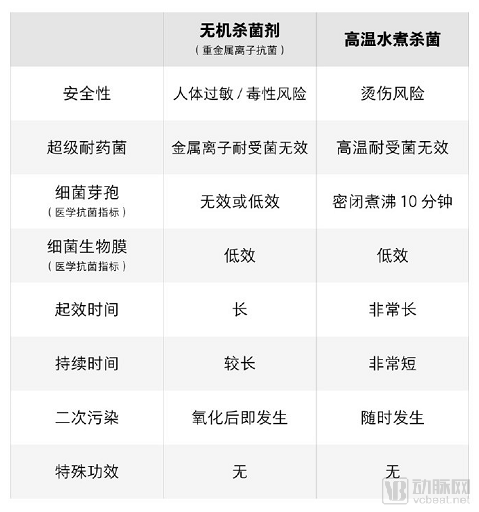
Ten years later, in 2017, a Hangzhou-based Chinese company named Peaceful Union acquired Sharklet and obtained CMA certification in China. This was a key factor that brought Luo Yonghao and Sharklet together.
Initially, Lao Luo sought to address the antimicrobial issue with the mouthpieces of Xiao Ye’s e-cigarettes. By chance, he came into contact with Sharklet technology. After arriving in the United States, Professor Brennan introduced him to the antimicrobial methods and materials already available on the market. What ultimately persuaded him to join the team and collaborate was this statement from the elder: “We must win, because ours is the only purely physical (antimicrobial) approach, which may be the only one that does not lead to superbugs. If they prevail, the world will be locked in an endless war against superbugs. Therefore, we must win.”
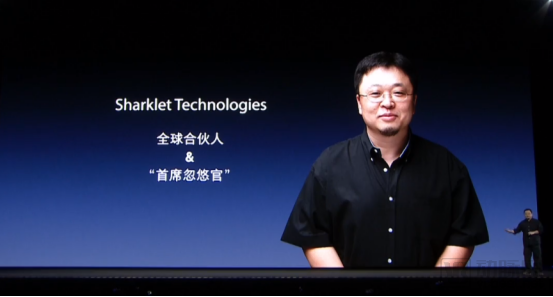
Nowadays, Luo Yonghao has officially announced his joining of this company, becoming a global partner and the "Chief Bluffing Officer."
This makes it easy to understand the logic behind Luo Yonghao’s continuous efforts on Weibo to seek corporate partnerships. The antimicrobial properties of Sharklet technology can be widely applied in fields such as maternal and infant products, dining utensils, digital devices, sports equipment, white goods, and adult novelty items.
What he aims to do is help Sharklet expand from military and medical applications into the broader consumer market, significantly scaling its market reach. Therefore, this product launch event resembled more of a B2B investment promotion conference, with Lao Luo even providing his email address to seek partners in the consumer market.
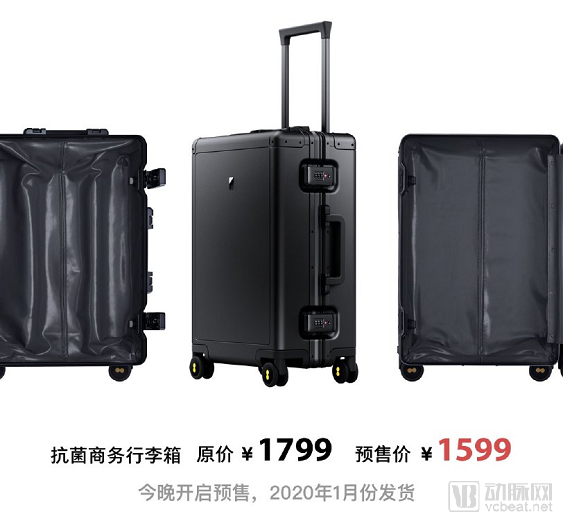
Of course, Lao Luo also unveiled consumer-facing products powered by Sharklet technology. The Level 8 brand’s antibacterial magnesium-aluminum alloy business travel suitcase and antibacterial children’s backpack were showcased at the launch event, with presale prices of RMB 1,599 and RMB 399, respectively.
The Development Path of Sharklet
Sharklet Technologies, a U.S. company founded in 2007, initially pursued goals vastly different from those in the luggage and bags industry. Its official website features only four main product categories, all of which are medical products.
Sharklet’s core technology was developed by its founder, Anthony Brennan. As Luo Yonghao noted, Professor Brennan discovered during his research that the textured structure of shark skin effectively resists the attachment of barnacles and algae, and exhibits a similar effect against human pathogenic bacteria.
In 2007, Professor Brennan co-founded Sharklet with three other partners and quickly secured $1.2 million in investment.
This startup encountered a major problem right from the start: how to mass-produce the shark-skin patterns that they had successfully simulated in the lab? The Sharklet team spent two years searching extensively and finally found FLEXCon and 10x Microstructures, which helped them solve the macroscopic material issues and the microscopic texture engraving problems, respectively.
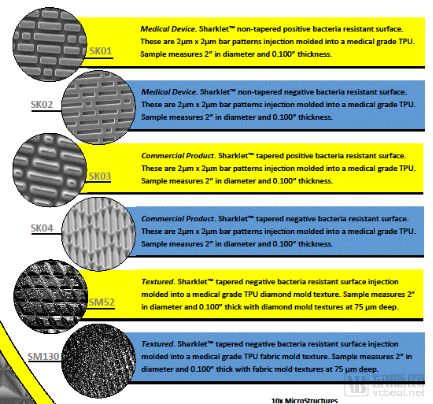
Sharklet Product Introduction Displayed on the 10x Microstructures Official Website
On the official website of 10x Microstructures, we can still see products co-manufactured with Sharklet. The manufacturing processes and structures are well-defined, and product variants have been developed to meet the distinct requirements of medical, commercial, and textile applications across various scenarios.
To date, the four products featured on Sharklet’s official website are urinary catheters, endotracheal tubes, wound dressings, and arterial and central venous catheters. Each product is accompanied by corresponding research data demonstrating its safety and efficacy. The core mechanism underlying these products leverages the unique properties of shark-skin-inspired microtopography to accelerate the migration of granulation tissue cells across the material surface while reducing pathogen adhesion, thereby lowering the risk of infection.
In May 2017, when Sharklet was acquired by Peaceful Union, it had a subsidiary named Clearsight Medical that was developing intraocular lenses. Sharklet hoped that its surface micropatterning technology could help reduce the incidence of posterior capsule opacification (PCO). Relevant studies conducted in rabbits were published in international academic journals in August 2019; therefore, based on current information, this project appears to be ongoing.
In a 2013 interview, Sharklet stated that its product sales had reached $1 million in the previous year (i.e., 2012). During the same interview, Sharklet’s executive team also mentioned plans for non-medical products, such as furniture.
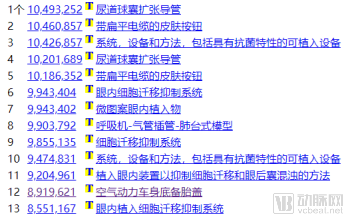
In the U.S. patent database, there are a total of 13 patents directly related to Sharklet Technologies. Twelve of these 13 patents are medical-related. Based on the patent descriptions, there is a clear connection to the four products listed on the official Sharklet website, as well as an undisclosed intraocular lens product.
The only patent unrelated to healthcare stands out as particularly distinctive. This patent covers a spare tire assembly, comprising a spare tire, an undercarriage, and a cover. Sharklet’s core technology is primarily applied to the cover. The patent states that materials featuring a shark-skin texture can be used to reduce surface drag on the cover. From this perspective, the shark-skin texture appears to have broader application prospects beyond merely preventing contamination.
Nowadays, in addition to the four original founding partners, Sharklet’s team roster has added Zhou Liwu, former chairman of the A-share listed company Xingyuan Environment; Zhang Qian, a healthcare sector investor; and Luo Yonghao, the protagonist of this article.
Zhou Liwu is an active entrepreneur who, according to Qichacha, is affiliated with 39 companies.
According to relevant reports, after a medical device company in Zhejiang, China acquired Sharklet in 2017, Zhou Liwu joined the board of directors of Sharklet.
The addition of Zhou Liwu shifted Sharklet’s product focus to the Chinese market. In February 2018, Hong Kong-registered Shanjie Asia Co., Ltd. applied for the Sharklet trademark. In May 2018, Beijing Shanjie Weikang Technology Co., Ltd. was established. In 2019, a phone case featuring Sharklet’s patented biomimetic shark-skin technology went on sale on Taobao. Its most prominent feature is its physical antibacterial property.
Zhou Liwu appears to be the individual connecting all these elements. It was Zhou Liwu who introduced Luo Yonghao to Sharklet. Luo Yonghao’s “investment promotion conference” is poised to bring greater possibilities to Sharklet technology.
Final Thoughts
Although I enjoy listening to Luo Yonghao’s “cross-talk,” I am not a “blind” devotee of his. After becoming a user of Smartisan phones, I came to realize that Luo’s presentations always highlight the best aspects, while every product has its imperfections. Therefore, we need to view Sharklet rationally. For instance, will its antibacterial efficacy diminish due to wear and tear after practical application? Or, how difficult is it to implement the Sharklet shark-skin denticle structure on certain materials?
At the press conference, Lao Luo repeatedly emphasized that “the old man” referred to Professor Anthony, while he himself was merely middle-aged. Yet as he turned away, the balding patch on his head was fully exposed, offering a glimpse into the hardships of his entrepreneurial journey. The path in the health sector is by no means easy; hopefully, this time he will reap some rewards.
By Liu Zongyu and Hao Han