

Sequoia Capital China Releases '2019 Urban Elderly Consumption Insights Report: When the Silver-Haired Drive a Sunrise Industry'
Editor’s Note: This article is republished from the WeChat official account Sequoia Hub, with authorization granted to VCBeat.
When you are old and grey and full of sleep,
Weary, I sat by the fireside and took down this book,
"Slowly reading, the look in the eyes of chasing dreams back then."
The gentle radiance and profound halos.
—William Butler Yeats
Translated by Bing Xin
This is a research report related to time.
It depicts the future that the past was destined to experience, and the past that the future is destined to unfold.
Our parents and elders, whose faces bear the marks of time, continue to use them in their pursuit of life’s highest meaning.
Although they have stepped away from the careers to which they devoted half their lives, they have never truly “moved to the sidelines” in the theater of life; rather, they are playing leading roles in the most significant trend transformations unfolding in Chinese society.
This is population aging. The nearly 250 million elderly population harbors immense consumer power waiting to be tapped. Their emotions and daily needs—clothing, food, housing, and transportation—will exert an increasingly significant impact on the entire consumer market. Their growing and diverse demands have pushed the "silver economy" to the brink of a boom.
Population aging is one of the few structural changes in Chinese society characterized by certainty; it is already underway and will accelerate. Such a significant structural shift will inevitably exert extensive and profound impacts on every aspect of society. Therefore, it is essential to conduct multidimensional, multi-level, and comprehensive investigations and discussions to identify opportunities for innovation, entrepreneurship, and investment. We believe that over the next 5 to 10 years, new demands, new supplies, new formats, and new business models will drive the robust growth of China’s “silver economy.” We look forward to collaborating with like-minded entrepreneurs and practitioners to create a happy and fulfilling life for hundreds of millions of elderly people in China!
—— Liu Xing, Partner at Sequoia Capital China

Following last year’s release of the “Report on Pan-Entertainment Consumption Among Generation Z,” which focused on the younger generation, Sequoia China has once again publicly released an industry research report: the “2019 Insights Report on Urban Elderly Care Consumption in China.” This time, we turn our attention to the other end of the temporal spectrum—the elderly population. According to international standards, a society is considered aged when individuals aged 60 and above account for 10% of the total population, or those aged 65 and above account for 7%. By this measure, China is entering a phase of deep aging. The substantial needs of the elderly population are being activated first in large and medium-sized cities, becoming a focal point for entrepreneurs.
To this end, the Sequoia China team conducted a stratified random sampling study of the elderly population in first- to third-tier cities. The stratification ratios were based on the provincial and municipal distribution of China’s aging population. To reflect a forward-looking perspective, the age range was expanded to include individuals aged 50 and above, with over 1,000 valid samples collected for data analysis.Unlike most surveys targeting the elderly population, this report innovatively includes the children of older adults in its scope. Based on over 1,500 valid samples, it reveals how intergenerational interactions between older adults and their children influence the senior consumer market.
Furthermore, we visited multiple companies providing elderly care products and services, including Anhe Nursing Care, AgeClub, Shengnuo Yijia, Wenjing Technology, Taikang Insurance, and Jinyouwang, gaining rich industry insights.
Through integrated research via multiple channels, including big data retrieval, quantitative surveys, desk research, and focus group interviews, the Sensors Data User Behavior Insight Institute collaborated to complete this study, ultimately producing the “2019 China Urban Elderly Care Consumption Insight Report.” Just one week ago, the Central Committee of the Communist Party of China and the State Council released the “National Medium- and Long-Term Plan for Actively Responding to Population Aging,” providing strategic direction for addressing the challenges of an aging population.Against this backdrop, we aim to provide an entrepreneurial guide on identifying sunrise industry opportunities within the “silver-haired” population, from the perspective of “urban elderly consumption.”Today, in collaboration with our media partner 36Kr, we are jointly releasing this report to reveal the authentic needs of this demographic and provide entrepreneurs and industry practitioners with insights to capitalize on this emerging trend.
Key Insight I
The elderly population totals nearly 250 million, and a consumption hotspot is emerging, giving rise to a wave of new business models.
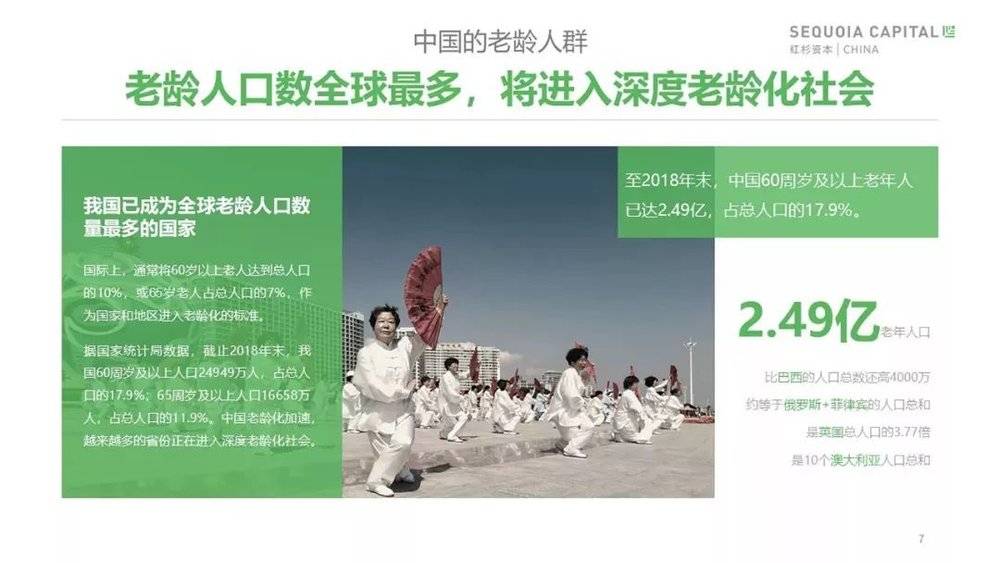
According to statistics, there have been three “baby booms” since the founding of the People’s Republic of China. The first two (1950–1957 and 1962–1975) saw nearly 500 million births, and these cohorts now constitute China’s middle-aged and elderly population aged 45 and above. Moreover, by international standards, China is entering a stage of deep aging; the “consumer power” represented by its nearly 250 million elderly people can even be regarded as an “economy” in its own right.
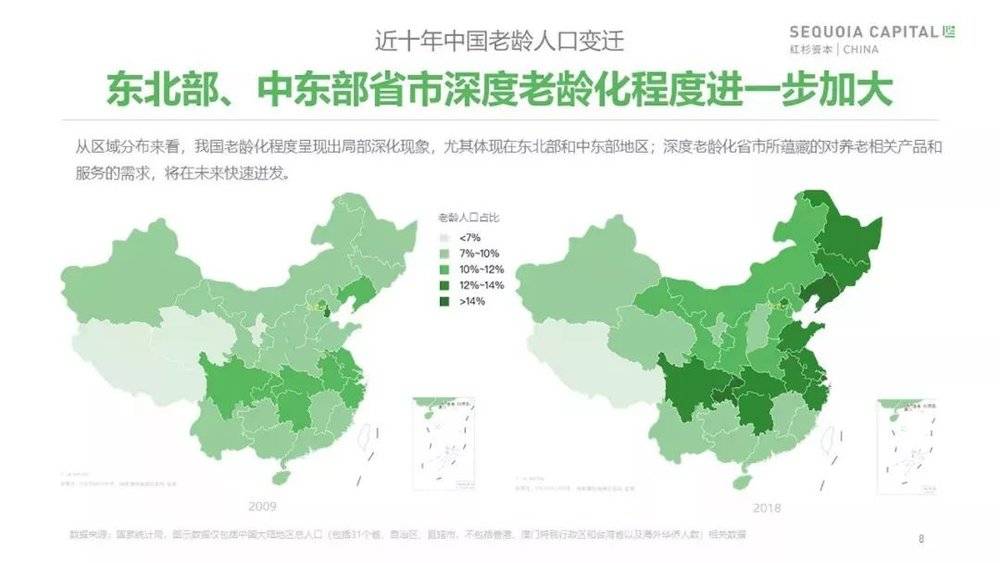
The aging population in central and eastern China has deepened rapidly over the past decade. The demand for elderly care products and services in these regions is expected to surge within the next 10–20 years, making them key areas of focus for entrepreneurs and industry practitioners.
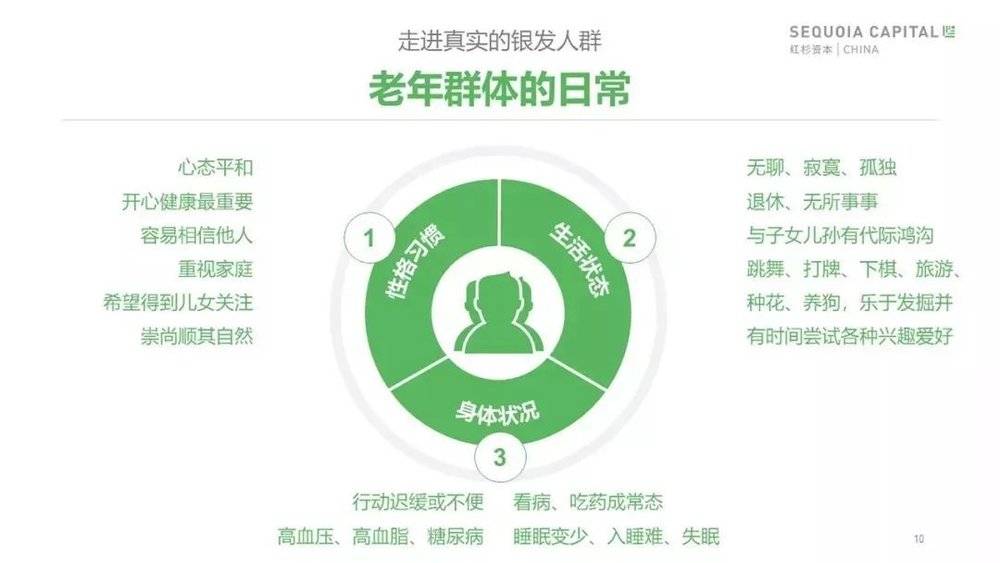
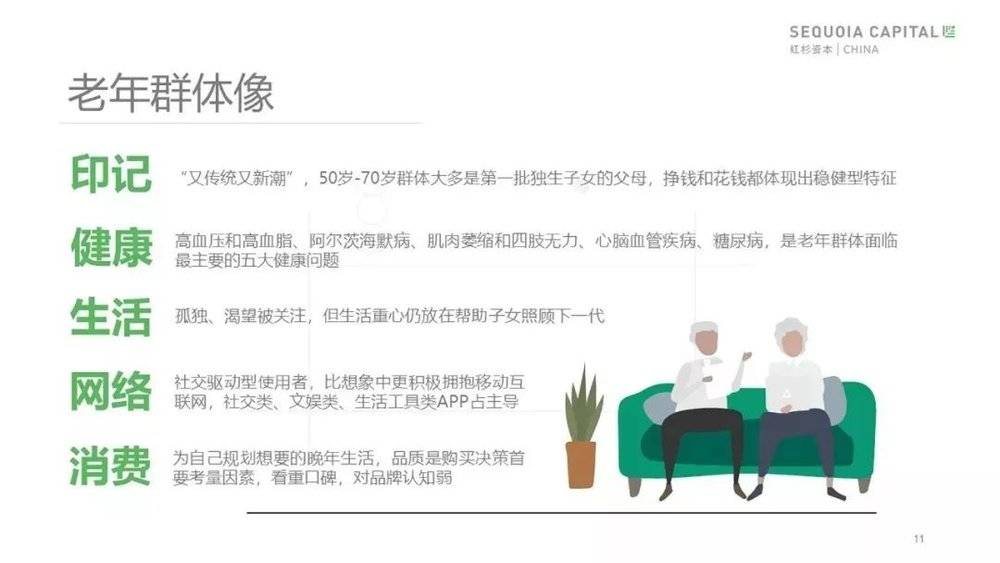
Through the profile of the urban elderly population, we can observe the common characteristics and needs of this group:
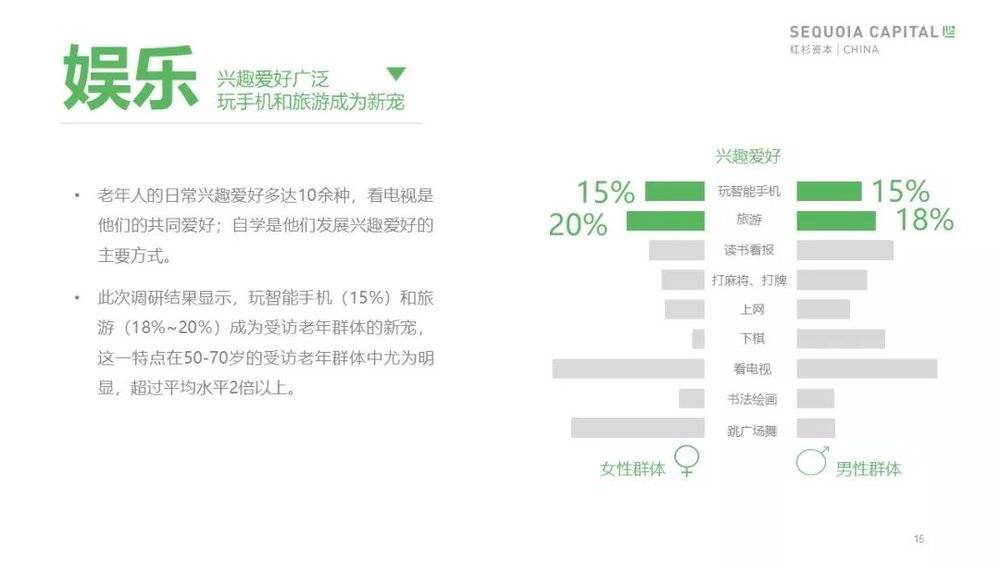
They exhibit a dual nature of being “both traditional and trendy” in their daily lives and consumption habits. They generally demonstrate traditional “prudence” in financial management and spending, yet are nearly as “trendy” as younger generations in actively embracing mobile internet, with distinctly social-driven characteristics.
How to reduce health problems and improve the quality of life in old age is the primary concern for the elderly, and it is also an important motivation for them to purchase elderly care products and services.
The psychological and mental health needs of the elderly population have long been neglected, with limited high-quality supply in this market segment and insufficient attention from their children.
Key Insight II
Urban elderly care consumption market is activated first, but there is a serious imbalance between supply and demand, with a lack of high-quality supply.
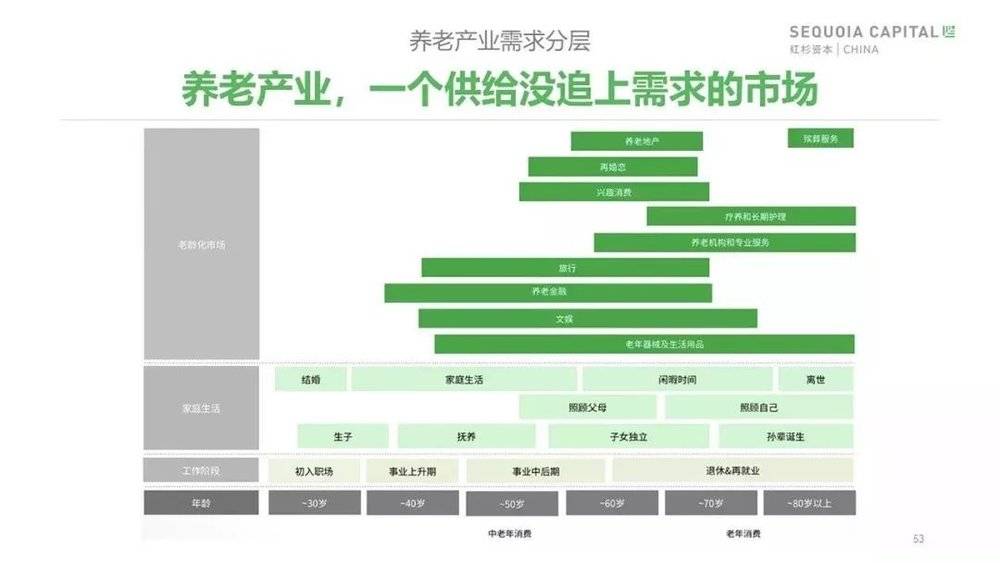
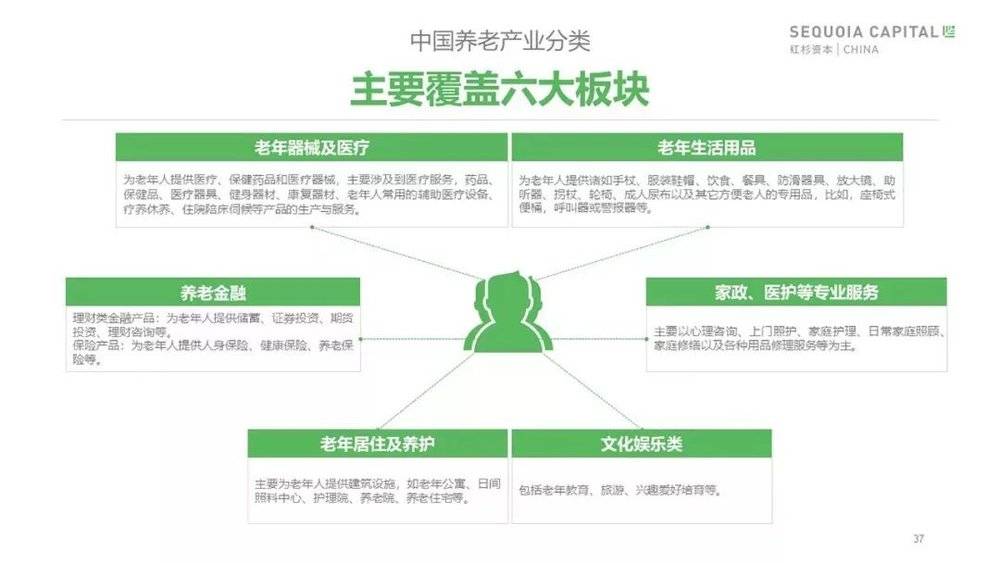
The elderly care industry is primarily divided into the six major sectors mentioned above, with different vertical sub-sectors catering to distinct middle-aged and elderly consumer groups. Overall, industries related to medical care and daily necessities—such as food, clothing, housing, and transportation—have a larger fundamental market base.
A lack of high-quality supply is the norm in the industry for developing products and services for the elderly.
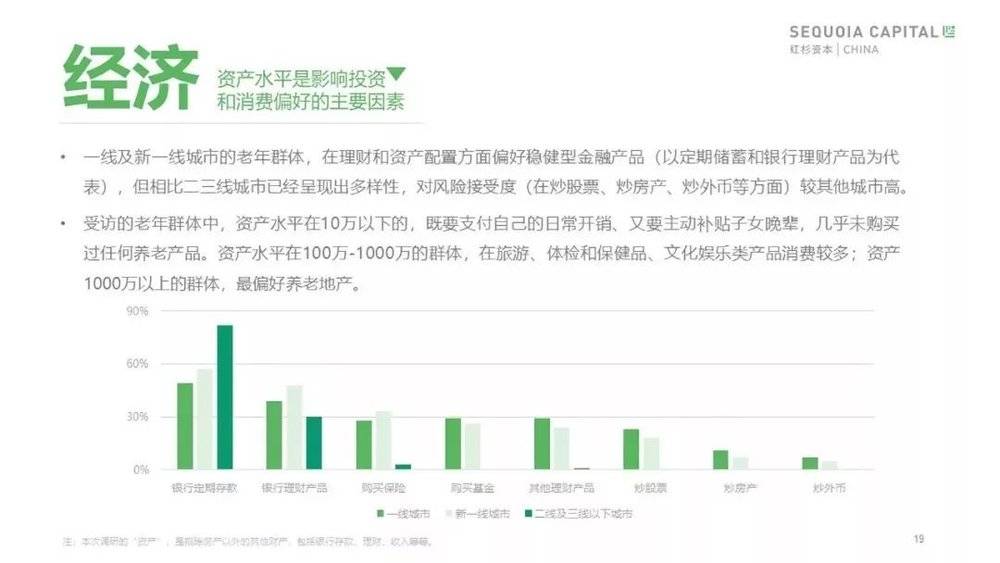
Survey findings indicate that financial management practices among the urban elderly population have begun to exhibit diversification. Asset allocation is no longer confined to time deposits, bank wealth management products, and insurance, but is increasingly shifting toward other sectors.
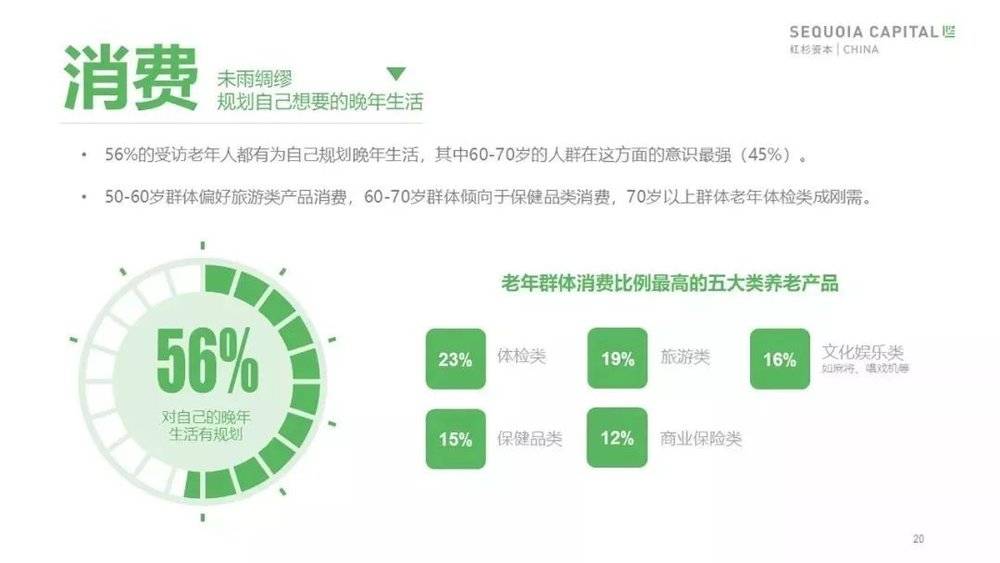
In the consumption of elderly care products and services, those related to physical health and mental well-being account for the largest share. Moreover, an increasing number of older adults are beginning to prioritize planning for their later years, a trend that is particularly pronounced among the "young-old" demographic.Entrepreneurs and practitioners should focus on the elderly care market associated with these vertical sectors.
Key Insight III
High Internet Penetration Among the Elderly: Significant Dependence on Mobile Internet and Socially Driven Online Behavior
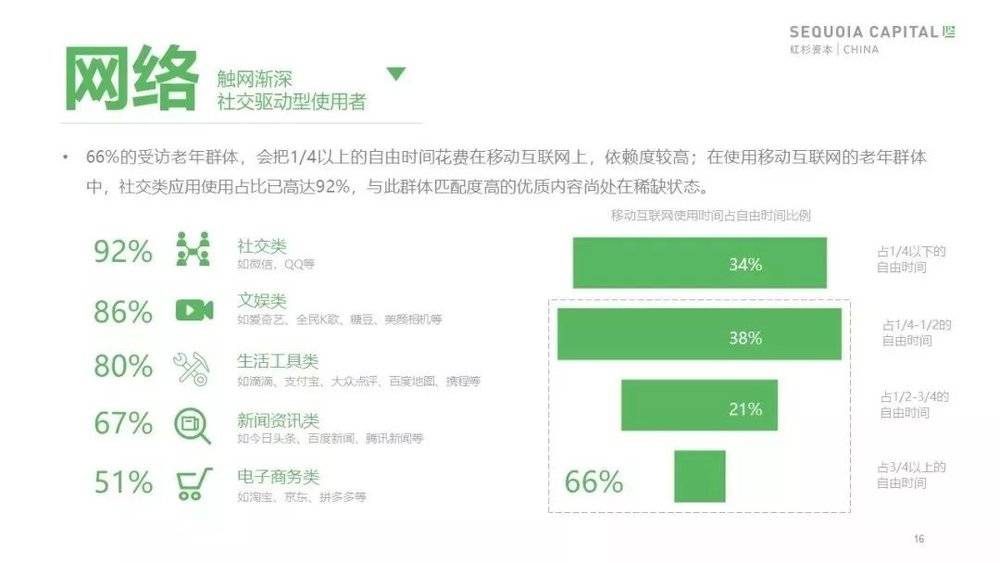
The proportion of urban elderly individuals who have gone online is already very high, with their degree of internet dependence being “even greater than that of young people.” A key characteristic of this group is that they skipped the PC internet era and entered directly into the mobile internet age.
Currently, mobile phones are not the primary means by which the elderly population accesses information. However, as time progresses, the mobile internet is poised to become the principal channel through which entrepreneurs and practitioners influence older users. The value of this “traffic depression” will become increasingly evident.
Key Insight 4
Both Parents and Children Have a Say in Elderly Care Consumption, Yet an Intergenerational Gap Persists Between Needs and Outcomes

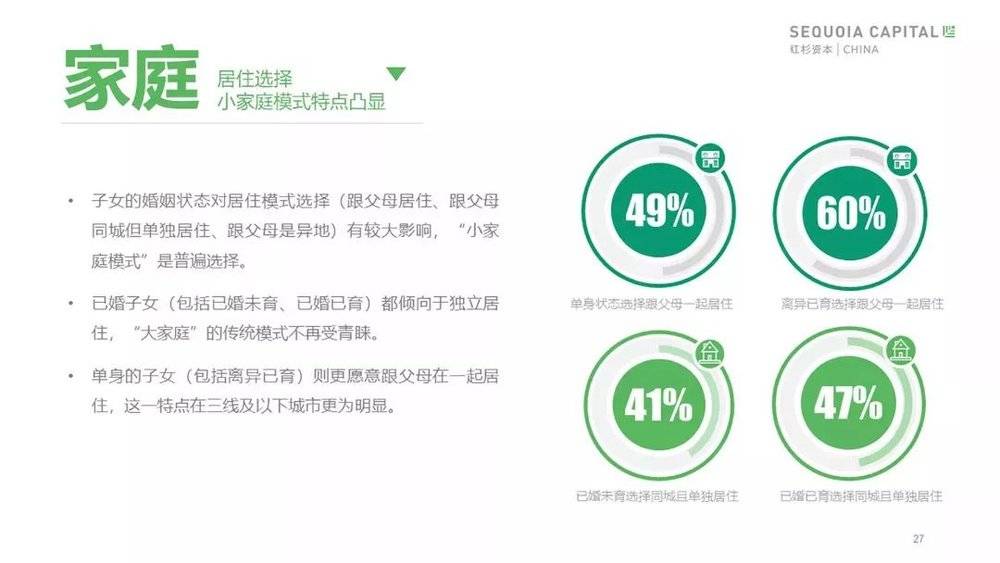
A prominent characteristic of the urban population aged 50–70 is that many are parents of China’s first generation of only children. This feature becomes increasingly pronounced as city tier levels rise.
In terms of family structure, today’s generation of children is markedly different from the previous one. Their declining tendency to live with their parents has led to a living arrangement dominated by “nuclear families.” These new changes have generated greater demand for elderly care provided by adult children.
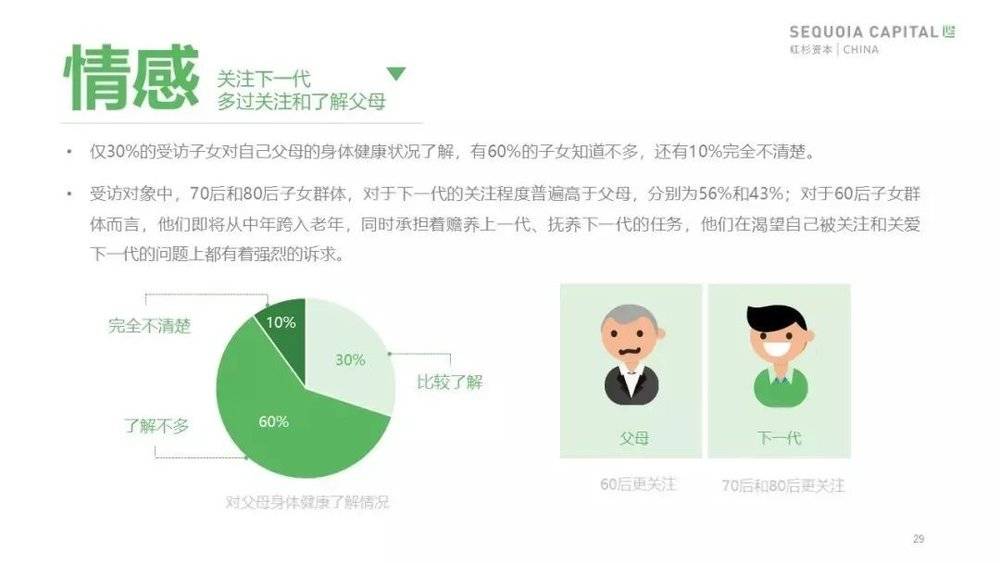
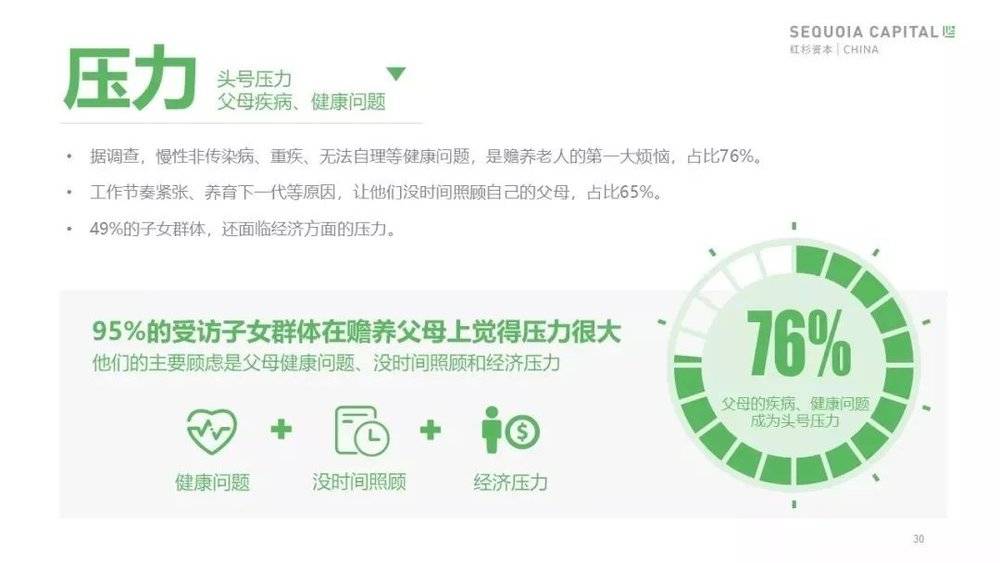
Children, in general, do not provide sufficient care for their parents. Particularly, those who have established their own families tend to devote more energy to raising the next generation. However, among middle-aged children born in the 1960s, growing life experience and advancing age have led to an increased level of attentiveness and care toward their parents.
Overall, children, particularly urban offspring from one-child families, generally feel immense pressure in caring for their elderly parents.Enterprises that provide convenient, affordable, and high-quality elderly care products and services will find it easier to penetrate the market among adult children.
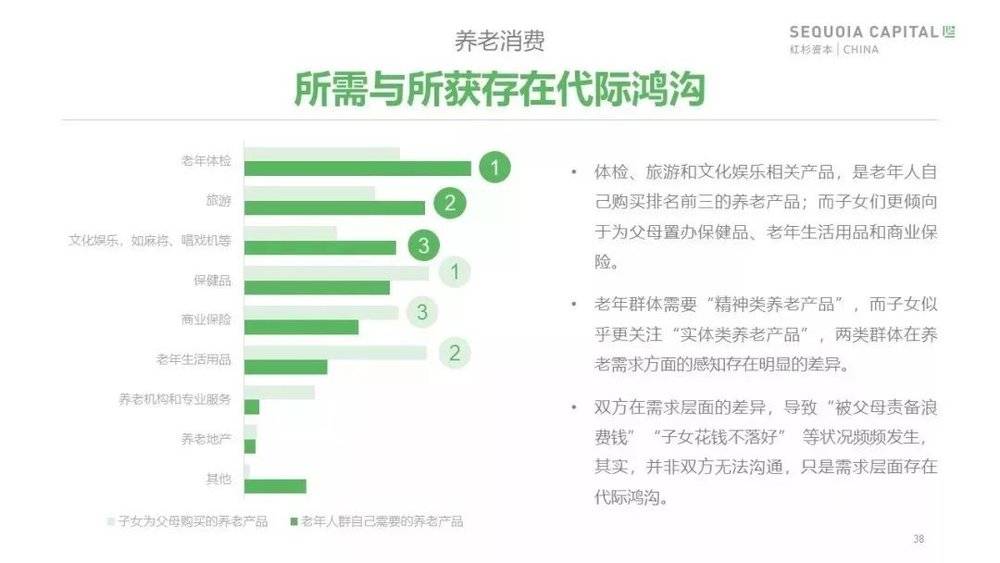
Although children are the primary consumers purchasing elderly care products to fulfill their filial duty, research reveals that they struggle to fully understand the genuine needs of the elderly population. They tend to overemphasize tangible elderly care products while neglecting those addressing psychological and emotional well-being, a disparity that often leads to communication breakdowns or even conflicts between parents and their children.
For entrepreneurs and practitioners, bridging the cognitive gap between children and their parents, and ensuring mutual satisfaction in product and service delivery as well as brand building, may represent a critical direction for establishing industry barriers.
Key Insight 5
Both the elderly population and their children prioritize quality, functionality, and safety, but hold differing views on “brand.”
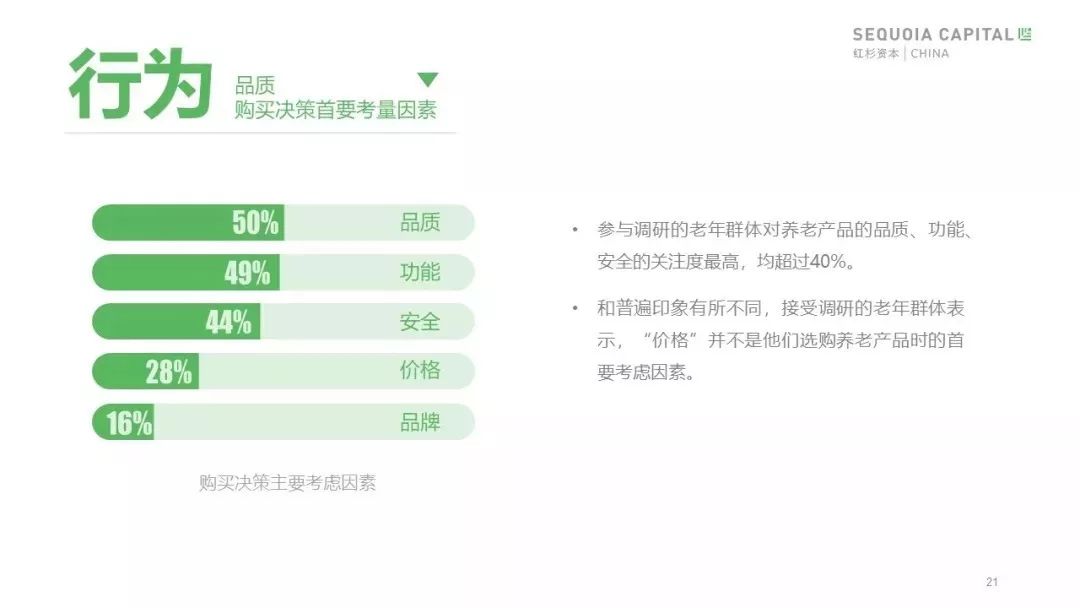
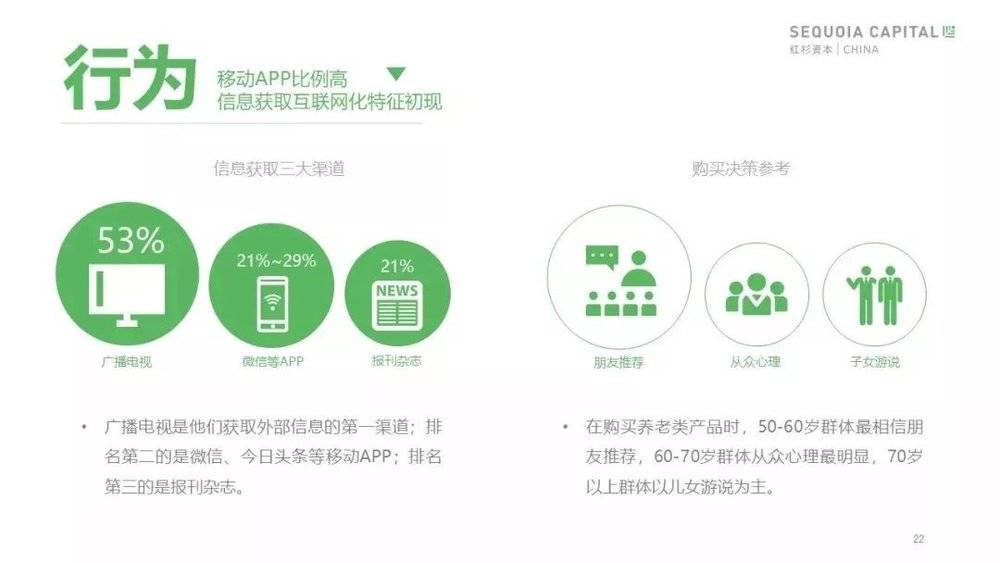
Survey results indicate that older adults prioritize quality, functionality, and safety when making purchases, while “brand” is mentioned far less frequently as an important factor. This suggests that older consumers generally have weak brand awareness and are more inclined to trust recommendations from friends, acquaintances, and their children.
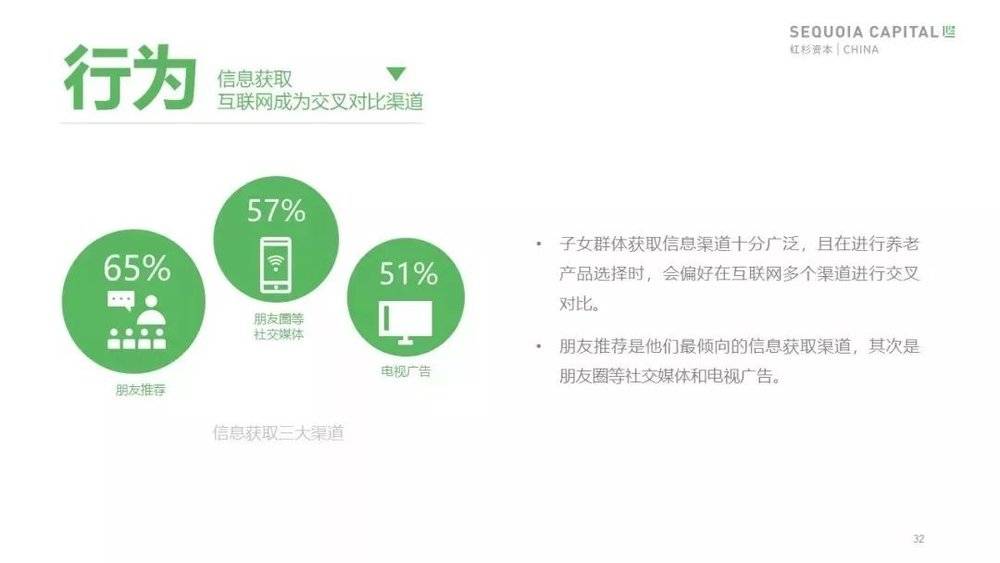
Urban children consider significantly more factors than their parents when selecting elderly care products and services, demonstrating a strong preference for “brands” and forming consumption habits characterized by cross-verification through multiple channels. Therefore, for providers of elderly care products and services, brand building can more effectively reach the children demographic and drive conversion.
Commercialization Recommendation 1
There is a clear separation between the roles of the demand side and the purchaser; stratifying goals and needs is key.
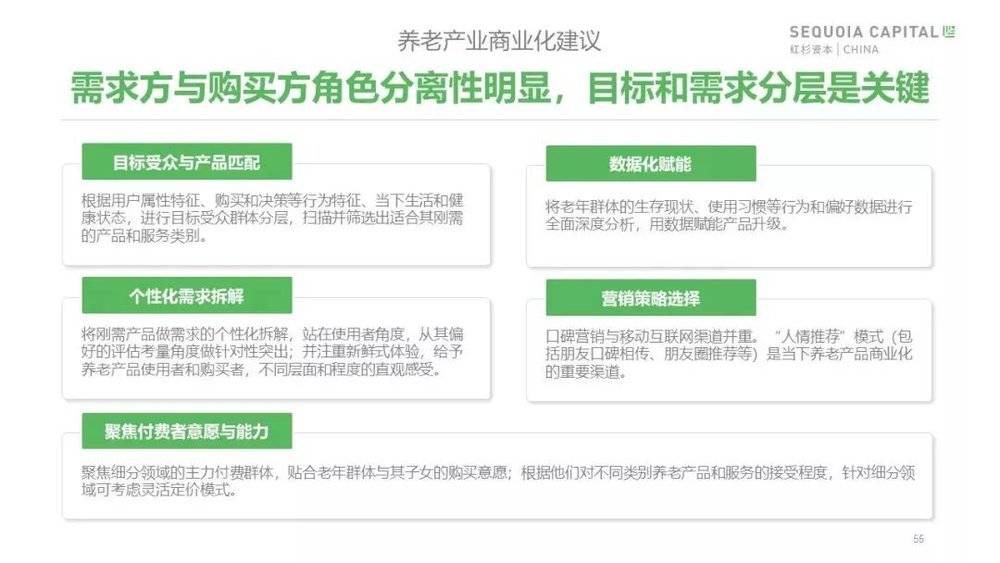
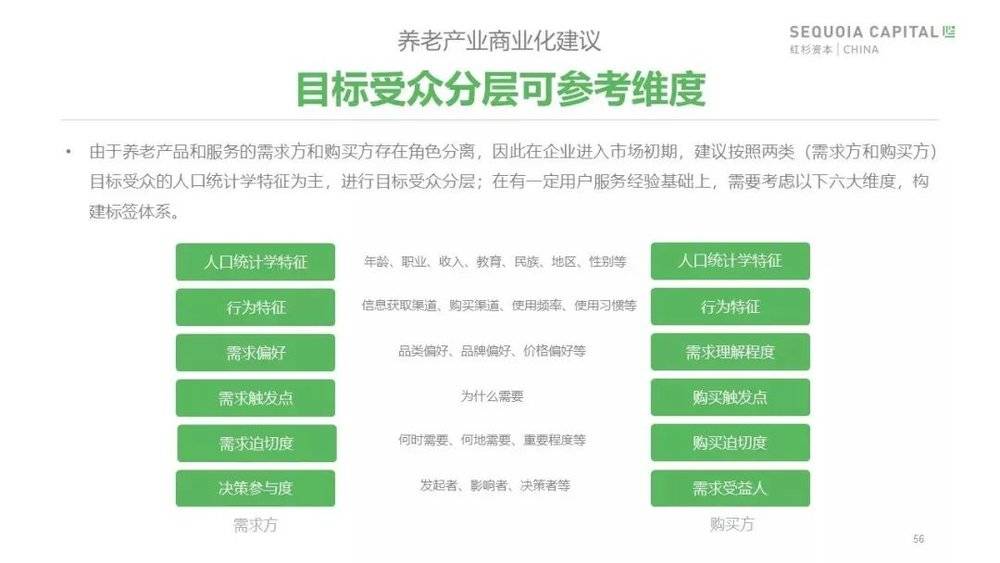
In the consumer market for elderly care products and services, there is a pronounced “separation between the demander and the purchaser”: adult children are the buyers of these related products and services, yet they themselves do not have the corresponding needs nor will they use them. For entrepreneurs and practitioners, accurately segmenting targets and needs should be the first step in market expansion and product positioning.
Commercialization Recommendation 2
Tech-Enabled Elderly Care Will Become a Major Mainstream Trend; Early-Stage Strategies Should Be B2B-Led
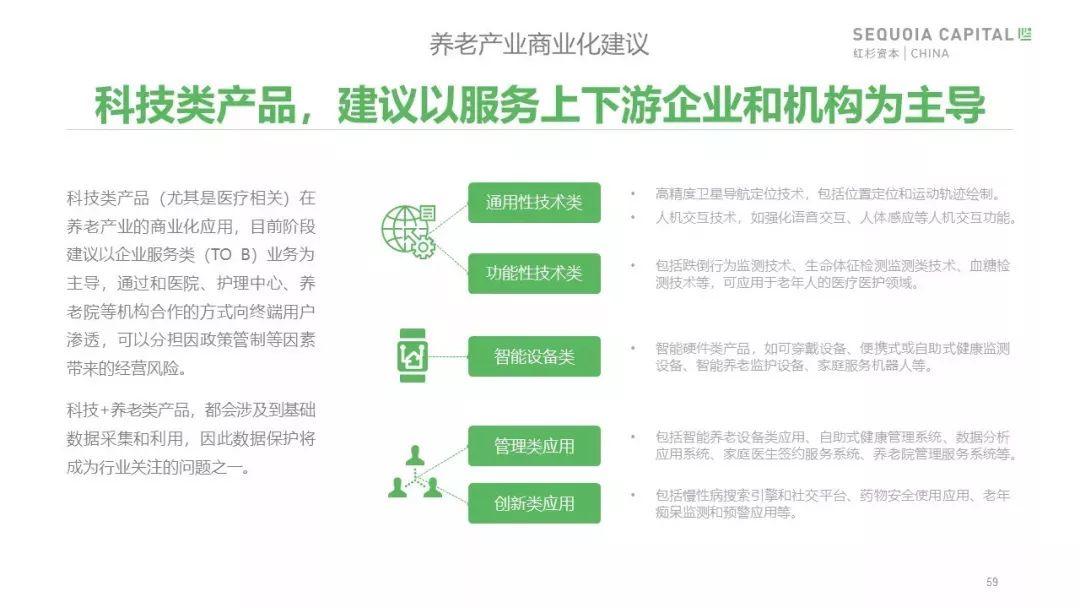 Technology-driven products in the elderly care industry, particularly those related to healthcare, are still in the early stages of commercial application. Their commercial prospects are highly promising for improving the quality of life for older adults and alleviating the burden on their children.
However, as updates to relevant policies and infrastructure may not keep pace in a timely manner, it is recommended that business-to-business (B2B) enterprise services remain the primary focus at this stage, penetrating end-user markets through collaborations with institutions such as hospitals, nursing centers, and elderly care facilities.
Most technology-enabled elderly care products and services involve the collection and utilization of basic data; therefore, enterprises should prioritize data protection from the outset.
As China’s population ages at an accelerating pace, with some provinces even entering a stage of deep aging, this presents significant and unavoidable pressures for families, society, and the government. With nearly 18% of the population classified as elderly, research into seniors’ consumption needs, market segmentation, and related services has entered a new phase of discussion.
From the current perspective of China’s elderly care industry, there remains a significant gap compared to foreign counterparts in both medical caregiving services and daily living assistance for the elderly. The professionalism and standardization of these services are lacking, and no unified standards have been established within the industry for domestic elderly care institutions. Consequently, China’s elderly care sector still holds substantial room for improvement.
For Anhe, we aim to address the pain points in China’s current elderly care landscape by conducting continuous research. Through learning and introducing international medical care and daily living assistance technologies and standards, we seek to facilitate the localization of global elderly care expertise within the Chinese market, thereby providing sustained medical care and daily living support services to China’s retired population.
——Wang Zheng, CEO of Anhe Nursing
Population aging presents both “crises” and significant “opportunities.” A base of hundreds of millions of older adults translates into a trillion-yuan industrial market. Against the backdrop of disruption and integration between digital technologies and traditional industries, the convergence and reshaping of the demographic dividend from the aging population with the digital industry will unlock greater potential for an aging society. This goes beyond merely meeting the basic need for elderly care; it offers older adults a “second spring” to redefine their self-worth. By precisely matching fragmented time with fragmented work, personalized scenarios for the utilization and value enhancement of older adult human resources can be constructed, thereby activating human capital value. This fosters a comprehensive ecosystem for the silver economy that ensures older adults are provided for, employed, and able to contribute meaningfully.
——Guo Wei, CEO of JinYou Network
We will eventually grow old, but the world remains forever young! Population aging is an issue we must confront, yet it is by no means a purely negative one; it also harbors new growth drivers for consumption.
I lived in Australia for ten years, where the elderly care industry is relatively mature. Today, China is moving toward a deeply aging society—a vast market with an elderly population alone ten times the size of Australia’s total population. Healthcare is an indispensable component of elderly care. Eight years ago, I returned to China and founded Shengnuo Yijia (St. George Health), helping Chinese patients access the best medical services worldwide. Among our patients seeking treatment abroad, those aged 50–60 represent the largest proportion across all age groups; furthermore, a significant number of our overseas health-checkup clients are also elderly. Beyond healthcare, population aging has permeated every aspect of our lives.
Coinciding with the release of Sequoia China’s *2019 Insight Report on Urban Elderly Care Consumption in China*, I had the privilege of being one of the interviewees in its focus groups. Rather than merely a report, it serves as an entrepreneurial guide for the elderly care industry. By surveying thousands of respondents, it provides valuable insights into the consumption psychology, behavioral preferences, and selection criteria of today’s elderly population and their children, offering highly valuable references for launching elderly care-related businesses.
—— Cai Qiang, CEO of Shengnuo Yijia
China is rapidly transitioning into a deeply aging society, posing unprecedented and significant challenges to existing medical services, chronic disease management, and elderly care nursing. These challenges are expected to intensify in the future. Smart elderly care solutions based on the Internet of Things (IoT), artificial intelligence (AI), and big data are inevitably becoming a major trend in the future of eldercare. By leveraging sensing technologies, smart elderly care enables continuous, precise, and efficient monitoring of older adults’ health status, establishing a closed-loop system featuring intelligent early warning, risk prediction, rapid response, and targeted intervention. This approach facilitates the integration and optimization of resources, significantly expanding the coverage, quality, and efficiency of elderly care services. It promotes the deep integration of medical and elderly care services and fosters innovation in care models, ultimately improving the quality of life, sense of well-being, and fulfillment for older adults and their families. The implementation of smart elderly care involves the deep integration of intelligent technologies with specific care scenarios. Its core philosophy centers on the comprehensive needs of the elderly population—extending beyond narrow definitions of care services to encompass all aspects of daily life, including clothing, food, housing, transportation, and medical care, as well as both material and spiritual well-being. This aligns with the concept of “human-centered AI” consistently emphasized by Wenjing Technology.
We thank Sequoia China for its attention to the elderly population, as elderly care is a critically important social issue. Wenjing Technology looks forward to collaborating with industry partners to jointly drive innovation and development in the elderly care sector, thereby genuinely enhancing the health and well-being of older adults.
— He Lei, Vice President of Wenjing Technology