

Ankecon Biopharma Files IPO Prospectus for 'Shuang Mao': A Novel Oncolytic Virus Platform Targeting Solid Tumors via Dual-Signal T Cell Activation
Through empathy, I cannot fully comprehend the depth of patriotic sentiment that compelled Dr. Yu Li to resolutely abandon his well-compensated and stable position as a lead vaccine reviewer at the U.S. Food and Drug Administration (FDA), returning to China to embark on an entrepreneurial venture in innovative oncology biologics. During my hour-long conversation with Dr. Li, I perceived the gentle demeanor of a wise individual, along with the earnest dedication characteristic of his generation of scientists toward their cherished careers. His commitment reflected a scientific ethos marked by diligent research and selfless devotion, driven by a passionate spirit to make altruistic contributions to the cause of human health.
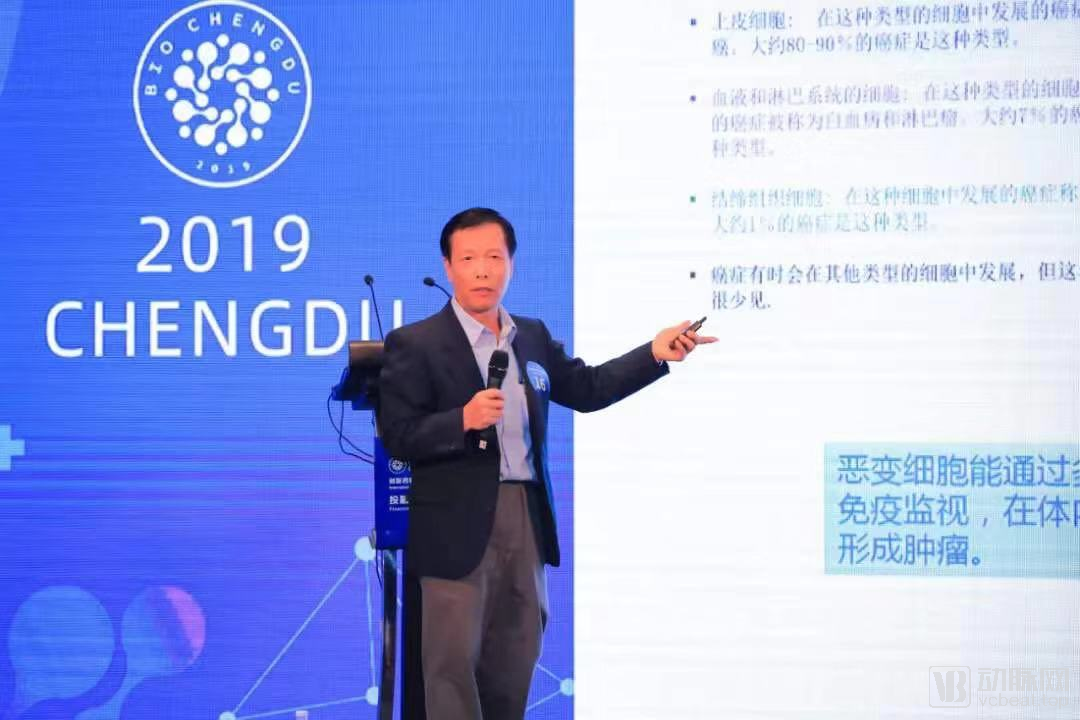
Dr. Yu Li, Founder of Anke Kang Biotech
In 1987, Dr. Yu Li earned his M.D. from Beijing Medical University. He subsequently held positions as Assistant Researcher, Lecturer, Postdoctoral Fellow, and Research Assistant Professor at the Chinese Academy of Preventive Medicine, Beijing Medical University, the U.S. National Institutes of Health, and Saint Louis University in the United States. He also served as Associate Research Professor at the Washington University School of Medicine in St. Louis from 1997 to 1999.
In early 2000, Dr. Yu Li joined the U.S. FDA, embarking on a 19-year career as a senior vaccine reviewer. During his tenure, Dr. Li led the review and approval of the majority of Investigational New Drug (IND) applications for vaccines against the Flavivirus genus, including those for various types of dengue, Zika, Japanese encephalitis, and West Nile encephalitis viruses. He was also responsible for the marketing approval of yellow fever and Japanese encephalitis vaccines, as well as the post-marketing regulatory oversight of these vaccines.
Notably, Dr. Yu Li is a seasoned virologist who conducted in-depth, cutting-edge research on the replication mechanism of the yellow fever virus during his tenure at the U.S. Food and Drug Administration (FDA), publishing several papers on the latest findings in top-tier international virology journals. Leveraging his extensive expertise in virology, he has gained profound insights into the numerous limitations of first-generation oncolytic viruses. To address the drawbacks of oncolytic viruses as biologics—including pathogenicity, immunogenicity, and restricted tropism for infected tissue cells—Dr. Li independently developed a yellow fever virus vector platform using genetic engineering techniques. This platform serves as the foundation for second-generation oncolytic virus biologics designed for cancer immunotherapy.
It is precisely this unique research achievement that enabled Dr. Yu Li to develop a novel immunobiological therapy for broad-spectrum solid tumors. This therapy combines the dual mechanisms of oncolytic viruses and CAR-T cell therapy, holding promise as a breakthrough for the majority of solid tumor patients in the future. “Looking at the current landscape of innovative oncology drug development in China, I find it somewhat disheartening. Despite the three conventional cancer treatments, 56% of tumor patients still fail to achieve complete remission, and existing mainstream biological therapies suffer from numerous limitations, making curative outcomes difficult to attain. I intend to bring my preliminary research findings back to China for further development as an innovative oncology drug, thereby contributing to the nation’s healthcare endeavors,” stated Dr. Yu Li.
Guided by this consideration, Dr. Yu Li resigned from his position as a vaccine review officer at the U.S. Food and Drug Administration (FDA) in late 2018 and formally established Sichuan Ancocan Biopharmaceutical Co., Ltd. (hereinafter referred to as “Ancocan Bio”) in December 2018. As of today, within less than a year, Ancocan Bio has completed the majority of efficacy testing in animal tumor models, yielding highly promising results. The company is currently conducting safety evaluations of its drug candidate and preparing regulatory submissions for Phase I clinical trials.
In 1999, the Malaghan Institute of Medical Research in Wellington, New Zealand, published the paper “The role of B7 costimulation in T-cell immunity,” which first highlighted the role of “costimulatory molecules” in T cell activation. It proposed that, in addition to the conventional antigenic signal, a “costimulatory” signal is also required; both signals must act together to activate T cells. T cells lacking costimulatory signals enter a state of anergy and fail to mount an immune response against tumor antigens.
The requirement of dual signals for T-cell activation is one of the core mechanisms underlying Ancokang Bio’s novel biologic therapy. By integrating the therapeutic principles of both oncolytic viruses and CAR-T therapy, this novel biologic approach is named “Dual Spear.”
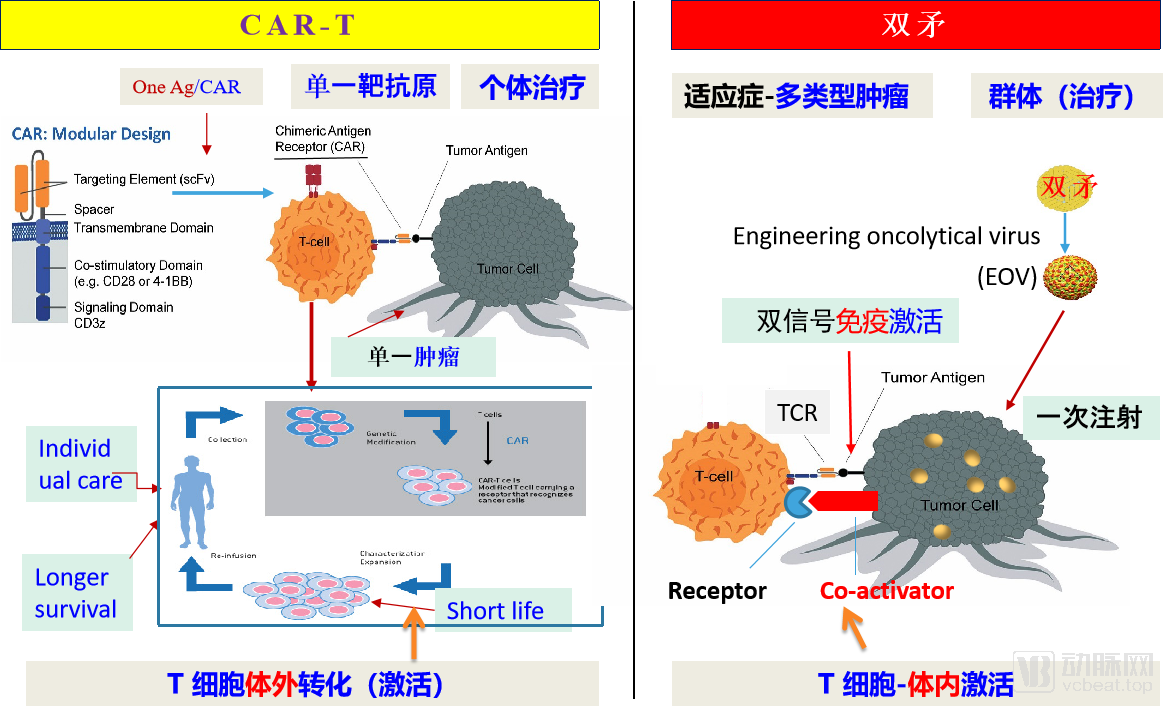
CAR-TwithDual SpearComparison of
To understand the "Double Spear" developed by Dr. Yu Li, we must first start with his area of expertise: vaccines. Viral vaccines are preparations containing either attenuated live or inactivated viruses. Upon injection into the human body, they stimulate the production of antibodies and prompt the immune system to generate corresponding memory cells. When the body encounters the same virus again, the immune system can respond rapidly to eliminate it. Oncolytic viruses are a special class of viruses used for tumor treatment; they also trigger an immune response after entering the human body. Similarly, when oncolytic viruses are administered again as therapeutic agents, the memory cells of the host's immune system will quickly recognize them and collaborate with other relevant immune cells to destroy the viruses, thereby significantly reducing the therapeutic efficacy of the oncolytic viruses. This process is also referred to as resistance to oncolytic viruses.
How to avoid the immunogenicity of oncolytic viruses was a topic Dr. Yu Li researched during his tenure at the FDA. The immunogenicity of a virus depends on the extent to which its outer shell (envelope proteins) is recognized by corresponding memory cells. If we change the virus’s “shell” each time, we can circumvent its immunogenicity. Dr. Yu Li explained, “We employ genetic engineering to modify viral envelopes, creating hybrid viruses that incorporate envelope proteins derived from different serotypes. This approach helps avoid the drug resistance and immunogenicity issues associated with single-agent therapies.”
Avoiding the drawbacks of immunogenicity associated with first-generation oncolytic viruses is merely the initial step in this dual-pronged strategy. Dr. Yu Li employed genetic engineering techniques to insert gene fragments encoding co-stimulatory molecules into viral vectors, which were then injected directly into patients’ tumor sites. Notably, co-stimulatory molecules within the immune system are typically produced by B cells and exhibit a one-to-one ligand/receptor relationship with T cells. To achieve the synergistic effect of dual signaling for T cell activation, Ancure Biotech engineered the viral vectors to deliver these co-stimulatory molecules—normally produced by B cells—into tumor cells. This approach enables tumor cells to simultaneously generate both “co-stimulatory signals” and “tumor antigen signals,” thereby activating T cells to mount specific attacks against the tumor. Furthermore, it stimulates the body’s entire immune system to combat multi-site tumors, metastatic disease, and tumor recurrence, ultimately aiming for a curative outcome.
When oncolytic viruses self-replicate within cancer cells, they lyse the cancer cells while simultaneously expressing T-cell co-stimulatory factors. Primarily through the latter mechanism, they activate anergic T cells within the tumor microenvironment, inducing a systemic immune response that kills and clears cancer cells to achieve curative tumor eradication. This constitutes the dual-pronged anticancer mechanism of Shuangmao.
The viral vector selected by Ankang Bio belongs to the genus Flavivirus and includes “multiple serotype virus strains.” The cross-use of vaccine strains from different serotypes can help prevent the development of drug resistance. These viruses are capable of infecting epithelial cells and have a broad range of infection. Notably, approximately 80–90% of solid tumors in cancer histopathological classification are epithelial cell lesions, while “blood cancers” of the hematologic and lymphatic systems account for only 7% of all cancer types, with the remaining approximately 1% classified as connective tissue cell lesions.
Utilizing a yellow fever virus capable of broadly infecting epithelial cells enables Dual Spear to achieve broad-spectrum treatment for 80–90% of solid tumors. Its competitive advantage over currently popular CAR-T therapy or immune checkpoint inhibitors is self-evident.
Immune checkpoint inhibitors are effective only against tumors with specific genotypes, resulting in a narrow therapeutic scope. Currently, PD-1/PD-L1 or CTLA-4 expression is observed in only 15% of solid tumor cells and 50% of lymphomas. Cancer patients treated with immune checkpoint inhibitors require multiple administrations, which is not only costly but also prone to inducing drug resistance. In contrast, CAR-T therapy requires ex vivo activation of T cells, involving a complex treatment process that is largely personalized and expensive. While it demonstrates significant efficacy against leukemia, its effectiveness against solid tumors remains to be improved.
In contrast, dual-vector systems can circumvent drug resistance with only 2–3 injections. The manufacturing process is simple, resulting in lower treatment costs. Intratumoral injection of DNA plasmids demonstrates significant broad-spectrum efficacy in the treatment of solid tumors.
Currently, animal efficacy studies conducted by Ankokang Biotechnology have demonstrated that the Shuangmao drug product achieves a tumor growth inhibition rate of >45%–80%. Ankokang Biotechnology will conduct further efficacy studies and safety evaluations, with plans to apply for and complete Phase I clinical trials of the new drug within one year.
It is reported that Ankokang Biotechnology has launched a new round of financing, aiming to raise RMB 20 million in its Series A funding. The proceeds will be primarily used for preclinical safety assessments of dual-specific antibodies and for applying for and completing Phase I clinical trials of new drugs in China. Sichuan Zhongjun Yatai serves as the financial advisor for this round of financing.