

RSNA at 105: Imaging Trends and the Value of AI — Exploring Seven Key Directions

SHUKUN
Provider of Intelligent Products and Innovative Solutions
Subtle Medical
Medical Imaging Software Developer

DeepWise
Developer of Artificial Intelligence Medical Imaging Diagnosis System

YITU
Provider of Full-Stack Intelligent Healthcare Product Solutions

Philips Healthcare
Integrated service provider in healthcare, quality living, and lighting fields

Infervision
Artificial Intelligence Product Developer

United Imaging
High-end Medical Device Developer
This winter, RSNA turns 105.
As the bellwether of global radiology, RSNA’s focus this year has shifted subtly—while AI empowerment and related algorithmic advancements remain at the core of the conference, new conceptual shifts are also emerging.
With the RSNA agenda now more than halfway complete, VCBeat has interviewed several domestic and international companies that traveled to Chicago and compiled extensive on-the-ground insights from the event. Ultimately, we have focused our analysis on seven key trends, aiming to uncover the development trajectory of medical imaging in the coming year through text, data, and images.
This year’s RSNA theme is somewhat subtle—“See Possibilities Together.” Where is the future headed? Who will accompany us on this journey, and how shall we proceed together? In the view of RSNA President Valerie P. Jackson, the way we approach these questions will determine the height to which radiology can ascend.
“We have both the opportunity and the ability to forge deeper connections with patients. However, reaching this level requires us to examine doctor-patient interactions from multiple perspectives.” In an interview with Daily Bulletin, Valerie P. Jackson stated that “doctor-patient interaction” is at a pivotal point in the transformation of radiology, representing an inevitable step in the U.S. healthcare system’s shift toward “patient-centered care.”
“Much like photography, where photographers must use different equipment and observe their subjects from various angles, radiologists also need to step out of the reading room, engage in more communication with patients, further examine the limitations of their work, recognize the barriers they have constructed for their own development, and discover the value of communicating with patients.”
Does such communication increase the burden on radiologists? Valerie P. Jackson, President, did not deny this possibility. Under the pressure of high workloads and anxiety over RVU (Relative Value Unit) metrics, physicians may face greater stress if they devote more time to social interactions with patients. The issue, however, is that regardless of what physicians do, the large volume of patient cases will not simply disappear.
Therefore, this issue should be viewed in two parts. Vijay M. Rao believes that the processing of massive volumes of medical records and the pressure for rapid turnaround times are the greatest challenges currently facing radiologists. However, it is the responsibility of device manufacturers and artificial intelligence companies to restore time freedom to physicians, while physicians themselves should prepare for a transformation in their work roles.
Returning to the initial question, “patient-centered care” is the future of radiology, and realizing this future requires the joint efforts of hospitals, physicians, patients, and enterprises.
“We excel at diagnosing depression, but we also hope to identify corresponding biomarkers,” said Helen S. Mayberg, Professor of Neurology at the Icahn School of Medicine at Mount Sinai in New York. “Neuroimaging can provide methodological anchors for building models of brain function, allowing us to conceptualize mental health issues as actual brain disorders, which will lead to better diagnosis and treatment.”
Current image-guided therapies require deep brain stimulation; however, locating the deep brain stimulator, particularly the specific brain regions targeted for activation, relies heavily on a combination of anatomical and functional neuroanatomical data. This novel diagnostic approach for depression necessitates the integration of medical imaging.
Depression is not the only neurological disorder seeking assistance from medical imaging. Alzheimer’s disease, whose drug development has been frequently hindered, has long embarked on research into multimodal brain biomarkers.
The Alzheimer’s Disease Neuroimaging Initiative (ADNI) has been dedicated to longitudinal studies using multimodal brain biomarkers since the early 2000s. It employs various imaging modalities, including MRI, FDG-PET, amyloid PET, and tau PET. However, even multimodal approaches have struggled to identify effective pharmacotherapies for Alzheimer’s disease (AD); molecular genetics may hold the key to breaking this impasse.
Andrew Saykin, Professor of Medicine and Medical and Molecular Genetics at Indiana University (IU), stated that international studies have identified 25 promising candidate genes associated with multiple biological pathways. Furthermore, the synergy among radiomics, systems biology, and bioinformatics has begun to play a role in identifying functionally abnormal networks in Alzheimer’s disease (AD).
At a deeper level, pathology is also being integrated into a combination of imaging and genomics. The application of data processing technologies, such as artificial intelligence, to extract and fuse data from radiological imaging, pathology, laboratory medicine, and genomics can yield richer insights, potentially accelerating the development of related drugs. For instance, some researchers have leveraged AI to achieve breakthroughs in uncovering associations between imaging features and genetic point mutations.
So, what can radiology gain from these integrations?
Dr. Mitchell D. Schnall stated, “Radiologists today have access to more non-imaging data than ever before. Integrated diagnostics, which combine laboratory data, imaging data, and clinical outcomes, are gradually becoming the standard in radiology practice.”
“The current problem lies in the fact that methods for retrieving data from medical records are both cumbersome and time-consuming. However, as data processing capabilities (level of informatization) continue to advance, the diagnostic efficacy of radiology may be significantly improved.”
The combination of pathological, imaging, and genetic data mentioned in Direction 2 represents one of the future approaches to data fusion. From a management perspective, integrating PACS system data, workflow data, and performance metrics can optimize workflows and enhance the operational efficiency of radiology departments.
Therefore, data is a critical asset; however, for hospitals, neither complete closure nor full openness is advisable. Thus, in the era of AI development, solutions that balance data sharing with data security have become essential.
Federated learning may offer a solution to this problem. This approach leverages distributed collaborative learning techniques to ensure information security during big data exchange while safeguarding terminal data and personal data privacy. Taking NVIDIA’s privacy-preserving federated learning system, “NVIDIA Clara Federated Learning,” released at the RSNA annual meeting, as an example, federated learning enables collaborative and decentralized neural network training without the need to share patient data. Each node is responsible for training its own local model and periodically submits updates to a parameter server. The server continuously accumulates and aggregates these contributions to create a global model, which is then shared with all nodes.
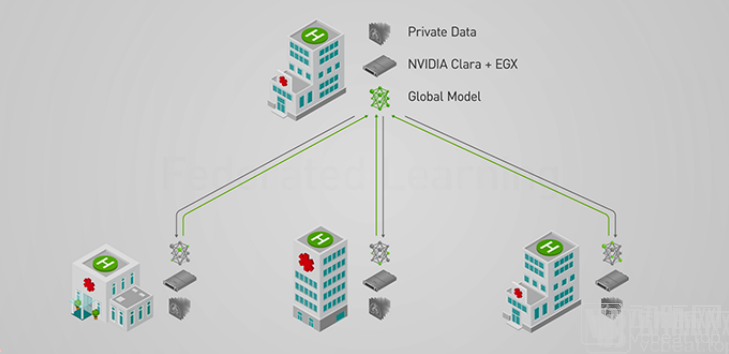
NVIDIA Clara Federated Learning employs distributed training to develop AI models across hospitals without sharing personal data.
However, for AI, there remains an even more intractable problem.
Steve Worrell, CEO of Riverain Technology, pointed out: “No matter how much data AI collects, it will always encounter situations where a disease manifests in a highly unusual way. Even with extensive accumulated training data, AI remains powerless in such cases.”
Rare diseases are a typical example. When a disease is not only rare but also exhibits significant heterogeneity in its clinical manifestations, it is difficult to collect sufficient data to build reliable analytical models.
To address this issue, Riverain Technology proposed a bold idea: using synthetic data to supplement clinical data.
“Data is the medium through which we train our software. If we rely solely on clinical data, we must collect samples for numerous specific scenarios. By constructing data around clinical scenarios, we eliminate the need to respond to individual cases and gain insights into the causes of algorithmic failures.”
Regrettably, Steve Worrell did not elaborate on the specific process of data generation; however, if an effective model for data synthesis could be developed, many challenges currently facing AI—such as safety concerns and data scarcity—would be readily resolved.
Compared with other top radiology conferences, the papers accepted by RSNA are mainly focused on clinical research. Therefore, the issues discussed in these papers are more closely related to practical clinical problems. Since the rise of the concept of artificial intelligence, the number of AI-related papers accepted by RSNA has shown a steady upward trend, doubling compared to 2018.
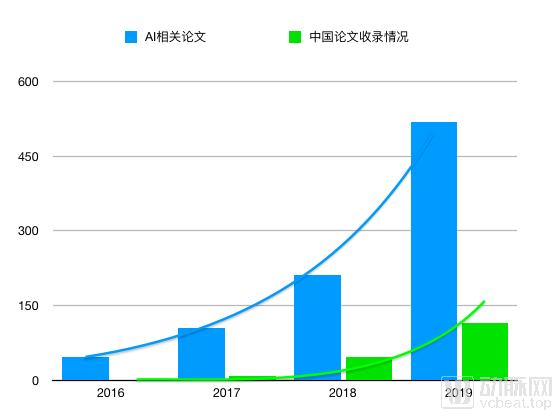
Although the upward trend has remained unchanged, physicians’ perspectives have been evolving. In 2016, the focal point of debate at the Radiological Society of North America (RSNA) was whether “AI is an assistant or a threat?” A year later, RSNA had defined AI’s role as “a significant innovation and tool for enhancing efficiency.” Today, this shift is evident in the words of Valerie P. Jackson, President of RSNA: “During my tenure as Board Chair, I hope RSNA will become a leader in artificial intelligence research and education.”
Certainly, in addition to the RSNA, the total number of papers accepted by various academic societies also highlights the current state and future development trends of radiology.
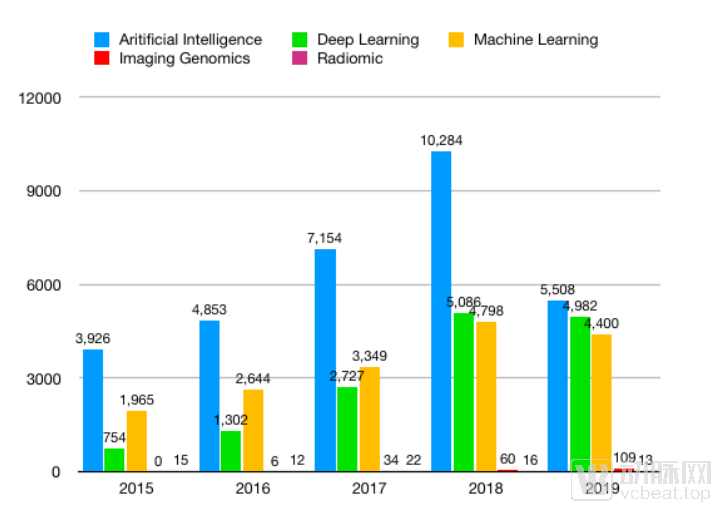
Data sourced from eAI Imaging Consultation
By searching for keywords, we can generate the chart above. The trends are evident: papers tagged with “deep learning,” “machine learning,” and “molecular genetics” have risen steadily year by year. However, this year, the number of indexed papers on deep learning has plateaued, while those on machine learning have declined.
With the total number of submissions in deep learning and machine learning remaining virtually unchanged, there has been a significant decline in submissions tagged with “Artificial intelligence.” This implies that radiology researchers have developed a more profound understanding of AI, possessing greater clarity on which algorithms to employ to achieve specific objectives.
The number of submissions to Molecular Genetics rose from zero in 2015 to 109 in 2019, demonstrating the vitality of this emerging research direction. As mentioned above, the integration of imaging, pathology, and genetics may unleash new momentum in the future.
Due to the discrepancy between test data and real-world clinical data, many companies that performed exceptionally well on test datasets have stumbled upon deployment in hospitals. However, under current circumstances, it is difficult to find alternative means to measure the differences between two distinct AI products or to assess the potential improvement in medical efficiency that AI could deliver under ideal conditions. Therefore, human-AI competitions still hold certain value.
On December 2, RSNA announced the winners of the Intracranial Hemorrhage AI Challenge. Ten teams made the list: SeuTao, NoBrainer, takuoko, GZ, Keep Digging Gold, BRAIN-SCAN.AI, Big Head, Shoukin de Yakiniku, Mind Blowers, and VinBDI.MedicalImagingTeam.
The dataset used in this competition was jointly provided by multiple research institutions, comprising a total of 25,000 multi-phase head CT scans. Furthermore, this marks the first time that the RSNA AI Challenge has adopted a multi-planar dataset. Through the design of the competition format, future AI challenges may be better equipped to differentiate and evaluate AI products.
The annual RSNA highlights invariably feature competitive showcases by domestic and international medical imaging equipment manufacturers, including GPS (GE Healthcare, Philips, and Siemens Healthineers), United Imaging, and Neusoft. Notable product launches include Philips’ new MR Ingenia Ambition, Siemens’ mobile head CT SOMATOM ON.site, United Imaging’s ultra-wide-bore 3.0T MRI uMR Omega, and its vehicle-mounted intelligent digital PET-CT. GE, meanwhile, emphasizes cost-containment strategies; in saturated markets like the United States, leveraging software solutions to help hospitals reduce expenses may hold equally profound value.
Traditional magnets must be immersed in 1,500–2,000 liters of liquid helium to maintain their superconducting properties. Philips’ Ambition reimagines the magnet design, requiring only 7 liters of liquid helium to generate a stable static magnetic field. Thanks to this technological innovation, the Ambition eliminates the need for a quench pipe, reduces the total system weight to 2,300 kg, and can be installed on virtually any floor and in any department.
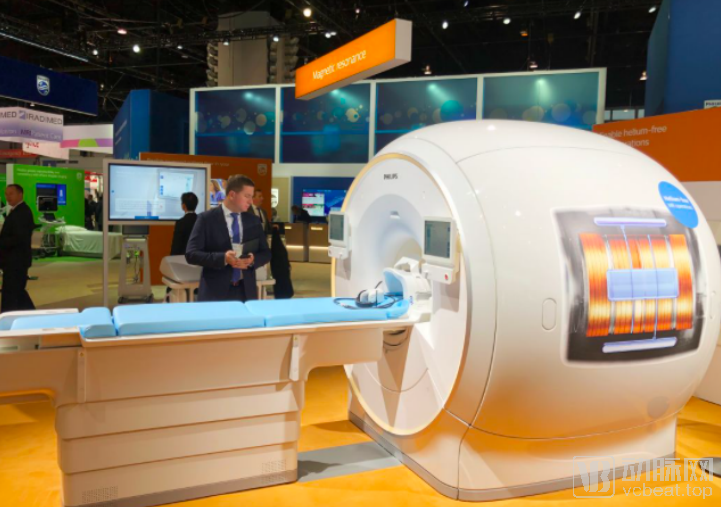
Ingenia Ambition
Image source: WeChat Official Account “Philips Healthcare”
Another refreshing product is the world’s first mobile intelligent digital PET-CT launched by United Imaging. In the United States, approximately two million PET-CT scans are performed annually. For populations in areas far from hospitals, mobile PET-CT has always been an effective means of improving access to high-end medical equipment services.
However, due to high technical complexity and prohibitive costs, more advanced digital PET-CT systems have historically been difficult to deploy in mobile vehicles. United Imaging’s newly launched mobile intelligent digital PET-CT innovatively brings this “molecular imaging diagnostic powerhouse” into a vehicle-mounted configuration, undoubtedly paving a new path for expanding the PET-CT market.
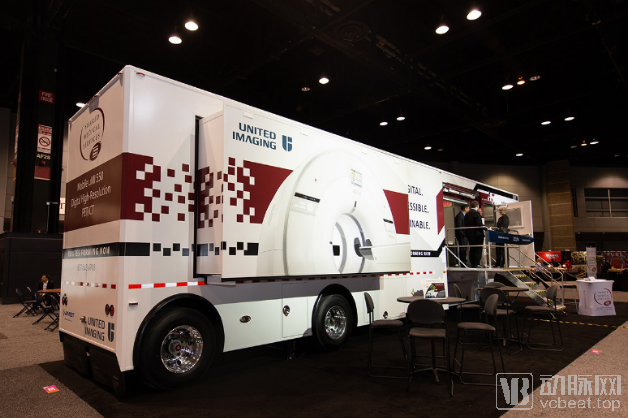
United Imaging Unveils World’s First Mobile Intelligent Digital PET-CT to the Global Market
In addition to various imaging equipment, industry giants have also made substantial investments in AI. VCBeat has compiled and summarized the technologies of these companies as follows: What directions are medical device giants taking in their approach to AI technology?
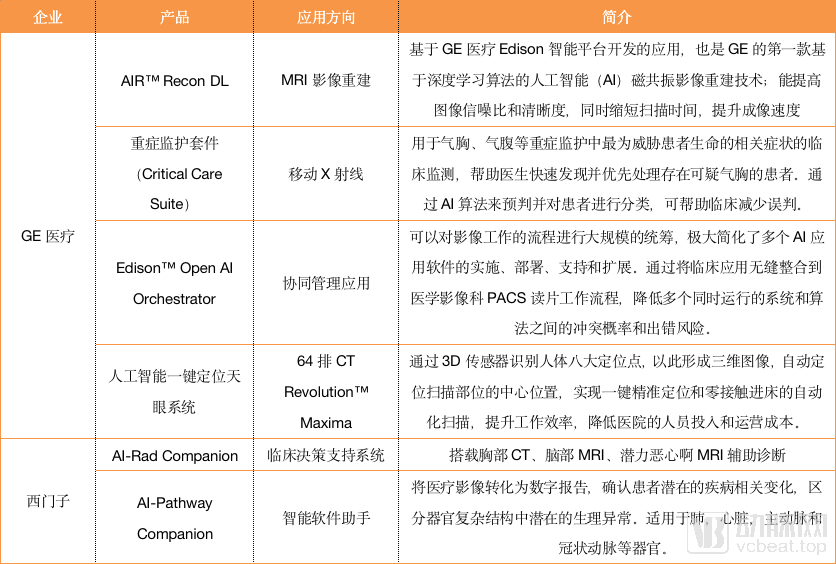
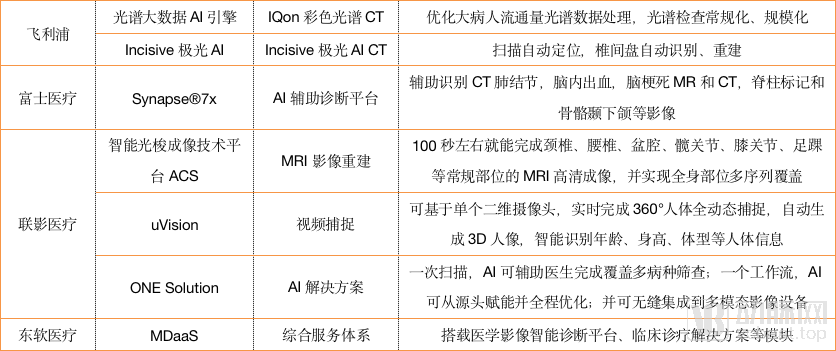
AI Applications from Device Manufacturers Exhibited at RSNA
Overall, most medical device manufacturers are keen on integrating AI into the workflows of their existing products to demonstrate its value through “efficiency enhancement.” United Imaging presents a unique case. Zhan Yiqiang, COO of United Imaging Intelligence, explained that the AI-assisted diagnostic tools independently developed by United Imaging Intelligence will be more compatible with United Imaging’s equipment. They are striving to identify a more effective model for AI development to scale up the entire development process. Although this approach requires substantial upfront investment, once a sufficient number of AI functional modules are in place, the cost of developing subsequent products gradually decreases, and AI technology is poised for exponential growth.
The needs of radiology departments can be broadly categorized into two types: the first pertains to imaging quality and accessibility, while the second focuses on accelerating diagnostic and treatment efficiency. As previously mentioned, most medical device manufacturers fall into the first category, whereas numerous AI startups are dedicated to enhancing the efficiency of radiology departments.
YITU Medical, Infervision, DeepWise, SHUKUN, and Huiyi Huiying—these five AI startups are no strangers to the RSNA. This year, they once again brought their homegrown artificial intelligence technologies to Chicago, showcasing China’s strength to radiologists worldwide.
At RSNA 2018, YITU Medical launched the world’s first full-region AI system—the care.ai® Intelligent 4D Chest CT Imaging System. By this year, the system has been upgraded to further automate the in-depth analysis of nodules, lymph nodes, and other metastatic lesions. Additionally, DeepWise unveiled its new AI product, the “Dr. Wise” All-in-One AI System for Pediatric Growth and Development, at the conference, further enhancing its product portfolio.
SHUKUN also demonstrated its mature solutions for the clinical deployment of digital heart and brain products in hospital departments.
However, the Chinese market is vastly different from the U.S. market. SHUKUN told VCBeat that feedback from overseas exhibitors and international clients indicates that customers in Europe and the United States place greater emphasis on enhancing clinical decision-making capabilities and improving patient workflows and experiences, rather than focusing solely on the efficiency gains brought by AI. Therefore, to carve out a path in the U.S. market, AI companies need to further explore their market strategies.
A review of the RSNA exhibition reveals that the platform sector is becoming increasingly crowded. In addition to GPS (GE Healthcare, Philips, and Siemens Healthineers), major medical imaging data processing company Terarecon showcased its envoyAI platform, while clinical speech technology leader Nuance and former film giant Fujifilm also launched their respective AI platforms... The race to claim territory in the AI landscape is intensifying.
In the startup sector, companies such as AIDoc, VizAI, and Subtle Medical have each secured FDA approval for more than one AI product in their respective niche markets. These products are gradually being deployed in hospitals and have begun to generate revenue for these enterprises.
It is difficult to predict the direction in which AI will evolve by 2020. Paul Chang, Advisor at Subtle Medical and Chair of Radiology at the University of Chicago Medicine, offers insights that may reflect emerging trends: “As long as our discussions remain focused on AI itself, it indicates that our understanding is still immature. Only when we shift our focus to clinical needs, applications, and value do we truly begin to understand AI. AI companies should not position themselves merely as adjuncts to PACS. It is through continuous efforts to optimize workflows, enhance efficiency, improve quality, and ensure consistency that AI will demonstrate its true value.”