

Sidoc Medical's Tibet Initiative: Bringing Point-of-Care Ultrasound to Remote Regions
It takes a six-hour drive from downtown Xining, Qinghai Province, to reach the Jimei Jianzan Ethnic Vocational School. The route along China National Highway 227, one of the country’s most scenic national highways, gradually ascends to an average elevation of 4,000 meters, where travelers often begin to experience altitude sickness as they near their destination.
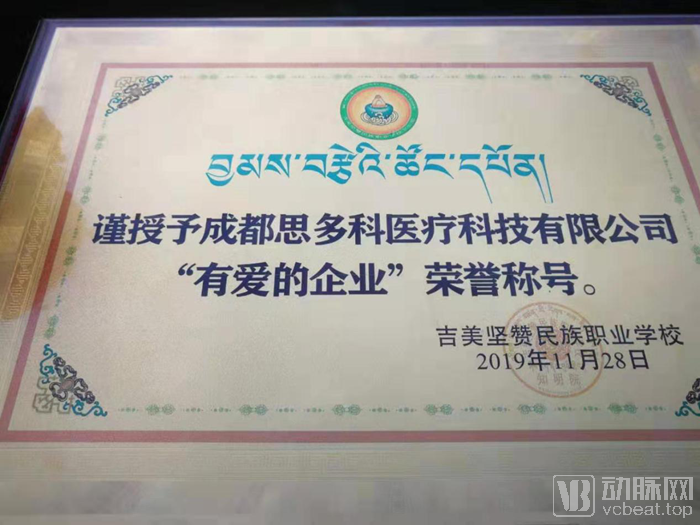
Along this national highway, one can find not only magnificent snow-capped mountains, canyons, pastures, rivers, and mountain ranges, but also a renowned Tibetan school. On November 27, 2019, Chengdu Siduoke Medical Technology Co., Ltd. provided targeted assistance to the Jigme Gyaltsen Ethnic Vocational School by donating two intelligent ultrasound devices. Zhang Zhuo, CEO of Siduoke, visited the school on behalf of the company to assess local conditions firsthand. He also taught students basic ultrasound operation techniques, promoting the application of handheld ultrasound devices at the grassroots level.
Jigme Khyentse Ethnic Vocational School, founded by the monk Jigme Khyentse, is divided into a three-year “Department of Basic Cultural Studies” and a three-year “Department of Vocational Education.” It is the first private welfare school for Tibetans in Qinghai Province and the most influential tuition-free school in the entire Tibetan region. The school employs innovative teaching methods—extensively utilizing debate-based learning—to successfully integrate Han and Tibetan education, as well as to creatively blend traditional and modern educational approaches. The Department of Vocational Education at Jigme Khyentse Ethnic Vocational School also offers specialized courses in Tibetan medicine.

Advanced educational philosophies can take root in barren soil, yet advanced medical services remain scarce here due to the underdevelopment of healthcare infrastructure and capabilities.
Throughout Qinghai Province, there were a total of 59,369 healthcare personnel in 2018 (including licensed physicians, pharmacists, technicians, and administrative staff), among whom only slightly more than 13,000 were licensed physicians. The population of Qinghai reached 6.03 million in 2018, resulting in an average of 0.0022 physicians per person. This severe shortage has posed significant obstacles to the diagnosis and treatment of diseases.
Taking echinococcosis, which is highly prevalent in Tibetan areas, as an example, this disease is generally rare in large cities but constitutes a high-incidence infectious disease in pastoral regions. The incidence rate in western China typically ranges from 0.4% to 1%, while in certain localities on the Qinghai-Tibet Plateau, it reaches as high as 10%.
Clinical diagnosis of echinococcosis typically relies on ultrasonography, with analysis based on the resulting imaging findings, which can present in various forms. B-mode ultrasound plays a decisive role in diagnosing abdominal echinococcosis. However, access to medical care is challenging in the vast pastoral areas of Qinghai Province, where there is a shortage of highly skilled sonographers.
Leveraging its portability and compact design, handheld ultrasound technology can be widely deployed in primary healthcare institutions, equipping them with B-mode ultrasound capabilities. Serving as a “pocket ultrasound” for physicians, it facilitates precise disease screening, diagnosis, treatment, and follow-up.
Handheld ultrasound expands the application scenarios of ultrasound equipment in a cost-effective manner, playing a crucial role in remote or extreme environments, community health centers, and other settings.
Meanwhile, Siduoke Ultrasound’s remote transmission diagnostics enable real-time image transfer without latency or lag, effectively addressing the shortage of ultrasound diagnostic physicians in remote areas and eliminating the burden of long-distance travel for specialists, thereby significantly improving work efficiency.
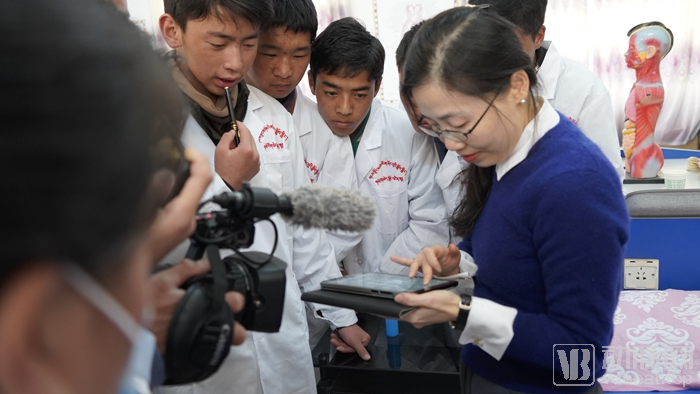
In addition to empowering physicians in Tibetan regions during the diagnostic process, handheld ultrasound devices can also be utilized for remote medical education. This enables expert physicians to extend their reach to more doctors in remote areas through distance learning. Traditionally, medical training and education could cover at most a few hundred physicians. However, with handheld ultrasound, doctors can perform real-time operations while learning ultrasound techniques. This approach not only provides immediate assistance but also imparts lasting skills.
Enabling more people to access high-quality medical services is the true purpose of applying technological advancements. Technology should reach those who need it most, serving as a vehicle for spreading compassion.
A volunteer who participated in the StoCare Tibet Aid Program stated, “On our return journey, heavy snow blocked the mountain passes, and the only scheduled flight of the day was canceled. In the end, monks from the college drove us to Xining. The moment when the Living Buddha of Lajia Monastery chanted scriptures and offered blessings for us was the most touching experience of my life.”