

JunLian Healthcare New Drug Bulletin Issue 34 Highlights Breakthrough Therapies in Oncology, Autoimmunity, and Respiratory Diseases
Dec 09, 2019 18:00
CST Updated
18:00

This week, there were 9 new drug data entries, including 4 in rheumatology and immunology, 1 in oncology, 1 in neurology, 1 in respiratory medicine, 1 in nephrology, and 1 in dermatology.
❖ IImmunityBio’s IL-15 superagonist N-803 has been granted Breakthrough Therapy Designation for the treatment of bladder cancer, following its earlier receipt of FDA Fast Track designation. The current first-line treatment for bladder cancer is transurethral resection of bladder tumor (TURBT), supplemented by intravesical chemotherapy or immunotherapy (Bacillus Calmette-Guérin, BCG); however, rates of recurrence and disease progression remain high. IL-15 may represent a new therapeutic direction. Cytokine therapies have garnered increasing attention in recent years, primarily due to their potential for combination with immuno-oncology (IO) agents.Potentially, especially IL-2 and IL-15. In 2018, Nektar Therapeutics received an upfront payment of $1.85 billion from Bristol Myers Squibb (BMS), with the two companies jointly developing NKTR-214 (an IL-2 formulation) and Opdivo for over 20 indications across nine types of solid tumors. Although particularly significant results have not yet emerged, industry enthusiasm remains undiminished, and IL-15 may also see a similar surge in interest.
❖ BiogenThe Company AnnouncesBIIB059In cutaneous lupus erythematosus and systemic lupus erythematosus (SLE) phase II clinical trials, both achieved the primary endpoints. From a mechanistic perspective,BIIB059should be withGSKofIFNMonoclonal Antibody DrugsanifrolumabThe mechanisms are consistent, both acting through modulation ofIFNto suppress the function of the immune system.Due to the complex pathogenesis of systemic lupus erythematosus (SLE), there has been little significant progress over the past 50 years. In 2011, HGS’s belimumab received FDA approval for the treatment of SLE, but its efficacy was modest. In 2019, RemeGen’s telitacicept and AstraZeneca’sanifrolumaball announcedPhase 3 trials have met their primary endpoints. From the current perspective, these successful or nearly approved drugs are all large-molecule agents (telitacicept is a fusion protein). This may be because immune-mediated diseases are complex and prone to systemic effects, thereby demanding higher selectivity for therapeutic targets.
Novartis’ Combination Asthma Drug Meets Phase 3 Clinical Endpoints
Novartis Announces That Its Combination Therapy QMF149 Met Primary and Key Secondary Endpoints in the PALLADIUM Phase 3 Pivotal Trial in Patients with Asthma
QMF149 consists of two active ingredients: the long-acting β2-agonist (LABA) indacaterol acetate and the inhaled corticosteroid (ICS) mometasone furoate (MF).
A randomized, double-blind, active-controlled Phase 3 clinical trial in adult patients with asthma who had previously received LABA/ICS therapy but whose symptoms remained inadequately controlled; patients were randomized to receive medium/high doses of QMF149 or MF/SFC.
Compared with the MF active control group, QMF149 not only significantly improved patients’ lung function but also improved their forced expiratory volume in one second (FEV1), thereby achieving the primary endpoint of the trial.
Acadia’s Dementia Drug Meets Endpoint in Phase 3 Trial
Acadia Pharmaceuticals Announces That Pimavanserin, a Serotonin Receptor Inverse Agonist, Met Primary and Key Secondary Endpoints in Phase 3 Trial for Dementia-Related Psychosis
Pimavanserin is a selective serotonin inverse agonist (SSIA) that selectively targets the 5-HT2A receptor, reducing its basal activity.
Phase 3, double-blind, placebo-controlled trial: Patients who met prespecified remission criteria during a 12-week open-label treatment period were randomized to the subsequent double-blind phase to continue receiving either pimavanserin or placebo.
After 12 weeks of pimavanserin treatment, patients across all subtypes experienced significant symptom relief and achieved clinical stability; results from the 26-week double-blind phase demonstrated a 2.8-fold reduction in the risk of disease recurrence compared with placebo.
ViiV Healthcare Submits Marketing Application for HIV Therapy
ViiV Healthcare Announces Submission of New Drug Application (NDA) to U.S. FDA for “First-in-Class” Antiviral Therapy Fostemsavir for the Treatment of Adults with Multidrug-Resistant HIV-1
Fostemsavir is a prodrug of temsavir. Temsavir binds to the gp120 subunit of the HIV-1 envelope glycoprotein gp160 complex, blocking the interaction between the virus and the cellular CD4 receptor, thereby preventing viral entry into host cells.
In Phase 3 clinical trials, fostemsavir was used in combination with optimized background therapy (OBT) to treat refractory patients with multidrug resistance.
At Weeks 24, 48, and 96 of treatment with fostemsavir plus OBT, 53%, 54%, and 60% of patients in the randomized cohort, respectively, achieved virologic suppression (HIV-1 RNA <40 copies/mL).
BMS Drug for Preventing Graft-versus-Host Disease Receives Breakthrough Therapy Designation
Bristol Myers Squibb (BMS) Announces FDA Breakthrough Therapy Designation for Orencia (abatacept) to Prevent Moderate-to-Severe Acute Graft-versus-Host Disease (GvHD) in Patients Undergoing Hematopoietic Stem Cell Transplantation from Unrelated Donors
Orencia treats autoimmune diseases by interfering with the immune activity of T cells, specifically and effectively binding to CD80/86 molecules to block the second signal, thereby preventing T cell activation.
Phase 2 trial aimed at evaluating the efficacy of adding Orencia to standard GvHD prophylaxis regimens in preventing severe acute GvHD
Positive Results from Clinical Trials
Mechanism of Action of Orencia
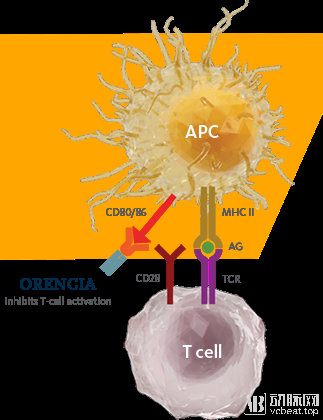
Data Source: BMS
ImmunityBio’s IL-15 Agonist Receives Breakthrough Therapy Designation
ImmunityBio Announces FDA Breakthrough Therapy Designation for IL-15 Superagonist N-803 in Combination with Bacillus Calmette-Guérin (BCG) for the Treatment of BCG-Unresponsive Non-Muscle-Invasive Bladder Cancer Carcinoma In Situ (CIS)
N-803 is a novel IL-15 superagonist complex. Compared with endogenous non-complexed IL-15 in vivo, N-803 exhibits improved pharmacokinetic properties, prolonged persistence in lymphoid tissues, and enhanced antitumor activity.
Phase I and II Clinical Trials for the Treatment of CIS Patients
In the subgroup of patients with Ta/T1 papillary/non-papillary CIS, 90% of those receiving combination therapy with N-803 and BCG achieved complete response (CR).
Aurinia’s Innovative Therapy for Lupus Nephritis Meets Phase 3 Clinical Endpoints
Aurinia Pharmaceuticals Announces That Voclosporin, in Combination with Mycophenolate Mofetil (MMF) and Low-Dose Steroids, Met All Primary and Key Secondary Endpoints in a Pivotal Phase 3 Clinical Trial for the Treatment of Patients with Lupus Nephritis (LN)
Voclosporin is a potential “best-in-class” calcineurin inhibitor (CNI). By inhibiting calcineurin, it blocks IL-2 expression and T cell-mediated immune responses, and stabilizes podocytes in the kidney.
Global study included 357 patients with lupus nephritis (LN)
voclosporin achieved a renal response rate of 40.8%, compared with 22.5% in the control group (p<0.001).
Ardelyx’s Chronic Kidney Disease Therapy Meets Primary Endpoint in Phase 3 Trial
Ardelyx Announces That Its NHE3 Inhibitor Tenapanor Significantly Improved Serum Phosphorus Levels and Met the Primary Endpoint in the Pivotal Phase 3 PHREEDOM Trial for Hyperphosphatemia in Patients with Chronic Kidney Disease (CKD) on Dialysis
Tenapanor is an inhibitor of NHE3, a sodium ion transporter in the gastrointestinal tract. It reduces the amount of sodium ions absorbed from food in the gastrointestinal tract, thereby increasing the concentration of protons in gastrointestinal cells. Its inhibitory effects on sodium and phosphate absorption are selective and do not affect the intestinal absorption of other ions, molecules, and nutrients.
Enrollment of CKD Patients on Dialysis for One Year, Phase III Trial
In the tenapanor treatment group, mean serum phosphorus levels were 1.4 mg/dL lower than those in the placebo group; during the 26-week treatment period, 77% of patients receiving tenapanor achieved a reduction in serum phosphorus levels of 2.0 mg/dL from baseline.
Mechanism of Action of Tenapanor
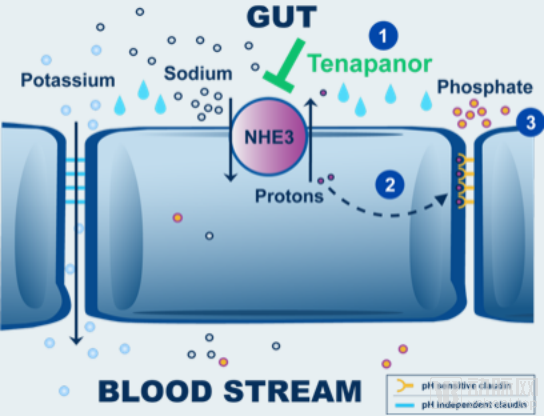
Data source: Ardelyx
Positive Clinical Results for Aslam’s Atopic Dermatitis Therapy
Aslan Pharmaceuticals (Aslam-KY) announced that ASLAN004, a monoclonal antibody targeting the IL-13 receptor alpha 1 subunit (IL-13Rα1) developed by the company, achieved positive results in a proof-of-concept trial for the treatment of atopic dermatitis.
ASLAN004 is a potential first-in-class humanized monoclonal antibody targeting IL-13Rα1. It blocks the signaling of the pro-inflammatory cytokines IL-4 and IL-13 by binding to IL-13Rα1.
In a randomized, double-blind, placebo-controlled clinical trial, patients with atopic dermatitis received treatment with ASLAN004 at three different doses.
Among the three patients who received treatment for at least one month, the Eczema Area and Severity Index (EASI) scores decreased by 85%, 70%, and 59%, respectively, compared with baseline.
Biogen’s New Lupus Therapy Meets Primary Endpoint in Phase 2 Trial
Biogen Announces That Its Humanized IgG1 Monoclonal Antibody BIIB059 Significantly Reduced Disease Activity Compared with Placebo and Met the Primary Endpoint in the Phase 2 LILAC Trial in Patients with Cutaneous Lupus Erythematosus (CLE) and Systemic Lupus Erythematosus (SLE)
BIIB059 is a humanized IgG1 monoclonal antibody targeting blood dendritic cell antigen 2 (BDCA2). BDCA2 is a receptor uniquely expressed on plasmacytoid dendritic cells (pDCs), a subset of human immune cells. It can reduce the production of inflammatory cytokines, including type I interferons (IFN-I), and plays a crucial regulatory role in the pathogenesis of lupus.
Randomized, Double-Blind, Placebo-Controlled Phase II Clinical Trial
At Week 16, BIIB059 significantly improved the Cutaneous Lupus Erythematosus Disease Area and Severity Index Activity (CLASI-A) score in patients with cutaneous lupus erythematosus (CLE) compared with baseline, thereby meeting the primary endpoint of the trial.
❖ Mylan and Indian Pharmaceutical CompaniesBioconSuccessfully Launched a Biosimilar of Herceptin in the United StatesOgivri, following Amgen/AllerganKanjintiThe Second Herceptin Biosimilar to Be Launched in the U.S. Market
❖FerGeneAnnouncednadofaragene firadenovecThe Criticality of Intravesical Instillation Therapy Every Three MonthsIIIPositive results from the Phase clinical trial. The results showed that the study met its primary endpoint: inCIS±Ta/T1Among the patients, treatment3months,53%patients achieved complete remission, treatment12months,24%patients continued to show complete response
❖Y-mAbs TherapeuticsThe company announced that it has launched its targetedGD2Humanized Monoclonal Antibody Against Antigennaxitamabrolling Biologics License Application for the treatment of relapse/Patients with refractory high-risk neuroblastoma
❖Genentech, a member of the Roche Group, announced that the United StatesFDAApprovedTecentriq(atezolizumab) and chemotherapy (Abraxane[Albumin-Bound Paclitaxel; nab-Paclitaxel]and carboplatin) as a combination for metastatic non-small cell lung cancer (NSCLC) as the first-line therapy for patients, patients withoutEGFRorALKMutation