

Returning to Chunyu Doctor: Wang Yuxiao's Love and Original Aspirations
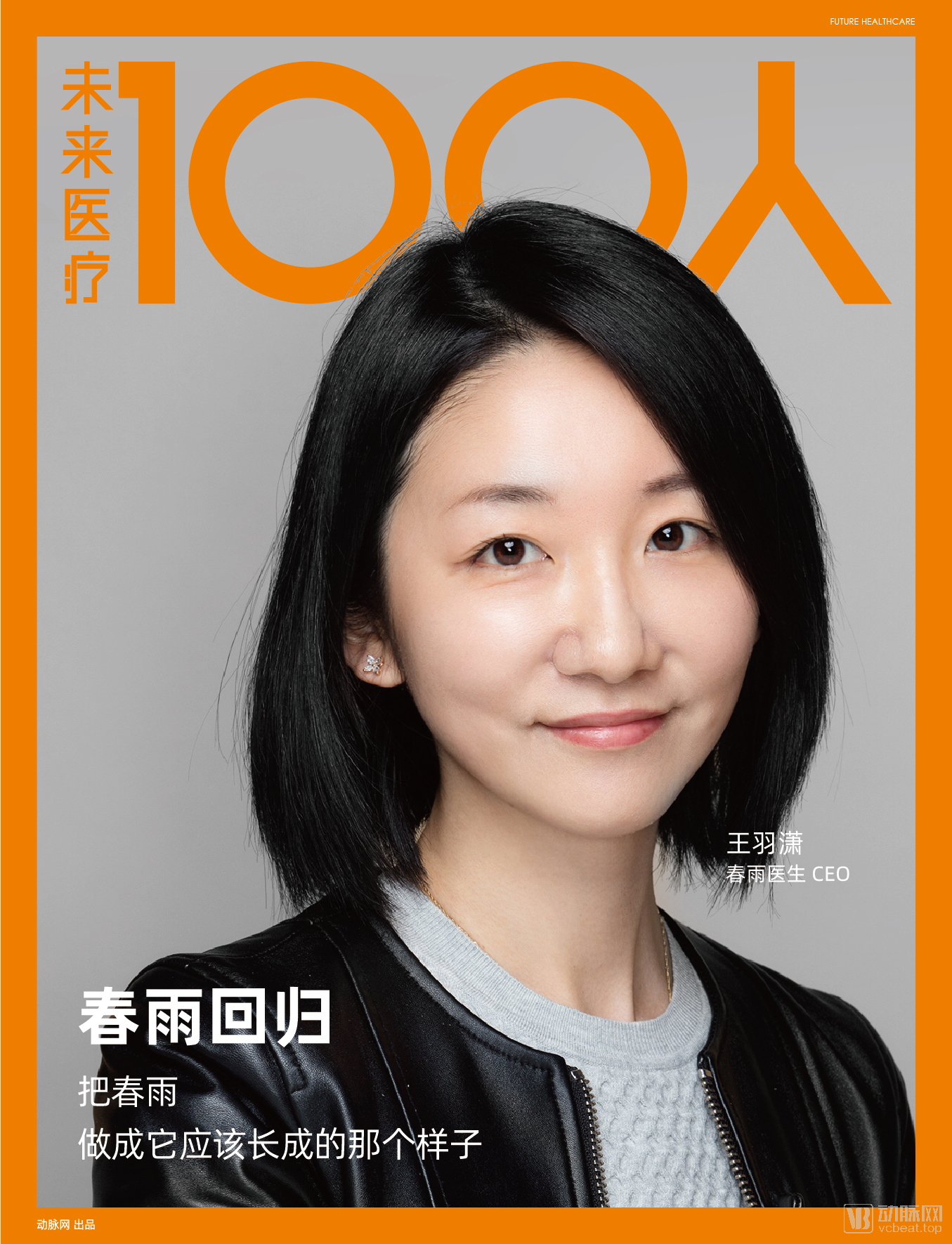
Born in Dongying, Shandong Province, Wang Yuxiao topped the city’s liberal arts rankings in the National College Entrance Examination. Inspired by her journalistic ideals, she enrolled at Renmin University of China. After completing her master’s degree, she joined the China Aerospace Science and Technology Corporation, where she was promoted to deputy division-level cadre at the age of 26. Up until then, Wang’s life had been remarkably smooth. Three years ago, when devastating news struck, she was completely unprepared: “Before that, I hadn’t even imagined that anything bad could happen in this world.”
During the 2016 National Day holiday, Wang Yuxiao’s husband, Zhang Rui, passed away from a myocardial infarction. The sudden bereavement and the prolonged media scrutiny have had a lasting impact on Wang that continues to this day. In the aftermath of its founder’s death, Chunyu Doctor, one of the pioneers of internet healthcare in China, gradually shifted from its previous rapid expansion to a more low-key and pragmatic approach.
“At that time, Renmin University of China had many esteemed senior professors, one of whom was Fang Hanqi. I remember him teaching our class. With his snow-white hair, he sat at the very front of a lecture hall filled with hundreds of students. Without using a microphone, his voice could be clearly heard even in the back row. He once shared with us these words: ‘Shoulder justice with iron resolve; craft articles with a masterful pen.’”
“At the time, those words barely registered with me. Yet in many moments throughout life, you find yourself recalling them, and they become a decisive force at critical junctures. To this day, I still believe that journalism is an excellent lens through which to observe the world—a robust methodology. Journalism graduates tend to be highly receptive to new developments, and the research methods inherent in journalism help one better understand the world and emerging phenomena. More importantly, it instills in you a lasting sense of reverence and responsibility. When you carry these values within, you inevitably stand apart from the crowd.”

Journalism at Renmin University of China has a tradition of requiring students to undertake full-time internships during their junior year. In 2003, Wang Yuxiao’s internship coincided with the SARS outbreak, when “there were few people on the streets and almost no one on the subway.” During the day, she interned at Siemens Healthineers; after finishing work at 6 p.m., she would rush to China Central Television (CCTV) to work for a nighttime news program from 7 p.m. to 12:30 a.m. She would return to her dormitory around 1 or 2 a.m., sleep for a few hours, and then leave her dorm room again at 7 a.m. the next morning with her backpack on.
During the same period, Zhang Rui transitioned from his role as Editor-in-Chief of The Beijing Times to become Deputy Editor-in-Chief of NetEase News. In the blog era, Zhang Rui’s personal blog signature read, “Journalism is an ideal.” On one occasion, Wang Yuxiao and Zhang Rui had a serious discussion about this phrase. Zhang Rui remarked that he had yet to find that balance and had not attained the stature of the perfect journalist he envisioned. Although Wang Yuxiao had completed internships at China Central Television (CCTV), Beijing Youth Daily, and Phoenix New Media, she did not even choose journalism as her profession; instead, she regarded it as an ideal.
Beijing has two well-known places named with numbers. One is the 798 Art Zone, located in Jiuxianqiao, Chaoyang District; the other is the 768 Creative Park, situated on Xueyuan Road in Haidian District. Both were originally old factory buildings constructed in the last century and have been revitalized through renovation. Many well-known internet companies, including Zhihu and Maimai, have chosen to locate their offices in the 768 Creative Park.

In Wang Yuxiao’s memory, a great many things happened that afternoon in the 768 Industrial Park. At the time, she and Zhang Rui had wandered to the front of a building undergoing renovation when a young boy’s soccer ball rolled to her feet, and she went to pick it up for him. The boy’s father, the property owner who had contracted the building’s management, came over on the spot to chat. Zhang Rui mentioned his desire to start a business and asked whether it might be possible to rent some space.
That afternoon, Wang Yuxiao was suddenly seized by the urge to dance, so Zhang Rui accompanied her to a dance studio that taught Chinese classical dance. Thereafter, Wang Yuxiao made it a habit to visit the studio once a week. As unexpected twists and turns later befell her life, the dance studio became the sole sanctuary where she could find relief…
Around 2011, China witnessed a series of significant developments. It was a time when the era of web portals was drawing to a close, while mobile internet was poised for rapid growth. The atmosphere for internet entrepreneurship in China was highly vibrant then. After his experiences with Xiaonei and Fanfou, Wang Xing founded Meituan; Lei Jun decided to step down as Chairman of Kingsoft to establish Xiaomi; and Zhang Xiaolong was leading Tencent’s Guangzhou R&D product team in developing WeChat.
At that time, Zhang Rui, who had spearheaded internal projects at NetEase such as the NetEase mobile client and NetEase Open Courseware, was also seeking new opportunities while serving as Deputy Editor-in-Chief of NetEase. In a later speech, Zhang Rui recounted his original motivation for founding Spring Rain Doctor: “The foundation of traditional medicine is built upon a tragic backdrop that we often overlook—as human beings, we do not actually possess the right to know or the right to make decisions regarding our own bodies.” He aimed to leverage information technologies such as mobile internet to “extend the value chain and industrial chain of traditional healthcare,” thereby empowering individuals with the right to know about their own health.
When Zhang Rui left NetEase to found Chunyu Doctor, Wang Yuxiao also sought to depart from the China Aerospace Science and Technology Corporation (CASC), where she had worked for five years. She was the first professionally trained journalism graduate recruited by the Chinese aerospace system for news and publicity work. During those five years, Wang Yuxiao spearheaded numerous “zero-to-one” initiatives within the Chinese aerospace system, including outstanding coverage of the entire launch process of Chang’e-1. At peak times, she would spend months with the launch team in Xichang, at one point even producing a news feature exceeding 5,000 words every single day.
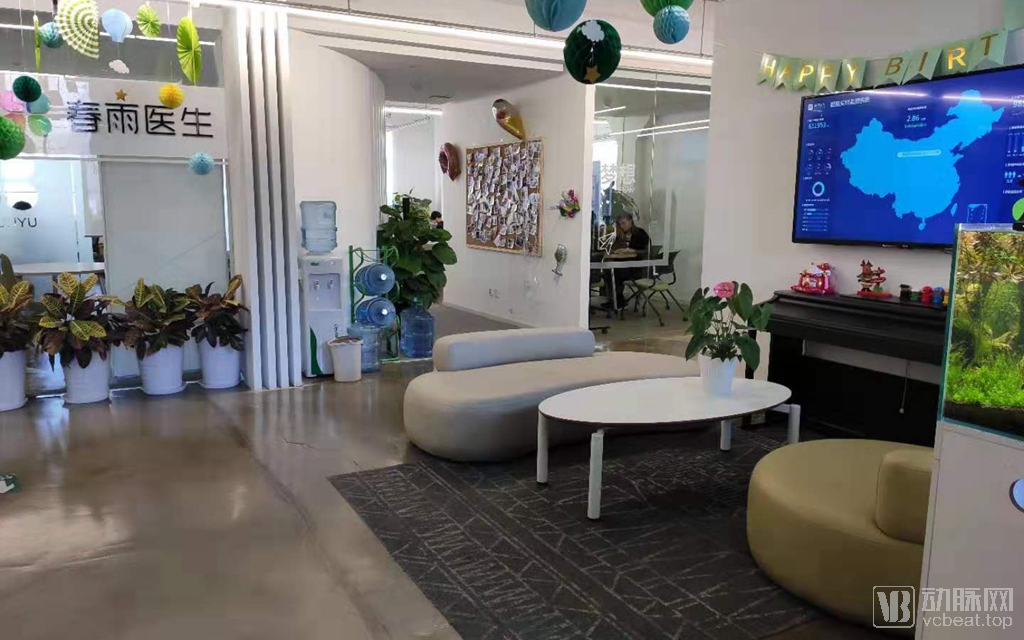
During this period, although Wang Yuxiao did not hold a long-term position directly within Spring Rain Doctor, she was deeply involved in its startup journey, including creating the “Human Self-Diagnosis Map” in the early stages, contributing to strategic planning, and assisting with fundraising. More often than not, Wang Yuxiao essentially played the role of a “user.”
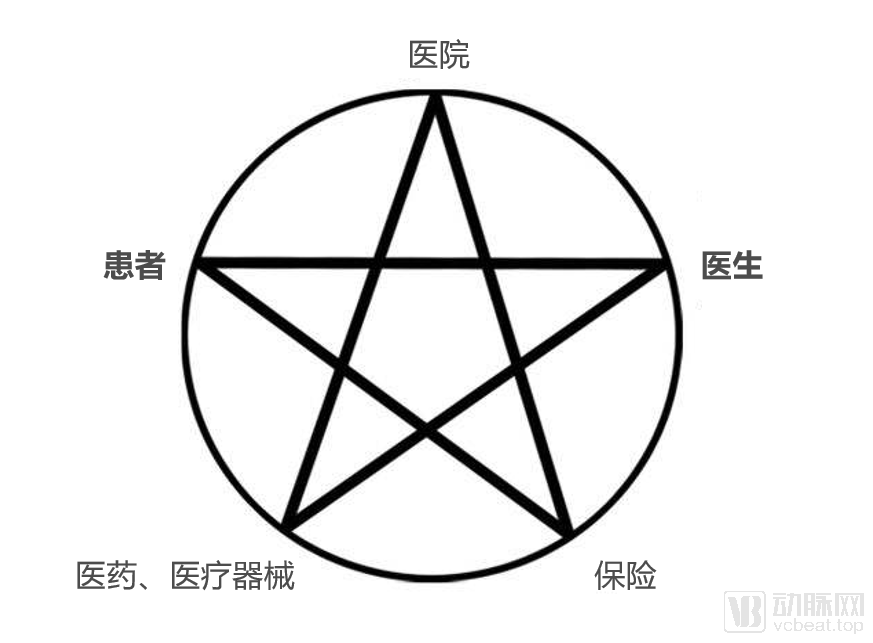

“Was Zhang Rui right or wrong? I pondered this question for a long time, and the conclusion I reached is that he was right. His strategy and approach were entirely correct; it was just that he was too hurried. Moreover, this haste may not have been entirely of his own choosing, as the broader environment at the time left little alternative. From a capital market perspective, if your company is valued at RMB 1 billion this year, you are inevitably expected to reach a valuation of RMB 5 billion or even RMB 10 billion the following year. Such an atmosphere is unavoidable. I believe that many companies today are still operating under similar pressures.”
Wang Yuxiao said, “After we calmed down before anyone else, we realized that the healthcare industry has its unique characteristics and is not easily disrupted quickly. It requires time, deep cultivation, and persistent accumulation like water dripping through stone. Only with such perseverance in ideals and passion, as demonstrated by many Spring Rain employees, can disruptive change truly occur.”
To put it simply, Spring Rain is returning to its core mission of deeply connecting doctors and patients with a patient-centric approach. Rather than pursuing blind expansion, it focuses on strengthening its core business to extend the company’s lifecycle. “Spring Rain is an enterprise that creates new value every year, with each year surpassing the previous one in value creation. Moreover, this value is increasingly reflected in the transformation of the medical service ecosystem.”
Wang Yuxiao has a clear understanding of his role. “The founding of Chunyu Doctor was driven by a mission and holds significant meaning. From day one, it was destined to take on a specific form. My job is simply not to impose my own ambitions, power, or ulterior motives onto the company, but rather to let Chunyu Doctor grow into what it is meant to be.”