

Forum on Building an Integrated 'Research-Education-Industry-Investment' Smart Healthcare Ecosystem Concludes, Unpacking New Drivers for Advancement
To explore the construction of a smart healthcare ecosystem and forecast investment trends for the coming year, the forum titled “Building a ‘Research-Learning-Industry-Investment’ Smart Healthcare Ecosystem,” hosted by BOC Group Investment Co., Ltd. (hereinafter referred to as “BOC Investment”), was successfully held in Chengdu on December 7, 2019. This marked another collaboration between BOC Investment and the National Medical Artificial Intelligence Conference, following their joint organization of the “Capital Empowering the Upgrading of the AI Healthcare Industry” forum in 2018. At the forum, industry elites, clinical experts, academic leaders, and prominent investors in the healthcare sector gathered to engage in in-depth discussions and share insights on cutting-edge technologies, development trends, investment directions, and innovative practices in smart healthcare.
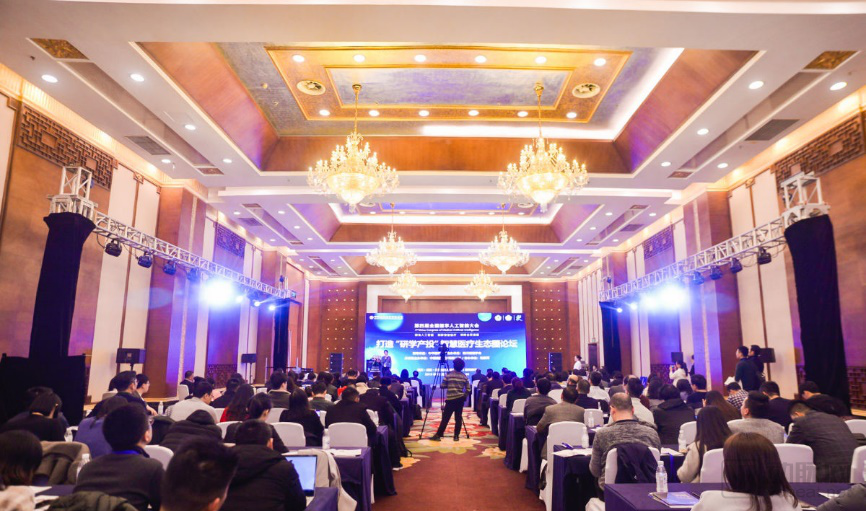
Smart healthcare is an emerging field that has risen to prominence in the healthcare sector in recent years. The new global wave of information technology revolution, driven by next-generation information and network technologies such as cloud computing, big data, artificial intelligence, mobile internet, and the Internet of Things (IoT), has accelerated the development of smart healthcare. The integration of smart healthcare with emerging technologies has not only transformed the industry’s foundational infrastructure from the perspectives of technology and resource supply but also fundamentally reshaped the supply-and-demand dynamics of healthcare services in terms of business models and operational approaches.
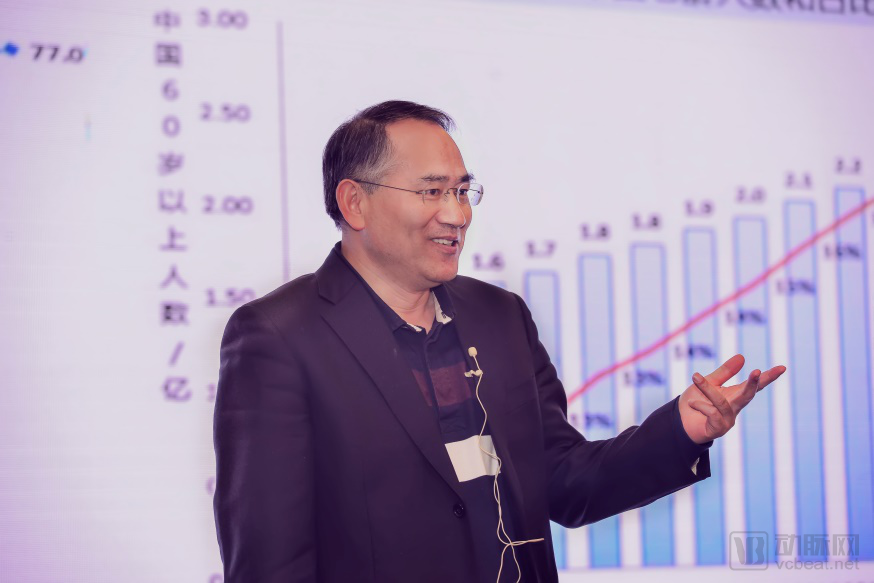
Gong Jianzhong, Chairman and Executive President of BOC Investment
Gong Jianzhong, Chairman and Executive President of BOC Investment, stated, “As the living standards of Chinese citizens continue to improve and life expectancy steadily increases, there is a growing demand for higher quality and efficiency in healthcare. The public requires health management services that cover the entire lifecycle. On the technology supply side, AI has significantly expanded the boundaries of healthcare, making large-scale, precise early screening possible, enhancing the precision of treatment, and improving the efficiency of postoperative management. However, relying solely on AI technology is far from sufficient. We need a robust ecosystem integrating industry, academia, research, and investment to support innovation at every stage, from R&D to commercialization, and leverage capital to optimize this collaborative ecosystem.”
Smart healthcare features diverse innovations with boundless possibilities. Unlike previous technologies that evolved along linear paths and transformed individual segments of the medical industry chain, smart healthcare reconstructs every aspect of the traditional healthcare sector through greater efficiency, more precise support, and entirely new doctor-patient interactions.
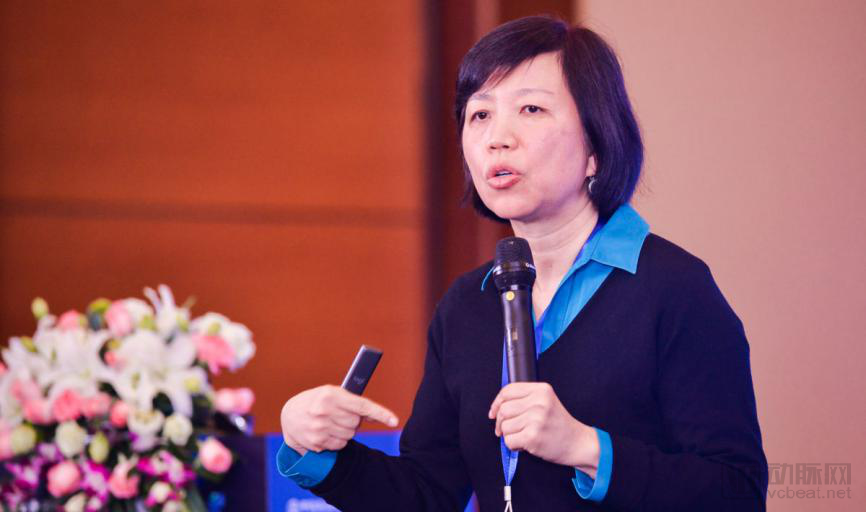
Liu Qianye, Partner at Bencao Capital
At the source of medical innovation, cross-disciplinary innovation is driving cutting-edge, disruptive transformations. Commenting on this trend, Liu Qianye, Partner at Bencao Capital, stated, “Artificial intelligence is one domain within cross-disciplinary innovation. We have observed an explosive growth in technological advancements, which means that incremental innovations are increasingly unable to meet future demands. The market’s expectations for disruptive technologies are rising accordingly. Disruptive technologies originate from cross-disciplinary innovation, a fact corroborated by the success stories of three Silicon Valley companies: Illumina, Intuitive Surgical, and Invisalign. Looking ahead, we need to encourage cross-sector integration so that more disruptive technologies can emerge in China.”
Smart healthcare is advancing vigorously, with emerging technologies serving as a key fuel for its development. Among these, AI technology has permeated multiple stages, including drug R&D, disease prevention, diagnosis and treatment, and hospital management, beginning to assume the role of foundational technology in the era of smart healthcare. However, the development of medical AI has not been without obstacles. Professor Liu Quanying from Southern University of Science and Technology and Sun Xiaorong, Chairman and General Manager of Wuhan Landing High-Tech, shared insights on the applications and challenges of AI technology from the perspectives of academic research and industrial development, respectively.
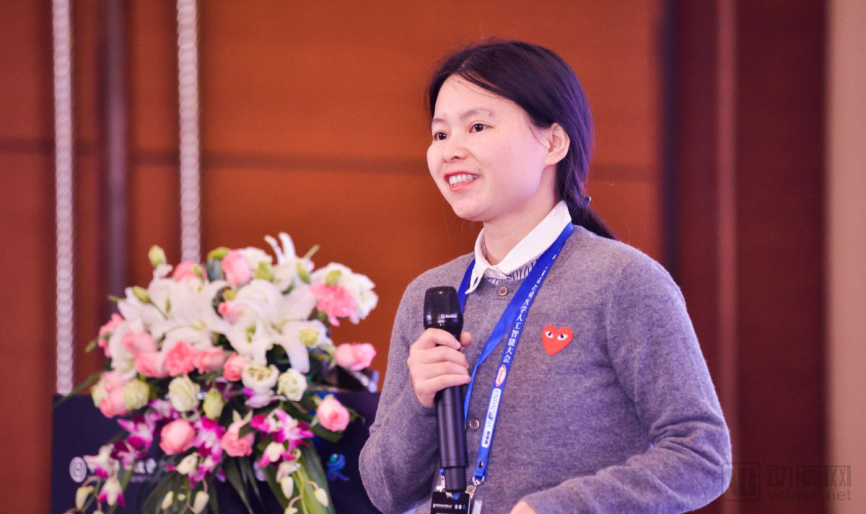
Professor Liu Quanying, Southern University of Science and Technology
Professor Liu Quanying stated, “This is the best of times for AI: we have mature AI algorithms ready for direct application, robust computational power to implement these algorithms, and abundant data. However, it is also the worst of times, as issues surrounding doctor-patient relationships and ethics remain unresolved, requiring both academia and industry to proceed with caution. Researchers will continue to explore ways to effectively empower healthcare through AI technology while enhancing public trust in these advancements.”
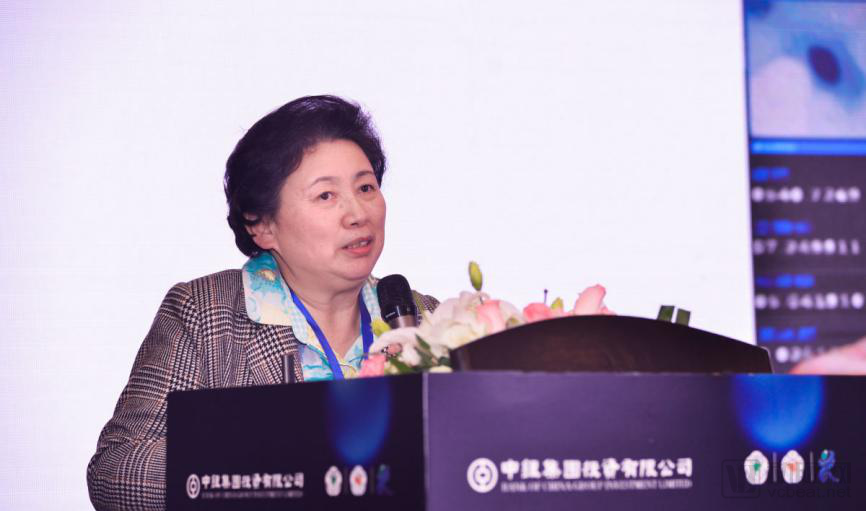
Sun Xiaorong, Chairman and General Manager of Wuhan Landing High-Tech
Sun Xiaorong stated that with the advancement of artificial intelligence (AI), AI previously had to adapt to existing market rules. However, as users deepen their engagement with AI applications, exploring business models intrinsic to AI itself has become a new imperative. Through continuous experimentation and innovation in both technology and operational models, Landin is pioneering a novel cloud-based early screening model for cervical cancer—a first of its kind in China and globally—leveraging technological empowerment and conceptual innovation to bring significant benefits to women worldwide.
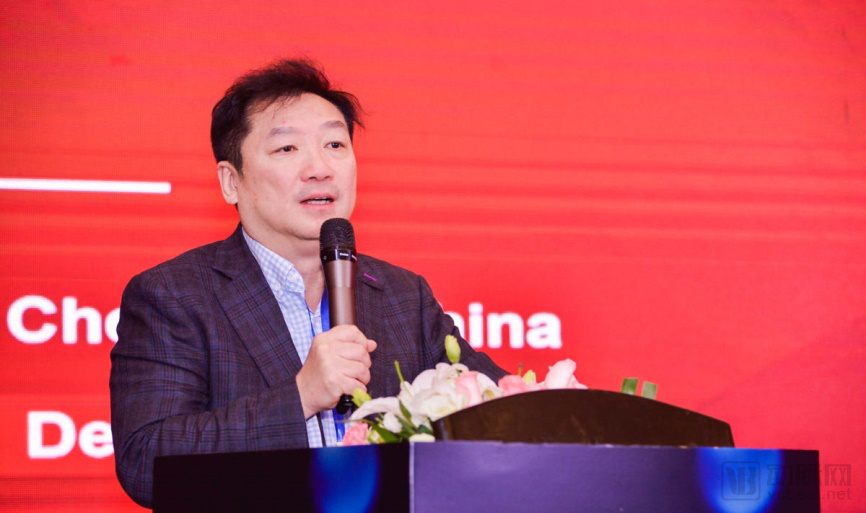
Zhang Suyang, Founding Partner of Volcanic Stone Capital
Regarding the challenges of implementing innovative technologies in the healthcare sector, Zhang Suyang, Founding Partner of Volcanic Stone Capital, stated: “In the new era, AI, cloud computing, and big data have emerged as entirely new general-purpose technologies. However, unlike other industries that have already been disrupted by such technologies, healthcare is characterized by significant information asymmetry between doctors and patients. Furthermore, it is an industry where supply exceeds demand, and it relies more heavily on human expertise. Consequently, the implementation of these technologies in the healthcare sector will proceed at a slower pace.”
Artificial intelligence technology represents a new growth driver in the evolution of smart healthcare, yet the scope of its implementation remains bound by the existing coordinate system, with policy being the most critical axis. The deployment of smart healthcare is inherently shaped by the unique contextual landscapes of each country.
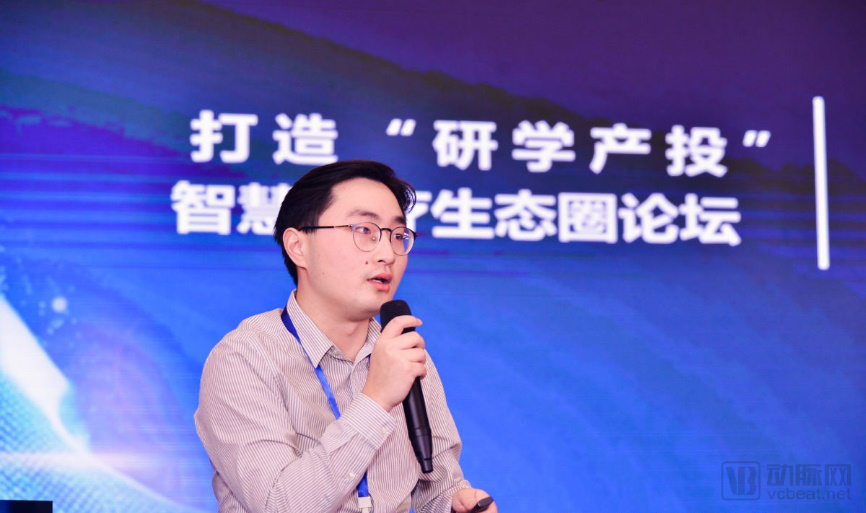
Luo Shiming, Head of VCBeat Research Institute
Luo Shiming, Head of VCBeat’s Eggshell Research Institute, analyzed the evolution and implementation of smart hospital policies. He pointed out, “Historically, the concept of smart hospitals emerged from the smart city framework in 2014; national construction standards were proposed in 2017; local governments began advancing the implementation of smart hospitals in 2018; and in March 2019, an evaluation system for smart hospitals was introduced. Looking toward future development directions, the construction of smart hospitals is now diverging into two pathways: enhancing disease treatment capabilities and improving healthcare management efficiency.”
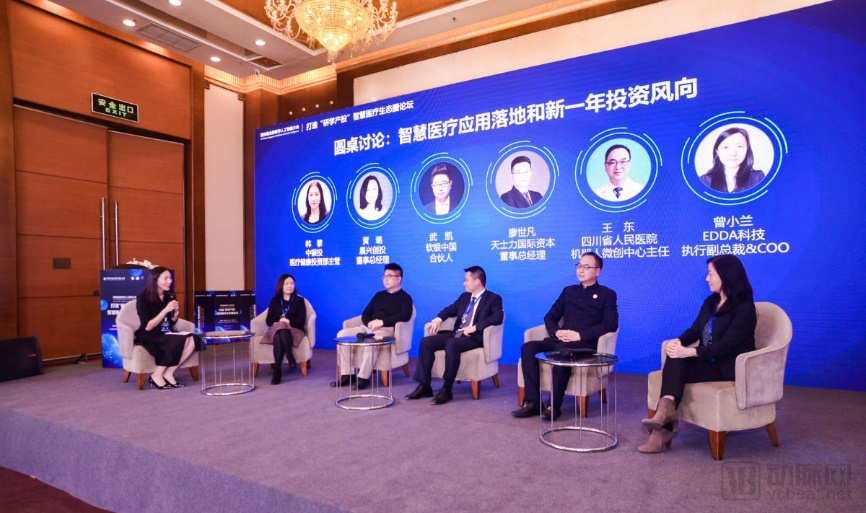
From left to right: Han Li, Head of the Healthcare Investment Department at Bank of China Investment; Huang Lu, Managing Director at Morningside Venture Capital; Wu Kai, Partner at SoftBank China; Liao Shifan, Managing Director at Tasly International Capital; Wang Dong, Director of the Center for Robotic Minimally Invasive Surgery at Sichuan Provincial People's Hospital; and Zeng Xiaolan, Executive Vice President and COO at EDDA Technology.
Initially, the practical applications of smart healthcare were limited to telemedicine. Today, as the core of the healthcare service system, hospitals are undergoing self-transformation through “smart upgrades.” How has smart healthcare developed over the past year, and how will it evolve in the future? During the roundtable discussion, Han Li, Head of the Healthcare Investment Department at BOC International Holdings (BOCI), first focused the conversation on the developments and remaining pain points in smart healthcare over the past year.
From the physician’s perspective, Wang Dong, Director of the Robotic Minimally Invasive Surgery Center at Sichuan Provincial People’s Hospital, stated, “A major pain point in integrating high-tech innovations with clinical practice is that they are not aligned with physicians’ needs; instead, they are based on imagined demands. Some products boast high technological sophistication but offer limited practical utility for clinicians, resulting in significant resource waste.”
This point was also acknowledged by the corporate representatives in attendance. Zeng Xiaolan, Executive Vice President and COO of EDDA Technology, stated, “Our AI products enter the operating room to work directly with surgeons. If you view surgeons merely as ‘technicians who perform operations,’ collaboration becomes impossible. They operate within an environment that integrates technology, humanistic care, and patient communication. These challenges cannot be resolved through simple technological upgrades alone.”
Several guests from the investment sector also pointed out during the roundtable discussion that a company's core competitiveness lies not in technological barriers, but in its ability to address clinical needs.
Huang Lu, Managing Director of Matrix Partners China, pointed out: “In the United States, we tend to focus on highly sophisticated, cutting-edge technologies. This approach works well there, as there are diverse pathways for translating foundational technologies into applications, supported by a well-structured market and a mature ecosystem. In China, beyond medical innovation, we prefer to invest in technologies that address specific clinical pain points. The key to resolving these clinical challenges lies with physicians, as they are the primary users who apply these technologies directly to patients.”
Wu Kai, Partner at SoftBank China, and Liao Shifan, Managing Director of Tasly International Capital, shared their future investment directions. Wu Kai stated, “The development of smart healthcare has experienced ups and downs, and the capital market has become more rational. Going forward, we will continue to focus on three key areas: the development of smart healthcare, technological innovation, and penetration into lower-tier markets.”
Liao Shifan stated, “As industrial capital, our objective is to build an ecosystem centered on patients, encompassing precision diagnostics, device-based diagnosis and treatment, pharmaceutical interventions, and digital health management. Our investment direction in the coming year will closely align with this industrial layout.”
During the lively forum discussions, multiple panelists emphasized that smart healthcare should adhere to the principle of integrating medicine and engineering, with medicine taking the lead. It is essential to deeply understand physicians’ needs and address key clinical pain points, which is crucial for building a healthy ecosystem encompassing research, education, industry, and investment. Although the development of smart healthcare in China is still in its early stages, facing numerous pain points and obstacles that urgently need to be overcome, we firmly believe that by combining research, education, industry, and investment, integrating modern smart technologies, and establishing a new, symbiotic medical ecosystem, we will usher in a comprehensive new healthcare ecosystem aligned with the Healthy China strategy.