

Alphamab Oncology Surges 34% on Hong Kong Debut as Bispecific Antibodies Gain Market Favor

Alphamab Oncology
Developer of Antibody and Protein Macromolecule Drugs
VCBeat learned that on December 12, 2019, Alphamab Oncology was listed on the Hong Kong Stock Exchange. The stock opened at HK$13, representing a 27.4% increase over its IPO price. Following the opening, Alphamab Oncology’s share price continued to rise, reaching a high of HK$13.7 by 11:00 a.m., with a gain of up to 34.3%.
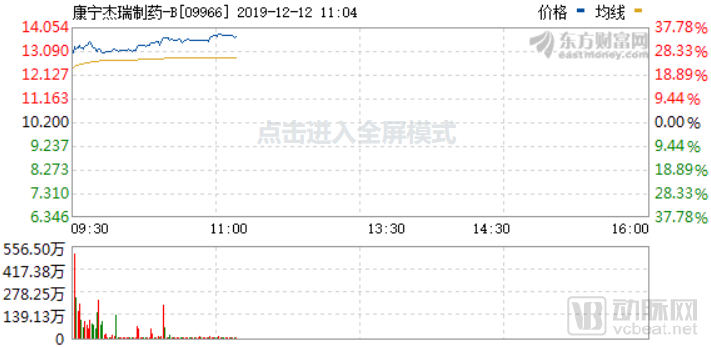
Image from East Money
Alphamab Oncology offered 179.2 million shares in its public offering at an issue price of HK$10.2 per share, raising a total of HK$1.83 billion. The proceeds will be primarily used to advance the development of its key product pipeline.
Alphamab Oncology is a leading clinical-stage biopharmaceutical company in China, featuring a fully integrated proprietary biologics platform specializing in bispecific antibodies and protein engineering. The company delivers world-class innovative therapeutic biologics to patients worldwide. Under the leadership of its founder, Dr. Xu Ting, Alphamab Oncology boasts a robust R&D team. As a prolific scientist, Dr. Xu has contributed to approximately 100 patent applications.
The core technological platforms of Alphamab Oncology are its multifunctional antibody platform, the CRIB platform, and the CRAM platform.
The CRIB (Charge Repulsion Improved Bispecific) platform is a bispecific antibody platform independently developed by Alphamab Oncology. Bispecific antibody molecules constructed based on the CRIB platform achieve heterodimer yields exceeding 98%. Furthermore, as the complete antibody framework structure is preserved, the resulting bispecific antibodies exhibit no significant differences from wild-type antibodies in terms of thermal stability and Fc-mediated biological activities (ADCC and CDC activities).
By leveraging the CRIB platform, Alphamab Oncology can replace the two arms of an antibody molecule with Fab sequences that recognize different antigenic epitopes, enabling a single molecule to simultaneously bind multiple epitopes and significantly enhancing its therapeutic efficacy. Additionally, the CRIB platform allows one arm to be replaced with other effector proteins (such as cytokines), which not only preserves the therapeutic efficacy of the parent antibody but also facilitates targeted delivery of the effector protein.
The CRIM (Charge Repulsion induced Antibody Mixture) platform is a mixed-antibody platform. Since most disease-related signaling pathways often involve multiple distinct antibody-receptor pairs, the combination of multiple antibody drugs has gradually become a development trend in the field of antibody therapy. The CRIM platform enables the production of multiple different antibody molecules from a single cell clone, ensuring that the complexity and controllability of the subsequent CMC development process are not significantly different from those for producing a single antibody.
Currently, hybrid antibodies constructed on the CRAM platform achieve a homodimer yield of greater than 95%. Furthermore, by leveraging Alphamab Oncology’s proprietary cell line development platform, we can identify cell lines with varying expression ratios of the two antibody components (ranging from 1:10 to 10:1) during early-stage screening, thereby meeting the requirements of diverse therapeutic regimens.
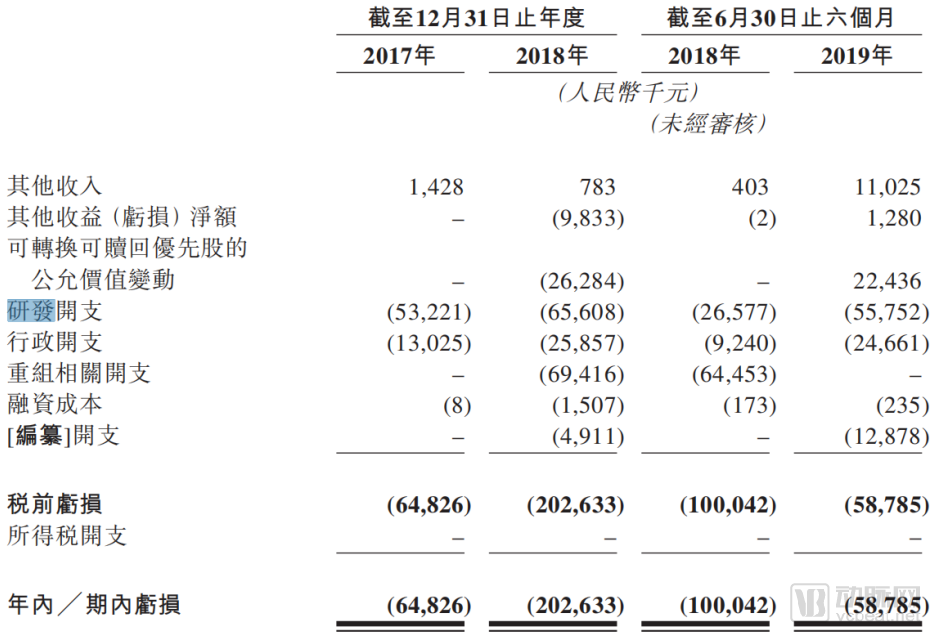
To date, Alphamab Oncology remains in a loss-making position, with R&D expenditures reaching RMB 53.221 million and RMB 65.608 million in 2017 and 2018, respectively. In the first half of 2019, R&D spending rose sharply to RMB 55.752 million, representing a 109.8% year-on-year increase compared to the same period in 2018. Looking ahead, Alphamab Oncology is expected to continue incurring losses, primarily driven by R&D expenses.
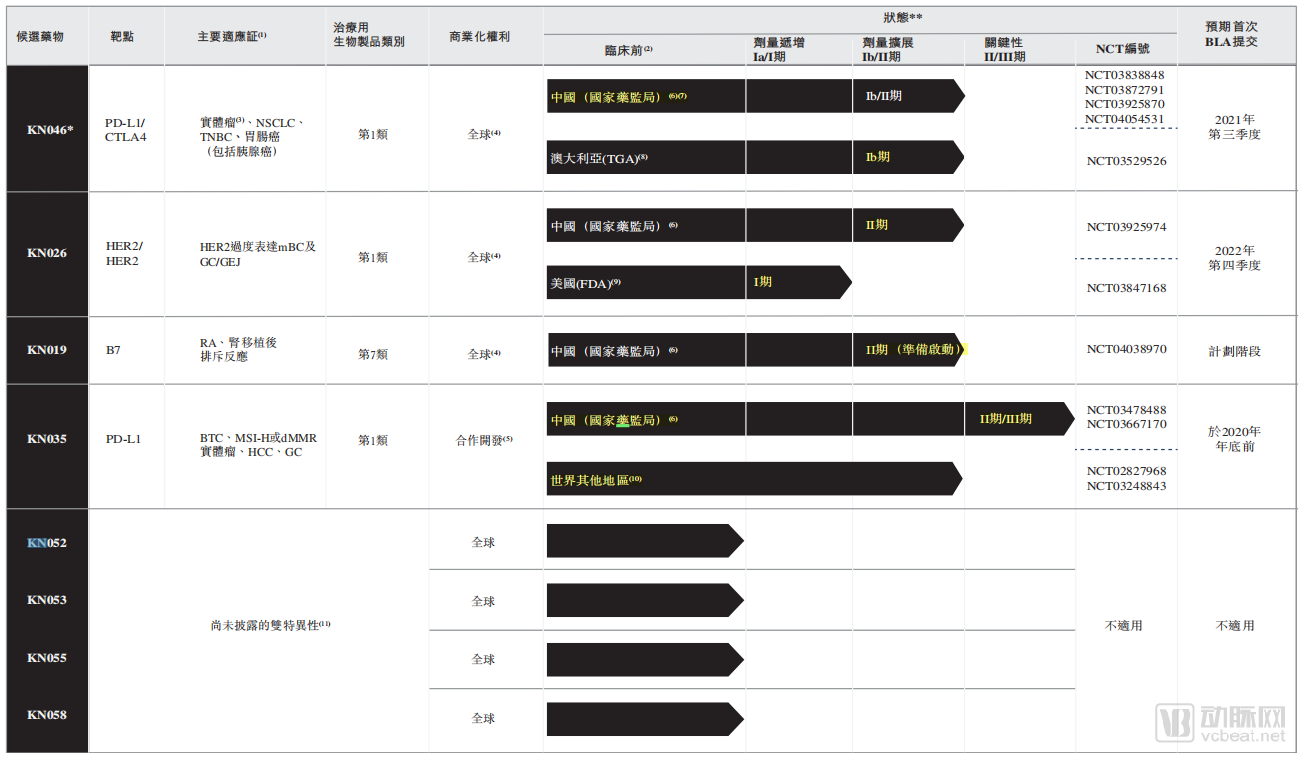
Bispecific antibodies are the primary focus of Alphamab Oncology, which already has two products in advanced development: KN046 and KN026.
KN046, a next-generation tumor immunotherapy drug developed by Alphamab Oncology that simultaneously targets PD-L1 and CTLA-4, demonstrated promising efficacy. In a Phase II clinical trial conducted in China involving patients with stage II or advanced non-small cell lung cancer (NSCLC), the disease control rate (DCR) reached 85.7%, and the objective response rate (ORR) reached 28.6%. In another Phase II clinical trial for triple-negative breast cancer (TNBC), all three evaluable subjects achieved disease control, with two of them obtaining an objective response. Thus far, KN046 has shown relatively favorable therapeutic effects, and its first Biologics License Application (BLA) submission is expected in the third quarter of 2021.
KN026 is a next-generation anti-HER2 bispecific antibody developed by Alphamab Oncology. It can simultaneously bind to two different clinically validated HER2 epitopes, potentially yielding superior clinical efficacy compared with previously available HER2 monoclonal antibodies. In the Phase I clinical trial of KN026, enrolled breast cancer patients demonstrated good tolerability and early signs of efficacy, with an overall disease control rate (DCR) of 71.4% and an objective response rate (ORR) of 28.6%. The related Phase Ib clinical trial is scheduled to conclude in the first half of 2020.
KN035, a PD-L1 inhibitor co-developed by Alphamab Oncology and 3D Medicines, is currently Alphamab Oncology’s most advanced product candidate. A Phase III clinical trial for biliary tract cancer is underway in China, and a Phase II clinical trial for dMMR/MSI-H (mismatch repair deficiency/microsatellite instability-high) solid tumors is also in progress. If both trials proceed smoothly, Alphamab Oncology will submit the first Biologics License Application (BLA) for KN035 before the end of 2020.