

Healthy Cities Become a Key Mission for Local Governments as AIoT Accelerates Digital Health Implementation
Two months ago, an OTC brand released a quirky and catchy short film titled “Healthy People, Strong China.” Regardless of its branding appeal or entertainment value, the film highlighted China’s achievements in public health from 1949 to 2019: average life expectancy doubled, the number of medical and healthcare institutions surged, and the scale of the broader health industry exceeded RMB 7 trillion in 2019.
Who could have imagined that before the founding of the People's Republic of China, the average life expectancy in China was only 35 years? By 2018, this figure had risen to 77 years. However, another indicator deserves attention: in 2018, the average healthy life expectancy in China was only 68.7 years, meaning that residents spent roughly more than eight years living with illness, indicating that overall health status still requires further improvement.
In many Western countries, the health management service system is already well-established and has demonstrated significant effectiveness in improving residents' health status and effectively reducing medical expenditures. In recent years, with the heightened health awareness among Chinese residents, the demand for health services has become more urgent. It is therefore imperative for the government to guide the development of a health management network supported by relevant institutions, structured around urban systems, and grounded in communities.

Source: Screenshot from the video “Healthy People, Strong China”
From a top-level design perspective, with the issuance of the Outline of the “Healthy China 2030” Plan by the State Council in 2016 and the introduction of the specific implementation plan for the Healthy China Initiative in 2019, the health management industry has seen clear indicators and measures transition from planning to implementation. Key health indicators are to be incorporated into the performance evaluation metrics for Party committees and governments at all levels. The effectiveness of regional population health management is closely linked to the burden of disease management, making the promotion of regional population health levels a critical mission for local governments.
Policy initiatives are paving the way for high-quality development of the private sector, giving rise to a wave of health technology companies focused on health management. Local governments’ emphasis on regional population health is accelerating the development and construction of digital health cities, creating new opportunities for digital health enterprises.
Prior to the issuance of documents related to the Healthy China Initiative, local governments across China never ceased their explorations into building healthy cities.
In Shanghai, hailed as a “model city for healthy cities,” we can see that along the Huangpu River, citizens have access to an open and shared fitness space on the Xuhui Riverside Walkway, which stretches approximately 8.95 kilometers in total length, offering diverse sports such as skateboarding, rock climbing, and basketball. Meanwhile, at the Jinqiao Community Elderly Activity Center in Pudong, smart health kiosks provide residents with services including family doctor appointments and vital signs monitoring.
These are the achievements made by Shanghai in its health practices over the past three-plus years since 2016. Moreover, its three major health indicators have all reached historic highs, attaining levels comparable to those of the world’s most developed countries: In 2018, the life expectancy of Shanghai’s registered population reached 83.63 years (81.25 years for males and 86.08 years for females), the maternal mortality ratio was 1.15 per 100,000 live births, and the infant mortality rate was 3.52 per 1,000 live births.
In addition to Shanghai, cities and counties including Xingtai in Hebei Province, Xiamen in Fujian Province, Laizhou in Shandong Province, and Taihe County in Anhui Province are also actively advancing the implementation of “Healthy City” planning.
As early as 2014, the “Xiamen Citizens’ Health Information System” pioneered a digital model for citizen health management and regional collaborative medical services across China, exploring the development of the “Xiamen iHealth” informatization platform supported by internet and big data technologies. Focusing on resident and family health management, Xiamen has promoted tiered diagnosis and treatment for chronic diseases among contracted residents by implementing the “1+1+N” joint health management model.
In early November this year, Qiaodong District of Xingtai City signed a cooperation agreement with Miao Health to jointly promote the implementation of the “Digital Health Xingtai 2030” city headquarters project. Through effective health management services, both parties aim to foster a healthier population within the radiating region, reduce the local disease prevalence, and gradually alleviate the burden on medical insurance, thereby setting an example for collaboration between local governments and health technology companies in building healthy cities.
Under the "Digital Health Xingtai 2030" plan, Xingtai City aims to establish a four-tier health management system, comprising one municipal headquarters for digital health management, overseeing three regional centers for digital health management, which in turn supervise 28 community service centers for digital health management, and deploying 200 health service stations for digital health management, thereby providing comprehensive health management services to residents in urban areas, townships, towns, and villages.
Miao Health primarily supports the establishment of the Xingtai Digital Health Management City Headquarters through its subsidiary, Canada Wellness Inc. (China) [hereinafter referred to as CWI (China)]. It provides a comprehensive lifestyle medicine health management solution based on AIoT technology. Local residents can experience a closed-loop service for full-scenario health management and chronic disease intervention, encompassing on-site risk screening and health assessment, prescription issuance and on-site implementation, professional outcome evaluation, prescription adjustment, and post-discharge remote health guidance.
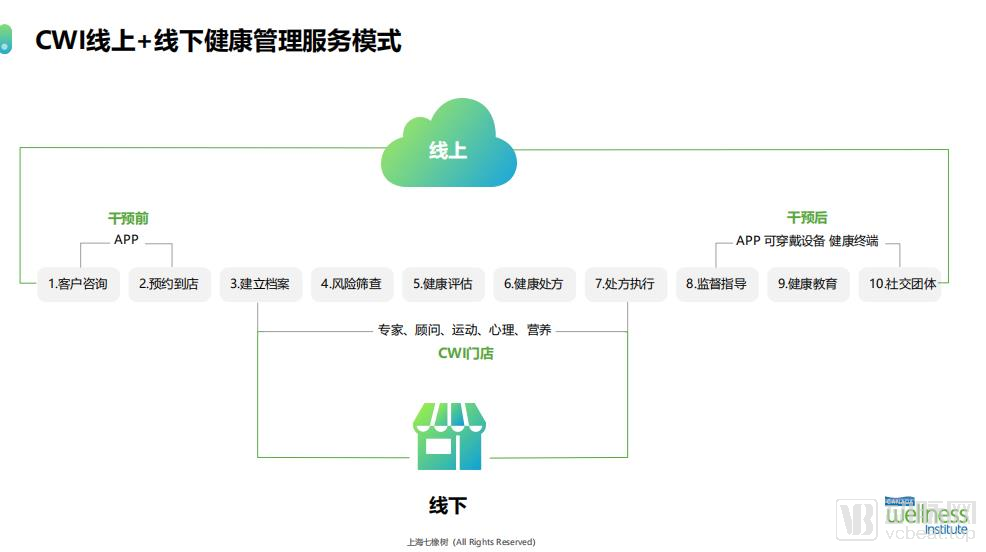
Specifically, when CWI (China) is implemented at the community level, it transcends the role of a simple health center. It collects diverse health data from residents and establishes health records. Health managers, nutritionists, and other professionals at local outlets then provide comprehensive intervention and management for individuals who are healthy, sub-healthy, or suffering from chronic diseases. Based on continuous changes in each user’s health data, they address multiple aspects including exercise, diet, sleep, and psychological well-being, aiming to prevent, treat, and improve chronic diseases associated with unhealthy lifestyle habits.
In building a “Digital Health City,” Miao Jiankang not only implements offline scenarios through CWI (China) but also leverages technologies such as health big data and artificial intelligence to enhance local residents’ health literacy and strengthen their capacity for proactive health management.
Miao Health assists local governments in establishing data-driven health management models based on health monitoring and data analytics. This approach enables the collection and analysis of residents’ health data, facilitating timely and accurate assessments of population health status within their jurisdictions. It also generates periodic evaluation reports on the effectiveness of health management initiatives, which can be published and promoted as white papers on local health management development.
In terms of digital capabilities, Miao Health has focused on the interconnectivity of various user health data and services since its establishment in 2015. It has built an open platform for health data and services, integrating data from over 300 smart devices across major mainstream brands. Additionally, it incorporates diverse health-related data, including physical examination results, genetic information, and insurance records, enabling the provision of comprehensive health profiles for users.
What Are the Tangible Outcomes of Digital Health Management? In a regional health management intervention case previously disclosed by Miao Health, a health literacy survey was conducted among engaged users of the Miao Health platform in Dalian, Liaoning Province. After 30 days of health interventions, the users’ health task completion rate increased from 3% to 17%, and the average daily Health Behavior Index (M-value) rose significantly, from 18 to 65 per day.
This success is primarily attributed to Miao Health’s robust capabilities in big data and AIoT (Artificial Intelligence of Things), as well as its gamified operational model. This approach not only helps local governments enhance residents’ overall health literacy and empower users to engage in self-managed healthcare, but also demonstrates the company’s commitment to corporate social responsibility. Furthermore, it assists local governments in meeting performance evaluation criteria and task targets, thereby driving continuous improvements in the health status of urban populations.
Relevant documents on the Healthy China Initiative state: “The role of market mechanisms should be leveraged to encourage the research, development, and promotion of artificial intelligence and wearable devices for health management. Internet technologies should be fully utilized to conduct real-time, continuous monitoring of health status, while safeguarding personal privacy, so as to achieve online real-time management, early warning, and behavioral intervention. Health big data should be applied to enhance the public’s ability for self-health management.”
Not long ago, Miao Health officially launched China’s first “AI Health Manager.” Leveraging capabilities such as big data analytics in health and medicine, NLP-based health knowledge graphs, clinical guidelines, expert consensus, and CWI’s clinical medical evidence, the AI Health Manager assigns users hundreds of health profile tags. The system then delivers personalized health management plans tailored to each individual.
In practical applications, the “AI Health Manager” can collect users’ health information through various intelligent methods, such as smart Q&A systems, wearable devices, and AI-based recognition technologies. It then provides comprehensive professional services and consultations, making health management services more convenient and accessible for community residents. Additionally, it serves as an effective tool for healthcare professionals, including health managers, thereby enhancing their work efficiency.
Miao Health not only integrates CWI’s lifestyle medicine with the technological capabilities of the Internet of Things (IoT), big data, and artificial intelligence (AI), thereby redefining the AIoT-based health management center model, but also empowers governments and related industries through its “AI Health Manager.” This approach continuously improves residents’ health literacy, effectively alleviates the financial burden on medical insurance, and drives the benign and sustainable development of the health industry.
Healthy cities are truly happy cities, and health technology companies are playing an increasingly important role in the construction of digital healthy cities. Under the requirement of comprehensive, full-life-cycle maintenance and protection of people's health, the exploration of "health management," an imported concept, has gradually adapted to national policies and public sentiment over the years. The responsibility for national health has shifted from relying solely on the healthcare system to a broader societal collaboration.
For over five years, Miaojiankang has been deeply committed to health technology, establishing a closed-loop ecosystem that integrates “wellness, medical care, pharmaceuticals, and insurance.” Leveraging core capabilities such as its Health Cloud SaaS, interactive insurance policy platform, and AI health managers, the company has broken down information silos and consolidated fragmented data. By applying intelligence to lifecycle health management, Miaojiankang is actively contributing to the Healthy China initiative and emerging as an industry pioneer.
Currently, Miao Health has established partnerships with institutions across multiple sectors, including real estate, hospitals, and enterprises. It plans to expand its offline presence by opening more stores, thereby further extending the reach of its health management services and continuing to contribute to the construction of a Healthy China. Kong Fei, CEO of Miao Health, previously stated, “In the future, we will leverage health big data and artificial intelligence to effectively integrate online and offline services, creating a new paradigm in China’s health management sector and serving more Chinese citizens.”