

Wode Life Sciences Unveils Fully Automated Thromboelastography System, Boosting Sample Processing Efficiency by 6–8 Times
Thromboelastography (TEG) is an analytical method that simulates and records the dynamic interactions among various coagulation factors in a human blood environment, encompassing the entire process from coagulation initiation, platelet aggregation, and fibrin formation to clot generation and fibrinolysis. TEG helps clinicians gain a comprehensive understanding of a patient’s coagulation profile, rapidly assess coagulation function, identify the causes of coagulation abnormalities, guide component blood transfusion, monitor anticoagulant therapy, and evaluate thrombotic risk.
This technology was first invented by the German scientist Harter in 1948 and became a key tool for guiding component blood transfusion in the 1980s. Today, thromboelastography (TEG) testing is in demand across entire hospitals, with applications in departments such as Transfusion Medicine, Operating Rooms, Intensive Care Units (ICU), Clinical Laboratories, Cardiology, Chest Pain Centers, Obstetrics and Gynecology, Nephrology, and even Orthopedics. Moreover, since the academic community widely recognizes TEG as providing a comprehensive overview of coagulation function, some experts advocate using it as the preferred initial screening tool for assessing coagulation status. These factors undoubtedly continue to drive up the demand for testing and the volume of specimens.
“However, the thromboelastography analyzers currently available on the market all require manual or semi-automatic operation, resulting in slow overall testing speeds, high demands on operator proficiency and patience, elevated labor costs, and significant susceptibility to human interference. This is particularly problematic when handling large sample volumes, making them unable to meet clinical needs,” stated Jin Ying, Chairman and General Manager of Render Biotech Co., Ltd. (hereinafter referred to as “Render Biotech”).
Render Biotech, through in-depth visits to end-users and on-site identification of their pain points, launched a fully automated thromboelastography analyzer after three years of R&D. This system enables direct loading of primary tubes, automating more than ten steps across the entire workflow—from sample and reagent pre-processing to pipetting, mixing, and detection—thereby significantly reducing labor costs and minimizing result instability caused by human interference.
According to reports, the registration certificate for Render Biotech’s fully automated thromboelastography analyzer is currently under application and will be launched soon.
Three series and five products, achieving full coverage of diverse application scenarios
Thromboelastography (TEG) analyzers were developed in Germany and have been used in Europe and the United States for many years. However, until now, the TEG analyzers available on the market still rely on manual or semi-automatic operation.
In response to this phenomenon, Jin Ying stated, “European and American countries have low population densities, dispersed medical institutions, and well-established primary healthcare systems. With relatively higher qualifications among testing personnel, many tests can be performed in small medical facilities or at the point of care. Given the low volume of specimen testing, manual or semi-automatic thromboelastography analyzers are sufficient to meet their needs.”AndIn China, many testing services are concentrated in large and medium-sized hospitals, which serve a vast patient population, handle high testing volumes, and feature diverse and unevenly distributed application scenarios., thromboelastography analyzers currently available on the market are clearly unable to meet such complex and diverse needs, leaving end-users with high sample volumes overwhelmed due to staffing constraints.
Through extensive consultations with experts and end-users, Render Biotech identified this need and developed a fully automated, high-throughput thromboelastography (TEG) analyzer. By integrating precision electromechanical control technology with pre-packaged reagent cartridges, the device enables single-sample testing with zero carryover contamination and full automation throughout the process. This design lowers operator skill requirements (eliminating the need for specialized laboratory personnel), significantly reduces labor costs during operation (whereas competing products on the market typically require one dedicated operator per 4–6 channels), minimizes human interference, and enhances overall product performance.
It is worth noting that thromboelastography products currently available on the market all dispense reagents into multiple containers. The greater the variety of reagents, the more complex the manual operation becomes, which not only leads to reagent waste but also poses a significant challenge to the operator’s professionalism and patience. To address this, Render Biotech has inventedPatented Microfluidic Card TechnologyBy pre-encapsulating the various reagents required for detection within a microfluidic card, the need for components such as tubing, valves, and pumps is eliminated. The assay can be completed using only disposable consumables and the microfluidic card, thereby simplifying the instrument, reducing failure rates and manufacturing costs, and minimizing the risk of carryover contamination.
Jin Ying stated, “Large hospitals require 5 to 10 conventional thromboelastography analyzers and at least 2–3 specialized laboratory personnel to meet testing demands. The use of the company’s fully automated thromboelastography analyzer canOverall specimen processing efficiency increased by 6 to 8 times, requiring only one device and a small amount of staff time to complete the test.”
To address varying specimen volumes and testing requirements across different medical institutions, Render Biotech has developed three series of thromboelastography (TEG) analyzers, comprising five products in total, to achieve comprehensive coverage of diverse TEG application scenarios.
Semi-automatic Thromboelastography Analyzer:Lower price and small footprint, designed for small-scale medical institutions with low specimen volumes, such as primary healthcare facilities and clinics.
Fully Automated Thromboelastography Analyzer:Available in three models: 2-channel, 4-channel, and 8-channel, designed for medical institutions with high specimen testing volumes.
High-Throughput, Fully Automated Thromboelastography Analyzer:Meets the high-volume specimen testing needs of large hospitals.
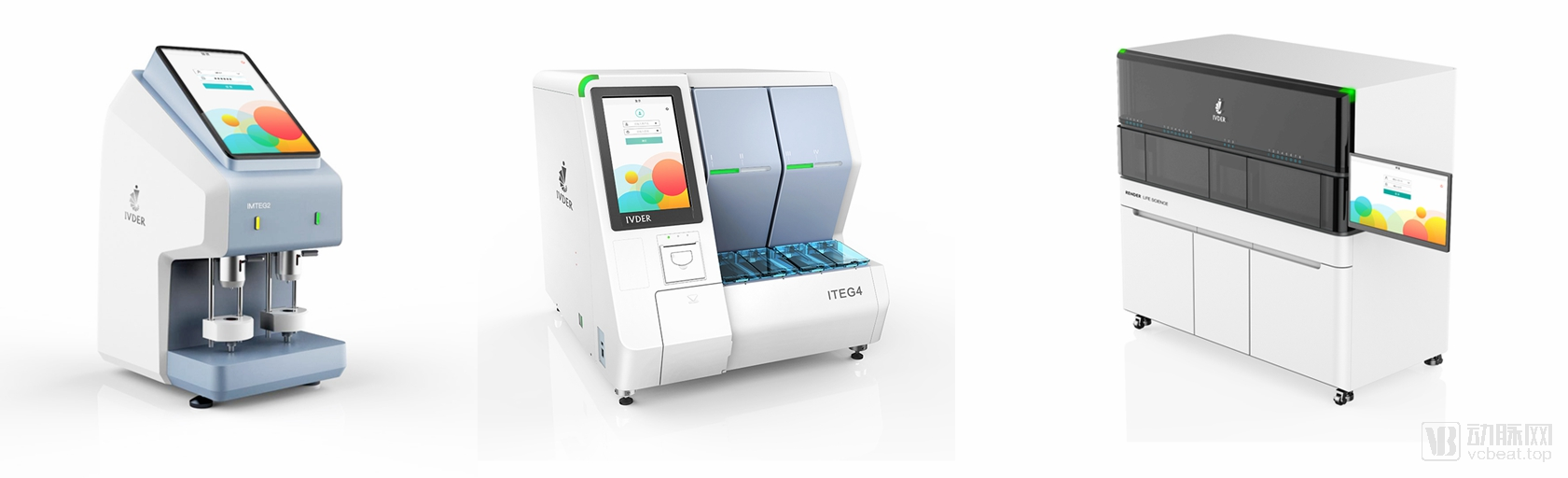
From left to right: semi-automatic thromboelastography analyzer, fully automatic thromboelastography analyzer, high-throughput fully automatic thromboelastography analyzer
Jin Ying stated, “Currently, many companies are developing fully automated thromboelastography analyzers. Render Biotech holds a first-mover advantage and core patented technologies, and its product has entered the registration application phase. It is expected to be launched in early 2020, positioning the company as the first to obtain approval for a fully automated thromboelastography analyzer.”
Core Corporate Competitiveness: High-Quality Products + Independent Innovation
Render Biotech, founded by Jin Ying in 2016, focuses on the in vitro diagnostics market and currently possessesHemostasis and Coagulation, Chemiluminescence, Clinical MicrobiologyThree product lines.
Jin Ying is a seasoned professional in the field of in vitro diagnostics (IVD), with over 20 years of extensive experience. Previously, he worked at a well-known domestic IVD company and founded an IVD equipment company, where many key team members also have years of experience in large medical companies.
In addition, Render Biotech boasts a high-caliber team dedicated to R&D and marketing services. According to Jin Ying, R&D personnel account for approximately 60% to 70% of the company’s workforce, with professional expertise spanning mechatronics, software, biochemistry, clinical affairs, algorithms, and fluid optics.
When discussing a company’s core competitiveness, Jin Ying stated, “There are two issues in China’s in vitro diagnostic (IVD) equipment sector: first, there is a significant gap in product quality compared with foreign products; second, there are many followers but few innovators. In other words, only enterprises that offer high-quality products and possess innovative capabilities can secure a competitive advantage.”
Jin Ying stated that the pursuit of quality and independent innovation are the driving forces behind the continuous development of Render Biotech.
Render Biotech maintains a rigorous quality management system and an Integrated Product Development (IPD) process to ensure product quality. Furthermore, it enforces strict controls over raw material sourcing by partnering with leading domestic and international suppliers to procure premium-grade materials.
In terms of innovation, the Render Biotech team maintains long-standing and productive collaborations with domestic and international research institutions as well as clinical experts at major hospitals. By closely monitoring emerging market trends and addressing the practical needs of physicians and patients, the company is committed to developing a diverse portfolio of innovative products. In addition to its fully automated thromboelastography analyzer, the chemiluminescence-based point-of-care testing (POCT) instrument represents another significant innovation by the company.
Chemiluminescence POCT instruments combine the advantages of chemiluminescence immunoassay and point-of-care testing (POCT), enabling rapid acquisition of diagnostic results through bedside testing. Jin Ying believes that with the gradual advancement of tiered diagnosis and treatment, many testing items can be completed at primary or small-scale medical institutions, and the chemiluminescence POCT market is poised for explosive growth.
Jin Ying stated, “The technology behind chemiluminescence POCT instruments has matured. Render Biotech aims to innovate at the application level by developing compact, flexible, automated, and low-cost chemiluminescence POCT instruments, promoting their adoption in primary healthcare markets to benefit a broader population of patients at the grassroots level.”
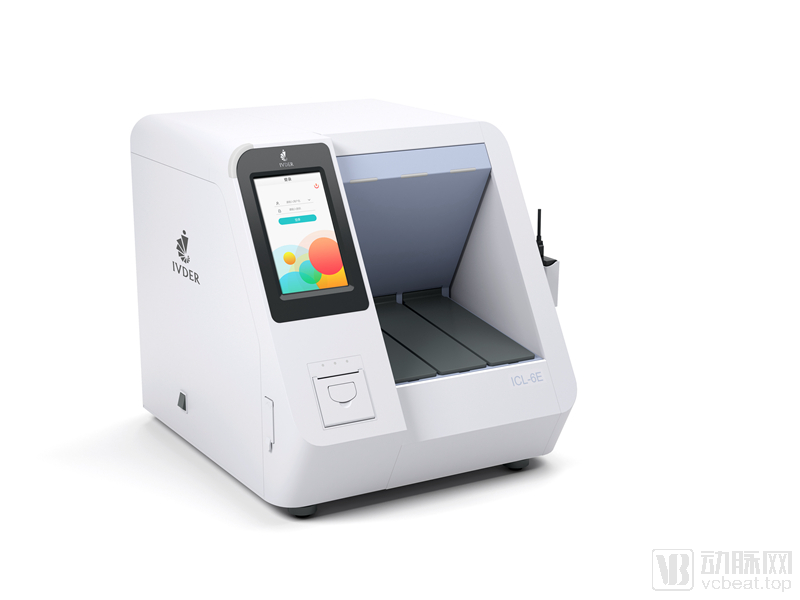
Chemiluminescence POCT Analyzer
It is understood that the chemiluminescence POCT analyzer developed by Render Biotech is currently applying for registration certification and is expected to be launched simultaneously with the fully automated thromboelastography analyzer.
Building a closed-loop product ecosystem for thrombosis and hemostasis, with multiple products sold in over 30 countries worldwide
Since its establishment, Render Biotech has accumulated an extensive network of distributors, boasting mature sales channels, a large pool of sales professionals, and strategic partners. The company currently offers a diverse portfolio of products, including microbial blood culture systems, antibiotic susceptibility identification instruments, mass spectrometers, and coagulation analyzers.These products are sold in more than 30 countries worldwide, with annual sales reaching tens of millions of RMB.
Jin Ying stated that after the launch of Render Biotech’s flagship products—the fully automated thromboelastography analyzer and the chemiluminescence POCT analyzer—the company will vigorously expand its sales team and collaborate with distributors and industry partners in a more open manner to better serve customers.
Looking ahead, Render Biotech aims to sustain innovation in areas where the market remains immature and domestic technologies still lag behind, striving to become a leader in its niche segments and gradually narrow the gap with international giants. Moving forward, the company will integrate its platforms to create a new closed-loop ecosystem for thrombosis and hemostasis products, deepen its operational excellence, and steadily build brand influence.