

From 'Service' to 'Service + Empowerment': Intelligent & Health Care for the Elderly Embraces a Friendly and Compassionate Future
On December 11, the “2019 Smart Health and Elderly Care New Technology Industry Forum” was successfully held in Shanghai. The forum was guided by the Shanghai Municipal Commission of Economy and Informatization and the Shanghai Civil Affairs Bureau, hosted by the Shanghai Internet of Things Industry Association, co-hosted by “Yanglaojia,” and co-organized by Flywell Intelligent Robot and Qin Keshi. Experts, scholars, business leaders, and representatives from various sectors were invited to gather and jointly explore new models and emerging formats for the application of new technologies in the health and elderly care sector.
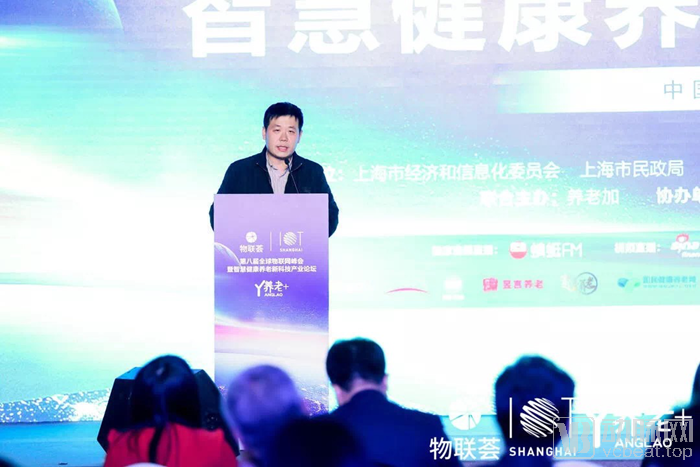
(Figure: Yu Junxin, Electronic Information Industry Division, Shanghai Municipal Commission of Economy and Informatization)
Yu Junxin from the Electronic Information Industry Division of the Shanghai Municipal Commission of Economy and Informatization stated in his address that, with the rapid development of next-generation information technology, efforts are being made to facilitate the coordination and matching of health and elderly care resources among individuals, households, institutions, communities, and society. This not only enhances service quality but also optimizes industrial structure, promoting the intelligent upgrading of the health and elderly care system. “As the elderly population’s demand for smart health and elderly care continues to rise, we will seize the opportunity to transform the smart health and elderly care industry from a service-oriented model to a ‘service + assistance’ model. We will accelerate technological breakthroughs and product development, foster enterprise growth and brand building, advance research on standardization, and expedite the implementation of demonstration projects and ecosystem construction, thereby helping Shanghai secure a leading position in the field of smart elderly care.”
Yu Junxin further stated that future elderly care models will transition from closed family-based and institutional types to an integrated model featuring coordinated development among open families, institutions, and communities. Ultimately, this will realize an ecosystem where family-based care is well-managed, institutional care is governed by regulations, community-based assistance meets demand, and social elderly care continues to develop.
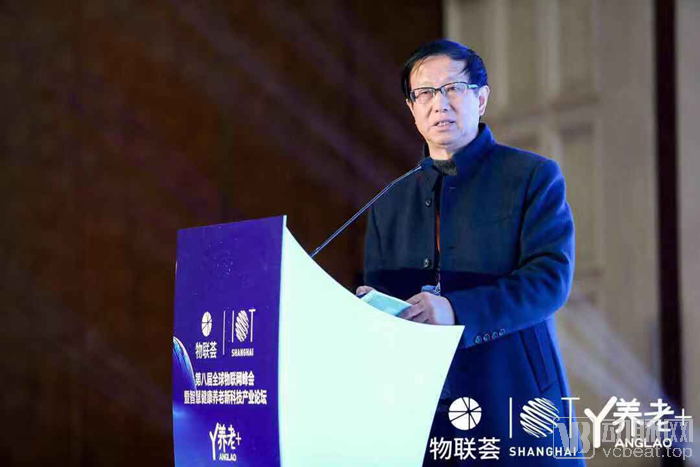
(Figure: Ye Xiaohua, Secretary of the Shanghai Internet of Things Industry Association)
“Aging-care technology requires a friendly and benevolent integration, and it is imperative to adopt multiple measures to promote smart elderly care. As the Internet of Things (IoT) enables real-time collection and transmission of vital health indicators, implementing tiered sharing and collaboration has become a major trend in the modern health service industry’s smart elderly care sector.” Ye Xiaohua, Secretary of the Shanghai IoT Industry Association, stated in his keynote speech titled “Viewing Smart Elderly Care from an IoT Industry Perspective” that companies currently need to strengthen their internal capabilities and enhance core competitiveness, noting that realizing the promising vision of “IoT + Elderly Care” still requires concerted efforts from all stakeholders.
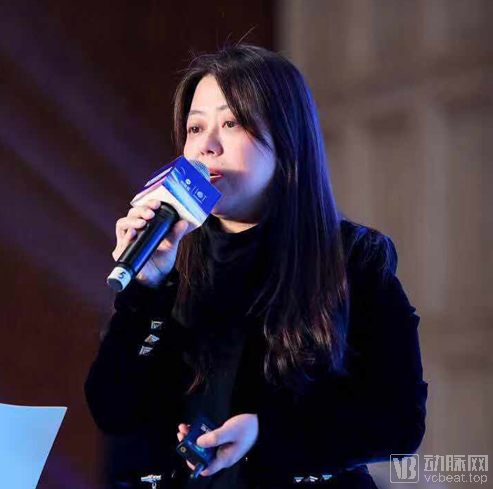
(Figure: Jin Weihua, Technical Expert at the IoT Operations Center of China Unicom Shanghai)
Population aging, supportive policies, and the consumption behaviors of the elderly—these three driving forces are ushering in a boom for the elderly care, wellness, and health industry. Jin Weihua, a technical expert at the IoT Operations Center of China Unicom Shanghai, delivered a speech on the theme of “5G Empowering the Upgrade of Smart Health Services.” In Jin’s view, the 5G era brings new opportunities and is transforming new models of medical and elderly care. While building integrated medical and elderly care platforms, it also provides digital and information-based services for the future big health ecosystem.
Furthermore, Jin Weihua shared insights on Shanghai’s first “AI + Industrial Park” — Zhangjiang AI Island — and introduced, from multiple dimensions, how the island has implemented 5G application scenarios. Examples include security robots, inspection robots, unmanned aerial vehicles (UAVs), unmanned surface vessels (USVs), unmanned supermarkets and restaurants for park services, smart conference rooms, intelligent exhibition halls, as well as AR and VR interactive experiences.
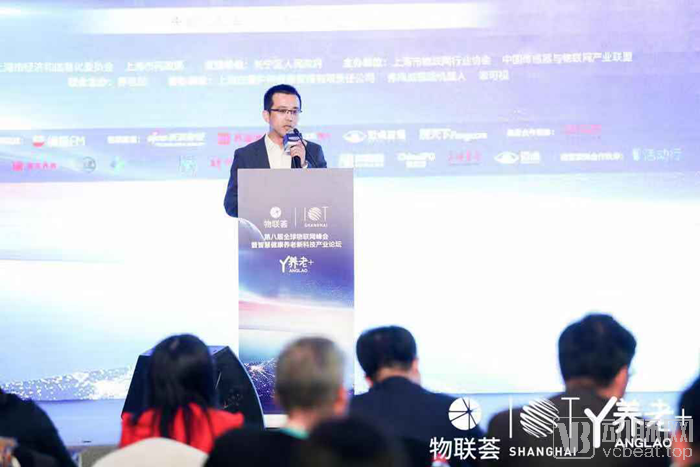
(Figure: Liu Qing, Vice President of Fosun Health)
“The domestic elderly care industry boasts a positive outlook, with a vast market scale and immense potential for growth. The development of the elderly care sector is an inevitable trend, representing a trillion-yuan market.” Liu Qing, Vice President of Fosun Health & Elderly Care, stated in his keynote speech titled “Fosun Health & Elderly Care’s Big Health Industry Sharing: Smart Elderly Care and Industrial Operations.” He highlighted that Fosun Health & Elderly Care is comprehensively seizing industry opportunities to support the development of China’s big health industry. The company has established a diverse portfolio of products and services, including high-end elderly care communities/institutions, health management centers, and integrated community-based home care services. It is committed to building full-lifecycle, whole-industry-chain, and global health services covering rehabilitation, nursing, elderly care, and health management in the post-acute phase.
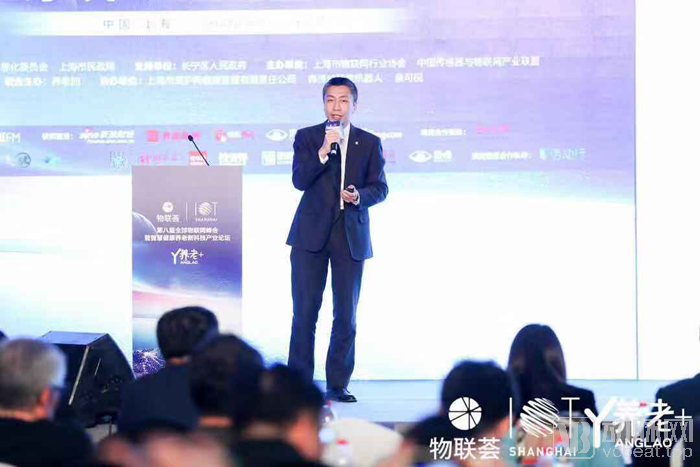
(Figure: Yang Xiaoyu, Assistant General Manager of the Health Technology Center at Tai Kang Health Investment)
Yang Xiaoyu, Assistant General Manager of the Health Technology Center at Taikang Insurance Group, stated in his keynote speech titled “Reflections and Practices on Technological Empowerment for Integrated Medical and Elderly Care Communities” that Taikang manages RMB 1.7 trillion in assets, generates an annual premium income of RMB 170 billion, and achieves a net profit after tax of RMB 20 billion. Allocating a portion of these funds to invest in medical and elderly care institutions represents a three-tiered strategy for us: within hospitals, our integrated medical, educational, and research centers are structured around five major medical centers distributed across eastern, western, southern, northern, and central China; pre-hospital care is provided through our general practice and specialized clinics; and post-hospital care is delivered via our retirement communities, which house Grade II Class A rehabilitation hospitals. Regarding how technology empowers the integration of medical and elderly care, a unified system supports the operation of retirement communities nationwide, enabling multidisciplinary teams to work on the same platform. This approach effectively integrates a labor-intensive enterprise through technological systems, thereby reducing operational complexity and enhancing service quality.
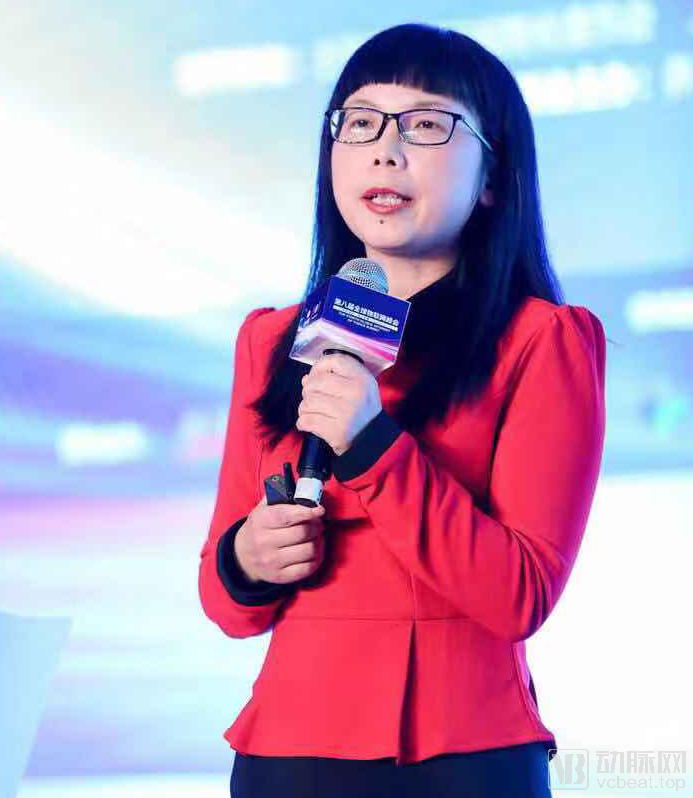
(Figure: Wang Lin, Vice President of Flywei Intelligent Robotics)
Wang Lin, Vice President of Flywei Intelligent Robotics, stated in her keynote speech on “Smart Elderly Care Solutions with Robots in the AI Era”: “Looking back at the entire intelligent system, it has rapidly gone through three stages of development. The initial stage, relying on human-operated equipment, is referred to as Version 1.0. Subsequently, with many auxiliary IoT terminals for data collection, we reached a stage of relatively weak intelligence. Now, through comprehensive robot-based management and services—partially replacing manual labor—and by better integrating machine learning with terminal data, we provide a highly intelligent Version 3.0.” Therefore, in Wang Lin’s view, robots are the natural carriers of AI technology. Wang Lin focused on how Flywei Intelligent Robotics, as a technology enterprise, integrates technology with elderly care and presents corresponding solutions. In her opinion, the most critical core task at present is to enable robots to take over tasks that humans cannot perform, cannot perform well, or are unwilling to perform. “The smart cloud platform created through robotics can directly serve the elderly while enhancing coordination with family members, institutions, and communities. Robots provide standardized 24-hour services, offering safety monitoring capabilities. By integrating robot-managed services with IoT sensors, we upgrade the Internet of Things (IoT) to the Internet of Intelligent Things (IoIT). We enhance the intelligence level of IoT through our services. For instance, when radar waves detect an accidental fall or abnormal respiratory or heart rate in an elderly person, the robot will proactively move to the scene, conduct voice confirmation with the individual, activate its camera, and if necessary, initiate further emergency measures, thereby achieving a small closed-loop management process. Meanwhile, high false-alarm rates for common issues cause significant distress to family members and backend staff; such alerts must be addressed immediately upon occurrence. We refine algorithmic models to improve data accuracy, making overall safety management more intelligent.”
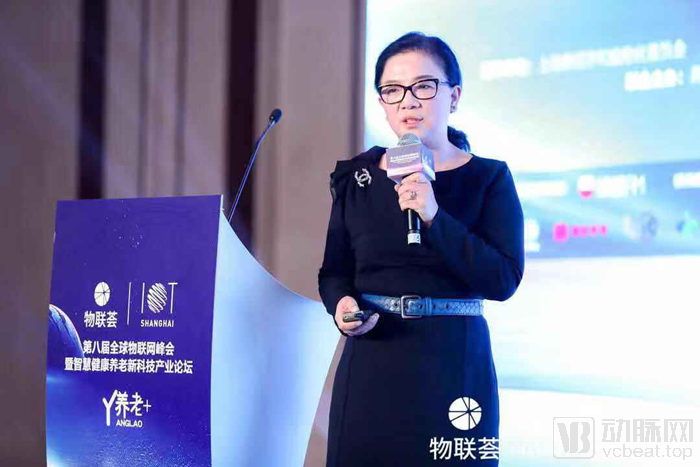
(Figure: Jiang Hui, General Manager of Greentown Elderly Care Service Group Co., Ltd.)
Jiang Hui, General Manager of Greentown Elderly Care Services Group Co., Ltd., delivered a keynote speech themed “Sharing Greentown’s Elderly Care Operation Cases.” As the professional elderly care segment within Greentown’s “Ideal Life Services” ecosystem, Greentown Elderly Care is committed to its mission of “unlocking high-quality, wonderful times for seniors through our imagination, creativity, and practical execution.” Addressing how elderly care can support the development of health and wellness towns, Jiang noted that this is an area many real estate developers are currently exploring. “All of our town projects incorporate health and wellness elements. Integrating such content into our projects is, in my view, the future trend. Overall, we will continue to meet people’s pursuit of an ideal life by creating beautiful architecture and fostering better living. We strive to become organizers, promoters, and leaders of a better life, providing one-stop comprehensive life services across the full lifecycle and entire industry chain, anchored in our property product development.”
(Figure: Roundtable Dialogue 1 “A New Era of Smart Elderly Care: The Trinity of New Technology, Nursing, and Elderly Care”)
The first roundtable discussion of the afternoon session centered on the core theme of “A New Era of Smart Elderly Care: The Integration of New Technology, Nursing, and Elderly Care Services.” Bao Yong, Dean of the Center for Health Management and Service Innovation at Shanghai Jiao Tong University, served as the moderator. Sun Tong, Vice President of Meinian Onehealth Healthcare Group, stated that the company has benefited from the overall development of China’s health industry, coinciding with its period of rapid growth. “Since 2014, our enterprise has undertaken extensive initiatives in preventive medicine, including investments in equipment for early cancer screening and adjustments to our product offerings.”
Liu Kexin, a partner at Shanghai Shigeru Architectural Design Co., Ltd., believes that design concepts must be integrated into products. Considerations for future usability should be incorporated during the preliminary design phase, including appropriate provisions and presets. Both designers and manufacturers must engage in continuous learning to embed these concepts into the product production process.
Gong Miao, Vice President of Shanghai Shenyuan Rehabilitation Hospital, pointed out that from an operational perspective, the biggest challenge in leveraging technology to empower the healthcare and elderly care industries remains a shortage of professional talent. As the demographic dividend gradually diminishes, it is worth continuous consideration how to integrate technology to provide older adults with a safer, healthier, and happier life using fewer human resources.
Jin Weihua, a technical expert at the China Unicom IoT Operations Center in Shanghai, believes that managing health trends is valuable. Particular attention should be paid to the sub-optimal health status of young and middle-aged adults, with increasing focus on this aspect to anticipate one’s overall health condition and future trends, thereby adjusting lifestyle and work patterns. Leveraging technologies such as the Internet of Things (IoT), 5G, cloud computing, and big data, we can progressively raise health standards, shifting from merely “saving lives” to “nurturing life,” and ultimately learning to enjoy life.
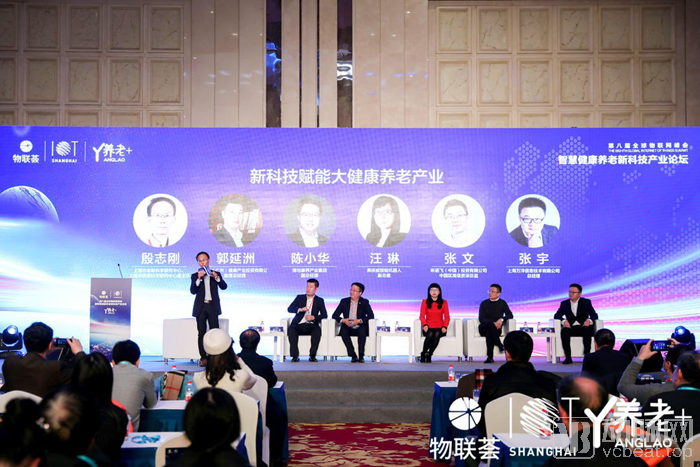
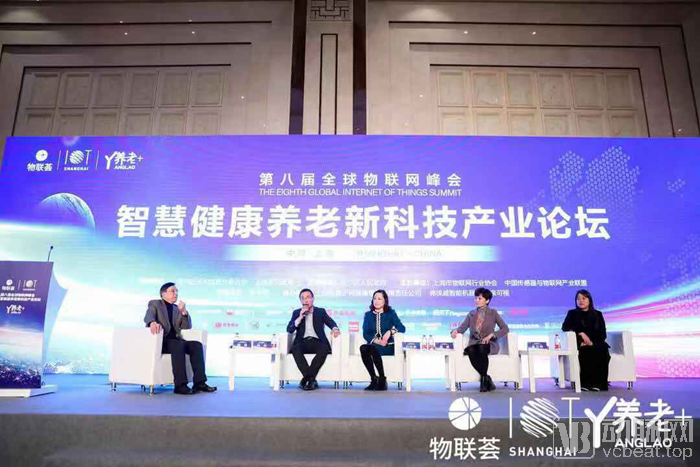
(Figure: Roundtable Discussion II: “How New Technologies Empower the Health and Elderly Care Industry”)
Entering the second roundtable discussion, the panelists explored the topic of “How New Technologies Empower the Health and Elderly Care Industry,” moderated by Yin Zhigang, former Director of the Shanghai Research Center on Aging Science and the Shanghai Civil Affairs Scientific Research Center. In this era of redefinition, the key lies in transforming everyone’s mindset. We must adopt a technological mindset grounded in modern Internet of Things (IoT) and artificial intelligence (AI) to approach problem-solving, plan industrial layouts, broaden our horizons, and strategize for every sector. It is essential to reassess and rethink before we can truly redefine. “I believe that within the boundless space of technological advancement, human life will become ever better.”
Guo Yanzhou, Assistant General Manager of Poly (Guangzhou) Health Industry Investment Co., Ltd., proposed that institutions should integrate technological elements. While achieving a balance between revenue and expenditure, each new institution can appropriately incorporate informatized products to enhance the overall value of the project.
Chen Xiaohua, Deputy General Manager of Greenland Health and Elderly Care Industry Group, believes that while the benefits of technology-enabled elderly care may not be immediately apparent in the short term, it is undoubtedly a prevailing trend. Leveraging technology will ultimately provide the most effective tools for future health and elderly care populations.
Wang Lin, Vice President of Flywheel Intelligent Robotics, stated that while the elderly care sector holds a bright future, the path ahead is fraught with challenges. First, the industry lacks mature business models. Second, high costs have become an Achilles’ heel for elderly care services, and there is a severe shortage of professional caregivers. These issues continue to plague the development of many elderly care institutions.
Zhang Wen, Senior Director for Greater China at Signify (China) Investment Co., Ltd., shared his philosophy on elderly care. He noted that all Philips lighting products can now be equipped with sensors to facilitate big data collection. This data is then fed into big data analytics software to help us better understand the daily routines and dietary habits of older adults, thereby enhancing our ability to support them. Our core philosophy is to promote healthy aging and maintain the well-being of older adults, rather than focusing solely on rehabilitation after illness occurs.
Zhang Yu, General Manager and Partner of Shanghai Wanfeng Information Technology Co., Ltd., stated that technology is a means, service is the foundation, and technology serves to empower services. His philosophy is to approach elderly care services from the perspective of technological R&D, addressing two key issues: usability and willingness to adopt. If simple, user-friendly, and intelligent solutions can help this demographic reduce risks in their daily lives, it holds significant social value.
On the New Technology Industry Forum for Smart Health and Elderly Care:
The Smart Health and Elderly Care New Technology Industry Forum is an annual health and elderly care technology conference jointly initiated by the Shanghai Internet of Things Industry Association and “Yanglao Jia.” The Shanghai Internet of Things Industry Association and “Yanglao Jia” aim to connect forward-thinking stakeholders across the elderly care industry chain to promote the vigorous development of the sector. Currently, the Smart Health and Elderly Care New Technology Industry Forum has become one of the most influential events in the field of elderly care technology, attracting top domestic elderly care institutions, artificial intelligence and IoT enterprises, financial and real estate sectors, technology media, and investment firms. Participants jointly explore new models, new business formats, and new achievements enabled by next-generation information technologies in the health and wellness sector, accelerating the development of the smart health and elderly care industry and advancing smart infrastructure in health and elderly care services.